Provinces
🌾Amnat Charoen
Isan's quiet Mekong frontier province
Isan's quiet Mekong frontier province
In the early morning at Wat Phra Mongkhon Ming Muang, an unhurried queue of locals files past a 20-metre seated Buddha to make merit. Up the road, in a sandstone hillside cave at Wat Tham Saeng Phet, foreign monks in the Ajahn Chah lineage sit through dawn meditation. Out at the eastern edge of the province, in Chanuman district, the Mekong slides by villages where fishermen still check nets the way their grandfathers did. This is Amnat Charoen — a small, rural Isan province that even many Thais struggle to place on a map, and one of the quieter corners of the country to disappear into.
With roughly 372,000 residents spread across 3,290 square kilometres of rice paddies, low hills, and a compact provincial capital, Amnat Charoen represents something increasingly rare in Thailand: genuine distance from the tourist economy. Created as recently as 1 December 1993 when it was split from neighbouring Ubon Ratchathani Province, it retains the feeling of a place still figuring out its identity, caught between Thai bureaucracy and the Lao cultural pull of its eastern border, between agricultural tradition and uncertain modernisation.
Only one of the province's seven districts — Chanuman, in the far east — actually touches the Mekong, which forms about 38 kilometres of border with Salavan Province in Laos. The rest of Amnat Charoen lies inland on Isan's rolling rice plain, closer in feel to neighbouring Yasothon than to the river-frontage provinces further downstream. There are no beaches, no mangroves, no archaeological tourism. What there is, quietly: a sacred provincial Buddha image, a meditation cave that draws monks from across the country, a sandstone plateau studded with lotus pools, and a slow Mekong frontage you reach by driving an hour east.
"This is Amnat Charoen — a small, rural Isan province that even many Thais struggle to place on a map, and one of the quieter corners of the country to disappear into."
Let's be direct: very few foreigners come to Amnat Charoen. It offers no beaches, no spectacular mountains, no Ayutthaya-style ruins, no nightlife, no international cuisine scene. What it does offer is the rarest commodity in modern Thailand — distance from the tourism machinery that has transformed so much of the country. If you're reading this section hoping for convenient transportation, reliable Wi-Fi, and English-speaking services, bookmark this page for a different trip. Amnat Charoen rewards patience, flexibility, and genuine curiosity about rural Isan life.
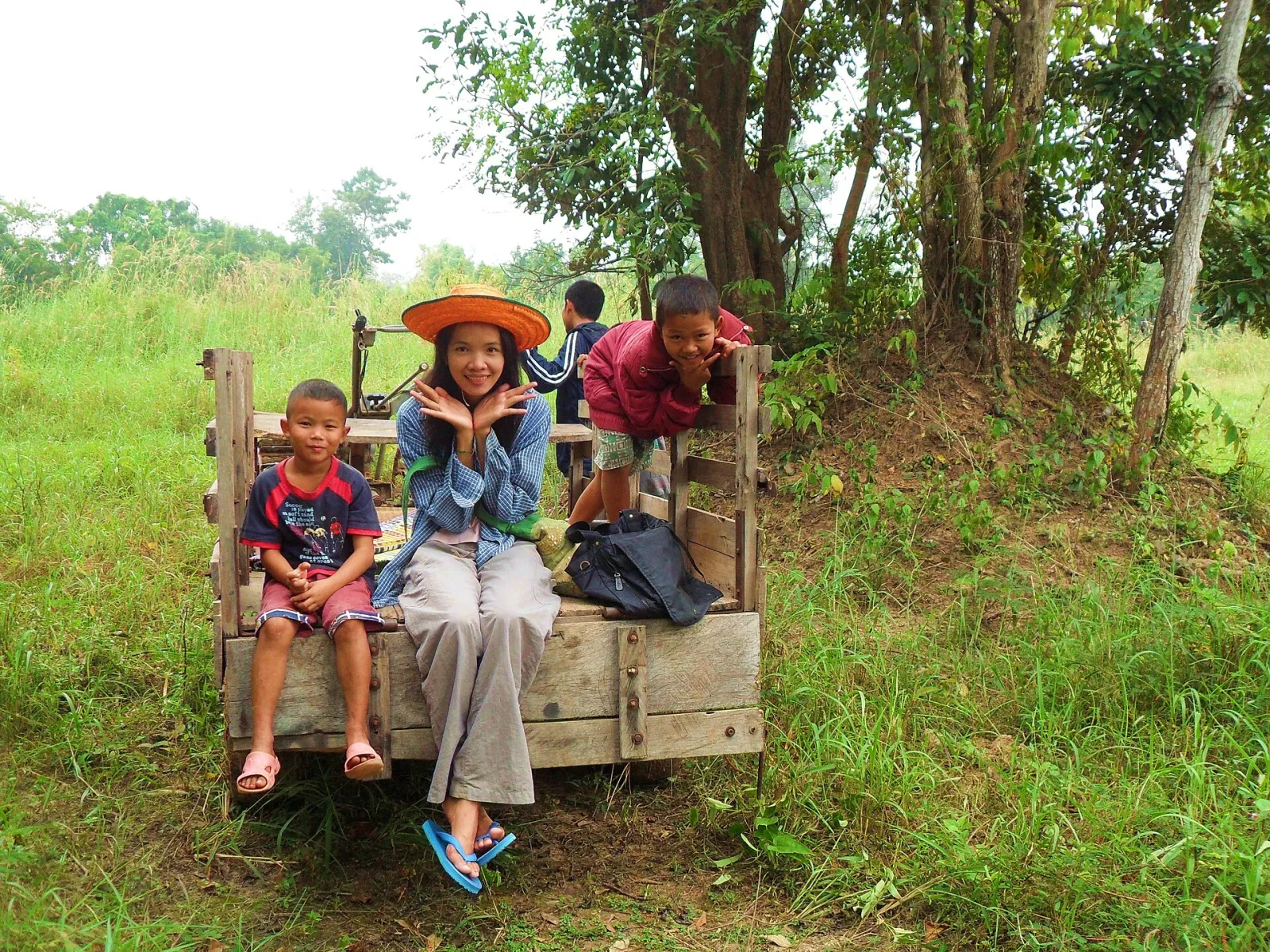
But for the right visitor — someone seeking authenticity over comfort, cultural immersion over convenience — Amnat Charoen delivers experiences hard to find in Thailand's more developed regions. You can live on 12,000-18,000 baht monthly including rent. You'll eat meals for 30-50 baht that taste like grandmother's cooking because they probably are. You'll cycle past rice paddies where farmers wave and genuinely wonder what brought you here. You can drive out to Chanuman for an afternoon of staring across the Mekong at Laos. This is rural Isan, stripped of the surface gloss that smaller-budget travel in Thailand sometimes still gets coated in.
Amnat Charoen's signature landmark is Phra Mongkol Ming Muang, a 20-metre seated Buddha image at Wat Phra Mongkhon Ming Muang in the Buddha Utthayan park just north of the provincial capital. Cast in concrete and finished in a distinctive matte ochre, it has been the symbol on the provincial seal since the new province's founding in 1993. The compound is open and walkable; locals come to make merit at dawn and dusk. Free entry; modest dress required.
A short drive west of town, Wat Tham Saeng Phet sits on a sandstone plateau where a viharn, a chedi, and a long reclining Buddha share the site with a cave whose quartz seams give it its name ("diamond-sparkle cave"). The temple is one of the most important meditation centres for the lineage of Ajahn Chah Suphatto — the great twentieth-century forest-monk teacher whose followers include the international Wat Pah Pong network — and you'll regularly see foreign monks in white walking the compound. Visitors are welcome to observe respectfully outside meditation hours; donations support the saṅgha.
Phu Sa Dok Bua National Park, in the western part of the province, takes its name from the eleven shallow sandstone pools on its small upland plateau, each colonised by a different species of lotus that you would normally expect to find only in lowland swamps. The combination — sandstone bedrock at altitude, naturally occurring stone basins, lotus plants — is the park's quiet specialty. Trails are short and easy; this is a half-day, not a multi-day trek. Standard national-park foreigner entry applies.
Tad Yai Waterfall: The province's main natural cascade, in Khok Kong subdistrict, runs best from July through October. Cool pools at each tier; small entry/parking fee on busier weekends.
Chanuman riverfront: About an hour east of the capital, the village strung along the Mekong is the only place in the province where you can actually see Laos across the water. Local longtail-boat operators run short river trips for a few hundred baht; no through-foreign border crossing exists here.
Silk and Khit pillows: The province is known for its hand-woven silk and triangular "khit" pillow covers worked in distinctive geometric patterns. Cooperative villages near the capital sell direct.
The Mekong reaches Amnat Charoen at Chanuman, the easternmost of the province's seven districts. The river forms roughly 38 kilometres of border with Salavan Province in Laos here — a small, quiet frontage compared with the long Mekong fronts of nearby Mukdahan or Nong Khai. Traditional fishing villages line the bank; wooden houses sit a little back from the high-water line; longtail boats are tied to posts marked at every season's flood level. In the dry season (February to May) the water drops far enough to expose sandbars and rocky islets — Kaeng Tanglang at Ban Si Sombun and Kaeng Hin Khan south of the district seat — which become local picnic spots until the rains return.
Visiting Chanuman is a half-day round trip from the capital (around an hour each way). Buy fish directly from the boats coming in at dawn — catfish, snakehead, whatever the night brought — at prices that make Bangkok markets look comical. The riverside foodstalls grill or fry the day's catch, often served with sticky rice and chilli paste, for 40-80 baht. Sunsets from the small concrete promenade beside the district office are unspectacular and exactly what you came for.
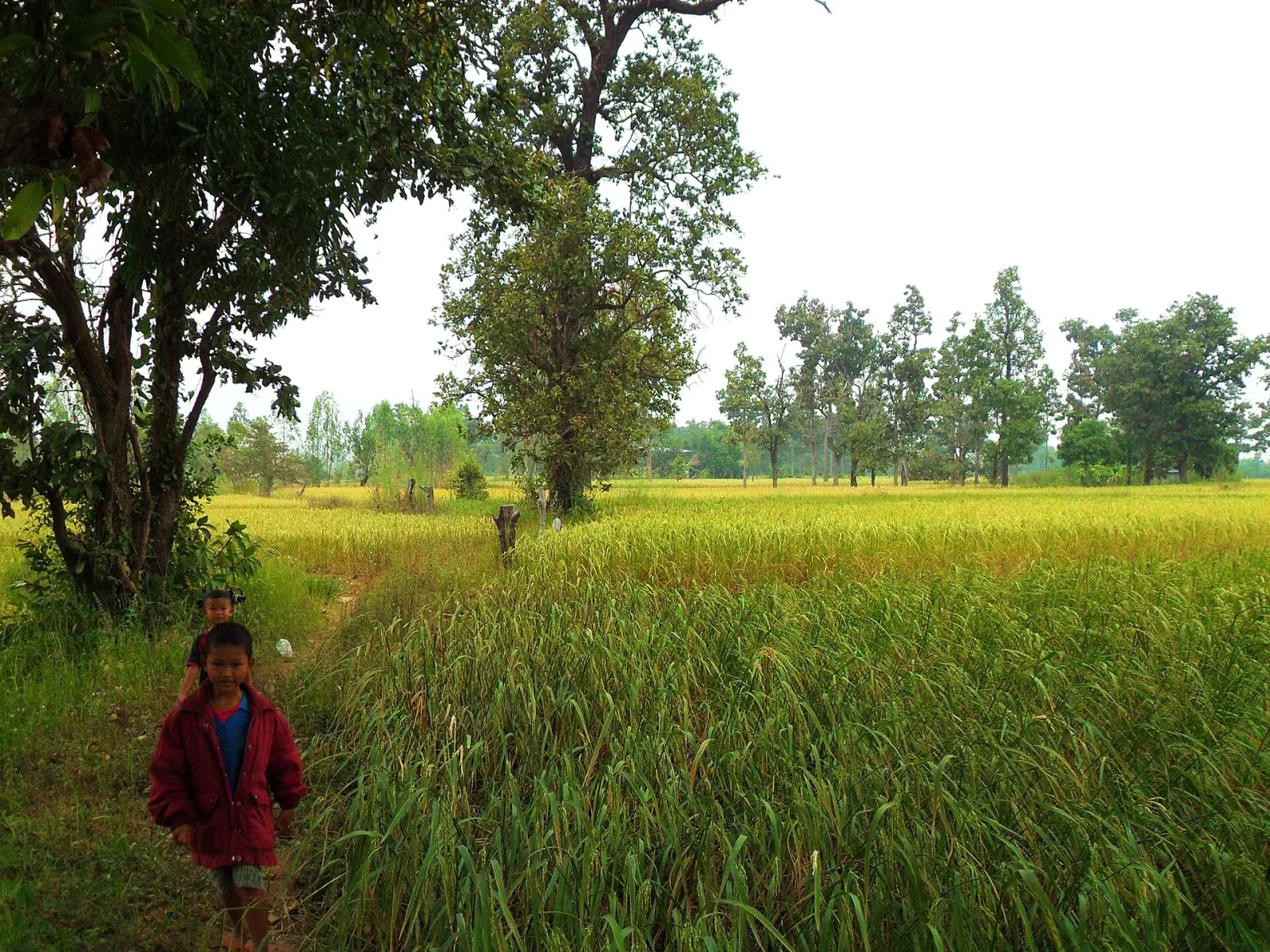
Local longtail-boat operators run short river trips for 200-500 baht depending on duration. There is no through-foreign border crossing in this district; if you need to enter Laos overland, drive north to Mukdahan's Friendship Bridge or south to the Chong Mek crossing in Ubon Ratchathani. Back in the rest of the province, the flat terrain makes countryside cycling rewarding — rent a bicycle (50-100 THB/day) and explore quiet roads winding through rice paddies, with the generous curiosity of people who rarely meet foreign visitors as the main backdrop.
Amnat Charoen's morning and evening markets provide windows into local life entirely removed from tourism. The morning market starts around 6am—vendors arranging pyramids of vegetables, butchers hanging fresh meat, fish sellers displaying river catches still glistening. The atmosphere is purely functional: locals shopping for daily meals, greeting neighbors, exchanging gossip in Lao-inflected Thai that even fluent Thai speakers might struggle with.
Evening markets transform into social hubs where the community gathers after the day's heat breaks. Simple food stalls serve authentic Isan specialties—som tam pounded fresh per order, grilled chicken with sticky rice, laab made the traditional way with mint, shallots, and roasted rice powder. Meals cost 25-40 baht. There's no menu in English, no accommodations for tourist tastes. Point at what looks good, smile, hope for the best. This is immersion by necessity, and it's glorious.
The markets also reveal how affordable life here truly is. Fresh produce sells for wholesale prices. A kilo of tomatoes: 20 baht. A bunch of morning glory: 10 baht. A whole grilled fish: 60 baht. If you're cooking for yourself—and many long-term visitors do—your food budget can drop to 2,000-3,000 baht monthly while eating better than in any city. The challenge is explaining to curious vendors why a foreigner is shopping at local prices. Learn a few Thai phrases, especially around food, and you'll unlock genuine friendships. For more on Thai culture and customs, see our guide to Buddhism in daily Thai life.
Accommodation in Amnat Charoen exists at price points that sound fictional to anyone living in major Thai cities. Basic guesthouses charge 180-250 baht nightly. Long-term rentals—and by "long-term" I mean month-to-month, since annual leases are rare—run 2,500-4,500 baht for studios, 3,500-6,000 baht for one-bedrooms. These aren't luxury properties. Expect basic furniture, reliable electricity and water, possibly spotty internet, and no English-speaking landlords. Finding places requires walking neighborhoods, asking locals, maybe posting in Thai-language Facebook groups. This is frontier housing—functional, affordable, unpretentious.
The tiny city center contains essential services—markets, a few restaurants, basic shops, government offices. It's walkable end-to-end in twenty minutes. Mekong riverside areas offer water views and access to fishing communities. The agricultural outskirts provide the most authentic rural experience, surrounded by rice paddies and farming families. Utilities run 200-300 baht monthly. Internet availability is the wild card—city center has basic service, rural areas struggle. If reliable connectivity is non-negotiable, this isn't your province.
Getting to Amnat Charoen requires patience. No airport serves the province. Buses from Bangkok take 9-11 hours (400-600 THB) with limited frequency. Most flying visitors fly into Ubon Ratchathani (UBP) and drive the remaining ~75-80 kilometres north (1.5 hours). The remoteness is both deterrent and appeal — it filters out casual tourists, ensuring those who arrive genuinely want to be here. Locally, you'll need a motorbike (rent for 1,500-2,000 THB monthly) or a bicycle for countryside exploration. Songthaew and walking handle in-town movement.
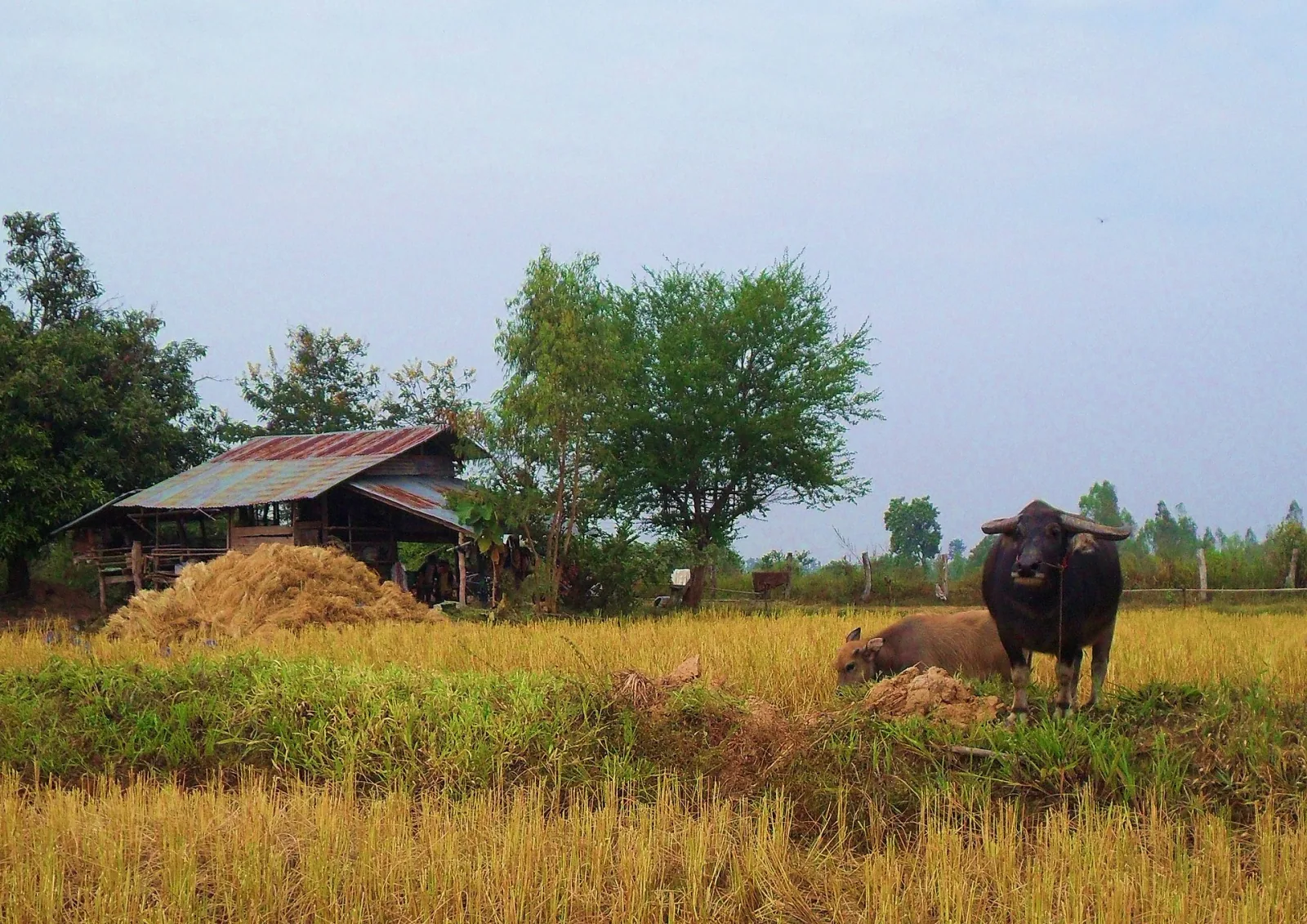
Amnat Charoen attracts a specific type of traveler. Remote workers whose income is location-independent and whose work doesn't demand high-speed internet. Writers, artists, people on sabbatical seeking deep cultural immersion. Adventurers comfortable with ambiguity, willing to learn Thai (it's essential here—English is virtually non-existent), and genuinely curious about rural life. The cost of living makes extended stays financially feasible even without substantial savings.
It doesn't work for digital nomads needing reliable connectivity for video calls and large file transfers. It doesn't work for people seeking Western amenities, diverse cuisine options, or active social scenes. Healthcare here is basic—serious medical issues require travel to Ubon Ratchathani or Bangkok. There's no expat community to speak of, no international schools, no convenience stores stocked with imported goods. If those things matter to you, there's no shame in admitting Amnat Charoen isn't your destination. Better to recognize that now than to arrive, feel isolated and frustrated, and leave disappointed.
"Amnat Charoen attracts a specific type of traveler. Remote workers whose income is location-independent and whose work doesn't demand high-speed internet."
Climate follows the standard Isan pattern. Cool season (November-February) offers pleasant temperatures 12-28°C—ideal for exploration. Hot season (March-May) punishes with 35-40°C heat that makes midday activity unpleasant. Rainy season (June-October) brings afternoon storms, lush landscapes, and dramatic skies. The best time to visit coincides with the best time throughout most of Thailand—November through February when temperatures cooperate and nature blooms.
The province only borders one foreign country — Laos (Salavan Province), across the Mekong in Chanuman district — and there is no through-foreign border crossing here. For regional onward travel: Ubon Ratchathani city (~75-80 km south) provides the nearest airport, the better-equipped Sappasitthiprasong Hospital, and the modern shopping you'll eventually miss; Yasothon (~70 km west) and Mukdahan (~70 km north) offer mid-sized Isan amenities. But if you're spending time in Amnat Charoen, the point is to stay put — to slow down, observe seasonal rhythms, build relationships that require months to develop. For insights on navigating Thai business culture if you're working remotely, see our guide to Thailand business culture.
What Amnat Charoen offers ultimately isn't measurable in attractions visited or photos captured. It's the accumulation of small moments that add up to something rare. It's the farmer who waves you over to share his lunch because he's curious where you're from and has all afternoon to talk. It's watching the Mekong change colors at sunset, nobody else around, wondering how many generations have watched the same scene. It's the evening market vendor who starts setting aside the best morning glory for you because you always come Tuesday afternoons. It's learning that "affordable" and "cheap" aren't synonyms—that life here costs little but offers richness difficult to find anywhere else.
This is Thailand stripped of tourist infrastructure but not stripped of soul. It demands flexibility, patience, genuine interest. In return, it provides authenticity that's increasingly difficult to find in a country as documented and developed as Thailand has become. Amnat Charoen won't suit everyone. But for those it suits, it might just be perfect. Just remember to set aside a morning at Wat Phra Mongkhon Ming Muang and an afternoon at Chanuman — the sacred Buddha and the Mekong are what stay with you.
KNOW BEFORE YOU GO
Population
~372,000 (province)
Area
3,290 km²
Monthly Budget
10,000-24,000 THB
Best Season
November-February
Nearest Airport
Ubon Ratchathani (~75-80 km)
MUST-DO
TYPICAL COSTS
CHALLENGES:
Som tam Lao: Laotian-style papaya salad
Mekong fish: Fresh river catch, grilled or fried
Sticky rice: Essential with every meal
Laab: Minced meat with herbs and roasted rice