Provinces
🏛️Ayutthaya
Ancient Capital of Siam
Ancient Capital of Siam
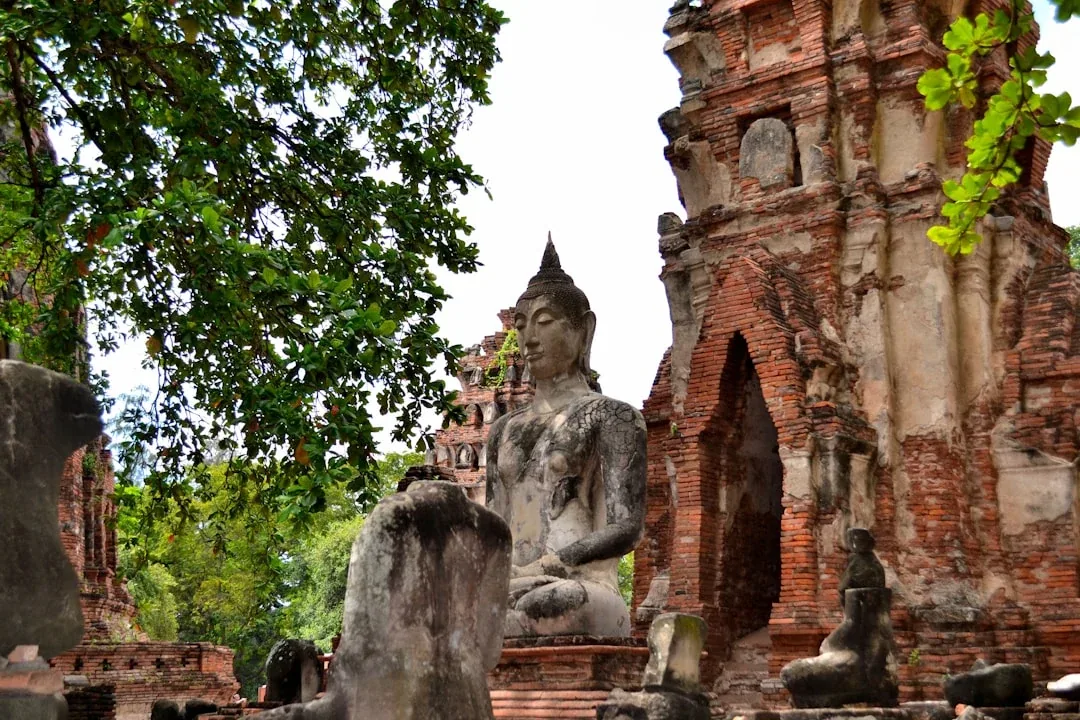
Cycle past headless Buddha statues at sunset, their weathered stone bodies still radiating serenity despite centuries of abandonment. Watch temple prangs pierce the sky where kings once ruled an empire that stretched across Southeast Asia. Stand before the famous Buddha head entwined in tree roots at Wat Mahathat, nature reclaiming what war destroyed, creating art more powerful than what human hands intended. This is Ayutthaya—Thailand's ancient capital, destroyed in 1767, preserved as ruins that tell stories of glory and catastrophe.
Founded in 1351 at the confluence of the Chao Phraya, Lopburi, and Pa Sak rivers, Ayutthaya served as Siam's capital for 416 years. At its peak it ranked among the world's largest and most cosmopolitan cities — by the late 17th century around a million inhabitants, magnificent temples covered in gold, and international trading posts run by Dutch, French, Chinese, and Japanese merchants. European visitors compared it favourably to London and Paris. Then a Burmese army sacked the city on 7 April 1767, burning temples, melting gold, and destroying what had taken centuries to build. The Siamese rebuilt their capital downstream in what's now Bangkok, leaving Ayutthaya to decay into the spectacular ruins that were inscribed on the UNESCO World Heritage List in 1991.
Today, Ayutthaya Province is both archaeological treasure and living Thai city. The roughly 800,000 people here go about daily life surrounded by ruins—riding motorcycles past ancient chedis, selling street food next to headless Buddhas, living in a place where history isn't preserved in museums but integrated into everyday landscape. For visitors, it's Thailand's most accessible major historical site: just 80 kilometers north of Bangkok, reachable in 90 minutes, perfect for day trips or weekend exploration. For expats and retirees, it offers something rare—authentic Central Thai culture, extremely affordable living, and the privilege of having more than four centuries of Siamese history as your backyard.
The province is equally famous for culinary traditions: river prawn farming makes Ayutthaya synonymous with massive freshwater prawns grilled with garlic. Boat noodles—served in small bowls at riverside restaurants, a tradition dating back centuries—draw Thai food enthusiasts from Bangkok. And roti sai mai, Ayutthaya's signature sweet of crispy crepes wrapped around cotton candy-like strands, gets sold at every market and street corner.
"Ayutthaya is both archaeological treasure and living Thai city—a place where history isn't preserved in museums but integrated into everyday landscape."
The Ayutthaya Historical Park sprawls across the island city, a UNESCO World Heritage Site featuring dozens of temple ruins and ancient palaces spread over several square kilometers. Wat Mahathat contains the image everyone photographs: a Buddha head entwined in tree roots, serene face emerging from the banyan's embrace. The symbolism—nature reclaiming what humans destroyed—creates more powerful art than the original craftsmen intended. The temple also houses rows of headless Buddhas, beheaded by Burmese invaders who melted the gilded heads for gold.
Wat Phra Si Sanphet, the most important temple in the old royal palace complex, features three iconic chedis containing ashes of Ayutthaya kings. The symmetry of the bell-shaped stupas against blue sky makes it the Historical Park's most photographed structure. No Buddha images remain—the Burmese took everything of value—but the architectural grandeur still communicates royal power across centuries.
Wat Chaiwatthanaram, built in 1630, resembles Cambodia's Angkor Wat with its Khmer-style central prang surrounded by smaller chedis. The riverside location offers spectacular sunset views when the temple glows golden and reflects in the water. Evening illumination transforms it into something magical—a monument to empire that refuses to stay dead despite centuries of neglect.
Wat Yai Chai Mongkhon differs from the ruins—it's an active temple with resident monks and functioning monastery. The monastery itself dates from 1357, but its towering main chedi — around 60 metres, the tallest in Ayutthaya — was raised by King Naresuan in 1592 to commemorate his elephant-back victory over the Burmese crown prince at the 1593 Battle of Nong Sarai. Visitors climb the surrounding terrace stairs for panoramic views. Rows of Buddha statues draped in golden saffron robes create powerful visual impact, and the combination of functioning religious site and historical monument shows Buddhism's continuity across centuries.
Bang Pa-In Royal Palace, 20 kilometers south, offers complete contrast to the ruins. This summer palace complex blends Thai, Chinese, and European architecture in manicured gardens with ornamental lakes. The Thai-style Aisawan Thipphaya-Art pavilion appears to float on water, its delicate proportions and traditional design creating postcard-perfect scenes. Kings used this retreat for escaping Bangkok's heat, and the well-preserved buildings show what Ayutthaya might have looked like before destruction.
Ayutthaya's culture remains deeply rooted in its historical legacy as Siam's former capital. Strong Buddhist traditions continue at active monasteries scattered among ancient ruins. Monks in saffron robes walk past headless Buddhas daily, maintaining spiritual practice in a city that's simultaneously archaeological site and functioning community.
Loi Krathong celebrations here are spectacular—thousands of floating lanterns drift on the rivers surrounding the ancient ruins, creating magical nighttime atmosphere that combines Buddhist tradition with historical setting. The Ayutthaya World Heritage Fair in December features historical reenactments with actors in period costume, traditional markets selling crafts using centuries-old techniques, cultural performances, and sound-and-light shows projected onto temple ruins.
Boat noodles (kuay tiew ruea) define Ayutthaya's food culture—small bowls of rich pork or beef broth served at riverside restaurants, a culinary tradition dating back centuries when vendors sold noodles boat-to-boat. You order multiple bowls at 40-50 baht each, eating until satisfied. The ritual feels like time travel: sitting riverside, boats passing, temples visible in the distance, eating exactly what locals ate generations ago.
Grilled river prawns (kung pao)—massive freshwater prawns grilled with garlic—are the province's most famous dish. River prawn farming is major industry here, and restaurants along the Pae Krung Kao riverside specialize in preparing them. Meals run 200-400 baht but deliver prawns so large and fresh they justify the splurge. For more on Thai food culture, explore our guide to authentic Thai dining.
Roti sai mai—Ayutthaya's signature sweet—consists of crispy crepes wrapped around cotton candy-like strands made from palm sugar. Street stalls and markets throughout the city make it fresh, pulling the sugar strands by hand into delicate threads. It's sweet, sticky, and distinctly Ayutthaya. Temple etiquette is strictly observed at active monasteries—visitors must dress modestly covering shoulders and knees, remove shoes, and show respect. The mix of functioning religious sites and tourist attractions means balancing photography desires with appropriate reverence.
Ayutthaya sits 80 kilometers north of Bangkok, making it Thailand's most accessible major historical site. Provincial minivans depart from Mochit New Van Terminal (next to Mo Chit 2 / Northern Bus Terminal) throughout the day (90 minutes, 60-80 baht), delivering you directly to the old city. Trains run frequently — since January 2023 most long-distance northern-line departures leave from Krung Thep Aphiwat Central Terminal (Bang Sue Grand), with some commuter services still using Hua Lamphong; the journey takes 1.5-2 hours and third-class tickets cost just 15-20 baht — probably Thailand's best travel bargain for the experience delivered. Private car or taxi takes 1-1.5 hours (1,200-1,500 baht) via Highway 1 or Highway 32 (the Asia Highway).
The historical park occupies an island surrounded by rivers. Bicycle rental is the most popular exploration method (50 baht/day)—flat terrain, most temples within 3-5 kilometers, and the pace lets you absorb the atmosphere properly. Cycling past ancient ruins at sunset, stopping when something catches your eye, feeling the heat radiating from old stone, creates connection that air-conditioned tours can't match. Tuk-tuks offer hourly rates (200-300 baht/hour) or temple tours (400-800 baht for half-day). Motorcycle rental (250-350 baht/day) provides more range for exploring beyond the main sites.
Long-tail boat tours explore temples from the water perspective (300-500 baht/hour), showing how the ancient capital used rivers for transportation and defense. Sunset boat tours offer romantic views of illuminated ruins reflecting in the water. For guidance on driving in Thailand if you're renting vehicles, check our comprehensive guides.
Ayutthaya offers accommodation ranging from budget guesthouses to luxury riverside hotels. Most options are concentrated near the historical park and along the riverfront. Long-term rentals are very affordable for those considering extended stays.
Guesthouses and hostels in the old city area: 300-800 THB/night. Baan Are Gong Homestay, Tony's Place, Ayutthaya Retreat offer clean rooms with air-con near temples. Dorms available from 200 THB. Monthly rentals: 5,000-8,000 THB for basic studios.
Modern hotels and boutique properties: 1,200-2,500 THB/night. iuDia Hotel, Baan Thai House, Classic Kameo Hotel offer pools, riverside locations, and tour services. Monthly rentals: 10,000-15,000 THB for one-bedroom apartments with amenities.
Historic properties and resort hotels: 3,000-8,000 THB/night. Sala Ayutthaya, Kantary Hotel, Krungsri River Hotel offer premium rooms with river views, spas, fine dining. Perfect for romantic weekends or special occasions.
Ayutthaya is famous throughout Thailand for its river prawns and boat noodles. The riverside restaurants specialize in grilled seafood, while the old city has countless noodle shops serving traditional recipes. The night market offers excellent street food at local prices.
Where to eat: Pae Krung Kao riverside restaurants for river prawns (200-400 THB per meal), Chao Phrom Market for boat noodles (40-50 THB per bowl), Hua Raw Night Market for street food and local dishes (30-80 THB), Pa Lek boat noodles for the most authentic experience. Many restaurants overlook the river ruins for scenic dining.
Internet & Coworking: Major hotels and cafes offer reliable wifi. 3BB, AIS Fiber, and True provide home internet (500-800 THB/month for 100-300 Mbps). Limited coworking spaces - most remote workers use hotel lobbies or cafes. Starbucks and Amazon cafe near the historical park have good wifi for laptop work.
Healthcare: Phra Nakhon Si Ayutthaya Hospital (the main public hospital) and the private Ratchathani Hospital provide general medical care with some English-speaking staff. Doctor consultations 300-600 THB. For serious medical needs, Bangkok hospitals are 1.5 hours away. Several pharmacies in the city centre stock common medications.
Expat Community: Small expat population mainly consisting of retirees and teachers. Limited organized expat activities compared to major cities. Facebook group "Ayutthaya Expats" connects the small community. Most social life revolves around Thai neighbors and local activities.
Ayutthaya offers extremely affordable living costs well below Bangkok rates. Comfortable lifestyle possible on modest budget.
Ayutthaya has a tropical savanna climate with three distinct seasons. Cool season (November-February) is ideal with temperatures 20-30°C, low humidity, and comfortable conditions for temple exploring. This is peak tourist season with clear skies and pleasant weather.
Hot season (March-May) is intensely hot with temperatures reaching 35-40°C. Temple touring becomes exhausting in the heat. April is typically the hottest month. Songkran water festival in mid-April provides some relief.
Rainy season (June-October) brings afternoon thunderstorms and high humidity. Temperatures moderate to 28-33°C. Flooding can affect low-lying areas as the city is surrounded by rivers. September-October sees the heaviest rainfall. Fewer tourists mean quieter temple visits, but rain can disrupt touring plans.
Best Months to Visit:
November-February offers the best weather for exploring the historical park. December during the World Heritage Fair combines perfect weather with cultural festivities. Avoid March-May unless you can handle extreme heat.
Ayutthaya's central location makes it an excellent base for exploring other historical and cultural sites in Central Thailand.
80 km south, 1.5 hours by van or train. Thailand's capital with endless attractions, shopping, and international connections. Regular day trips or weekend escapes.
60 km north, 1 hour by bus. Ancient city famous for monkey temple and Khmer ruins. Quieter historical destination with unique character.
45 km north, 40 minutes by car. Small province with temples, local markets, and authentic Thai small-town atmosphere.
50 km west, 1 hour by car. Known for dragon descendants museum and traditional Thai culture. Less touristy alternative for history buffs.
60 km east, 1 hour by car. Home to Phra Phutthabat (Buddha's footprint) and sunflower fields. Popular pilgrimage destination for Thais.
Ayutthaya works brilliantly as a day trip or weekend destination from Bangkok—close enough for easy access, different enough to feel like escape. For longer-term living, it appeals to retirees and expats seeking authentic Thai life at exceptional value. Monthly living costs run 20,000-35,000 baht for comfortable lifestyle including modern apartment, local food, and transportation. Studios in the city center rent for 6,000-10,000 baht monthly—a fraction of Bangkok prices for housing near UNESCO World Heritage sites.
The small expat community—mostly retirees and teachers—means limited organized expat activities compared to major cities. English is less common outside tourist hotels. Healthcare is adequate for routine needs at Phra Nakhon Si Ayutthaya Hospital (300-600 baht consultations), but serious medical issues require traveling to Bangkok hospitals 1.5 hours away. Internet is reliable with fiber available (500-800 baht/month), making remote work feasible, though limited coworking spaces mean most digital nomads use hotel lobbies or cafes.
Weather demands consideration. Cool season (November-February) delivers perfect conditions for temple exploring—comfortable 20-30°C temperatures, low humidity, clear skies. Hot season (March-May) tests endurance with temperatures reaching 35-40°C, making midday temple touring exhausting. Rainy season (June-October) brings afternoon thunderstorms and occasional flooding, as the city sits at the confluence of three rivers. For detailed information on settling in Thailand, consult our guides on visa options and rental contracts.
Ayutthaya isn't trying to be anything other than what it is: Thailand's ancient capital, destroyed in 1767, preserved as spectacular ruins that tell stories of empire and catastrophe. The temples command respect. The Buddha head entwined in tree roots creates images you'll never forget. The boat noodles and river prawns deliver culinary traditions dating back centuries. And the privilege of cycling through 400 years of Siamese history at sunset, with temple prangs glowing golden and locals going about daily life among the ruins, offers something increasingly rare—history that's integrated into everyday landscape rather than preserved behind museum glass. Perfect for weekend exploration from Bangkok. Compelling for long-term living if you value historical atmosphere and authentic Thai culture over expat amenities. Either way, those headless Buddhas still radiating serenity despite centuries of abandonment teach lessons about impermanence that no guidebook can capture. That's what Ayutthaya offers: ruins that refuse to stay dead, temples that still inspire devotion, and the chance to live surrounded by evidence that all empires fall—but beauty sometimes survives destruction.
Capital
Phra Nakhon Si Ayutthaya
Province Population
~800,000
City Population
~55,000
Area
2,557 km²
Region
Central Thailand
Distance from Bangkok
80 km north
Main Festival
World Heritage Fair (December)
Tourist Police
1155
Emergency
191 (Police), 1669 (EMS)
Quick Take
Ayutthaya is perfect for history enthusiasts and those seeking affordable, authentic Thai living near Bangkok. The ancient ruins are spectacular, but be prepared for hot weather and limited expat amenities. Ideal as a weekend destination or peaceful base for exploring Central Thailand.
Best For
History buffs, retirees, budget travelers, photographers, weekend trips from Bangkok