Provinces
🏙️BANGKOK PROVINCE
Thailand's capital and only special administrative province
Thailand's capital and only special administrative province
Bangkok occupies a peculiar position in Thailand's administrative geography: it's simultaneously the national capital, Thailand's most populous city, and a first-level division alongside the country's 76 provinces — but unlike any of them. Officially designated a "special administrative area," Bangkok answers directly to the central government rather than following the typical provincial administration model. The governor is elected rather than appointed, the territory is divided into 50 districts (khet) instead of the amphoe system used elsewhere, and essentially every national institution, ministry, and decision-making body operates from within its 1,568 square kilometers. Bangkok isn't just Thailand's capital—it IS Thailand in the minds of most outsiders, consuming the country's identity so completely that mentioning you live in Thailand prompts the immediate assumption you mean Bangkok.
Bangkok Province (officially Krung Thep Maha Nakhon—"City of Angels, Great City") spans just 1,568 square kilometers but is by far Thailand's most densely populated subdivision: around 8.4 million registered residents in the city proper, plus several million more uncounted internal migrants, and an extended metropolitan area of roughly 14-17 million people when surrounding provinces are included. The province consists entirely of urban landscape where the Chao Phraya River cuts through from north to south, with no rural agricultural areas—a distinction unique among Thai provinces. Everything here is city: gleaming towers in the central business district, sprawling shophouse neighborhoods in outlying districts, temple complexes that predate the city's founding, slums squeezed along canal banks, and the expressways that carry millions through gridlock daily.
What distinguishes Bangkok provincially isn't its size or population alone—it's the concentration of power, wealth, infrastructure, and opportunity that creates Thailand's massive urban-rural divide. Bangkok alone produces roughly a third of Thailand's GDP from a much smaller share of the country's 66 million people. Every major corporation has headquarters here. All international flights connect through here. The best hospitals, universities, entertainment, and career opportunities concentrate here. Other provinces send their ambitious young people here, creating a brain drain that reinforces Bangkok's dominance while leaving provincial Thailand increasingly behind. Living in Bangkok versus living in "the provinces" (tang jangwat) represents not just geographic difference but often fundamental life trajectory divergence.
"Bangkok alone produces around a third of Thailand's GDP. It IS Thailand in the minds of most outsiders, consuming the country's identity completely."
Bangkok's 50 districts (khet) function differently than districts in other provinces. Each khet operates under the Bangkok Metropolitan Administration (BMA) rather than provincial governance, with local district offices handling administrative services but ultimate authority residing with the elected governor and city council. The districts aren't uniform administrative zones—they're distinct neighborhoods with their own character, demographics, and living costs that vary as dramatically as the difference between separate provinces elsewhere in Thailand.
Pathum Wan district, home to Siam Square and the central shopping corridor, represents high-density commercial Bangkok where retail, office towers, and luxury condos dominate. Daily population swells to hundreds of thousands as people commute in for work and shopping, but residential population stays relatively low. Rent for a one-bedroom condo here runs 25,000-50,000 THB monthly. Cross south into Samphanthawong district and you're in Chinatown (Yaowarat)—narrow streets, century-old shophouses, street food culture, and a completely different pace of life where monthly rent for similar space drops to 10,000-18,000 THB.
Wattana and Khlong Toei districts contain Sukhumvit Road, Bangkok's main expat corridor where English is common, international restaurants dominate, and Western amenities create comfortable bubbles for foreigners. Monthly costs here mirror Pathum Wan—expensive but convenient for those working international jobs or needing English-speaking environments. But travel to outer districts like Bang Khae, Bang Bon, or Nong Chok and you enter working-class Bangkok where Thai is the only language, street food replaces fancy restaurants, and rents drop to 5,000-12,000 THB monthly for equivalent space. These areas feel fundamentally different—not just cheaper, but culturally distinct, offering authentic Thai neighborhood life rather than internationalized urban experience.
Central business districts (Pathum Wan, Bang Rak): Expensive, convenient, tourist-friendly, high costs but maximum amenities. Where foreigners instinctively settle when first arriving.
Expat corridors (Wattana, Khlong Toei, Sathon): International restaurants, English-speaking services, modern condos. Comfortable but expensive, creating expat bubbles that can limit Thai cultural exposure.
Inner residential (Huai Khwang, Din Daeng, Ratchathewi): Mix of Thai and international, better value, still convenient to BTS/MRT. Sweet spot for many long-term residents seeking balance.
Outer districts (Bang Khae, Lak Si, Prawet, Min Buri): Predominantly Thai neighborhoods, minimal English, authentic local life, fraction of central costs. Requires commitment to Thai language and culture but offers genuine community integration.
The infrastructure varies dramatically by district too. Central areas enjoy multiple BTS/MRT connections, Grab arriving within 5 minutes, delivery services functioning seamlessly. Outer districts might have no mass transit nearby, requiring motorcycles or buses, with Grab wait times of 20+ minutes and some delivery services refusing to operate there. Understanding daily Thai cultural practices becomes more important in outer districts where you're living among Thais rather than fellow foreigners.
Every major road and rail line in Thailand radiates from Bangkok like spokes on a wheel. Traveling between provincial cities almost always requires passing through Bangkok—going from Chiang Mai to Phuket means flying through Bangkok's airports or driving the long way around. This hub-and-spoke infrastructure reflects Bangkok's centralized dominance and reinforces it. The capital consumes national resources, talent, and attention while provincial Thailand watches opportunities concentrate increasingly in the capital.
The provinces immediately surrounding Bangkok—Nonthaburi, Pathum Thani, Samut Prakan, Samut Sakhon, Nakhon Pathom, and Samut Songkhram—have essentially become outer rings of Greater Bangkok despite maintaining separate provincial administration. Millions commute daily from these provinces into Bangkok proper for work, creating extended metropolitan area of 16+ million people. Property developers build massive condo projects in these border provinces marketed to Bangkok workers seeking affordable housing, while maintaining convenient access to capital jobs via extended BTS/MRT lines and expressways.
This relationship creates interesting arbitrage opportunities. Living in Nonthaburi province costs 25-35% less than equivalent Bangkok locations while maintaining 30-40 minute commutes. Samut Prakan offers similar savings with airport proximity. But you sacrifice Bangkok's convenience, entertainment density, and the prestige that comes with a Bangkok address. For Thais, living in Bangkok versus "the provinces" carries social signaling beyond just geography—it suggests success, cosmopolitanism, and upward mobility. Many people maintain Bangkok addresses even when spending significant time elsewhere, purely for the status implications.
Bangkok's governance structure differs fundamentally from other provinces. The governor is elected by Bangkok residents rather than appointed by the Ministry of Interior, giving the position more political independence but also making it subject to Bangkok's particular politics and demographics. The Bangkok Metropolitan Administration operates the city's infrastructure, schools, public health services, and local administration through the 50 district offices, but coordinates closely with national agencies since Bangkok serves as both city and national capital.
For residents, this means bureaucratic services concentrate here. Need to register a business? Bangkok has multiple offices across districts with shorter wait times than provincial offices handling entire regions. Need specialized medical care? Bangkok's hospitals include the country's best with international accreditation. Need visa services? Immigration offices in Bangkok generally process applications faster and have more experience with foreign residents than provincial offices. The infrastructure advantages compound—excellent internet (100-500 Mbps fiber widely available for 500-900 THB monthly), extensive co-working spaces, international schools, and support services for foreigners that simply don't exist at this density elsewhere.
But Bangkok's concentration also means competition. Landing desirable jobs is harder when competing with Thailand's best talent concentrated here. Rents consume larger percentages of income. Traffic is genuinely terrible—commutes of 90 minutes each direction are common, eating 15+ hours weekly. Air quality deteriorates during the dry-season haze months (December-March) when PM2.5 levels regularly exceed safe thresholds, driven by a mix of traffic, industrial emissions, and crop-burning blown in from the central plains. The heat feels worse surrounded by concrete and asphalt. And the overwhelming scale can be isolating—millions of people create anonymity that provincial cities' tighter communities don't have. Our guide to Thailand's healthcare system details why Bangkok hospitals set the standard other provinces aspire to.
Central Districts (Pathum Wan, Bang Rak, Sathon)
→ Rent: 25,000-50,000 THB for 1BR modern condo
→ Food: 15,000-20,000 THB mixing street food, restaurants, international dining
→ Transport: 3,000-4,000 THB (BTS/MRT, occasional Grab)
→ Utilities & misc: 8,000-12,000 THB
→ Total: 51,000-86,000 THB monthly
Mid-Range Districts (Huai Khwang, Lat Phrao, Phra Khanong)
→ Rent: 12,000-25,000 THB for 1BR
→ Food: 10,000-15,000 THB
→ Transport: 2,000-3,000 THB
→ Utilities & misc: 6,000-8,000 THB
→ Total: 30,000-51,000 THB monthly
Outer Districts (Bang Khae, Min Buri, Prawet)
→ Rent: 5,000-12,000 THB for 1BR
→ Food: 6,000-10,000 THB (predominantly Thai food)
→ Transport: 1,500-2,500 THB (motorcycle, buses)
→ Utilities & misc: 4,000-6,000 THB
→ Total: 16,500-30,500 THB monthly
Certain bureaucratic processes are simply easier in Bangkok Province than elsewhere. Visa extensions and renewals happen at immigration offices that process thousands of applications weekly, meaning staff have seen every edge case and the process runs more smoothly. Business registration at the Department of Business Development happens faster when you can walk directly into offices rather than coordinating through provincial intermediaries. Opening bank accounts as a foreigner is straightforward at branches accustomed to international customers, while provincial banks often lack staff comfortable with non-Thai documentation.
Healthcare represents Bangkok's clearest advantage. The province contains Thailand's best hospitals—Bumrungrad, Samitivej, Bangkok Hospital, BNH—with international accreditation, English-speaking staff, and the full range of specialists. You can see cardiologists, oncologists, neurologists, and specialists in obscure conditions who might only practice in Bangkok. Dental care is excellent and affordable (cleanings 1,000-2,000 THB, crowns 8,000-15,000 THB). Emergency services respond quickly. The peace of mind knowing you have access to genuinely excellent healthcare proves valuable, especially for families or those with chronic conditions requiring specialist monitoring.
For remote workers and digital nomads, Bangkok's infrastructure is unmatched. Dozens of co-working spaces — The Hive, HUBBA, AIS D.C., Spaces, Justco, WeWork, and similar networks — offer professional environments (roughly 3,000-8,000 THB monthly memberships) with fast internet, meeting rooms, and networking opportunities. Cafes with excellent WiFi and power outlets are abundant, especially in Ari, Ekkamai, and Thong Lo neighborhoods. Mobile 5G coverage is extensive. The sheer density of other remote workers creates community and collaboration opportunities that provincial cities can't match. Understanding Thai driving licenses becomes important if you want to explore beyond BTS reach via motorcycle rental.
Living in Bangkok Province means occupying the privileged side of Thailand's massive urban-rural inequality. Average income in Bangkok is 2-3 times higher than in northeastern provinces. Educational opportunities concentrate here—the best universities, international schools, and language programs. Career advancement happens here, not in provincial cities. Entertainment, culture, international connectivity—everything flows through Bangkok, leaving provincial Thailand with significantly diminished access to opportunity.
This creates political tensions that periodically explode into protests and conflict. Provincial Thais resent Bangkok's outsized share of resources and political power. Bangkok residents often dismiss provincial concerns as backward or unsophisticated. The divide runs deep enough that "Bangkok people" and "people from the provinces" function as distinct identity categories with stereotypes and resentments attached. Understanding this context helps explain Thai politics and social dynamics that outsiders often find confusing.
As a foreigner living in Bangkok Province, you benefit from this inequality without having created it. But recognizing the structural advantages helps contextualize the experience. When Thais from other provinces describe their own cities as "boring" or lacking opportunity, they're not being self-deprecating—they're acknowledging the reality that Bangkok consumed most of the country's development resources and opportunities. When provincial Thais describe Bangkok as "not the real Thailand," they're pointing to a genuine truth: Bangkok's cosmopolitan urban character differs fundamentally from the 76 other provinces where most Thais live.
Perfect for: Career professionals seeking international jobs, digital nomads wanting infrastructure and community, expat families needing international schools, those who thrive in dense urban environments, people prioritizing convenience and amenities over cost, short-term visitors exploring Thailand
Less suitable for: Budget travelers (expensive by Thai standards), nature lovers, those seeking peaceful environments, people wanting authentic Thai cultural immersion, anyone sensitive to heat/pollution, beach or mountain enthusiasts, those seeking small-town community
Provincial comparison: Bangkok offers maximum convenience and opportunity at maximum cost. Other provinces offer lower costs, more space, cleaner air, and authentic Thai culture at the expense of infrastructure, career options, and international amenities. Choose based on whether you prioritize opportunity/convenience or lifestyle/authenticity.
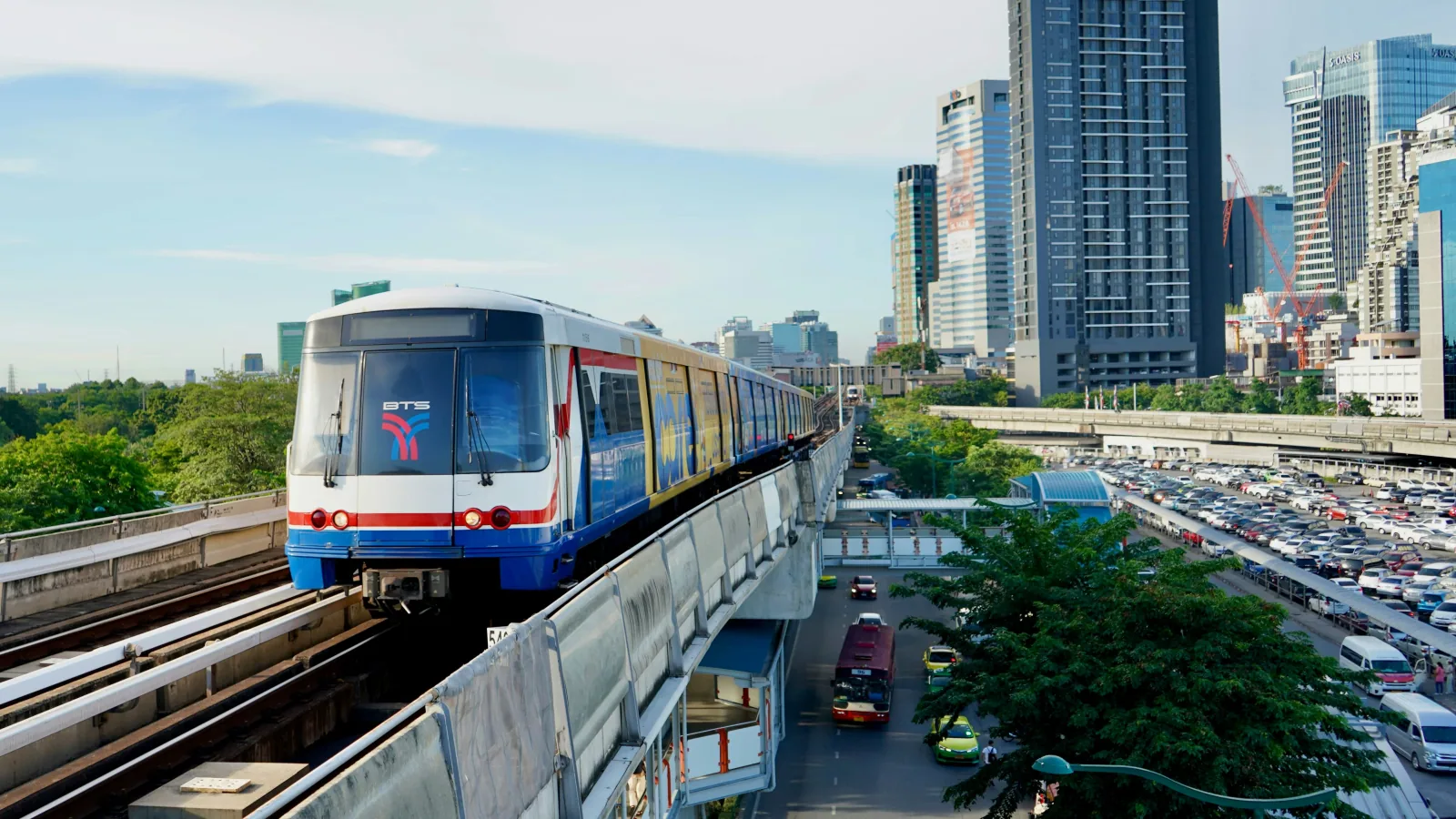
Bangkok Province benefits from Thailand's best public transportation infrastructure, though "best" is relative—traffic remains horrendous and commutes are lengthy. The BTS Skytrain (Sukhumvit, Silom, and Gold lines) and MRT subway (Blue, Purple, and the newer monorail Yellow and Pink lines) cover major corridors with frequent service (roughly 6am-midnight, every 5-10 minutes during rush hours). The SRT Red commuter rail and Airport Rail Link feed into the same network. Stored-value Rabbit Cards work on BTS, while MRT accepts contactless payment cards. BTS one-day passes (150 THB) make sense if you're making multiple trips, though most residents use stored-value cards.
The reality is that Bangkok's 50 districts spread far beyond mass transit coverage. If you live or work outside BTS/MRT reach, you're dependent on buses (8-23 THB, extensive routes but slow), motorcycle taxis (20-80 THB for short trips, fastest but dangerous), Grab/Bolt rides (50-300 THB typical journeys), or personal vehicles. Many expats buy or rent motorcycles (monthly rental 2,500-4,000 THB) for flexibility, though Bangkok traffic is genuinely intimidating for beginners. Car ownership makes sense if you have family or regularly travel outside the province, but traffic and parking challenges make it impractical for singles living in central districts.
Two international airports serve the province: Suvarnabhumi (BKK) handles full-service carriers and is connected to the city via Airport Rail Link (45 THB, 30 minutes to Phaya Thai or Makkasan stations). Don Mueang (DMK) serves budget airlines and requires buses, taxis, the SRT Dark Red Line, or Grab to reach (200-400 THB, 30-60 minutes depending on traffic). Long-distance rail has also shifted: since January 2023, most upcountry trains depart Bangkok from Krung Thep Aphiwat Central Terminal (Bang Sue Grand Station) rather than the historic Hua Lamphong, which now handles a limited set of commuter and short-haul services. The province's position as Thailand's aviation hub means you can reach virtually anywhere in Asia within 3-4 hours, with frequent daily flights to major cities throughout the region. This connectivity is one of Bangkok's genuine advantages over other provinces.
Bangkok Province experiences tropical monsoon climate with three seasons that all qualify as "hot" by temperate standards. Cool season (November-February) brings the most pleasant conditions—temperatures 25-32°C with lower humidity and clear skies. This is peak tourist season when festivals, outdoor events, and comfortable evening activities make Bangkok feel almost livable. But understand that "cool" is relative—you're still sweating, just less intensely.
Hot season (March-May) is brutally uncomfortable. Temperatures reach 35-40°C with humidity making it feel hotter. The heat index regularly exceeds 40°C, creating genuinely dangerous conditions for outdoor activity during midday hours. This is when you understand why malls are packed—they provide air-conditioned refuge. Traffic feels worse when sitting in motionless cars under intense sun. Mood deteriorates as the heat drains energy. Air conditioning shifts from luxury to survival necessity. Many long-term residents take this period to travel outside Thailand.
Rainy season (June-October) brings afternoon thunderstorms that cool temperatures slightly (28-34°C) but create new challenges. Flash flooding occurs in low-lying areas, especially in outer districts with poor drainage. Streets become rivers within 30 minutes during heavy downpours. The BTS/MRT remain operational, but street-level travel becomes complicated. Air quality improves dramatically as rain clears pollution. The rain isn't constant—typically sunny mornings with 2-4pm storms—but planning requires flexibility. Bangkok's flood management has improved significantly since the devastating 2011 floods, but vulnerability remains, particularly in districts along the Chao Phraya and old canals.
GDP Share
Of Thailand's GDP from a single province
Transportation
→ BTS Skytrain: 3 lines (Sukhumvit, Silom, Gold)
→ MRT: 4 lines (Blue, Purple, Yellow, Pink)
→ SRT Red Line + Airport Rail Link
→ Krung Thep Aphiwat / Bang Sue Grand rail hub
→ 2 international airports (BKK, DMK)
→ Express boats on the Chao Phraya
Governance: Bangkok Metropolitan Administration (BMA) - different from other provinces
Districts: 50 khet (not amphoe like other provinces)
Governor: Elected by Bangkok residents, not appointed
Council: 50-member elected council for local legislation
Nonthaburi (North): 25-35% cheaper, 30-min commute
Pathum Thani (North): Suburban, family-oriented
Samut Prakan (East): Airport access, industrial
Samut Sakhon (Southwest): Seafood, fishing industry
Nakhon Pathom (West): Historical, university town
Advantages: Maximum infrastructure, career opportunities, international amenities, healthcare, convenience, entertainment
Trade-offs: Highest costs in Thailand, traffic, pollution, heat, urban density, anonymity, limited nature access