Provinces
🌹Chiang Mai Province
The Rose of the North - Cultural Heart of Northern Thailand
The Rose of the North - Cultural Heart of Northern Thailand
It's 7am on a December morning in Chiang Mai, and I'm watching a scene that shouldn't exist in tropical Thailand. Locals are bundled in winter jackets, scarves wrapped against the crisp mountain air. Coffee shop patrons nurse hot drinks, breath visible in the 14°C chill. Mountains ring the city, their peaks obscured by morning mist. This is Chiang Mai Province during cool season—a Thailand that feels nothing like the sweltering beaches and humid capital most visitors imagine.
Chiang Mai Province has emerged as Southeast Asia's digital nomad capital while somehow maintaining its identity as the cultural heart of northern Thailand. The provincial capital—also called Chiang Mai—hosts over 40,000 expats and remote workers who've discovered what makes this mountain valley so compelling: exceptional quality of life at a fraction of Western costs, ancient temples around every corner, genuine cultural depth, spectacular nature within easy reach, and a thriving international community that makes integration effortless.
Beyond the city, the province sprawls across roughly 22,000 square kilometres of northern mountains and valleys—the largest province in Thailand by area. Thailand's highest peak—Doi Inthanon at 2,565 meters—rises here, its summit cool enough for frost. Hill tribe villages dot the mountains, maintaining traditions that predate Thailand itself. Rice terraces cascade down hillsides. Elephant sanctuaries pioneering ethical tourism dot the countryside. Waterfalls hidden in jungles see more locals than tourists. Over 300 Buddhist temples preserve Lanna architectural traditions distinct from central Thailand's style.
"Chiang Mai has emerged as Southeast Asia's digital nomad capital while somehow maintaining its identity as the cultural heart of northern Thailand—a rare balance that defines life here."
Chiang Mai pioneered the digital nomad lifestyle before the term became mainstream. What started in the late 2000s with a few remote workers discovering cheap living and good internet has evolved into a global phenomenon. Today, the city hosts one of the world's largest concentrations of location-independent workers—freelancers, entrepreneurs, remote employees, and digital agencies serving clients worldwide while living in Northern Thai comfort.
The infrastructure reflects this evolution. Fiber optic internet reaches most of the city, delivering 100-300 Mbps for 500-800 baht monthly. Coworking spaces cluster in Nimman and Old City—Punspace, CAMP, Yellow, Alt_Chiang Mai, Manakaa—each offering high-speed internet, meeting rooms, air conditioning, and communities of fellow remote workers. Day passes run 150-250 baht, monthly memberships 2,500-3,500 baht.
But what truly distinguishes Chiang Mai is the cafe culture. Hundreds of laptop-friendly establishments dot the city, each with reliable WiFi, abundant power outlets, and baristas accustomed to customers occupying tables for hours. Ristr8to serves championship-level espresso. Graph offers minimalist Nordic design. Akha Ama sources ethically from hill tribe coffee farmers. Rustic & Blue channels vintage European charm. You can rotate through different cafes daily for months without repetition, working amid aesthetics that would cost triple in Western cities, spending perhaps 100-200 baht for a day's worth of coffee and ambiance.
The expat community facilitates connection effortlessly. Facebook groups like "Chiang Mai Digital Nomads" (35,000+ members) and "Chiang Mai Expats Club" (25,000+) post daily events—networking meetups, hiking trips, language exchanges, Muay Thai training, volleyball games, business masterminds. You can arrive knowing nobody and have a full social calendar within a week. The community skews young and entrepreneurial but includes families, retirees, teachers, and everyone in between. For insights into managing visas while working remotely, see our digital nomad visa guide.
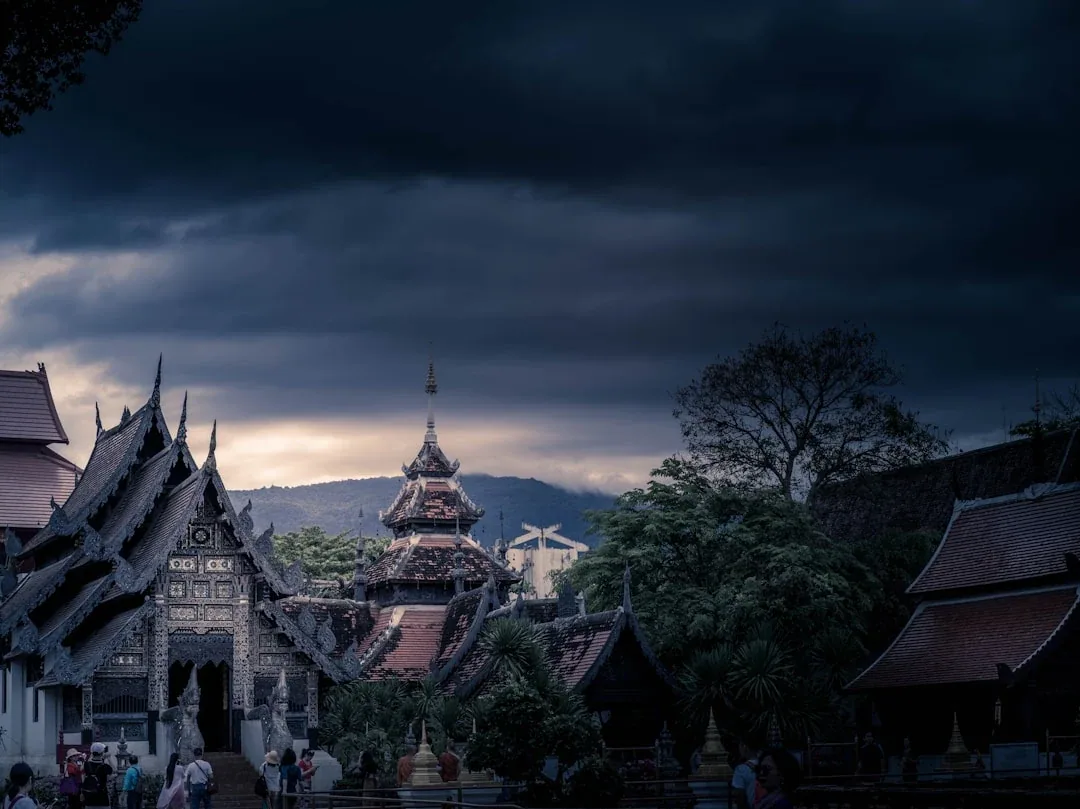
What prevents Chiang Mai from becoming just another international remote work hub is its deep cultural identity as the capital of the Lanna Kingdom, founded by King Mangrai in 1296 and absorbed into Siam only in the late 19th century. Walk through the Old City—still surrounded by fragments of ancient walls and a moat—and you're navigating space that's been continuously inhabited for over 700 years. Lanna architectural traditions persist in temple designs featuring multi-tiered roofs, intricate wood carvings, and gilded decorations distinct from Bangkok's Rattanakosin style.
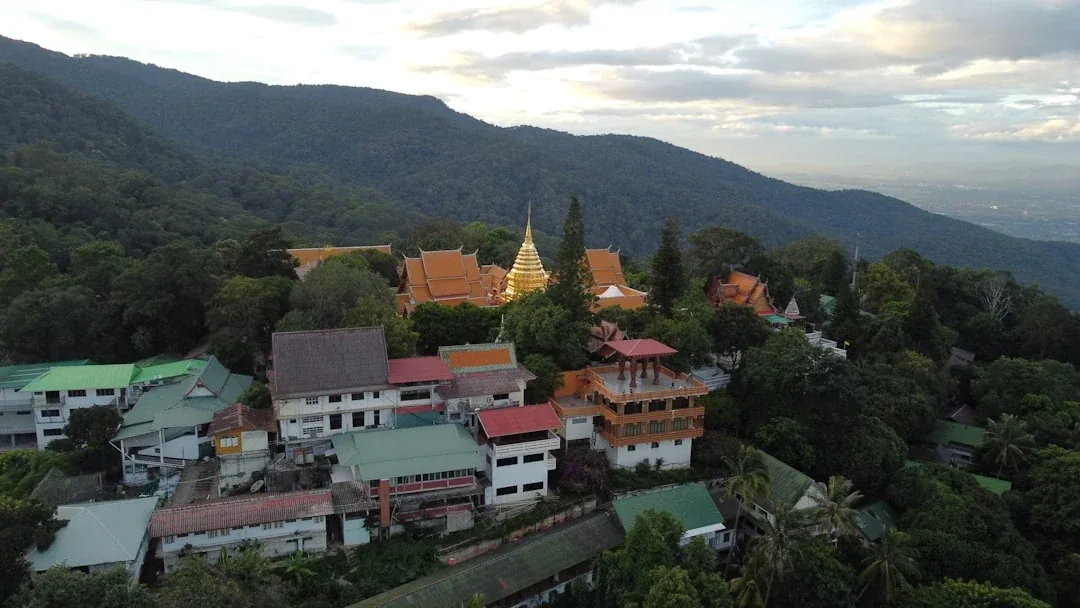
Wat Phra That Doi Suthep, perched at roughly 1,050 metres above sea level on the mountain that shares its name, exemplifies this heritage. The temple's golden chedi houses a Buddha relic and serves as the province's spiritual heart. On clear days, the view from the temple encompasses the entire valley—city sprawl giving way to rice paddies, mountains rising in all directions. You reach it via 309 steps flanked by naga serpents, or take the cable car if your knees object. Early morning visits reward with monks chanting in the cool mountain air and sunrise painting the valley gold.
Within the Old City, over 30 temples preserve different eras of Lanna architecture. Wat Chedi Luang's massive 15th-century chedi—partially destroyed by earthquake—still dominates its grounds, giving a sense of scale that photos can't capture. Wat Phra Singh houses the revered Phra Singh Buddha image. Wat Chiang Man, built in 1296, claims status as the city's oldest temple. On Sundays, Ratchadamnoen Road transforms into Walking Street, stretching a kilometer through the Old City with vendors selling handicrafts, artwork, and street food while temple courtyards host traditional music performances.
The Lanna cultural identity extends beyond architecture into daily language and customs. Many older residents speak Kham Mueang (northern Thai dialect) as their first language. Traditional crafts flourish—silverwork on Wualai Road, umbrella painting in Bo Sang village, wood carving, celadon pottery, silk weaving. The province's festivals blend Buddhist observance with local tradition, most spectacularly during Yi Peng when thousands of paper lanterns rise into November skies, creating one of Thailand's most photographed moments. For deeper insights into Thai Buddhist practices that shape daily life, explore our Buddhism in daily Thai life guide.
If Chiang Mai has a signature dish, it's khao soi—coconut curry soup with egg noodles, crispy fried noodles on top, chicken or beef, served with pickled mustard greens, shallots, and lime. The dish arrived via Burmese-Muslim traders and became quintessentially northern Thai. Every restaurant serves it, every vendor claims their version is authentic, and debates about the "best" khao soi rival sports arguments in passion.
Essential spots: Khao Soi Khun Yai for traditional preparation, Khao Soi Mae Sai for generous portions, Khao Soi Lamduan Faham for the version locals actually eat. Prices range from 40-80 baht. Beyond khao soi, try sai ua (herb-packed grilled sausage), nam prik ong (tomato-pork chili dip), gaeng hanglay (Burmese-style pork curry), and kaep moo (crispy pork rinds). The northern food tradition is distinct, flavorful, and significantly less fiery than Isan cuisine.
One weekend you're working in cafes, attending meetups, exploring temples. The next weekend you're summiting Thailand's highest peak, climbing a unique limestone waterfall, or feeding elephants at ethical sanctuaries. This proximity to nature—genuine wilderness accessible within an hour or two—distinguishes Chiang Mai from most cities that claim outdoor access but deliver crowded parks.
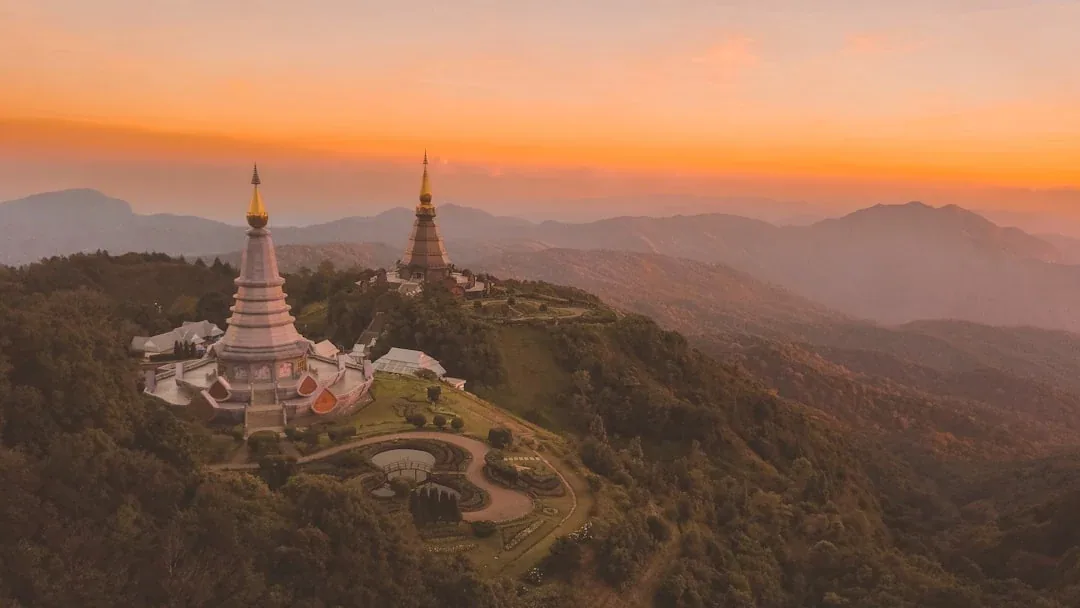
Doi Inthanon National Park, roughly 90 minutes southwest, encompasses Thailand's highest mountain and some of its most spectacular scenery. The summit sits at 2,565 meters, cool enough that locals wear winter gear year-round. Twin pagodas built to honor the late king and queen offer panoramic views when weather cooperates. Trails wind through moss-covered forests to waterfalls—Mae Ya cascades 280 meters, Wachirathan thunders with power during rainy season. Hill tribe villages dot the park, and the Royal Agricultural Station showcases temperate crops that shouldn't grow in Thailand but thrive at altitude: strawberries, roses, asparagus.
The Sticky Waterfall (Bua Thong), about 1.5 hours north, defies expectations. Limestone deposits create a grippy surface that allows you to climb directly up the cascading water barefoot—no ropes, no equipment, just walking up what should be a slippery waterfall. Crystal pools punctuate the tiers. Forest surrounds the site. Unlike major parks, this remains relatively uncrowded and free to enter, the kind of gem that feels like a local secret even as word spreads.
Mae Sa Valley, northwest of the city, offers a different appeal—a scenic loop through countryside featuring the ten-tiered Mae Sa Waterfall, orchid farms bursting with color, butterfly gardens, and craft villages where you can watch artisans work. It's a popular motorcycle day trip, the kind of casual exploration that reminds you you're living in Northern Thailand, not just working remotely in some abstract location.
Chiang Mai Province pioneered ethical elephant tourism, and visiting sanctuaries remains one of the most meaningful experiences available. But the industry is complex—genuine sanctuaries coexist with operations that claim ethics while maintaining exploitative practices. The distinction matters.
Elephant Nature Park led the sanctuary movement, rescuing elephants from logging, circus work, and street begging, allowing them to live in conditions approximating natural behavior. Visitors observe, feed, and sometimes bathe elephants, but riding is prohibited, chains aren't used, and breeding is controlled. Full-day visits include vegetarian lunch and cost around 2,500 baht. Book weeks ahead—they're popular for good reasons.
Other reputable Chiang Mai-area operations include Elephant Jungle Sanctuary and BEES (Burm and Emily's Elephant Sanctuary) in Mae Chaem; Boon Lott's Elephant Sanctuary is similar in ethos but actually based in Sukhothai province, not Chiang Mai. Signs of genuine sanctuaries: no riding, no shows or tricks, transparent rescue stories, elephants free to roam, veterinary care visible. Red flags: riding offered, elephants chained when not working, vague origins, breeding programs, shows where elephants paint or play instruments. The difference between ethical observation and exploitation is stark once you know what to look for.
Accommodation: Nimman area studios run 12,000-18,000 THB monthly. Old City similar. Santitham and areas outside the moat drop to 8,000-12,000 THB. Luxury condos near MAYA mall can hit 25,000-40,000 THB but offer Western standards.
Food: Street food 40-80 THB per meal. Local restaurants 60-120 THB. International mid-range 150-300 THB. Fine dining 500-1,500+ THB. Coffee ranges from 30 THB at local shops to 70-130 THB at trendy Nimman cafes.
Transportation: Motorcycle rental 2,000-3,500 THB monthly (plus fuel at 40 THB/liter). Grab rides across town 60-150 THB. Red songthaews 30-60 THB per trip. Many expats live car-free comfortably, relying on motorcycles, Grab, and walking.
Honesty requires addressing Chiang Mai's most serious problem: burning season. From roughly late February through April, farmers throughout northern Thailand and neighboring Myanmar burn agricultural fields to clear land for the next planting cycle. Smoke blankets the valley, creating hazardous air quality that regularly exceeds AQI 200 (very unhealthy) and sometimes hits 300+ (hazardous).
During peak burning season, the sky turns gray-brown. Mountains disappear behind haze. Breathing feels labored. Throat irritation becomes constant. Masks sell out. Air purifiers run continuously in homes and cafes. Many expats simply leave—flying to the islands, visiting neighboring countries, or returning home for these months. Those who remain invest in quality air purifiers (3,000-15,000 THB) and limit outdoor activities.
The burning season coincides with the hot season, creating a double burden—oppressive heat (35-40°C daily) plus air you can see. March and April are genuinely difficult months to be in Chiang Mai. Government initiatives to reduce burning have shown mixed results. Satellite hotspot monitoring, payment programs for farmers who don't burn, public awareness campaigns—all help, but the practice persists, rooted in agricultural economics and cross-border dynamics beyond any single government's control.
This seasonal reality shapes how people approach Chiang Mai. Many arrive in November for the start of cool season, stay through February, then depart before burning season begins. Others embrace the full year, treating March-April as travel months or simply accepting it as the price for the spectacular November-February period. First-time long-term visitors should experience a full cycle before committing to annual leases—the burning season impact varies person to person, and what's tolerable for one person is unbearable for another.
"The cool season (November-February) in Chiang Mai is genuinely perfect—comfortable temperatures, clear skies, vibrant culture. The burning season (March-April) is genuinely difficult. Both realities define life here."
Healthcare quality in Chiang Mai rivals Bangkok at lower costs. Bangkok Hospital Chiang Mai and Chiang Mai Ram Hospital are international-standard private facilities with English-speaking doctors, modern equipment, and specializations covering most medical needs. General consultations run 500-1,000 baht. Specialists 1,000-2,000 baht. Dental cleanings 800-1,500 baht. Even complex procedures cost fractions of Western prices.
Many expats purchase Thai health insurance through providers like Luma, AXA, or BUPA—annual premiums typically range 30,000-80,000 baht depending on age, coverage level, and pre-existing conditions. Alternatively, international insurance or simple outpatient coverage works. Pharmacies are ubiquitous, and many medications requiring prescriptions in Western countries are available over-counter here, though quality varies and caution is warranted.
Chiang Mai International Airport, just 4km from the city center, connects to Bangkok (1 hour 20 minutes, multiple flights daily starting around 800 baht), Phuket, Koh Samui, Singapore, Kuala Lumpur, Hong Kong, Seoul, Shanghai, and Taipei. It's Thailand's fourth-busiest airport, meaning decent international access without Bangkok's overwhelming scale. Grab or taxi to/from the airport costs 120-200 baht.
Banking services are adequate though less comprehensive than Bangkok. Major Thai banks (Bangkok Bank, Kasikorn, SCB) have branches throughout the city. Opening accounts as a foreigner is straightforward with proper visa documentation. International transfers work, though you may navigate more bureaucracy than in Bangkok. For serious financial needs, many expats maintain Bangkok banking relationships and handle them during occasional visits.
Beyond khao soi and northern Thai specialties, Chiang Mai's international food scene rivals Bangkok in quality if not quite in diversity. The city hosts excellent Italian trattorias, French bistros, Japanese izakayas, Korean BBQ, Indian restaurants, Mexican taquerias, and burger joints that would thrive in Western cities. Breakfast culture is particularly strong—avocado toast, granola bowls, shakshuka, and full English breakfasts populate cafe menus citywide.
The vegetarian and vegan scene is exceptional. Goodsouls Kitchen, Taste from Heaven, Reform Kafé, and countless other establishments cater to plant-based diets with creativity beyond the tofu-substitution model. The organic and farm-to-table movement thrives here, with restaurants sourcing from nearby farms growing vegetables impossible to cultivate in Thailand's lowlands. You can eat differently every meal for months without exhausting options or defaulting to chains.
Night markets and street food remain accessible regardless of international tastes. Chang Klan Road Night Bazaar operates nightly. Saturday Walking Street takes over Wualai Road. Sunday Walking Street transforms Ratchadamnoen through the Old City into a kilometer-long festival of handicrafts and food vendors. Warorot Market offers authentic Thai market experience—fresh produce, prepared foods, household goods, all at local prices without tourist markup. Chang Phueak Gate serves legendary late-night grilled pork skewers (moo ping) that draw crowds until 2am.
Chiang Mai's central location in northern Thailand makes it an ideal base for regional exploration. Chiang Rai, three hours north, offers the famous White Temple (Wat Rong Khun), Blue Temple, Golden Triangle where Thailand, Myanmar, and Laos meet, tea plantations, and a more laid-back vibe than Chiang Mai. Pai, three to four hours northwest via 762 curves through mountains, attracts hippies, backpackers, and those seeking hot springs, waterfalls, canyons, and reggae bars in a mountain town setting.
Lampang, 90 minutes southeast, remains authentically Thai with less tourism development—beautiful wooden temples, horse carriages, an elephant conservation center, and glimpses of provincial Thai life unchanged by international influence. Mae Hong Son Province, six to eight hours northwest, is Thailand's most remote and mountainous province, thick with morning mist and ethnic diversity, offering off-beaten-path exploration for those with time and adventurous spirits.
Chiang Mai works brilliantly for digital nomads and remote workers who can structure their schedules around cool season and escape burning season. It works for retirees seeking comfortable, affordable living with excellent healthcare and international community. It works for families able to navigate the international school system and willing to adapt to Southeast Asian life. It works for cultural travelers who appreciate authentic traditions alongside modern amenities.
Chiang Mai works less well for people requiring year-round outdoor activities without air quality concerns, those needing Bangkok's career opportunities or international school diversity, anyone uncomfortable with motorcycle transportation, or those expecting Western-level English fluency outside tourist zones. The burning season is a dealbreaker for some—completely unacceptable—while others accept it as the tradeoff for spectacular cool season and overall quality of life.
The city has evolved dramatically. Ten years ago, it was a hidden gem that expats discovered through whispered recommendations. Today, it's featured in every "best places for digital nomads" article. The influx brings both benefits—better infrastructure, more services, stronger community—and drawbacks—higher prices than rural Thailand, occasional overcrowding in popular neighborhoods during peak season, a sense among long-timers that something authentic is being diluted.
But what Chiang Mai offers remains compelling: a place where you can work remotely in excellent conditions, eat world-class food for reasonable prices, explore ancient temples and mountain wilderness, build genuine community with thousands of like-minded internationals, and experience authentic Thai culture that hasn't been sanitized for tourism. Whether the burning season tradeoff is acceptable, whether the balance between international amenities and Thai authenticity hits the right note, whether the cool season magic compensates for hot season challenges—these are personal calculations. For the tens of thousands who call Chiang Mai home, the equation clearly works. For those considering joining them, visit during both cool season and burning season before committing. The difference between November and March is so dramatic it hardly feels like the same place. Both versions are real. Both define what living here actually means. To explore more of Thailand's diverse provinces, visit our regional guides.
Provincial Capital
Chiang Mai City
Population
1.8 million (province)
Area
~22,311 km²
Language
Thai, Kham Mueang (Northern Thai)
Emergency (Police)
191
Emergency (Tourist Police)
1155
Emergency (Ambulance)
1669
Sample Monthly Budget
Best For
Key Challenges
Cool Season (Nov-Feb)
15-25°C, perfect weather, peak season
Hot Season (Mar-May)
35-40°C + burning season air pollution
Rainy Season (Jun-Oct)
28-32°C, afternoon storms, lush & green
Doi Inthanon
Thailand's highest peak (2,565m)
Wat Phra That Doi Suthep
Sacred mountain temple
Old City Temples
30+ ancient Lanna temples
Elephant Sanctuaries
Ethical elephant experiences
40,000+ expats from around the world. Extremely social and welcoming. Major Facebook groups have 25,000-35,000 members with daily events, networking, and support.
Easy to build community and find like-minded people within days of arrival.