Provinces
🦕Kalasin Province
Land of Dinosaurs and Ancient Cultures
Land of Dinosaurs and Ancient Cultures
Stand in the Sirindhorn Museum before the towering skeleton of Phuwiangosaurus sirindhornae—the long-necked sauropod named in honour of Princess Maha Chakri Sirindhorn—and the absurdity of geography collapses. This rice-farming province, more than 500 kilometres from Bangkok, where buffalo plow fields and farmers speak in Isan dialect, sits atop one of Southeast Asia's most significant paleontological sites. Beneath Kalasin's red earth lie fossils from roughly 130 million years ago, when this was lowland forest patrolled by herbivorous giants and small predators alike. Locals found the first bones at Phu Kum Khao in 1980 while clearing forest, and the excavation has since yielded seven near-complete sauropod skeletons—the richest single haul of dinosaur remains anywhere in Southeast Asia.
Kalasin province, home to nearly one million people, remains proudly agricultural. Rice paddies dominate the landscape, interrupted by cassava fields and the occasional sugar cane plot. The provincial capital—also named Kalasin—is a modest town that exists primarily to serve farmers and government workers, not tourists. There are no backpacker hostels, no trendy cafes, no expat scene. What English you encounter comes from hotel receptionists and museum guides. This is Thailand as most of Thailand actually is: rural, hardworking, rooted in traditions that tourists rarely see.
But alongside this agricultural present sits remarkable prehistoric past and living cultural heritage. The Phu Thai ethnic minority—distinct from both Thai and Lao—maintains language, dress, and customs that predate modern national boundaries. Women still weave silk using patterns passed through generations. Villagers craft pottery using techniques their grandparents learned. And those dinosaur fossils? They've turned Kalasin into an unlikely but genuine destination for anyone fascinated by deep time, whether that's measured in millennia or millions of years.
"Beneath Kalasin's red earth lie fossils from 125 million years ago, revealing a prehistoric world hidden under everyday Thai life."
The Sirindhorn Museum—officially the Phu Kum Khao Dinosaur Museum—is genuinely world-class. This isn't local boosterism; the museum rivals similar institutions in wealthier countries, with modern displays, interactive exhibits, and comprehensive explanations of the Mesozoic era and Thailand's place in it. Complete dinosaur skeletons stand in dramatic poses. Touch screens explain excavation methods. Videos show how paleontologists piece together ancient ecosystems from scattered bones.
What makes it special is the local connection. These aren't fossils imported from Mongolia or Argentina—Phuwiangosaurus sirindhornae was unearthed right outside the museum at Phu Kum Khao, where seven near-complete skeletons emerged from a single Cretaceous bone bed. The galleries also display Siamotyrannus isanensis and Kinnareemimus khonkaenensis from neighbouring Khon Kaen's Phu Wiang site, weaving Thai place names with scientific Latin into a story that connects ancient creatures to modern Thai identity in unexpectedly moving ways.
Outside the museum, you can visit actual excavation sites where bones still emerge from rock layers. It's humbling in a particular way—standing on earth that's yielding creatures dead for a hundred million years, while farmers work rice fields just beyond the dig site. The conjunction of deep time and daily life, of vanished species and ongoing human labor, creates perspective that formal exhibits can't quite capture.
If the museum's articulated skeletons feel a step removed, Phu Faek Forest Park in Don Chan district closes the distance. In 1996 a villager found a curious oval depression in a slab of sandstone beside a stream; closer inspection revealed more than twenty dinosaur footprints preserved in a flat bedding plane from roughly 140 million years ago. Today, raised wooden walkways arc over the trackway so you can examine the prints without stepping on them.
Interpretation panels show how paleontologists identified the trackmakers—a mid-sized carnosaur from three-toed prints with claw impressions, a smaller theropod from a tighter stride, possibly a juvenile from a smaller set tracking the larger animal. Reading a trackway is unsettling in a way the museum bones never quite manage: a skeleton is a death, but a footprint is a living animal walking past, leaving an absent-minded record of a single afternoon a hundred and forty million years ago.
The forest around the trackway is pleasant rather than dramatic—dry dipterocarp woodland, a small stream, a modest viewpoint over the Phu Phan range's southern edge. Come early in the cool season morning, before the heat builds, and you can have the boardwalk almost to yourself. Combine it with the Sirindhorn Museum to see two halves of the same Cretaceous story, one stitched together from bones, the other caught in the act of walking away.
Sirindhorn Museum: About 28 kilometres north of Kalasin town in Sahatsakhan district. Open Tuesday–Sunday 9am–5pm (closed Mondays). Foreigner admission 100 baht. Allow 2–3 hours. English signage throughout, and the on-site Phu Kum Khao excavation pit is part of the visit.
Phu Faek Forest Park: In Don Chan district. Best visited November–February when trails are dry. Small entrance fee. Bring water—facilities beyond the entrance are minimal. The dinosaur-trackway boardwalk is short and flat; the optional viewpoint trail adds a moderate climb.
Getting there: Both require your own transport. Rent a scooter in Kalasin town (200–250 baht/day) or hire a songthaew for the day (negotiable). The two sites are on opposite sides of the province, so a single day trip from town is tight—pick one, or spend a night in Sahatsakhan.
While dinosaurs get the headlines, Kalasin's Phu Thai community represents living cultural heritage that's equally remarkable. The Phu Thai are ethnic minorities distinct from both central Thais and ethnic Lao (who dominate Isan). They maintain their own language, though most younger Phu Thai also speak Thai and Isan. Traditional dress features distinctive silver ornaments and woven patterns unique to Phu Thai identity. Cultural practices blend animist beliefs with Buddhism in ways that predate the formal Thai state.
The Kalasin Provincial Museum offers a useful primer: a quiet, well-laid-out gallery on the south side of town with sections on Phu Thai textiles and dress, the Dvaravati-era Mueang Fa Daet culture, dinosaur fossils, and provincial history. But the real experience comes from visiting villages where these traditions continue as daily practice, not performance. Ban Khok Kong in Kuchinarai district is accessible and authentic—a Phu Thai community where families still weave silk on looms set up beneath raised houses, plait bamboo baskets, and perform the Khan Mak Beng welcoming ceremony for visitors on auspicious days.
The province's signature textile is Phrae Wa—a supplementary-weft silk brocade so identified with Kalasin that the slogan "Kalasin: city of Phrae Wa silk" appears on the provincial seal. Ban Phon in Kham Muang district is the heartland of the craft; weavers still produce metre after metre of the dense, geometric brocade on traditional looms, with a village cooperative selling lengths and finished garments directly. This isn't heritage industry created for tourists. These are communities maintaining traditions because those traditions remain culturally meaningful, economically viable, and central to local identity. You're witnessing living culture, not reenactment, which carries an authenticity increasingly rare in Thailand's tourist circuits. For deeper understanding of Thai and Isan family traditions, explore our cultural guides.
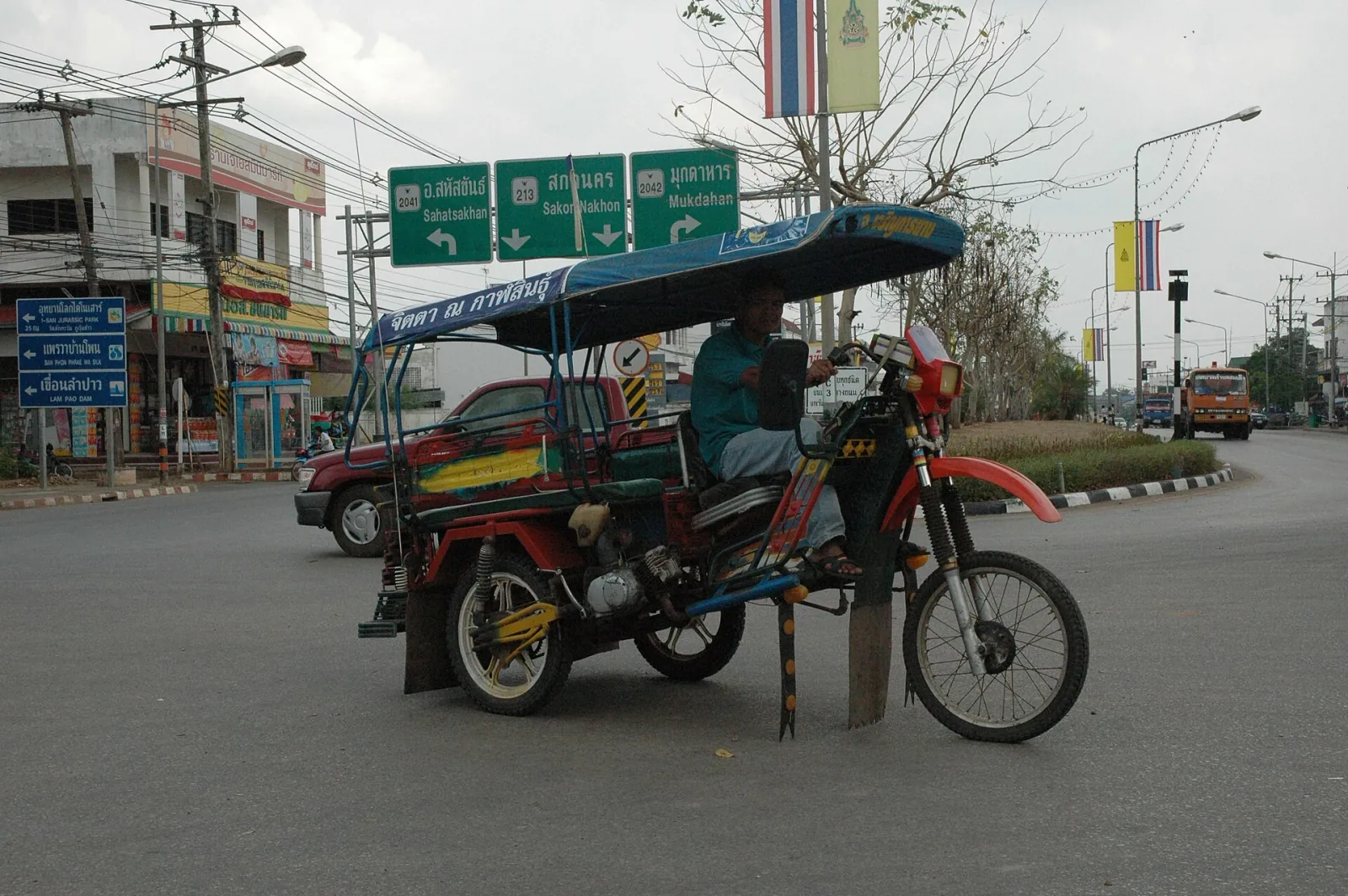
Let's be direct: Kalasin is not set up for typical tourism. There are zero coworking spaces, almost no cafes where you could work on a laptop, and English is scarce. The town exists to serve local needs—government offices, agricultural supply stores, markets for farmers—not visitors. If you need hand-holding, Western amenities, or daily English interaction, Kalasin will frustrate you within hours.
The food is pure Isan—spicy, fermented, intensely flavored. Som tam poo (papaya salad with fermented crab) is the local specialty, made with alarming quantities of chilies. Fresh fish from Lam Pao Reservoir features prominently. The night market offers excellent Isan street food for 30-60 baht per dish, but don't expect English menus or ingredients lists. Point, smile, and hope your heat tolerance is adequate. Western food doesn't exist. The closest you'll find is Thai-Chinese restaurants serving standard dishes.
Accommodation is basic—simple hotels serving Thai business travelers, not boutique guesthouses or international chains. Long-term apartments exist but require Thai language ability to arrange. The expat community is essentially nonexistent—perhaps a handful of Western men married to local women scattered across the province. Healthcare is basic; serious medical issues require transfer to Khon Kaen, roughly 80 kilometres west on a fast highway. The cost of living is remarkably low—15,000-20,000 baht monthly covers rent, food, and transport comfortably—but that's because there's minimal commercial infrastructure to spend money on.
→ Visit November-February for coolest weather and best outdoor conditions
→ Rent a scooter or car—attractions are spread out and require private transport
→ The Sirindhorn Museum alone justifies the trip for science enthusiasts
→ Learn basic Thai phrases—English is extremely limited everywhere
→ Try local markets for authentic Isan food at incredibly low prices
→ Combine with nearby provinces (Khon Kaen, Roi Et) for better infrastructure
Kalasin works for specific types of travelers. Science enthusiasts and paleontology buffs will find the Sirindhorn Museum genuinely rewarding—it's not a gimmick but a serious institution that happens to be located in rural Thailand. History buffs interested in prehistoric rock art can explore Phu Faek's paintings and mushroom rocks in settings that remain uncrowded and uncommercial. Cultural travelers seeking authentic ethnic minority traditions will appreciate Phu Thai villages where silk weaving and pottery making continue as living practices, not tourist performances.
Budget travelers appreciate the absurdly low costs—you can live on 500 baht daily including accommodation and meals. Adventurous souls comfortable navigating without English support or familiar infrastructure find the authentic rural character refreshing after Thailand's more developed regions. Travelers exploring northeastern Thailand comprehensively can add Kalasin as a worthy detour, especially if they're already passing through nearby Khon Kaen.
It's completely unsuitable for first-time Thailand visitors who need support infrastructure. Digital nomads will find no workspace, slow internet outside of hotels, and zero community. Anyone expecting nightlife, shopping, or entertainment will be disappointed—the town is quiet after 8pm. Travelers who need Western food, craft beer, or international grocery stores should skip Kalasin entirely. This province rewards curiosity and flexibility but punishes expectations formed by Thailand's tourist centers.
Khon Kaen (~80 km west): Major Isan city with university, shopping malls, better transport connections, and more developed tourist infrastructure while maintaining authentic Isan character.
Udon Thani (140 km northwest): Gateway city with international airport, Ban Chiang UNESCO site, shopping, and nightlife. More comfortable base for exploring the region.
Roi Et (90 km south): Home to Thailand's tallest standing Buddha image, beautiful Bueng Phalan Chai lake, and peaceful temple complexes with slightly more tourist facilities than Kalasin.
Kalasin offers something increasingly valuable: authentic rural Thailand where tourism hasn't reshaped local life, where traditions continue because they matter to the people practicing them, where ancient history sits alongside agricultural present. The dinosaur museum is world-class. The rock art is genuine. The Phu Thai culture is living heritage, not performance. But you'll navigate these experiences largely on your own, in Thai, without the support infrastructure that makes travel easy. For travelers who find that prospect exciting rather than daunting, Kalasin rewards with perspectives on Thailand—and on deep time stretching back millions of years—that the tourist trail never touches. To understand more about traditional Thai festivals and celebrations you might encounter, explore our cultural guides.
Capital City
Kalasin (Mueang Kalasin)
Population
~985,000 (province)
Area
6,947 km²
Language
Isan (Lao dialect), Thai, Phu Thai
Religion
Buddhism (Theravada)
Major Festival
Phrae Wa Silk & Pong Lang Festival (February)
Best Time to Visit
November-February
Emergency Number
191 (Police), 1669 (EMS)
Main Hospital
Kalasin Hospital
Quick Take
Kalasin offers world-class dinosaur heritage and beautiful natural parks but almost zero tourist infrastructure. The Sirindhorn Museum alone justifies a visit for science enthusiasts. This is authentic rural Isan—expect minimal English, basic facilities, and genuine local culture.
Sirindhorn Museum
World-class dinosaur fossils
Phu Faek Forest Park
140-million-year dinosaur trackway
Lam Pao Reservoir
Scenic water views & fresh fish
Ban Phon / Ban Khok Kong
Phu Thai villages & Phrae Wa silk
November-February
Cool, pleasant. Best for hiking and outdoor activities.
March-May
Extremely hot (35-42°C). Very difficult for outdoor exploration.
June-October
Rainy season. Muddy trails, afternoon storms.
Kalasin sits atop one of Southeast Asia's richest Cretaceous fossil beds (around 130 million years old).
Highlights:
• 7 Phuwiangosaurus sirindhornae skeletons (Phu Kum Khao)
• Theropod trackway at Phu Faek (~140 Mya)
• Isan dinosaur galleries (Sirindhorn Museum)