Provinces
🐴Lampang
Northern Thailand's historic horse carriage city
Northern Thailand's historic horse carriage city
The clip-clop of horse hooves on pavement isn't a sound effect from a period drama—it's Tuesday afternoon in Lampang. A woman flags down a horse-drawn carriage the way you'd hail a taxi anywhere else, negotiates her destination, climbs aboard, and disappears around the corner past wooden shophouses that look lifted from 1920s photographs. The horse carriages here aren't tourist attractions. They're rot ma—functional public transport that locals use for groceries, temple visits, errands. Lampang is the last Thai city where horse carriages remain working infrastructure rather than nostalgia, creating a place that feels genuinely unstuck in time.
Lampang province, about 100 kilometres south-east of Chiang Mai along the Wang River valley, was once a crucial node in the teak trade that made Northern Thailand wealthy. The river carried logs down from mountain forests. Merchants built elaborate wooden homes. British and Burmese teak companies established operations and brought their craftsmen and their architecture with them. The city prospered through the early 20th century, then gradually faded as roads replaced rivers and Bangkok centralised power. What remains is an architectural legacy—those wooden shophouses, century-old temples, tree-lined streets—and cultural practices that disappeared elsewhere but somehow persisted here.
The province attracts a specific type of visitor: people seeking Thailand before mass tourism reshaped it, remote workers who find Chiang Mai overrun, retirees stretching fixed incomes, and curious travelers willing to trade convenience for authenticity. Lampang won't dazzle you with nightlife or international restaurants. What it offers is rare—a functional Thai city that retained character most places sold off decades ago. The cost of living is absurdly low. The temples are stunning. And yes, you really can take a horse carriage to dinner.
"Lampang is the last Thai city where horse carriages remain working infrastructure rather than nostalgia, creating a place that feels genuinely unstuck in time."
Let's address the obvious question: Are the horse carriages ethical? It's complicated. The drivers—mostly older men who inherited the profession from fathers and grandfathers—genuinely care for their horses. The animals work limited hours, get veterinary care, rest in shaded stables. The provincial government monitors welfare. It's not perfect, but it's also not the tourist exploitation you see in some cities where overworked animals pull carriages in scorching heat. These are working animals in a traditional occupation that's disappearing. Whether that's romantic preservation or anachronistic cruelty depends on your perspective.
Riding one feels surreal. You negotiate the fare—40 to 100 baht depending on distance—climb into the carriage, and suddenly you're experiencing Lampang at horse pace. Cars pass you. Motorcycles weave around. But you're clip-clopping along at 10 kilometers per hour, high enough to see over walls into temple courtyards, slow enough to notice architectural details, creating a rhythm that forces presence. It's not faster or more convenient than a songthaew. That's precisely the point.
The old town preserves the best of this atmosphere. Two-story wooden buildings line narrow streets. Ground floors house shops selling ceramics, textiles, or everyday goods. Upper floors remain residential, laundry hanging from balconies, evidence of actual life happening above the commerce. Few tourists wander these streets, which means you're experiencing genuine neighborhood character—elderly women gossiping outside shophouses, schoolkids buying snacks, the daily rhythm of a Thai city that hasn't been reimagined for visitors.
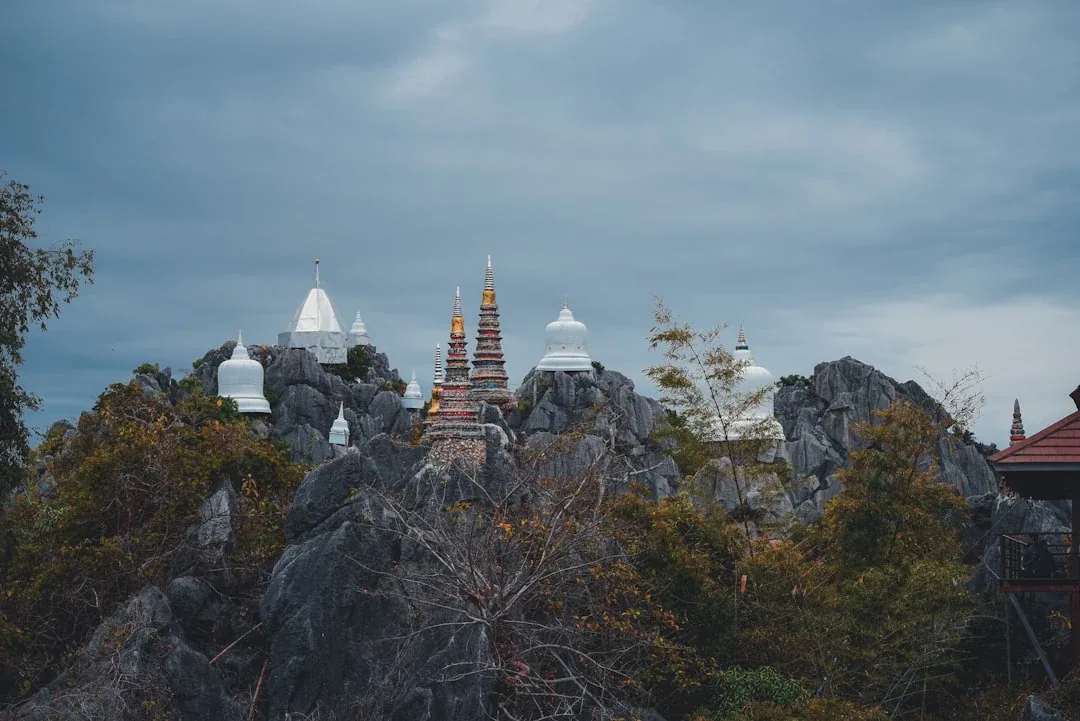
Wat Phra That Lampang Luang sits on a low hill in Ko Kha district, about 15-18 kilometres south-west of town, and it's one of those temples that justifies the entire province. Legend traces the site back to a visit by the Buddha himself, but the surviving complex is essentially a Lanna masterpiece of the 15th century—the great open viharn luang is dated to 1476—built around a much earlier chedi. The main chedi—gilded, graceful, perfectly proportioned—rises inside a walled compound that you enter on foot up a long naga staircase. Inside, the viharn features massive teak pillars and centuries-old murals.
What strikes you immediately is the scale. Lanna temples were built to awe, with proportions that dwarf human visitors, creating space that encourages contemplation. Unlike Bangkok's glittering temples designed for tourist photography, Wat Phra That Lampang Luang remains a working monastery. Monks sweep courtyards. Devotees make offerings. The temple exists for religious practice, not visitors, which paradoxically makes visiting more meaningful. You're witnessing faith in action, not performance.
In town, Wat Phra Kaew Don Tao is arguably Lampang's most historically important temple—it housed the actual Emerald Buddha (now in Bangkok) from 1434 to 1468, after which the image moved on to Chiang Mai and eventually to the Grand Palace. Wat Sri Chum, on the south side of town, is a 1893 Burmese-style wooden temple built by Burmese teak-company workers during the late-19th-century logging boom—ornate tiered roofs, gilded carvings and a celebrated wooden bot. Wat Pongsanuk, with its tiered open-sided viharn, won a UNESCO Asia-Pacific Heritage Award of Merit in 2008 for its community-led restoration. Wat Chedi Sao—Temple of Twenty Chedis—sits a few kilometres north along the road to Chae Hom and is best known for its 1,507 kg solid-gold Buddha image.
Lampang's other claim to fame is ceramics. Family-run kilns throughout the province produce utilitarian pottery—rice bowls, serving platters, decorative pieces—using techniques passed through generations. This isn't artisanal craft targeting tourists; it's industrial production that supplies much of Thailand's ceramic needs. You can visit factories, watch production, and buy directly at wholesale prices that make Bangkok retailers seem like highway robbery.
The Thai Elephant Conservation Center, about 30 kilometers from town, offers one of Thailand's more ethical elephant experiences. It's a government-run facility focused on veterinary care, mahout training, and genuine conservation rather than tourist entertainment. You can observe elephants receiving medical treatment, watch traditional mahout demonstrations explaining historical working relationships, and learn about Asian elephant challenges. It's educational rather than exploitative, which increasingly sets it apart from many elephant tourism operations.
The night market sets up each evening with food stalls serving Northern Thai specialties—khao soi (curry noodles), sai oua (Northern sausage), gaeng hang lay (Burmese pork curry)—at prices that feel like time travel. A full meal with multiple dishes, sticky rice, and a drink runs 80-120 baht total. The market isn't fancy or photogenic. It's just locals eating dinner in a casual outdoor setting, which after weeks in tourist-oriented Thailand feels remarkably refreshing.
Remote work reality: Fiber internet is available in the city (50-200 Mbps, 400-700 baht monthly). One dedicated coworking space exists, plus several cafes tolerate laptop work. The expat community is tiny—maybe 50-200 people—mostly retirees and teachers. You'll be largely on your own for networking.
Healthcare: Lampang Hospital handles routine care. Serious medical issues require transfer to Chiang Mai (100km, 1.5 hours). Most expats establish relationships with Chiang Mai hospitals for specialist care while using Lampang for routine matters.
Cost of living: Absurdly low. Comfortable living on 20,000-25,000 baht monthly including rent. Simple apartments run 4,000-8,000 baht. Street food meals cost 30-60 baht. It's 40-50% cheaper than Bangkok while offering reasonable amenities. For more on managing living costs in Thailand, see our detailed breakdown.
Lampang is not for everyone. If you need English spoken daily, Western restaurants weekly, or entertainment beyond temple visits and riverside dining, you'll struggle. The expat infrastructure is minimal. Teaching jobs exist but pay modestly (25,000-40,000 baht monthly). The town is quiet after 9pm. Shopping means local markets or a small Central department store, not international brands.
But for certain people, Lampang is ideal. Retirees stretching pensions find exceptional value—you can live well on $700-900 monthly. Remote workers comfortable with solitude appreciate the low costs and lack of digital nomad scene. Cultural travelers seeking authentic Northern Thailand without Chiang Mai's crowds find exactly what they're looking for. The burning season (March-April) brings terrible air quality, but October through February offers pleasant weather and clear skies.
Chiang Mai sits about 100 kilometres north-west, accessible via frequent buses or personal vehicle (roughly 1.5–2 hours). Many Lampang expats use Chiang Mai for medical care, shopping and occasional social needs while appreciating returning to quieter Lampang. The proximity means you're not completely isolated but far enough to avoid Chiang Mai's tourist saturation and higher costs.
→ Visit November-February for best weather and clear skies
→ Ride horse carriages for genuine cultural experience, not just photos
→ Visit Wat Phra That Lampang Luang early morning before crowds
→ Learn basic Thai—English is extremely limited
→ Explore ceramic factories for wholesale pottery shopping
→ Use Chiang Mai (100km) for medical care and shopping as needed
→ Join "Lampang Expats" Facebook group for community connection
Lampang rewards patience and cultural curiosity. The horse carriages symbolize what makes this place work—they're slower, less efficient, anachronistic, and somehow perfect for what they do. If you're racing through Thailand hitting tourist highlights, skip Lampang. But if you want to experience a Thai city that retained its character by being overlooked, where daily life continues with traditions intact, where affordability meets authenticity, Lampang offers something increasingly rare. For insights into Northern Thai traditions and practices, explore our guide to Thai festivals and celebrations to better understand what you'll encounter.
Distance from Bangkok
~600 km
Population
~704,000 (2024)
To Chiang Mai
~100 km NW (1.5-2 hrs)
Best Time
November-February
Quick Take
Lampang offers authentic Northern Thailand with unique horse carriage culture, stunning Lanna temples, and exceptional affordability. Ideal for those seeking genuine cultural immersion without tourist crowds. English is limited, but rewards are substantial.
Horse Carriage Ride
40-100฿ for functional transport
Wat Phra That Lampang Luang
15th-c. Lanna masterpiece, Ko Kha
Ceramic Factories
Wholesale pottery shopping
Old Town Walking
Wooden shophouses & authentic life