Provinces
🍇Lamphun
Northern Thailand's longan province and the ancient capital of the Mon Hariphunchai kingdom
Northern Thailand's longan province and the ancient capital of the Mon Hariphunchai kingdom
Lamphun doesn't announce itself dramatically. Driving south from Chiang Mai, you pass through 26 kilometers of increasingly rural landscape—rice fields giving way to longan orchards, urban sprawl thinning to agricultural villages, four-lane highway narrowing to provincial two-lane. Then you reach town, and there it is: Wat Phra That Hariphunchai, its golden chedi rising 46 meters, anchoring a temple complex that predates most of Thailand's current kingdoms. This juxtaposition—ancient spiritual center surrounded by fruit orchards—captures Lamphun's essential character.
Lamphun occupies a curious position in northern Thailand's hierarchy. It's a province with a distinct identity, founded as the capital of the Mon Hariphunchai kingdom by Queen Chamadevi around the late 7th or early 8th century — well over a thousand years before Chiang Mai existed. But it sits so close to Chiang Mai—just 30 minutes by car—that it functions almost as suburb. People commute to Chiang Mai for work, university, shopping, and medical care. Yet Lamphun keeps a quietly distinct character: longan orchards, provincial pace, the Northern Region Industrial Estate's electronics factories employing tens of thousands (including a large long-running Japanese expat workforce), and an old town that tourism has largely passed by. It's simultaneously accessible and overlooked, near and far, modern and traditional.
The longan fruit defines Lamphun economically and seasonally. From July through September, orchards burst with harvest. Markets overflow with fresh longan sold at wholesale prices—20-40 baht per kilogram for fruit that costs triple elsewhere. Families gather for pick-your-own orchard experiences. Processing facilities dry longan for year-round sales. The town celebrates with longan festivals featuring beauty contests, fruit displays, and agricultural competitions. For those months, Lamphun transforms from sleepy provincial capital to bustling agricultural hub, then settles back into quiet routine once harvest ends.
"Lamphun is what happens when ancient kingdoms meet agricultural pragmatism—more than a millennium of history surrounded by longan orchards, accessible but overlooked, near Chiang Mai but distinctly itself."
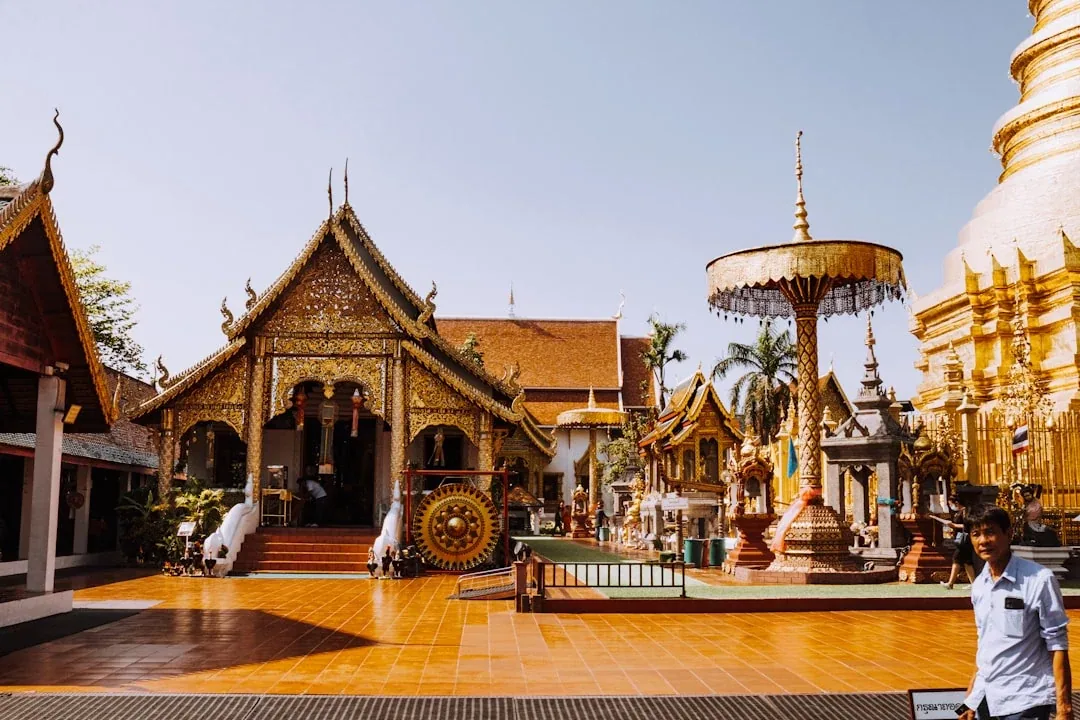
Wat Phra That Hariphunchai dominates Lamphun both physically and spiritually. Tradition places the temple's earliest origins in the 9th century, with the present compound founded under King Athitayarat in 1044 and the distinctive golden chedi taking its current form in 1418. It ranks among northern Thailand's most significant pilgrimage sites. The golden chedi contains Buddha relics, making it sacred destination for Buddhist devotees throughout the region. But what makes Hariphunchai remarkable isn't just religious importance—it's how the temple functions as living spiritual center rather than tourist attraction.
Morning at the temple reveals authentic Buddhist practice. Locals arrive before 6am bringing food offerings for morning alms. Monks emerge from quarters in saffron robes, collecting donations while devotees kneel in respect. Incense smoke drifts across courtyards. Elderly women sweep temple grounds, making merit through service. Schoolchildren stop to wai (bow) before Buddha images on their way to classes. This isn't performance for cameras—it's daily ritual maintained for centuries, accessible to anyone respectful enough to observe without disrupting.
The temple complex itself demonstrates Lanna architectural evolution. The main chedi, covered in gold leaf that catches sunlight magnificently, represents classic northern Thai design. Surrounding structures include Burmese-influenced shrines, Chinese-style pavilions, and modern buildings constructed to accommodate increasing pilgrims. Walking the grounds becomes an architectural history lesson spanning nearly a millennium. And unlike tourist temples charging entrance fees and managing crowds, Hariphunchai welcomes visitors freely while maintaining spiritual authenticity. Entry is free with donations welcomed—20 baht supports temple maintenance while respecting limited budgets.
Lamphun's proximity to Chiang Mai shapes everything about living here. The advantages are substantial: you gain provincial affordability and authenticity while maintaining easy access to Chiang Mai's medical facilities, international schools, shopping centers, airport, and expat infrastructure. Need specialist medical care? Thirty minutes to Chiang Mai's private hospitals. Craving international food? Half-hour to dozens of restaurants. Want to travel? Quick trip to the airport. This accessibility makes Lamphun viable for people who couldn't handle truly remote provinces.
But proximity cuts both ways. Lamphun struggles to develop its own identity when Chiang Mai looms so close. Why build shopping centers when Central Festival is 30 minutes away? Why attract restaurants when Chiang Mai offers hundreds? Why cultivate expat community when Chiang Mai has thousands? The result is that Lamphun remains perpetually overshadowed—convenient for those seeking quiet escape from Chiang Mai but invisible to anyone considering northern Thailand generally.
For remote workers and retirees, this dynamic can work brilliantly. You rent apartments for 5,000-12,000 baht monthly versus 12,000-25,000 in Chiang Mai. You eat local meals for 40-80 baht versus 80-180 in tourist Chiang Mai. You live in peaceful provincial environment without isolation's downsides. And when you need Chiang Mai's resources or social scene, you hop on a songthaew or drive half an hour. It's strategic proximity—close enough for convenience, far enough for authenticity and affordability.
Transportation: Regular songthaews (shared pickup trucks) run between Lamphun and Chiang Mai throughout the day, 30-40 baht per trip, taking 45 minutes to an hour. Faster option: rent motorcycle or drive personal vehicle, 25-30 minutes depending on traffic. Many Lamphun residents commute daily to Chiang Mai for work or education.
Strategic living: Some remote workers and retirees base in Lamphun for affordable provincial life while accessing Chiang Mai resources regularly. This works well for those not needing daily urban access but wanting it available. Healthcare especially benefits—routine care in Lamphun, specialists in Chiang Mai.
Trade-off: The commute adds time and cost to accessing Chiang Mai benefits. Factor this into calculations—saving on rent but spending on transport and time. Works best for those genuinely preferring provincial life rather than treating Lamphun as cheap Chiang Mai overflow.
Longan harvest season (July-September) transforms Lamphun completely. Orchards that stood quiet suddenly buzz with workers picking fruit. Trucks loaded with longan roll through town constantly. Markets overflow with fresh fruit. Processing facilities operate around the clock drying longan for domestic and export markets. Temporary workers arrive from neighboring provinces. The economy surges, money flows, and everyone participates in harvest-driven prosperity.
Many orchards welcome visitors during harvest. For 100-200 baht, you can pick your own longan, eating unlimited fruit while collecting baskets to purchase at wholesale rates. It's agricultural tourism at its most authentic—working farms allowing access rather than staged experiences. Kids love the orchard adventures. Families gather for weekend outings combining fruit picking with countryside picnics. And you'll leave with kilograms of fresh longan costing less than a Bangkok restaurant meal.
Outside harvest season, Lamphun slows dramatically. Orchards stand quiet between crops. Markets sell regular produce rather than overwhelming longan quantities. The town returns to sleepy provincial rhythm—early morning markets, afternoon siestas, evening temple visits. This seasonal pulse creates two distinct Lamphuns: bustling agricultural hub three months yearly, peaceful provincial backwater the remaining nine. For those interested in seasonal rhythms and agricultural cycles, it provides fascinating observation of how traditional economy still shapes modern Thai life.
Lamphun preserves Lanna cultural traditions more authentically than tourist-oriented Chiang Mai. The local language—Kam Mueang or northern Thai dialect—dominates daily conversation. Traditional Lanna architecture appears in wooden houses throughout rural areas. Textile villages maintain cotton weaving traditions using natural dyes and traditional looms. Temple festivals follow Lanna Buddhist calendar without tourism overlay. This is northern Thai culture as lived practice rather than heritage performance.
Wat Chama Thewi (Wat Kukut) exemplifies this authentic preservation. The temple's founding is tied to Queen Chamadevi in the 8th century, but the two stepped-pyramid chedis you see today were rebuilt by King Athitayarat in the 12th-13th centuries — among the oldest standing structures in northern Thailand and a direct architectural link to the Mon Hariphunchai civilization that preceded the Lanna kingdom. The architecture is genuinely distinctive, historically significant, and remarkably uncrowded. Entry costs just 20 baht, no tour groups stampede the grounds, and the few visitors are mostly Thai pilgrims rather than international tourists.
Pasang, a village about 20 kilometers from Lamphun town, maintains traditional cotton weaving as living industry rather than tourist attraction. Families operate wooden looms in home workshops, creating textiles using techniques passed through generations. You can observe weaving process, purchase quality fabrics at source prices (200-2,000 baht depending on size and complexity), and support craftspeople directly. No tour buses, no performance weaving, no pressure—just working artisans appreciating genuine interest in their craft.
The numbers make Lamphun compelling for budget-conscious residents. One-bedroom apartments in town run 4,500-9,000 baht monthly—modern units with air conditioning, WiFi, and basic furnishings. Street food costs 35-60 baht per meal. Local restaurants charge 50-100 baht for full plates. Markets sell fresh produce at agricultural prices. A comfortable monthly budget including housing, food, utilities, transportation, and modest entertainment fits in 16,000-24,000 baht. This undercuts Chiang Mai by 30-50% while maintaining adequate infrastructure and proximity to urban resources.
Internet connectivity is reliable in town with fiber available for 500-700 baht monthly. Speeds suffice for remote work including video calls and cloud applications. Several cafes offer work-friendly environments, though nothing like Chiang Mai's digital nomad ecosystem. For remote workers requiring absolute connectivity reliability or wanting coworking community, Lamphun sits close enough to access Chiang Mai resources while basing in affordable provincial environment.
Healthcare covers routine needs through Lamphun Hospital, adequate for common illnesses, basic emergencies, and preventive care. Doctor visits run 400-800 baht without insurance. But for specialist care, complex procedures, or quality private healthcare, you'll travel to Chiang Mai. The proximity makes this practical—30 minutes to Chiang Mai Ram Hospital or Bangkok Hospital Chiang Mai. This dynamic works well for generally healthy people comfortable with basic local care and willing to travel when needed.
→ Rent: 4,500-9,000 THB for 1-bedroom apartment in town
→ Utilities: 1,000-1,800 THB (electric, water, internet)
→ Food: 6,000-9,000 THB (local markets and restaurants)
→ Transportation: 1,500-2,500 THB (motorcycle/songthaews)
→ Misc: 2,000-3,000 THB (entertainment, personal care)
→ Total Budget: 16,000-24,000 THB for comfortable life
Significantly cheaper than Chiang Mai while maintaining access to urban amenities. The proximity creates excellent value for strategic provincial living.
Lamphun works brilliantly for people who love provincial Thailand but need urban resources accessible. If you're torn between Chiang Mai's infrastructure and provincial authenticity, Lamphun offers compromise. You get affordable quiet life with temples, markets, and agricultural surroundings while keeping Chiang Mai's hospitals, shopping, restaurants, and airport within easy reach. It's strategic location-arbitrage—provincial costs with urban access.
It works for remote workers on tight budgets who occasionally need Chiang Mai's coworking spaces, cafes, or social scene but can't afford living there full-time. The commute is manageable for occasional trips—work from home in Lamphun most days, head to Chiang Mai once or twice weekly for meetings, socializing, or change of environment. Monthly savings compound quickly when rent costs half and food costs 40% less.
It works for families seeking affordable northern Thai living near international schools. While Lamphun lacks international schools itself, several Chiang Mai schools are accessible via 30-40 minute commute. Some families base in Lamphun for space and affordability while driving kids to Chiang Mai schools daily. The trade-off—commute time versus cost savings and provincial environment—works for those prioritizing budget and calm over urban convenience.
But Lamphun struggles for anyone needing daily urban access, diverse international dining, active nightlife, or established expat community. The town offers minimal English-language support, virtually no international restaurants (a few decent Thai-Chinese places represent the height of culinary diversity), and entertainment limited to temple festivals and agricultural events. For people requiring Western amenities or expat social networks, Lamphun feels isolated despite Chiang Mai's proximity. The commute adds up when you need urban resources constantly rather than occasionally.
Lamphun's greatest advantage might be that almost nobody considers it. Tourists flock to Chiang Mai, Chiang Rai, Pai, and Mae Hong Son. Digital nomads cluster in Chiang Mai's Nimman district. Retirees settle in Chiang Mai's suburbs. And Lamphun sits 26 kilometers away, overlooked and underestimated. This invisibility preserves authenticity impossible in tourist zones. No backpacker cafes, no "Thai massage happy ending" signs, no touts offering elephant rides. Just provincial northern Thailand living its daily life largely unchanged by foreign presence.
The temple remains genuinely sacred rather than tourist attraction. Markets serve local needs rather than visitor consumption. Agricultural rhythms—longan harvest, rice planting, seasonal festivals—dictate community life more than tourism patterns. Street signs appear in Thai only. Restaurant menus lack English translations. Daily interactions require at least basic Thai language. This demands more from residents than tourist zones but rewards with authentic cultural immersion.
For those seeking Thailand's mainstream tourist experience, Lamphun disappoints. But for those wanting affordable northern Thai provincial life with strategic proximity to urban resources, Lamphun delivers remarkably well. It's not dramatic or exciting. It's not remote adventure or cosmopolitan convenience. It's provincial Thailand in agricultural mode—orchards, temples, markets, modest living—accessible yet authentic. Sometimes the overlooked choice proves the wisest. Lamphun suggests that possibility. For insights on building connections in provincial Thailand, see our guide to family-friendly communities throughout the country.
KEY STATS
Population
~12,000 (town)
Monthly Budget
16,000-24,000 THB
Rent (1BR)
4,500-9,000 THB
From Chiang Mai
26 km (30 minutes)
BEST FOR
HIGHLIGHTS
Remember
Lamphun is Chiang Mai's overlooked neighbor—provincial authenticity with urban access. Perfect for strategic living, challenging for those needing daily city conveniences. The longan harvest season transforms everything.
PROS
CONS
From Chiang Mai
Songthaew: 45-60 min, 30-40 THB
Car/Motorcycle: 25-30 minutes
Route 106 south from Chiang Mai
Harvest Season
Longan: July-September
Orchard visits: 100-200 THB
Fresh fruit at wholesale prices