Provinces
⛰️Mae Hong Son
Thailand's most remote mountain province with Burmese influences
Thailand's most remote mountain province with Burmese influences
The road to Mae Hong Son winds through 1,864 curves—locals actually count them—climbing through mountains that form Thailand's northwestern frontier. Arriving feels like reaching land's end, which in a sense you have. Myanmar's border sits just kilometers away, visible from hilltops where Burmese-style temples catch morning sun. The town sits in a valley at only about 260 metres, but the ridges around it climb past 1,500 metres and the surrounding hill stations are noticeably cooler than the lowlands. This is Thailand's most remote province, where cultural boundaries blur and mountains dictate everything.
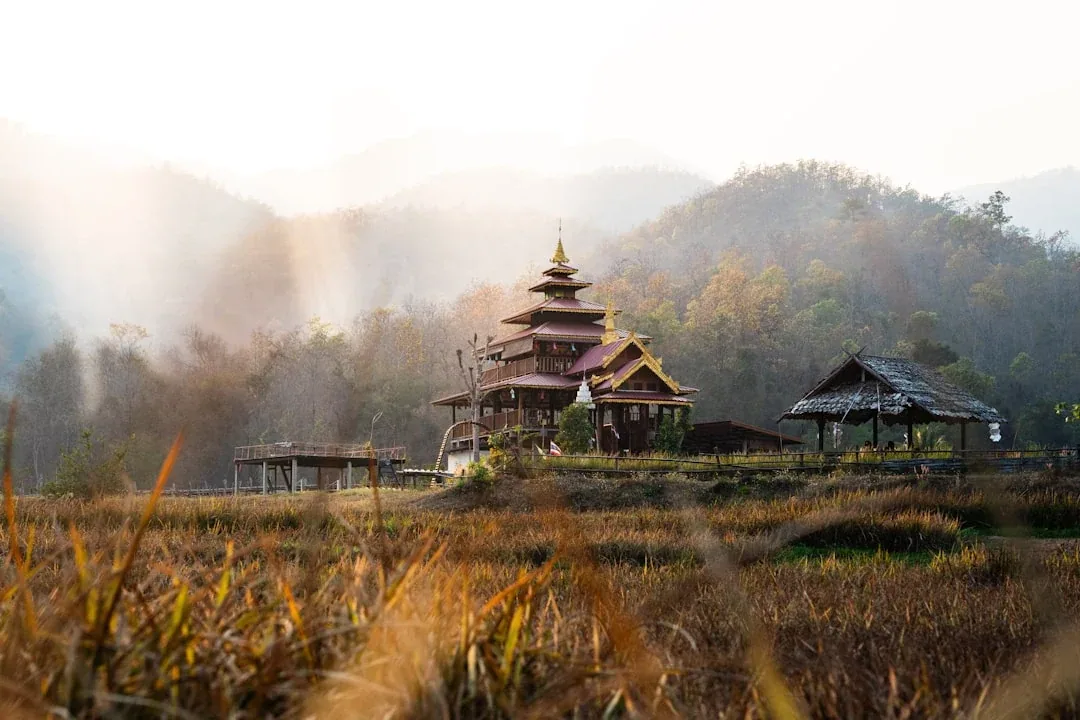
Mae Hong Son town—the provincial capital of about 7,000 people—clusters around Nong Jong Kham lake, its Burmese-style temples reflected in calm waters. The architecture immediately signals you're somewhere different. Multi-tiered roofs curve upward in Shan style. Gilded wooden carvings reflect Burmese Buddhist aesthetics. Even the way monks drape their robes follows Burmese tradition rather than central Thai practice. The proximity to Myanmar isn't just geographic—it's cultural, visible, and defining.
But Burmese influence is just one layer. Hill tribe villages dot surrounding mountains—Karen, Hmong, Lisu, Shan communities maintaining traditional lifestyles in ways increasingly rare elsewhere in Thailand. The province hosts Thailand's highest concentration of hill tribes, creating genuine cultural diversity where different peoples farm adjacent valleys, speak distinct languages, and preserve separate traditions. This makes Mae Hong Son fascinating for cultural immersion but complex for anyone expecting homogeneous Thai culture.
"Mae Hong Son sits at the edge—geographically, culturally, economically. It's Thailand, but barely. And that's exactly its appeal."
Mountains define Mae Hong Son more than any single cultural element. The province occupies some of Thailand's most dramatic terrain—sharp peaks rising to 2,000+ meters, deep valleys cultivating fog, rivers carving through limestone, and forests extending to horizons in every direction. The elevation creates Thailand's most temperate climate. Even hot season peaks around 32°C rather than the 40°C torment of lowland Thailand. December-February nights drop to 10-15°C, genuinely cold by Thai standards, requiring blankets and occasionally jackets.
This topography creates spectacular scenery but limits development. Roads are few and challenging. The main route from Chiang Mai takes 6-7 hours covering just 245 kilometers—those infamous curves slow everything. Scheduled commercial flights to Mae Hong Son were suspended in 2024 and have not resumed, so the winding mountain highways are the only way in. Within the province, those roads wind precariously, discouraging casual exploration. The landscape that makes Mae Hong Son beautiful also isolates it, keeping tourism limited and development slow.
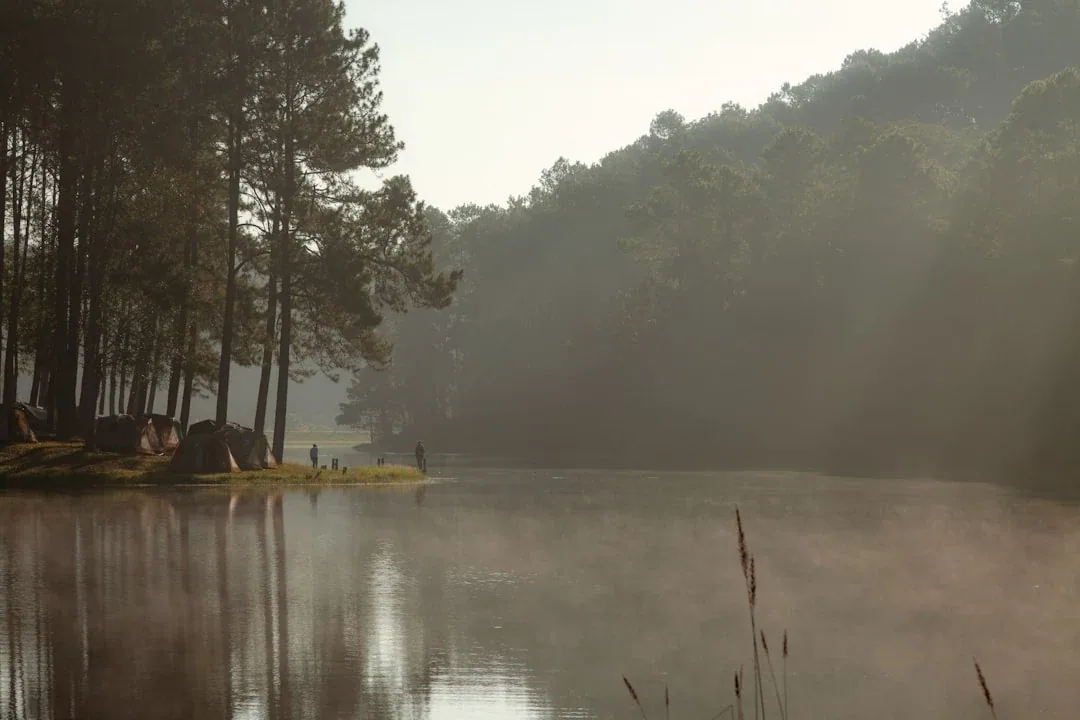
Pang Oung, about 44 kilometres from town and a winding 2.5-hour drive, exemplifies the region's alpine character. This small reservoir sits at roughly 1,200 metres elevation, surrounded by pine forest that wouldn't look out of place in Switzerland. Morning mist hovers over water. Wooden cabins line the shore. The temperature drops noticeably as you climb. It's startlingly un-Thailand—more reminiscent of mountain lakes in temperate climates than tropical Southeast Asia. For those seeking cool-weather relief or alpine aesthetics, Pang Oung delivers experiences impossible elsewhere in Thailand.
Mae Hong Son attracts specific types of foreigners—those seeking genuine remoteness, those fascinated by border cultures and hill tribes, outdoor enthusiasts drawn to trekking and natural landscapes, and people who find mainstream Thailand too developed and touristic. The town has small but steady foreign presence: long-term travelers extended their stay, remote workers seeking mountain serenity, retirees embracing provincial simplicity, and occasional researchers studying hill tribes or border dynamics.
Practical living skews toward basic comfort rather than luxury. Accommodation runs 7,000-18,000 baht monthly for decent apartments—more expensive than Isan provinces but less than Chiang Mai. The elevation and wood construction drive heating needs in cool season, adding to utility costs. Food costs remain reasonable—meals at local restaurants 50-120 baht, though ingredient variety is limited compared to larger cities. Fresh vegetables from mountain farms taste excellent, but imported goods or Western ingredients are scarce and expensive.
Internet connectivity exists but can be unreliable, especially during storms that frequently hit mountain areas. Most accommodations have WiFi, fiber is available in town, but speeds and stability don't match urban Thailand. For remote workers requiring absolutely dependable connectivity for critical video calls or large file transfers, Mae Hong Son presents challenges. It works for asynchronous work or flexible schedules but struggles for roles demanding real-time reliability.
Climate: Cool season (November-February) requires warm clothing and bedding. Many accommodations lack heating—bring layers and blankets. Morning temperatures of 10-15°C are common. This coolness is Mae Hong Son's great advantage but requires preparation.
Transportation: Motorcycle is essential for exploring beyond town. The roads are mountainous and can be challenging—confidence on two wheels required. Car rentals exist but limited and expensive. Local songthaews serve main routes irregularly.
Isolation: This isn't weekend-trip-to-Bangkok accessible. You're committing to provincial life with limited escape options. Nearest major city (Chiang Mai) is 4-5 hours away. This isolation is either liberating or claustrophobic depending on temperament.
Hill tribe tourism in Mae Hong Son raises ethical complexities that anyone visiting or living here must navigate. The "long neck Karen" villages—where women wear brass coils extending their necks—exist primarily for tourism. These communities fled Myanmar as refugees, now sustaining themselves through visitor fees. It's simultaneously exploitation, cultural preservation, and economic necessity. There's no clean moral position: boycotting denies communities income; visiting perpetuates human zoo dynamics.
More authentic hill tribe experiences exist through trekking tours that visit working villages less touched by tourism. Hmong settlements cultivating mountain slopes, Lisu communities maintaining animist traditions alongside Buddhism, Shan villages with cross-border family connections—these represent genuine cultural diversity rather than performative displays. But accessing them requires hiring guides, respecting protocols about photography and behavior, and accepting that you're still an outsider observing communities that may or may not want your presence.
For long-term residents, building respectful relationships with hill tribe communities takes time, language learning (multiple languages—Karen, Hmong, Lisu all differ), and cultural humility. Some foreigners have established genuine connections, participating in village festivals, supporting educational initiatives, or working on agricultural projects. Others remain perpetual tourists, extracting experiences without reciprocating. The province rewards those willing to engage deeply while exposing the shallowness of casual cultural tourism.
Mae Hong Son works brilliantly for outdoors enthusiasts who want trekking, mountain biking, and nature access without tourist infrastructure. The surrounding mountains offer endless hiking, waterfalls appear after moderate hikes, and caves like Tham Lot provide exploration opportunities. The cool climate makes outdoor activity comfortable year-round—a luxury compared to lowland Thailand's oppressive heat.
It works for people genuinely interested in border cultures, Buddhism beyond temple tourism, or hill tribe traditions approached respectfully. The cultural complexity creates learning opportunities impossible in more homogeneous regions. Researchers, anthropologists, and serious cultural students find Mae Hong Son invaluable despite its challenges.
It works for those seeking genuine isolation and small-town community. The foreign population is small enough that you'll know other expats quickly. The town maintains village-like intimacy where shopkeepers recognize you, neighbors greet you, and community forms organically. For people exhausted by Bangkok's anonymity or Chiang Mai's digital nomad scene, Mae Hong Son offers refreshing simplicity.
But Mae Hong Son struggles for anyone requiring sophisticated medical care (nearest quality hospital is Chiang Mai, 6-7 hours by road), international schools for children (none exist), diverse dining or entertainment (extremely limited), reliable high-speed internet (challenging), or easy travel access (no commercial flights, road journeys long and slow). It struggles for those uncomfortable with mountain driving, cold weather, or genuine cultural immersion demanding language learning and humility.
→ Rent: 7,000-18,000 THB for decent apartment in town
→ Utilities: 1,500-2,500 THB (higher in cool season with heating needs)
→ Food: 8,000-12,000 THB (limited variety increases costs)
→ Transportation: 2,000-3,500 THB (motorcycle essential)
→ Total Budget: 22,000-32,000 THB for comfortable provincial life
This is higher than Isan but significantly less than tourist-oriented locations. The remoteness adds costs through limited competition and transportation expenses.
Mae Hong Son's cool season (November-February) is genuinely magical—morning mist rolling through valleys, temperatures requiring sweaters, clear skies revealing mountain vistas. This is peak tourist season when visitors from Bangkok and international travelers flock to experience Thailand's coolest province. Accommodation prices rise, popular sites become crowded (by Mae Hong Son standards—still far less than major tourist destinations), and the town takes on temporary bustle.
Hot season (March-May) remains surprisingly tolerable thanks to elevation. While lowland Thailand swelters at 40°C, Mae Hong Son peaks around 32-35°C—warm but manageable. The mountains still provide cool refuge at higher elevations. This is actually excellent time for long-term residents as tourists depart, prices drop, and the province returns to sleepy authenticity.
Rainy season (June-October) brings daily afternoon storms that drench mountains and test infrastructure. Roads become slippery and occasionally impassable. The province turns impossibly green. Waterfalls rage with volume. But the rain also creates isolation—some trekking routes close, mountain roads become hazardous, and the dampness penetrates everything. This season separates casual visitors from committed residents.
Mae Hong Son isn't for everyone, and that's entirely the point. It sits at Thailand's edge geographically and experientially. You gain spectacular mountain landscapes, cool climate, cultural complexity, outdoor access, and genuine remoteness. You lose convenience, amenity variety, easy travel connections, sophisticated infrastructure, and the buffer that tourist development provides between foreigners and local life.
The province demands more from residents than tourist destinations. You'll learn at least basic Thai and possibly hill tribe languages. You'll navigate cultural complexity without guidebooks or established expat communities to buffer you. You'll accept limitations in healthcare, shopping, dining, and connectivity. You'll spend significant time and money traveling when you need to leave. And you'll confront the ethical ambiguities of living in a region where tourism both preserves and exploits indigenous cultures.
But for those whose priorities align—who value mountains over beaches, coolness over heat, cultural depth over tourist convenience, and isolation over connectivity—Mae Hong Son offers experiences increasingly rare in modern Thailand. The border feels real here. The mountains shape everything. The cultures remain distinct rather than homogenized. And Thailand's edge, it turns out, might be exactly where some people need to be. For more on navigating Northern Thai culture and traditions, explore our cultural guides.
KEY STATS
Population
~7,000 (town)
Monthly Budget
22,000-32,000 THB
Elevation
~260m town / 2,000m+ peaks
From Chiang Mai
245 km (6-7 hours)
BEST FOR
HIGHLIGHTS
Remember
Mae Hong Son is Thailand's edge—geographically and culturally. It demands genuine commitment, cultural sensitivity, and comfort with isolation. Not a place to try Thailand; a place to live Thailand deeply.
PROS
CONS
From Chiang Mai
Car: 6-7 hours via Route 1095 (Pai)
Minibus: ~6-8 hours from Chiang Mai Arcade
Flights: suspended since 2024
Climate
Cool: 10-25°C (Nov-Feb)
Mild: 20-32°C (Mar-May)
Rainy: 18-28°C (Jun-Oct)