Provinces
🌊Mukdahan Province
Gateway to Indochina on the Mekong
Gateway to Indochina on the Mekong
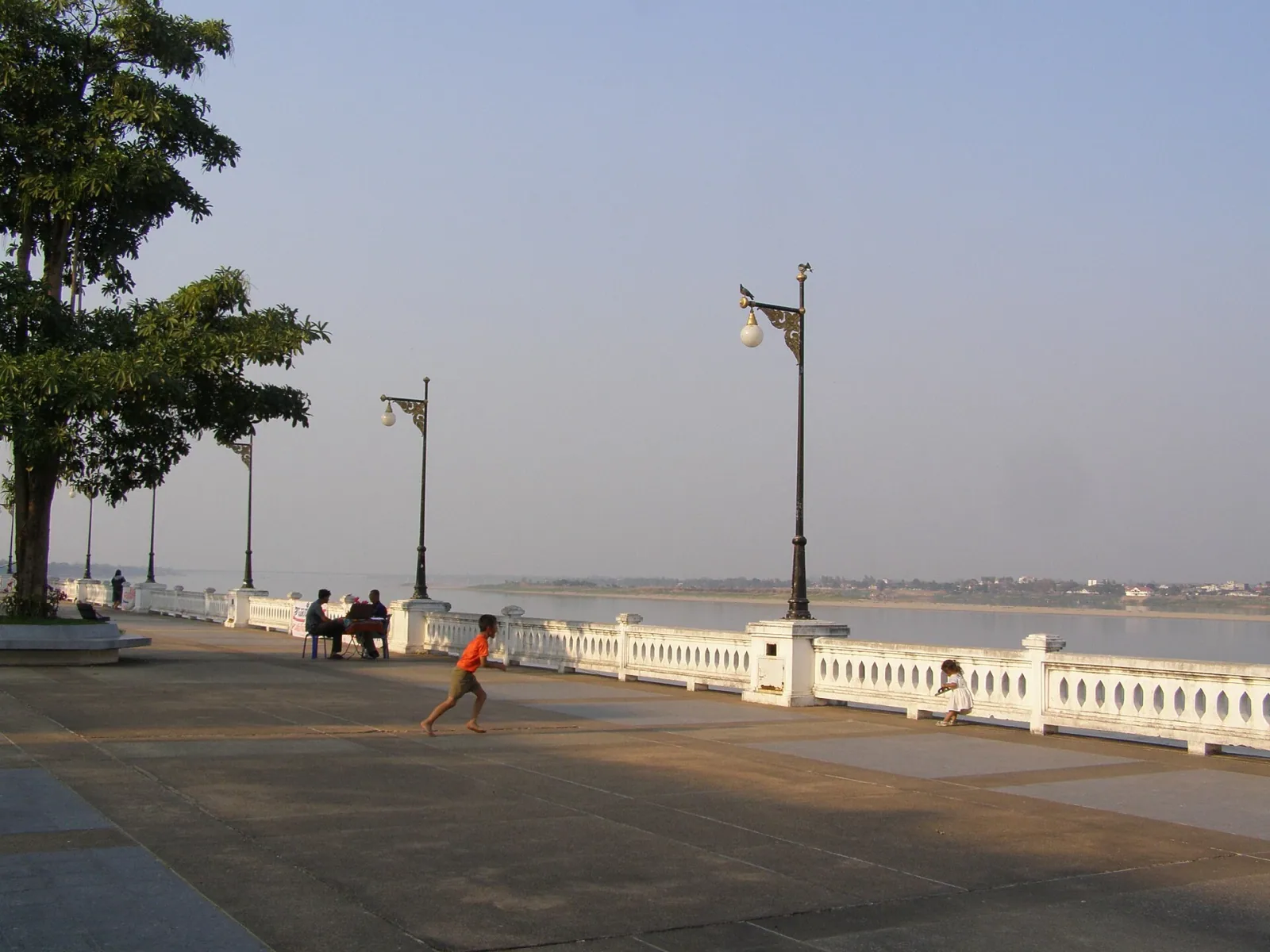
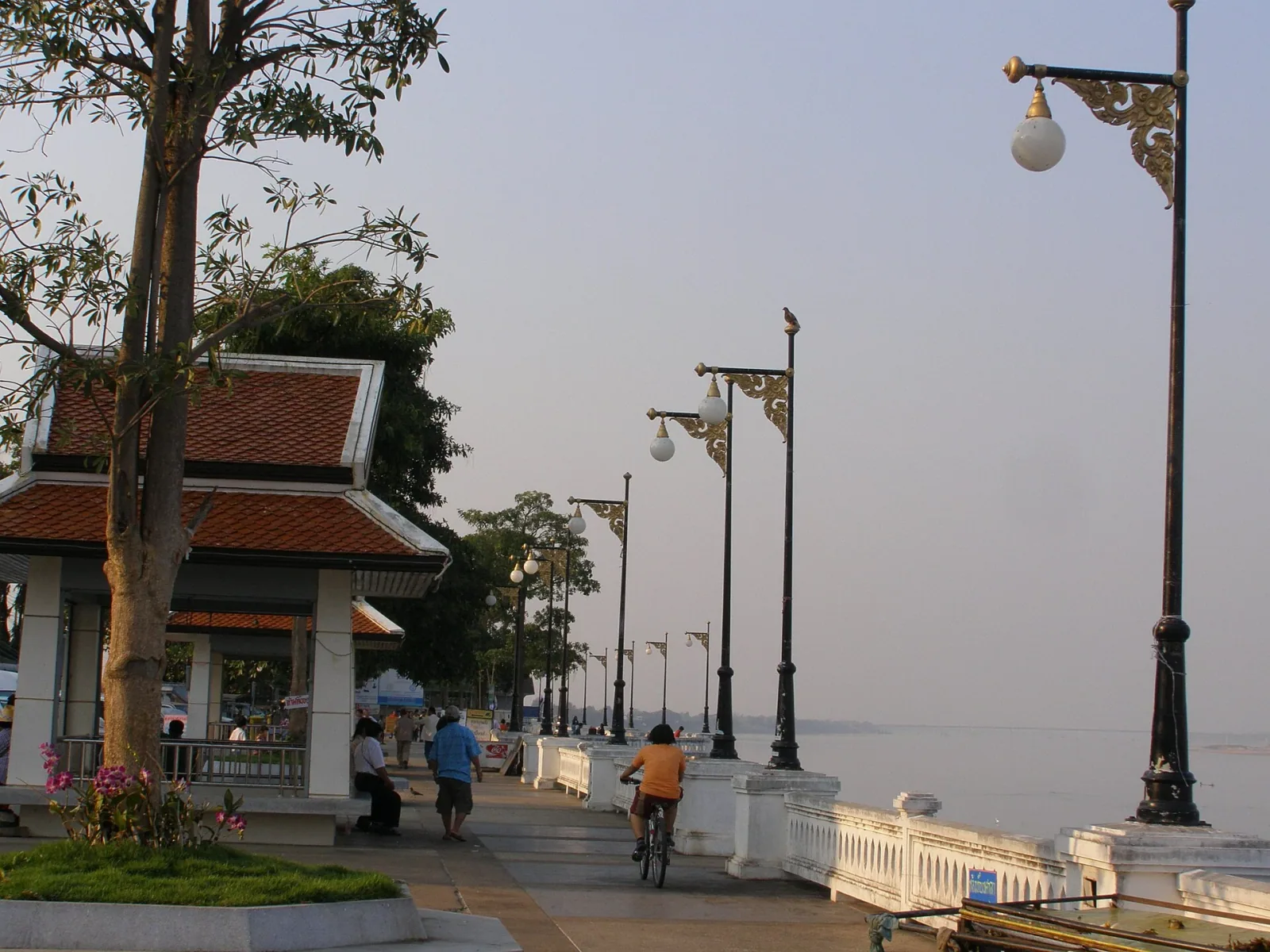
Stand on Mukdahan's riverside promenade at sunset, and you're looking directly into Laos. Savannakhet sits right there across the Mekong, close enough that you can make out individual buildings, vehicles crossing the Second Friendship Bridge, the daily rhythm of a foreign country unfolding just a few hundred meters away. This proximity—geographical and cultural—defines everything about Mukdahan. It's not just near the border; it is the border, a province where Thai, Lao, and Vietnamese cultures have blended for centuries into something distinctly Indochinese.
Mukdahan province, home to about 348,000 people, occupies a unique position in Thailand's northeast. Unlike the landlocked provinces surrounding it, Mukdahan has always been shaped by the river. The Mekong isn't a barrier here—it's a highway, a meeting point, a cultural exchange flowing in both directions. Vietnamese traders bring goods to the Indochina Market. Lao monks cross for ceremonies at riverside temples. Thai businesses export products west through the East-West Economic Corridor that runs directly through the province into Vietnam.
What struck me most on my first visit wasn't the tower or the temples—it was how genuinely multicultural the place feels. Eight ethnic groups maintain their identities here: Thai-Isan, Lao, Phu Thai, Yor, Bru (sometimes called Thai Khaa), Kaleung, So, and Saek communities, each with their own languages, textiles, and traditions. Walk through the market and you'll hear three languages in as many minutes. Shophouse facades along the older streets carry a hint of the Indochinese style seen across the river in Savannakhet, and food stalls serve Vietnamese pho beside Isan som tam. This isn't manufactured diversity for tourists—Mukdahan has been a crossroads for longer than Thailand has been Thailand.
"Stand on Mukdahan's riverside promenade at sunset, and you're looking directly into Laos. This proximity—geographical and cultural—defines everything about the province."
The provincial capital, also called Mukdahan, centers on its riverside promenade. This isn't grand boulevard architecture—it's a pleasant, walkable stretch of waterfront where locals and the occasional visitor gather for evening breezes and Mekong sunsets. Restaurants line the walkway, most serving the day's catch from the river: whole fish grilled in salt crust, spicy raw fish salads, catfish curry that's been simmering since morning.
The Indochina Market comes alive as temperatures cool. Vendors spread their wares across hundreds of stalls—Lao textiles with geometric patterns, Vietnamese coffee darker and stronger than anywhere else in Thailand, herbal medicines, handicrafts, knockoff goods that somehow made it across three borders. It's chaotic and authentic in a way that pre-packaged night markets can never be. Bargaining is expected, mix of Thai, Lao, and creative hand gestures gets you through most transactions.
Mukdahan Tower—that 65-meter concrete structure that dominates the skyline—divides opinions. Some find it architecturally incongruous, this modern tower rising from a small border town. But take the elevator up, and the view justifies its existence. From the observation deck, you see the full sweep of the Mekong valley: Thailand on this side with its temples and towns, Laos across the water with mountains rising behind Savannakhet, the bridge connecting them like a thread. The interior floors house exhibits on the eight ethnic groups, complete with traditional costumes and artifacts. It's worth an hour, especially if you're trying to understand the cultural complexity underneath what initially seems like a simple river town.
About 18 kilometers south of town, Phu Pha Thoep National Park preserves something far older than any border disputes or modern nations. The park's highlight is a cliff face covered in prehistoric rock paintings—red ochre images of hunting scenes, elephants, human figures—dating back 3,000 to 4,000 years. Stand before these paintings and the math gets disorienting. People lived here, hunted here, created art here before Buddha, before Christianity, before written Thai language existed.
The park's other attraction—mushroom rocks—formed through millennia of erosion. Massive sandstone boulders balanced atop narrow bases create otherworldly shapes that photographers love. Well-maintained trails wind through the formations with numbered markers explaining geological processes. Come early morning during cool season when mist still clings to valleys, and it feels genuinely prehistoric. The dry, rocky terrain that seems harsh now once supported enough wildlife and vegetation for those ancient hunters whose art still watches from the cliffs.
Two very different temples anchor the spiritual landscape. Wat Si Mongkhon Tai, a few blocks back from the river in town, enshrines Phra Chao Ong Luang—a bronze Lan Xang-style seated Buddha, around four centuries old and considered the most sacred image in the province. The compound is unshowy: a small ordination hall, a few subsidiary shrines, locals making merit before the principal image on Buddhist holy days. South of town, on the other hand, Wat Phu Manorom crowns a low hill with a giant seated Buddha statue roughly 84 metres tall, one of the largest in Thailand. The terrace around the base is the best viewpoint over Mukdahan, the Mekong, and Savannakhet beyond—the statue catching sunset light, glowing against the darkening river, Laos fading into evening shadow across the water.
The Second Thai-Lao Friendship Bridge makes Savannakhet, Laos remarkably accessible. The crossing process is straightforward: take a bus, tuk-tuk, or private vehicle to the bridge, pass through Thai immigration, cross the Mekong, handle Lao visa-on-arrival (available for most nationalities, around $30-42 USD depending on nationality), and you're in Laos.
Savannakhet offers French colonial architecture, quieter pace, authentic Lao food, and a completely different atmosphere just 30 minutes away. Many visitors use Mukdahan as a base for Laos day trips or to break up journeys between Thailand and Vietnam along the East-West Economic Corridor. For more on re-entry permits if you're on a Thai visa, check our visa documentation guide.
Mukdahan's food reflects its position at the cultural crossroads. Yes, you'll find classic Isan standards—grilled chicken with sticky rice, spicy papaya salad, laab—but with Vietnamese and Lao influences woven through. The Indochina Market sells Vietnamese pho alongside Thai noodles. Restaurants serve Lao khao piak (rice noodle soup) and Thai tom yum from the same kitchen. The province's specialty is pla som, fermented fish with rice, which has an intensely funky flavor that divides people immediately into love-it or hate-it camps.
The real star is Mekong fish—catfish, carp, giant prawns—grilled fresh at riverside restaurants. At places along the promenade, you choose your fish from tanks, specify your preparation (grilled in salt, made into spicy salad, steamed with herbs), and eat at plastic tables with Laos right there across the water. It's simple, incredibly fresh, and remarkably cheap. A whole grilled fish that would cost 400 baht in Bangkok runs 120 baht here. Add som tam, sticky rice, and a beer, and you're eating like royalty for less than 200 baht total.
The night market—not to be confused with the larger Indochina Market—sets up each evening near the bus station. Here you'll find Isan street food at its most authentic: sai krok (fermented sausage), grilled skewers, som tam made to order with the vendor adjusting chilies based on your tolerance (or lack thereof). Most dishes run 30-60 baht. English is minimal, pointing and smiling works. The vendors have been doing this for years; they know what foreigners can and can't handle heat-wise, though they'll gladly make it "Thai spicy" if you insist.
Let's be clear about what Mukdahan is and isn't. This isn't Chiang Mai or Bangkok. There are no coworking spaces, limited cafes suitable for laptop work, and English is scarce outside of a few hotels. The expat community is tiny—mostly Western men married to local women. If you need constant English-language support or Western amenities, Mukdahan will frustrate you quickly.
But if you're comfortable navigating with basic Thai, don't need daily access to international restaurants or bars, and appreciate authentic regional Thailand, Mukdahan offers something increasingly rare: a genuinely multicultural Thai town that hasn't been packaged for tourism. The cost of living is remarkably low—you can live comfortably on 15,000-20,000 baht monthly including rent. Riverside apartments with Mekong views run 5,000-8,000 baht. Street food meals cost 40-80 baht. A scooter rental for the month is 2,500 baht.
Healthcare is basic—Mukdahan Hospital handles routine issues, but serious medical situations require transfer to Ubon Ratchathani or Udon Thani. Getting here involves an 11-hour bus from Bangkok (450-650 baht) or flights into nearby airports with connecting buses. The town itself is compact and walkable, though renting a scooter makes sense for visiting the national park and riverside areas outside town.
→ Visit November-February for coolest weather and best river views
→ Explore the riverside promenade in evening when it's most alive
→ Consider a day trip to Savannakhet, Laos across the bridge
→ Try fresh Mekong fish at riverside restaurants—incredibly fresh and affordable
→ Rent a scooter to visit Phu Pha Thoep National Park and rock formations
→ Learn basic Thai phrases—English is extremely limited
Mukdahan works best as a stop rather than a destination. If you're traveling overland between Thailand and Vietnam, it's a logical break in the journey with the Friendship Bridge providing the crossing point. If you're exploring northeastern Thailand, it offers Mekong scenery distinct from inland provinces. If you're planning to visit Laos anyway, basing here for a few days gives you easy access while maintaining Thai infrastructure and pricing.
Budget travelers appreciate the low costs and authentic atmosphere. Cultural travelers interested in ethnic diversity find the eight indigenous groups fascinating. River enthusiasts can explore Mekong culture from both the Thai and Lao perspectives. The prehistoric rock art at Phu Pha Thoep draws history buffs and anyone amazed by human creativity spanning millennia.
It's not ideal for first-time Thailand visitors who need more support infrastructure, digital nomads requiring workspace and fast internet, or anyone expecting nightlife and entertainment. The town is genuinely quiet after 9pm. If you need Western food, craft cocktails, or shopping malls, you'll be disappointed. But if you can appreciate a town where the main evening activity is walking along the river eating grilled fish while watching Laos across the water—that quiet authenticity that's disappearing from much of Thailand—Mukdahan delivers something increasingly valuable.
Savannakhet, Laos (across the bridge): French colonial architecture, quiet streets, authentic Lao culture. Easy day trip or overnight stay.
Nakhon Phanom (130 km north): Another beautiful Mekong town with stunning mountain backdrop and That Phanom temple.
Ubon Ratchathani (180 km south): Major Isan city with Pha Taem cliff paintings, better tourist infrastructure, and connections to Cambodia.
Mukdahan won't transform your life or feature prominently in Thailand travel highlight reels. It's a small border town that happens to sit in a remarkably beautiful location with genuine cultural interest underneath its modest appearance. Two to three days suffices for most visitors—enough to explore the tower, visit the national park, eat well along the river, maybe cross into Laos for a day. But those few days offer something that's becoming rare in Southeast Asia: a place that exists primarily for the people who live there, not for the people who visit. That authenticity, more than any specific attraction, is Mukdahan's real appeal. For more insights into Isan culture and travel, explore our Thai family traditions guide and Thai festivals and holidays.
Capital City
Mukdahan (Mueang Mukdahan)
Population
~348,000 (province)
Area
4,340 km²
Language
Isan (Lao dialect), Thai, Vietnamese
Religion
Buddhism (Theravada)
Major Festival
Bun Bang Fai Rocket Festival (May)
Best Time to Visit
November-February
Emergency Number
191 (Police), 1669 (EMS)
Main Hospital
Mukdahan Hospital
Quick Take
Mukdahan offers beautiful Mekong River ambiance, multicultural heritage, and easy Laos access. The riverside promenade is genuinely pleasant and fresh fish excellent. Not a destination for extended stays but worthwhile for 2-3 days exploring the river region and crossing to Laos.
November-February
Cool, pleasant weather. Best for all activities.
March-May
Very hot (35-40°C). Difficult for outdoor exploration.
June-October
Rainy season. Mekong rises, dramatic but muddy.