Provinces
⛩️Nakhon Pathom
Dvaravati heartland and home to Thailand's tallest stupa
Dvaravati heartland and home to Thailand's tallest stupa
Phra Pathom Chedi—Thailand's tallest stupa—rises from the central plains as a spiritual landmark visible for miles, drawing pilgrims and seekers to a province where ancient Dvaravati devotion meets affordable provincial living about an hour west of Bangkok.
You see it long before you arrive. The dome of Phra Pathom Chedi rises about 120 meters above the flat rice fields, catching the morning sun like a beacon calling faithful and curious alike. This is Thailand's spiritual ground zero—a place where Buddhism took root in what would become Siam, where King Mongkut began encasing a crumbling ancient stupa within Thailand's tallest Buddhist monument, and where devout Thais still journey to walk clockwise around its base, seeking merit in the shadow of architectural ambition.
But Nakhon Pathom is more than its famous stupa. The site has been sacred ground since the Dvaravati Mon kingdom flourished here between the 6th and 11th centuries—archaeological evidence traces Buddhist worship around the chedi back well over a thousand years—and agricultural traditions define provincial identity as surely as religious devotion. Fruit orchards fan out from the urban center, feeding Bangkok's insatiable appetite for pomelo (the local specialty), mangoes, and grapes while grounding life in seasonal rhythms of planting and harvest. It's a province where morning markets burst with farm-fresh produce, where temple festivals mark the Buddhist calendar, and where life moves at a deliberately slower pace than the capital sprawling about 56 kilometers east.
Phra Pathom Chedi dominates Nakhon Pathom's landscape and psyche. At roughly 120.45 meters it is Thailand's tallest stupa—and one of the tallest in the Buddhist world—and its origins predate most European cathedrals. King Mongkut (Rama IV) ordered the reconstruction in 1853, encasing the ancient crumbling chedi within a massive new structure; work continued under his son Rama V and finished around 1870. The result is an architectural masterpiece—a bell-shaped dome rising from multiple tiers of stairs and terraces, surrounded by chapels, museums, and pavilions where pilgrims rest in the shade of ancient trees.
The best time to visit is dawn, when the air is cool and the grounds are filled with devotees making morning merit—offering flowers, lighting incense, and circling the massive base in silent contemplation. The temple grounds themselves are free to enter; small fees apply to the on-site museum collections. Inside the perimeter walls, you'll find four Buddha images facing the cardinal directions, museums displaying religious artifacts and the stupa's construction history, and a palpable sense of spiritual weight that settles over the grounds regardless of your religious inclinations.
"Standing at the base of Phra Pathom Chedi, watching monks in saffron robes circle the ancient structure at dawn, you understand why Thailand's Buddhist devotion remains unshaken by modernity. This isn't a tourist attraction—it's a living pilgrimage site where faith has been practiced continuously for over a thousand years."
The name Nakhon Pathom—"first city" in Pali—reflects the province's role as a heartland of the Dvaravati Kingdom, a Mon Buddhist civilization that flourished between roughly the 6th and 11th centuries. Excavations around the original chedi base revealed Buddhist artifacts dating to this period, suggesting the site has been sacred ground for well over a thousand years. The town itself fell into decline after Dvaravati's collapse and was effectively re-established in the 19th century when King Mongkut restored the chedi; today its temples and museums showcase layers of Dvaravati, Khmer, Ayutthaya, and Bangkok-era influence, telling the story of how Buddhism anchored the region through political upheavals and dynastic changes.
Sanam Chandra Palace, built between 1907 and 1911 by Crown Prince Vajiravudh (later King Rama VI) and a short walk west of the chedi, is the other essential historical site. Its blend of Thai and European architecture now shares the grounds with one of Silpakorn University's main campuses, lending the precinct a quiet, garden-and-art-school atmosphere that contrasts with the pilgrim bustle around the chedi. Together the two sites pin the town's identity to deep history while still functioning as living spaces—worship, study, daily commerce—rather than preserved relics.
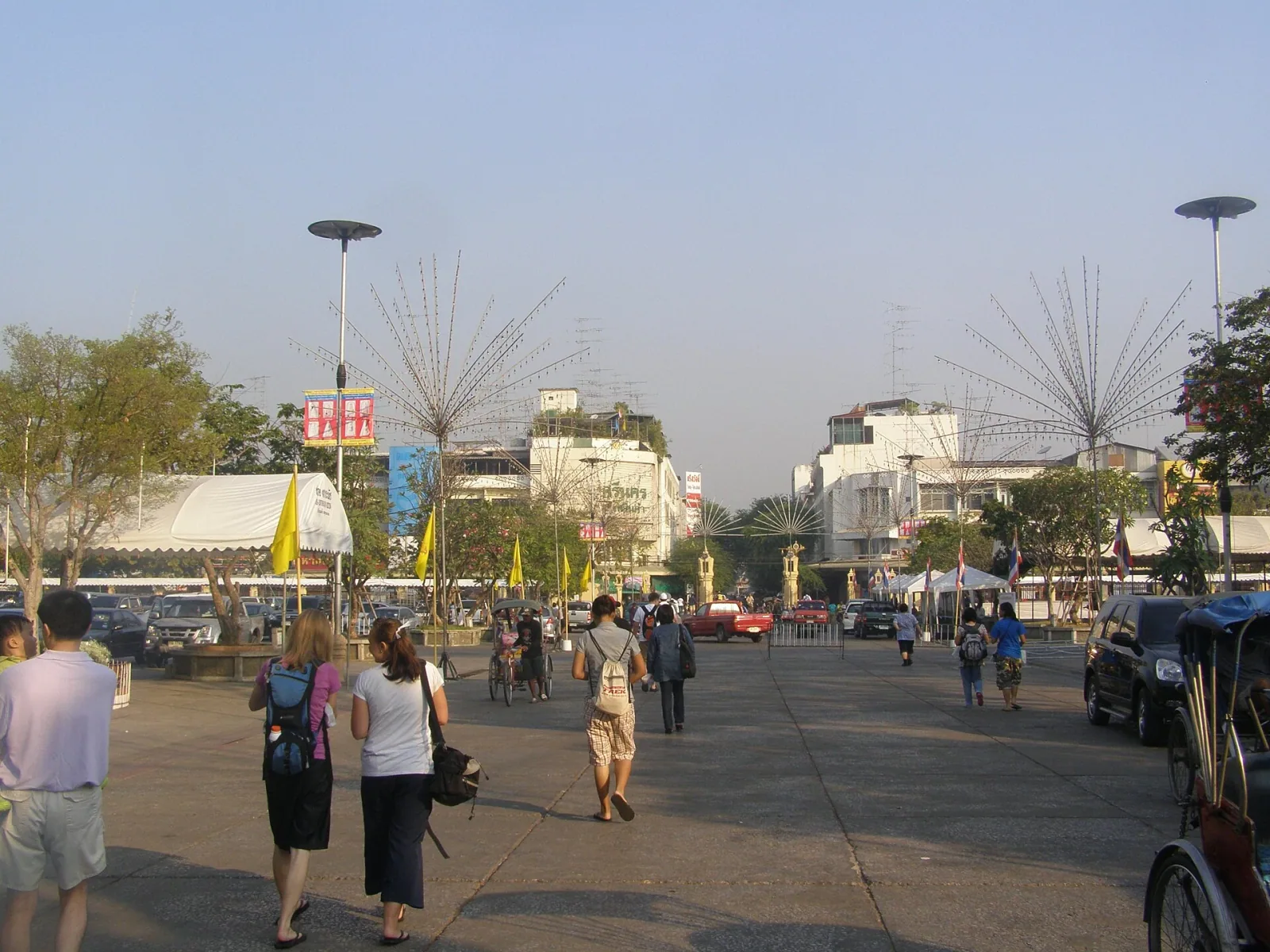
Step into Nakhon Pathom's morning market around 7am and you'll understand why locals say Bangkok eats what Nakhon Pathom grows. The produce stalls overflow with fruit from surrounding orchards—mangoes so ripe they perfume the air, grapes in clusters that would cost triple in the capital, pineapples piled high at prices that make Bangkok's supermarkets look like highway robbery. Vendors arrange vegetables with the pride of people who know their produce is exceptional because it came from soil they or their neighbors tend personally.
Agriculture defines provincial identity here more than tourism or industry. Families work the same orchards their grandparents planted, timing life around flowering seasons and harvest cycles that dictate when kids help pick fruit and when extended families gather to process the bounty. The result is a cost of living that feels like time travel—meals at the market cost 30-50 THB, fresh fruit smoothies from local orchards run 25 THB, and dinner at decent restaurants rarely breaks 150 THB even for multiple dishes.
The food culture celebrates this agricultural abundance. Local specialties include khanom chin (fresh rice noodles with curry sauces), khao lam (glutinous rice and coconut milk steamed inside bamboo tubes), and above all the sweet, fragrant Nakhon Pathom pomelo (som-o)—shipped country-wide but eaten freshest here. During mango season (April-June), you can gorge on varieties rarely seen in Bangkok at prices that make buying by the kilogram feel reasonable.
"Living on 21,700 THB per month isn't austerity in Nakhon Pathom—it's comfortable middle-class life with daily market meals, a decent apartment, and enough left over for weekend trips to Bangkok. The value proposition is so extreme it makes you question why anyone pays capital prices."
Here's the calculation that makes Nakhon Pathom work for remote workers and Bangkok commuters: spend 8,000 THB on a modern one-bedroom apartment here versus 15,000-25,000 THB for equivalent space in Bangkok. Add the savings on food (30-40% cheaper), the absence of city stress, and the ability to actually afford a lifestyle rather than just survival, and an hour-long commute starts looking less like a sacrifice and more like a smart financial play.
The infrastructure supports this arrangement better than you'd expect. Highway 4 (Phetkasem Road) and Motorway 81 provide direct Bangkok access outside rush hours. Buses run every 20-30 minutes throughout the day. Nakhon Pathom sits on the State Railway's Southern Line as the first major stop heading out of Bangkok, with the Kanchanaburi/Nam Tok branch peeling off nearby; trains are slower (about 1.5-2 hours) than driving but cheap and frequent. Internet in modern developments handles video calls and remote work without issue. Several coffee shops around the chedi cater to laptop workers, offering air-conditioning and decent wifi for 50-80 THB including drinks.
The reality check: this isn't for everyone. English proficiency is minimal outside tourist areas around the chedi. Nightlife means temple festivals and local restaurants, not clubs and craft cocktail bars. Healthcare requires Bangkok for serious conditions, though the provincial hospital handles routine care competently. International schools don't exist—families with school-age children need to factor in Bangkok commutes or boarding schools. But for remote workers, retirees, and anyone willing to trade urban conveniences for financial freedom and cultural authenticity, Nakhon Pathom offers a genuine Thai lifestyle at prices that feel like cheating.
What works: Exceptional value (around 35% cheaper than Bangkok), Bangkok accessibility (about an hour by road, 1.5-2 hours by train), authentic Buddhist culture without tourist infrastructure, farm-fresh food at wholesale prices, peaceful environment perfect for remote work.
What doesn't: Limited English speakers, minimal nightlife and entertainment, hot/humid weather most of the year, occasional flooding during rainy season, serious healthcare requires Bangkok.
Best for: Remote workers maximizing budget, retirees seeking spiritual/cultural immersion, Bangkok workers willing to commute for housing savings, anyone interested in agricultural Thailand and Buddhist pilgrimage culture.
During major Buddhist holidays—Visakha Bucha, Makha Bucha, Asalha Puja—Phra Pathom Chedi transforms from provincial landmark into national pilgrimage site. Thousands arrive from across Thailand, carrying flowers and incense, joining candlelit processions that circle the massive structure as monks chant prayers into the night. The grounds fill with temporary markets selling religious items, food stalls feeding the crowds, and makeshift shrines where families make offerings seeking spiritual merit for ancestors and living relatives alike.
Even on ordinary days, the chedi draws steady streams of pilgrims. You'll see elderly women making the clockwise circuit with prayer beads, young families teaching children proper temple etiquette, monks in meditation beneath the bodhi trees. There's a sense of living continuity here—the faith practiced today connects directly to practices unchanged for centuries, performed at the same sacred site by believers whose ancestors walked these same paths seeking the same spiritual goals.
For foreign residents, this provides rare insight into Thai Buddhist practice without tourist veneer. You're welcome to observe (respectfully dressed, shoes removed in temple buildings), to walk the circuit yourself, to sit in the shade and simply witness devotion practiced without performance or explanation. The experience can be profound even for non-Buddhists—there's something powerful about watching faith maintained across generations at a site sacred for over a millennium.
While Phra Pathom Chedi dominates, the province rewards exploration beyond the famous stupa. Don Wai Market, on the Tha Chin river in Sam Phran district, is a century-old waterfront food market famed for grilled fish, duck, and Thai sweets—less touristy and more lived-in than Amphawa or Damnoen Saduak. Phutthamonthon, the vast Buddhist park in the eastern district of the same name, centres on a striding-Buddha statue of about 15.9 metres and is a popular morning jogging and merit-making spot. Sanam Chandra Palace, on Silpakorn University's grounds in Nakhon Pathom city, opens its halls and gardens to visitors and gives the clearest picture of how Rama VI imagined a modern Thai royal residence.
The surrounding countryside also rewards motorcycle exploration. Fruit orchards offer farm tours during harvest seasons (typically 1,000-2,500 THB including lunch), showing cultivation methods passed through families for generations. Wat Samphran in Sam Phran district—the 17-storey temple wrapped by an enormous pink dragon—has become an Instagram fixture for a good reason, while the Jesada Technik Museum in Nakhon Chai Si houses a vast private collection of vintage cars, planes, and oddities. Mahidol University's main campus at Salaya and Kasetsart University's Kamphaeng Saen campus also sit inside the province, giving Nakhon Pathom an unusually strong academic footprint for a quiet central-plains region.
The monthly budget breakdown for comfortable Nakhon Pathom living demonstrates why the province attracts remote workers and retirees seeking financial sustainability without sacrificing quality of life.
This budget assumes single-person living in a modern one-bedroom apartment near the town center, mixing market meals with restaurants, and maintaining modest entertainment spending. Couples can live comfortably on 30,000-35,000 THB monthly. Families need more depending on children's ages and schooling requirements. The key advantage over Bangkok isn't just lower rent—it's the cumulative savings across every spending category that make the difference between surviving and thriving financially.
Nakhon Pathom experiences central plains weather in full force—cool season (November-February) brings pleasant 20-32°C temperatures perfect for temple visiting and outdoor activities. Hot season (March-May) cranks temperatures to 35-40°C with oppressive humidity and occasional agricultural burning affecting air quality. Rainy season (June-October) brings afternoon downpours and flooding risk in low-lying areas, though modern developments account for this with proper drainage and elevated construction.
The flat terrain makes flooding more than theoretical concern during September-October peak rainfall. Check specific apartment locations and building heights before committing to rentals. Traditional communities handle this through elevated structures and flood-adapted agriculture—newcomers should follow local wisdom rather than assuming modern infrastructure solves ancient water problems.
Nakhon Pathom works for specific demographics willing to embrace its contradictions: provincial living within commuting distance of a megacity, profound spirituality alongside agricultural pragmatism, ancient history grounding contemporary life. It's not a place for nightlife seekers, international school families, or anyone requiring constant English-language interaction. But for remote workers wanting financial breathing room, retirees seeking cultural immersion, Bangkok commuters prioritizing housing savings, and anyone drawn to Buddhist Thailand's spiritual heartland, this province offers exceptional value and genuine authenticity.
Thailand's tallest stupa rises above the landscape as a constant reminder that some places maintain significance across centuries despite—or perhaps because of—refusing to chase modernity's pace. Nakhon Pathom has been a spiritual anchor for the region since Dvaravati times. It will continue that role long after current residents have moved on. The question is whether you can align your life with that ancient rhythm, accepting slower pace and limited conveniences in exchange for something increasingly rare in modern Thailand: genuine provincial life at prices that respect your budget rather than exploit it.
For those willing to make that exchange, Nakhon Pathom provides what Bangkok increasingly cannot—space to breathe, time to think, and cost of living that doesn't require constant financial anxiety. The golden dome catches the morning sun, pilgrims walk their circuits, fruit falls from orchards older than your grandparents, and life continues at a pace that feels increasingly precious in a world accelerating toward nowhere in particular.
Distance from Bangkok
~56 KM WEST
Population
~927,000
Monthly Budget
20,700 THB
Average Rent (1BR)
8,000 THB
Temperature Range
20-40°C
Cost vs Bangkok
-35%
Key Landmark
Phra Pathom Chedi (~120m, Thailand's tallest stupa)
Best Season
November to February
The Reality
The Dvaravati Buddhist heartland and home to Thailand's tallest stupa offers exceptional value for those seeking spiritual immersion and authentic provincial living within Bangkok commute distance.
Works best for remote workers, retirees, and Bangkok commuters willing to trade urban conveniences for 35% cost savings and genuine cultural experience. Limited English, minimal nightlife, and seasonal flooding require adaptation.
External Resources