Provinces
🎨Nan Province
Northern Thailand's Hidden Cultural Gem
Northern Thailand's Hidden Cultural Gem
Nan doesn't announce itself with flashy temples or tourist infrastructure. You arrive via a small regional airport or winding mountain roads, and at first glance it seems like any other Northern Thai provincial capital—shophouses, temples, morning markets. But spend a few days wandering Sumon Thewarat Road past Wat Phumin and the Nan National Museum, climbing the 303 steps to Wat Phra That Chae Haeng for sunrise, or talking with the handful of expats who've made Nan home, and you realize what you've found—Northern Thailand's last major province where authentic Lanna and Tai Lue culture persists largely undisturbed by mass tourism, where monthly living costs genuinely shock people accustomed to Bangkok or Chiang Mai prices, and where being foreign still feels novel rather than commonplace.
The province sits in Thailand's most remote corner—bordered by Laos to the north and east, surrounded by mountain ranges that historically kept it isolated. This geographic separation preserved traditions that disappeared elsewhere. The old town retains wooden architecture from the teak merchant era. Dozens of temples showcase distinctive Nan-style design elements—a Lanna-Tai Lue hybrid—that you won't find in other regions. Tai Lue lowland communities and upland minorities (Hmong, Mien/Yao, Htin/Mal, Khamu, and Lua) maintain traditional lifestyles, their presence adding ethnic diversity rare in modern Thailand. Silver filigree, indigo-dyed cotton, and traditional weaving workshops continue centuries-old techniques.
What drew me to Nan initially was curiosity about somewhere I'd heard mentioned only in passing by long-term Thailand residents. What kept me coming back—I've spent about six months here over the past three years—is the combination of genuine cultural depth and practical affordability that's increasingly hard to find. Chiang Mai transformed into digital nomad central with rising costs and tourist saturation. Chiang Rai developed its art scene and White Temple fame. Nan simply continued being Nan—a functioning Thai province that happens to welcome the small number of foreigners interested in authentic living rather than convenient tourism.
"Nan simply continued being Nan—a functioning Thai province that happens to welcome the small number of foreigners interested in authentic living rather than convenient tourism."
Sumon Thewarat Road and the lanes around Wat Phumin cut through Nan's old town, lined with teak merchant houses and shophouses that somehow survived modernization. These aren't museum pieces or boutique hotels—many remain private homes or operate as working businesses, their wooden facades weathered but intact, upper floors featuring the intricate carved details characteristic of Northern Thai craftsmanship. Walk these streets in early morning before heat builds, and you're moving through living history. Elderly residents sit on their porches watching street life. Small shophouses sell textiles, hardware, household goods to local customers rather than tourists.
The Sunday walking street market transforms this area once weekly, vendors spreading out along the road selling food, crafts, textiles, and assorted goods. Unlike Chiang Mai's tourist-oriented walking street, Nan's version serves primarily locals. You'll see families shopping together, teenagers hanging out with friends, vendors you recognize from the permanent morning market setting up temporary evening stalls. Foreign visitors are present but distinctly minority. The atmosphere feels celebratory and authentic—a community gathering that predates tourism and would continue without it.
Beyond Sumon Thewarat Road, the old town's narrow lanes reveal more architectural treasures—shophouses painted in fading colors, early-20th-century civic buildings from the post-incorporation era, modern Thai construction interspersed with older structures creating a visual timeline of the province's evolution. None of this is sanitized or theme-park perfect. Buildings show age and use. Paint peels. Wood weathers. But the authenticity is precisely why it matters. This is preservation through continued occupation rather than museum curation.
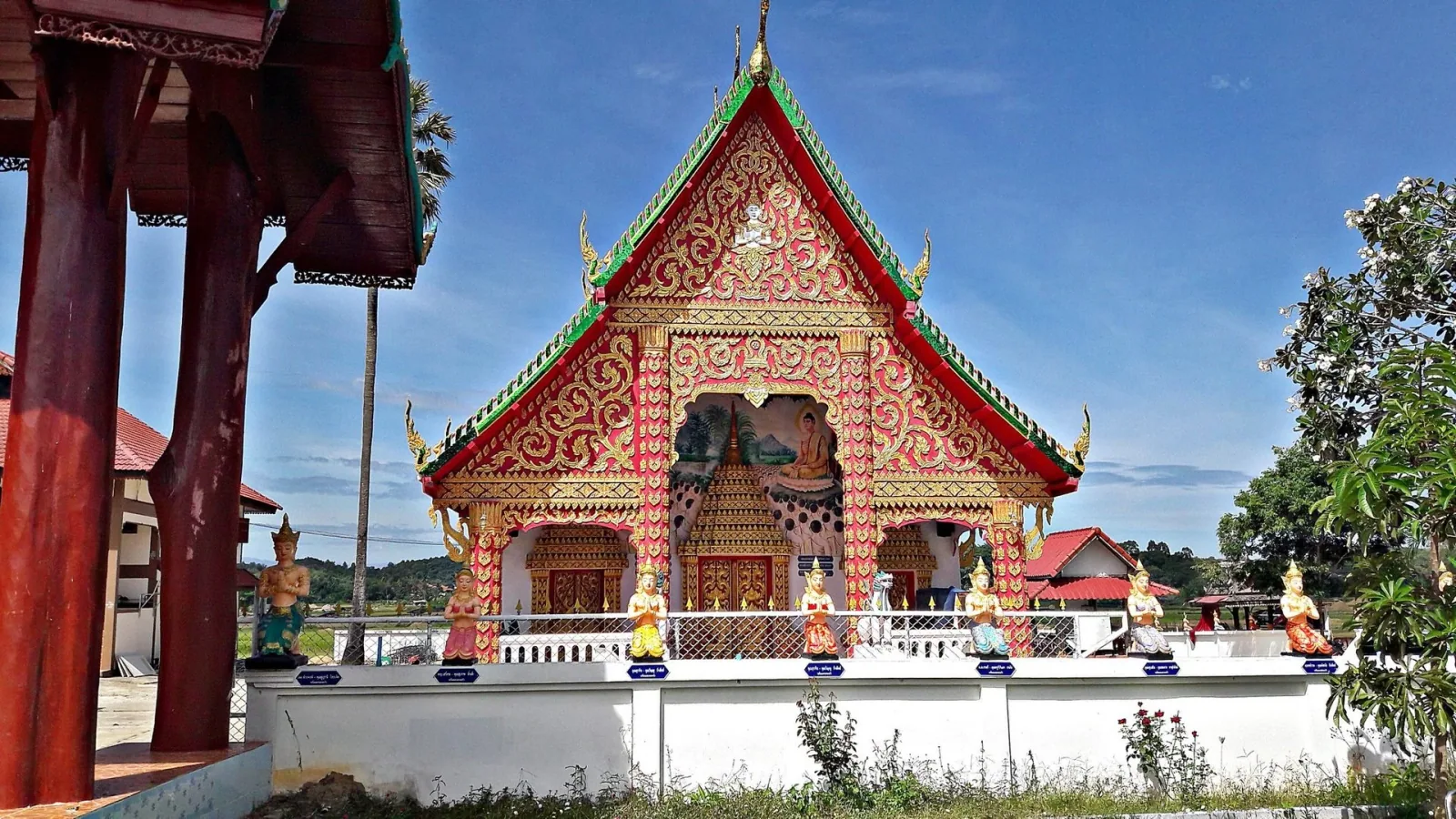
Nan hosts dozens of significant temples, each reflecting the distinct Lanna-Tai Lue architectural traditions that evolved here over centuries. The signature sight is Wat Phumin in the heart of the old town—a 16th-century cruciform temple famous for its "Whisper of Love" mural and other 19th-century paintings depicting daily life and Tai Lue customs. Wat Phra That Chae Haeng, perched on a hillside east of the city across the Nan River, is the province's leading pilgrimage site; its naga-flanked staircase of 303 steps rises to a golden Lanna chedi enshrining Buddha relics. Visit before sunrise and you'll find dedicated practitioners in meditation, elderly Thais making merit, and the occasional expat who's discovered this as Nan's most transcendent space.
A short walk from Wat Phumin, the Nan National Museum occupies the former palace of Nan's last hereditary ruler and houses the legendary "Black Elephant Tusk"—a long-revered talismanic relic of the old kingdom. Together with Wat Phumin and the adjacent Wat Phra That Chang Kham, it anchors the historic core of Nan town.
Unlike tourist-heavy temple complexes in major cities, Nan's temples function primarily for spiritual and community purposes. Morning alms rounds happen throughout neighborhoods—monks walking barefoot collecting offerings, residents kneeling to give food and make merit. Temple festivals celebrate Buddhist holidays and local traditions with community participation rather than tourist performances. The architecture reflects distinctive Nan characteristics—particular roof styles, decorative elements, spatial arrangements that differ subtly but significantly from temples in Bangkok or Chiang Mai. For those interested in understanding Thai Buddhist practice beyond surface observation, Nan's temple communities offer accessible immersion. See our guide to Buddhism in daily Thai life for deeper context.
The temples also serve as social gathering points beyond religious function. Educational programs for children, community meetings, festival preparations, meditation instruction—all happen within temple grounds. I've spent countless hours at various Nan temples, sometimes actively participating in ceremonies, sometimes just sitting under shade trees watching community life unfold, always welcomed but never pressured. This integration of spiritual and social functions is core to how Thai Buddhism operates, but it's easier to observe in less touristed provinces where temples haven't been transformed into primarily visitor destinations.
Nan's mountain districts host significant Hmong, Mien (Yao), Htin/Mal, Khamu, and Lua populations maintaining distinct cultural traditions, alongside lowland Tai Lue communities — a legacy of Tai Lue migration from Sipsongpanna in southern China. These aren't tourist-village performances but actual communities where people live traditional lifestyles adapted to contemporary Thailand. Agriculture—rice farming, fruit cultivation, coffee growing—provides primary income. Traditional crafts continue: intricate textile weaving, indigo dyeing, silver filigree, and bamboo work produced for both local use and regional markets. Language preservation varies by community; many speak their ethnic language at home while using Thai for broader communication.
Visiting these communities requires cultural sensitivity and ideally local guidance. This isn't ethical tourism where you pay entrance fees and observe from safe distance. Rather, it's genuine cultural exchange requiring respectful engagement, language effort (even basic Thai helps significantly), and understanding that you're guests in functioning communities not performers in cultural displays. I've been welcomed into hill tribe homes for meals, taught traditional weaving techniques, invited to participate in agricultural work—experiences that happened through relationship-building over time rather than commercial transactions.
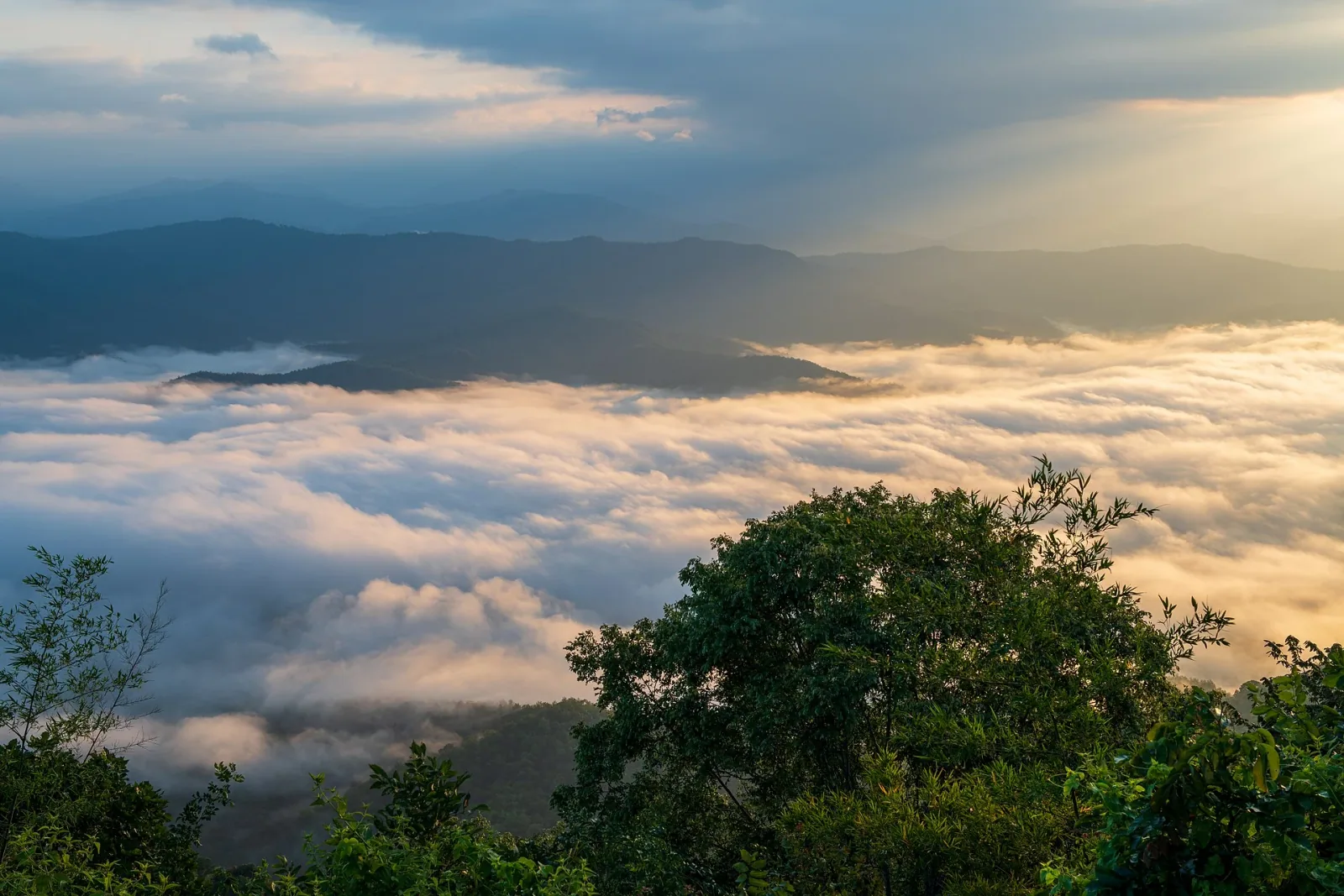
The ethnic diversity enriches Nan's cultural landscape. Local markets sell products from various communities—Mien (Yao) embroidery, Hmong silver work, Tai Lue indigo cotton. Festivals sometimes incorporate multiple cultural traditions. The food scene includes ethnic specialties alongside Thai standards. For expats seeking to understand Thailand's ethnic complexity beyond simplistic "Thai culture" narratives, Nan provides accessible educational opportunities. But this requires genuine interest rather than tourist curiosity—reading background materials, hiring ethical guides, approaching communities with humility and respect.
Nan's food scene centers on Northern Thai cuisine with less international influence than Chiang Mai's tourist-oriented restaurants. Khao soi appears everywhere—the rich coconut curry noodle soup that defines Northern Thailand, here prepared in regional variations favoring richer curry and tender meat. Morning markets offer the best experience: vendors selling khao soi from 6:30am until supplies run out around 10am, noodles cooked to order, curry poured steaming over crispy egg noodles, condiments arranged for self-seasoning. Cost: 30-50 THB for portions that could feed two.
Sai oua (Northern sausage) grills at street stalls throughout the day, packed with lemongrass, kaffir lime, galangal, and chilies. Nam prik ong—tomato-pork dip served with fresh vegetables and sticky rice—arrives at restaurants as appetizer or full meal depending on hunger. Gaeng hanglay shows Burmese influence: pork belly curry with ginger, tamarind, and warming spices. Sticky rice is the foundation of every meal, eaten with fingers from small woven baskets. Everything tastes intensely of itself because ingredients are genuinely fresh and preparations follow traditional methods rather than tourist-adapted versions.
→ Street food: 30-60 THB per meal—khao soi, noodle soups, grilled meats, rice with curry
→ Local restaurants: 50-100 THB for complete meals with multiple dishes and sticky rice
→ Coffee shops: 15-25 THB for local coffee, 40-60 THB at hipper cafes trying to approximate Bangkok style
→ Morning market: The essential experience—exceptional quality, absurdly low prices, zero English spoken
→ International food: Essentially non-existent outside 2-3 tourist-oriented restaurants with limited menus
Monthly food budget: 5,000-8,000 THB eating mostly local, cooking occasionally from market ingredients
Nan attracts remote workers, retirees, and anyone whose income isn't tied to local employment. The job market for foreigners is essentially nonexistent outside teaching positions at schools or universities (typically 25,000-40,000 THB monthly). Internet infrastructure supports remote work—fiber broadband available in city center for 300-500 THB monthly delivering 50-100 Mbps speeds. Mobile data through AIS, True, or Dtac costs 5-10 THB per gigabyte. Power outages happen occasionally during hot season but less frequently than rural areas.
Coworking spaces are limited—maybe 2-3 options with desk rental around 2,000-2,500 THB monthly. Most remote workers establish home offices or work from laptop-friendly cafes. The small expat community (300-500 people total) means limited networking infrastructure compared to Chiang Mai's established digital nomad scene, but also deeper connections among those present. Everyone knows everyone. The Facebook group "Nan Expats" functions as essential communication hub for news, events, help, and social coordination.
Healthcare exists through the provincial hospital and private clinics—adequate for routine medical needs, dental work, and minor emergencies. English-speaking medical staff are limited; bring translation apps or local friends for complex consultations. Serious medical conditions or specialist care require travel to Bangkok (around 80-minute flight from Nan to Don Mueang) or Chiang Mai (6-7 hours by road). Health insurance becomes essential for anyone with ongoing medical needs. For comprehensive coverage information, review our Thailand health insurance guide.
Accommodation: Budget studios 5,000-8,000 THB monthly; mid-range apartments 8,000-18,000 THB; premium condos or heritage shophouses 18,000-40,000+ THB. Still exceptionally affordable compared to Bangkok or tourist areas.
Getting there: Daily flights from Bangkok Don Mueang (around 1h 20m, 800-1,500 THB) via Nok Air and Thai AirAsia. Overnight buses from Bangkok (10-12 hours, 600-900 THB). Buses and minivans from Chiang Mai (6-7 hours over mountain roads, 300-500 THB).
Language barrier: English is rare outside tourist hotels and handful of restaurants. Daily life happens entirely in Thai. Essential for language learners; frustrating for those unwilling to study Thai. The immersion accelerates progress dramatically for committed learners.
Nan Province sprawls across roughly 11,472 square kilometers of mountain ranges, valleys, and the Nan River's scenic course. Doi Phu Kha National Park protects about 1,704 square kilometers of pristine forest—one of the largest in northern Thailand—with peaks rising to nearly 2,000 meters. Hiking trails range from easy walks to serious multi-day treks. Waterfalls cascade during rainy season. Wildlife includes macaques, gibbons, hornbills, and occasionally larger mammals if you're deep enough into protected areas.
The park's cool mountain climate provides relief from lowland heat—temperatures at elevation run 5-10°C cooler than Nan city. Camping facilities allow overnight stays for those wanting extended immersion. Unlike crowded parks near Bangkok or Chiang Mai, Doi Phu Kha sees relatively few visitors. You can hike for hours encountering more wildlife than humans. For nature enthusiasts based in Nan, these mountains provide regular escape options without traveling far.
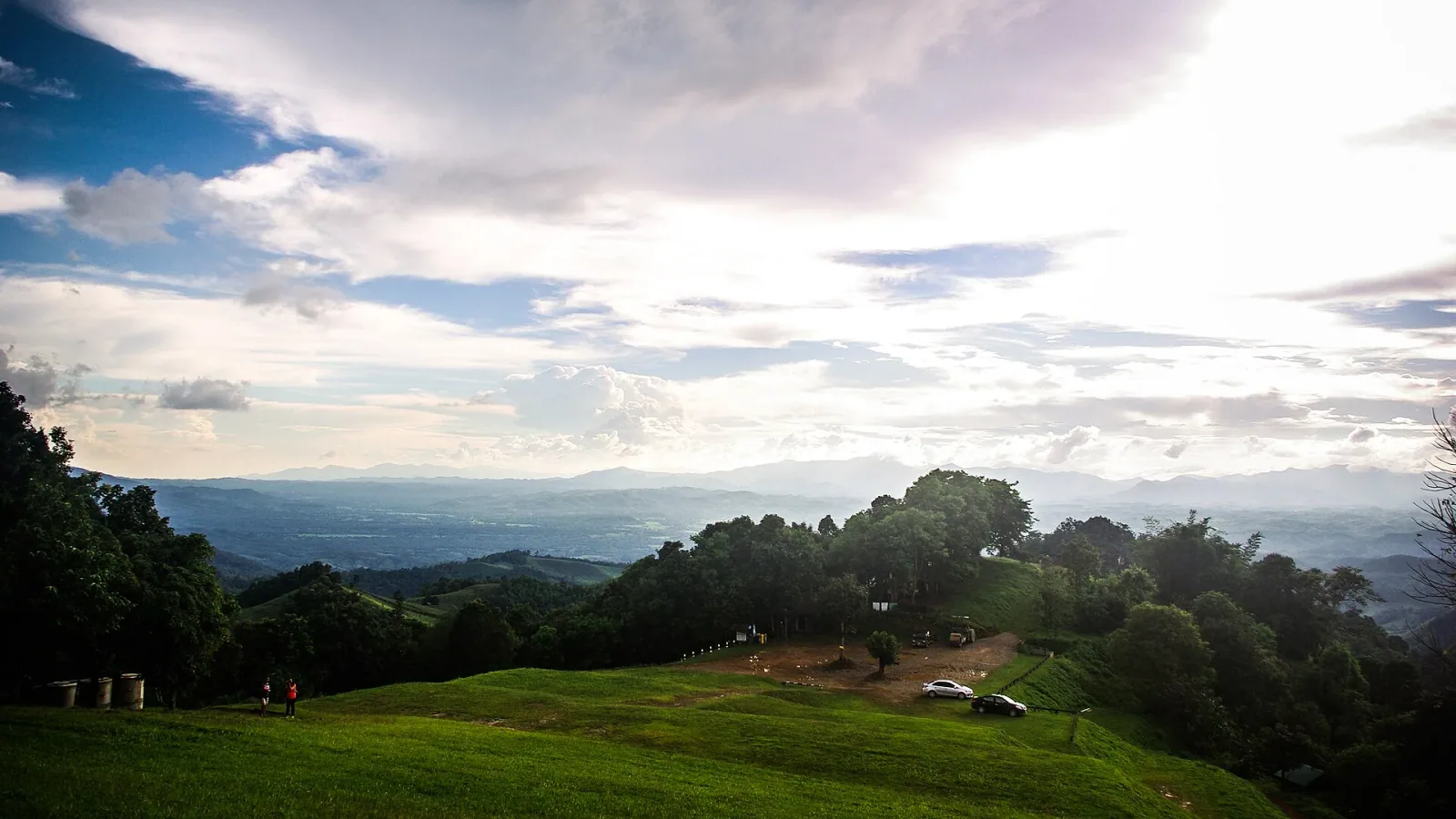
The Nan River winds through valleys creating scenic landscapes particularly beautiful during rainy season when everything turns impossibly green. Kayaking grows increasingly popular with routes ranging from gentle floats to technical rapids depending on season and section. Rubber and teak plantations line the banks in places. Fishing communities work traditional methods. For photographers or anyone appreciating natural beauty, the river provides endless subject matter.
Nan's mountain location creates distinct seasons. Cool season (November-February) is absolutely glorious—temperatures 12-20°C mornings warming to 25-28°C afternoons, clear blue skies, low humidity, perfect conditions for outdoor exploration and temple visits. December and January are coldest; light jackets necessary for mornings. This is unquestionably the best time to visit or arrive if planning extended stays.
Hot season (March-May) brings intense heat reaching 35-38°C. Burning season (late February through March) impacts air quality as agricultural fields are cleared, though Nan's mountains help dissipate smoke better than Chiang Mai's valley trap. Many expats take trips during the hottest weeks to coast or neighboring countries. Rainy season (June-October) brings afternoon thunderstorms, lush landscapes, spectacular waterfalls at peak flow, and dramatically fewer tourists. Mornings often remain sunny; heavy rain typically arrives afternoons or evenings. September and October are wettest months but also when the province looks most beautiful.
Nan is exceptionally affordable—genuinely the lowest cost of living in Northern Thailand for comparable lifestyle quality. I've met remote workers living comfortably on 15,000-18,000 THB monthly all-in by cooking most meals and living modestly. My own budget runs about 25,000 THB monthly including: apartment 10,000 THB, utilities and internet 1,500 THB, food 8,000 THB eating out regularly, motorcycle rental 1,500 THB, cafes and entertainment 2,000 THB, and miscellaneous 2,000 THB. This provides comfortable middle-class lifestyle that would cost 60,000-80,000 THB in Bangkok. For detailed comparisons across Thailand, see our comprehensive cost of living breakdown.
The affordability transforms what's financially possible. Remote workers can reduce hours or be more selective about projects. Retirees on fixed pensions live comfortably where they'd struggle in expensive Western cities or even Bangkok. Career break takers extend trips from months to years. Artists, writers, and creators maintain sustainable practices while building portfolios or establishing themselves. The low overhead creates freedom—not just financial but temporal and creative freedom to pursue what matters rather than what pays maximum.
What you won't find in Nan: large international schools, Western restaurant chains, shopping malls, vibrant nightlife, yoga studios with classes in English, established digital nomad infrastructure, or expat social clubs organizing regular events. The province has minimal tourist development outside basic hotels and handful of guesthouses. This isn't Chiang Mai lite—it's something fundamentally different requiring different expectations and commitments.
What you will find: dozens of temples showcasing distinctive Lanna-Tai Lue architecture, preserved teak merchant shophouses along Sumon Thewarat Road, genuine Tai Lue and hill-tribe communities maintaining traditions, silver filigree and indigo-dye workshops continuing centuries-old techniques, national parks with pristine wilderness, authentic Northern Thai cuisine at street food prices, morning markets bursting with fresh produce for absurdly low costs, small welcoming expat community where everyone knows everyone, and living costs so low that 20,000-25,000 THB monthly provides comfortable lifestyle including regular travel.
Nan demands certain commitments—learning Thai language (essential for daily life), accepting limited international amenities, embracing small-town pace where entertainment means conversation over cheap food rather than nightclubs or concerts, tolerating isolation from large expat communities and international services. The rewards for these commitments include exceptional affordability, genuine cultural immersion in preserved Lanna traditions, access to ethnic diversity through hill tribe communities, peaceful mountain living with quality outdoor recreation, and the particular satisfaction of discovering authentic Thailand that hasn't been discovered by everyone else. Three years after my first visit, I still return to Nan for months at a time, drawn by the combination of cultural depth and practical livability that's increasingly rare as Thailand modernizes and tourism expands. For those seeking the real Northern Thailand at prices that allow extended exploration and genuine community integration, Nan delivers quietly but profoundly. If you're considering long-term stays, understand the visa options available for establishing yourself properly.
BEST FOR
NOT IDEAL FOR
KEY FACTS
Wat Phumin
"Whisper of Love" murals · Old-town centerpiece
Wat Phra That Chae Haeng
Hillside temple · 303 steps, panoramic views
Nan National Museum
Former royal palace · "Black Elephant Tusk"
Doi Phu Kha National Park
~1,700 sq km · Pristine mountain wilderness
Hill tribe villages
Hmong, Mien, Htin, Khamu, Lua · Tai Lue lowland