Provinces
🌴Narathiwat Province
Where Thailand meets Malaysia: authentic border culture at the Kingdom's edge
Where Thailand meets Malaysia: authentic border culture at the Kingdom's edge
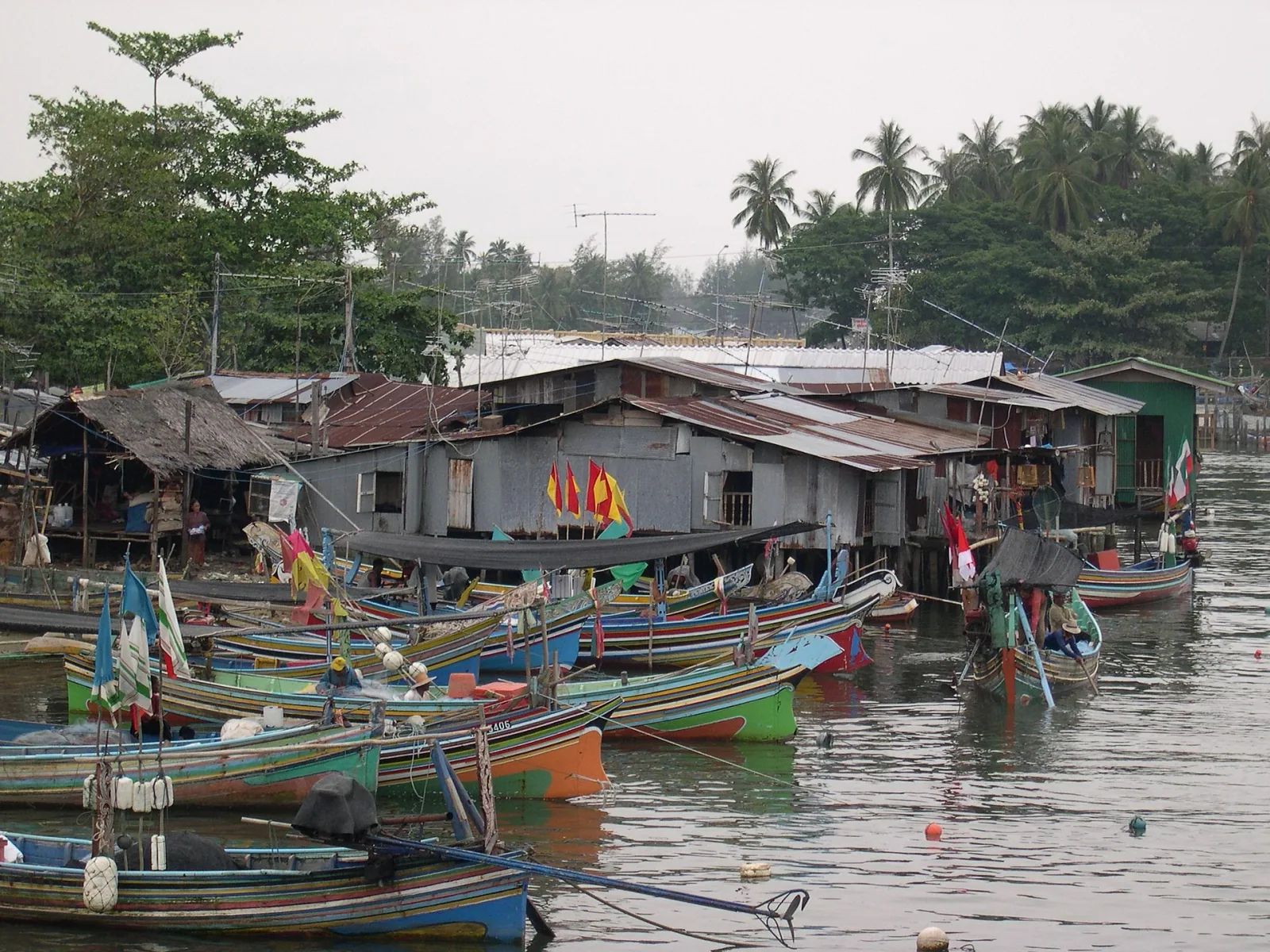
The morning fish market in Narathiwat City smells like salt, diesel, and possibilities. Long-tail boats bob against weathered docks as fishermen haul catches onto ice-filled crates—snapper, grouper, prawns still twitching. Women in colorful headscarves negotiate prices in a flowing mix of Thai and Malay, their voices rising and falling like the tide itself. Behind them, the Bang Nara River slides past toward the Gulf, carrying with it centuries of trade, migration, and Patani-Malay cultural exchange that have made this corner of Thailand unlike anywhere else in the Kingdom.
Narathiwat Province occupies Thailand's southeastern extremity, a 4,475-square-kilometer wedge of land pressed against the Gulf of Thailand and Malaysia. The provincial capital, Narathiwat City—historically Bang Nara—lines the mouth of the Bang Nara River with Sino-Malay shophouses, riverside promenades, and mosques whose calls to prayer echo across neighborhoods where Thai Buddhist temples sit just blocks away. The border town of Su-ngai Kolok pulses with cross-border commerce, Malaysian ringgit changing hands alongside Thai baht, while quiet beaches stretch along the Gulf coast, largely empty except for local families.
Narathiwat is one of Thailand's most affordable provinces and one of its most culturally complex. The population of around 824,000 is roughly 82% Malay-Muslim, with Patani Malay (Yawi) as the first language for most residents and traditions distinct from mainstream Thai society. It is also one of the four Deep South provinces—alongside Pattani, Yala and four districts of Songkhla—that have been under a state of emergency since July 2005 because of the ongoing Malay-Muslim separatist insurgency that has killed more than seven thousand people since 2004. Any honest guide has to begin with that reality.
Narathiwat sits inside the four-province Deep South conflict zone where a Malay-Muslim separatist insurgency has killed more than seven thousand people since January 2004. The Thai government has kept the Emergency Decree on Public Administration in Emergency Situations in force across Pattani, Yala, Narathiwat and four districts of Songkhla since July 2005, and most of the area also remains under martial law.
UK FCDO: advises against all but essential travel to the provinces of Pattani, Yala, Narathiwat, and the southern districts of Songkhla, citing regular bombings and shootings, security checkpoints and martial law.
US State Department: "Exercise increased caution" for Yala, Pattani and Narathiwat; US government employees require special authorisation to travel to the region, and US consular assistance is limited.
Practical implications: most standard travel insurance policies will not cover incidents in areas your home government advises against visiting. Permanent military and police checkpoints, occasional curfews and convoy escorts are part of daily life. Always check your own government's current advisory before booking.
"Narathiwat is not a relocation pitch. It is one of Thailand's most fascinating cultural regions and one of its most genuinely difficult places to travel to—both things are true at once."
Narathat Beach runs for kilometres north from the mouth of the Bang Nara River, fringed with casuarina pines and dotted with seafood shacks. Every September the surf in front of the beach hosts the kolae long-boat races—painted Patani-Malay craft with their swooping prow-and-stern, rowed by crews from villages up and down the coast as part of the long-running Narathiwat Fair. Outside fair week it is a quiet local beach, used mostly by Thai families spreading mats under the pines on weekends. There are no tourist islands worth chasing offshore: the Gulf coast here is shallow estuary water rather than limestone-and-coral.
A short drive south of the city sits Wat Khao Kong, with the gold-mosaic seated Phra Phuttha Taksin Mingmongkhon—one of the largest outdoor Buddha images in Thailand, looking out over a small forested hill. It is a working temple and a reminder that, even in a province where mosques set the rhythm of the day, Theravada Buddhism still has a visible place in the landscape.
Inland, the province climbs into rainforest. Hala-Bala Wildlife Sanctuary, straddling Waeng and Sukhirin districts on the Malaysian border, protects one of the last large lowland rainforests in the country and has been nicknamed "the Amazon of ASEAN" by Thai conservationists—it is the easiest place in Thailand to see all ten species of hornbill in the wild, given safe access. Further north, Budo-Su-ngai Padi National Park wraps the Budo mountain range and the multi-tiered Pacho Waterfall. Both sanctuaries sit deep in red-zone districts where security travel restrictions apply; visits require local guides, advance arrangements and a clear-eyed read of the current advisory.
Above the city stands the Princess Mother Memorial Hall (Phra Tamnak Taksin Ratchaniwet), a royal residence used by the late Princess Mother during winter visits, now open to the public when royals are not in residence; the surrounding gardens give one of the best views over the Gulf coast. Most other genuinely interesting sites in Narathiwat—Wat Chonthara Sing-He's old wooden viharn in Tak Bai, the historic Talo Mano mosque in Bacho, the To Mo waterfall in Sukhirin—sit out in districts that Western governments specifically warn against.
Sungai Kolok sits right on the river that forms the Thai-Malaysian border, a town that exists because borders create opportunities. The streets pulse with a distinctive energy—Thai, Malaysian, and Chinese merchants doing business in three languages, duty-free shops stuffed with electronics and cosmetics, night markets where you can pay in baht or ringgit, restaurants serving everything from tom yam to nasi lemak to dim sum. It's not beautiful in any conventional sense, but it's fascinating in the way border towns always are: liminal spaces where cultures collide and create something entirely their own.
The town's proximity to Malaysia means Malaysian tourists cross over for Thai shopping and massage parlors, while Thais cross into Malaysia for different prices and products. The result is a commercial ecosystem unlike anywhere else in Thailand. Wandering the night bazaar, you'll hear more Malay than Thai, see Malaysian license plates on half the cars, and encounter food fusion that exists nowhere else—Malaysian curry puffs sold next to Thai som tam, Chinese roast duck alongside Malay satay.
For visitors, Sungai Kolok offers a glimpse into the reality of Southeast Asian border life—messy, commercial, culturally ambiguous, and utterly authentic. It's not where you'd base yourself, but it's worth a day trip from Narathiwat City to witness how borders shape the communities that straddle them. The crossing itself is straightforward if you have the proper visas, and stepping into Malaysia for a few hours provides interesting contrast to the Thai side.
What took me longest to understand about Narathiwat is how its Malay-Muslim majority shapes daily life in ways both obvious and subtle. The call to prayer marks the rhythm of the day. Women in colorful headscarves shop at markets where halal is simply the default, not a specialty designation. Restaurants close during Ramadan daylight hours, though some stay open discreetly for non-Muslim customers. The pace of life moves to different rhythms than you'll find in Bangkok or Chiang Mai—slower, more traditional, deeply rooted in community and faith.
The Central Mosque—Matsayit Klang—is one of the oldest mosques in the province, a tiered, Sumatran-style wooden building rather than the domed Indo-Persian form people often associate with Thai mosques. It is a functioning religious centre, not a tourist attraction, but visitors are welcome outside prayer times with appropriate modest dress and respectful behaviour. The mosque reflects something important about Narathiwat: this is a Thai province where Buddhism isn't the default culture, where understanding and respecting Islamic traditions isn't optional etiquette but essential to connecting with the place.
→ Dress modestly throughout the province—cover shoulders and knees. Women should bring scarves for mosque visits.
→ During Ramadan, avoid eating or drinking in public during daylight fasting hours as a sign of respect.
→ Learn basic Malay phrases—"Assalamualaikum" (peace be upon you) opens doors and shows cultural awareness.
→ Alcohol is generally not available in restaurants and shops due to Islamic cultural norms.
→ Photography of people requires permission, especially women in traditional Islamic dress.
Yet despite the Muslim majority, Narathiwat remains distinctly Thai in governance, language, and national identity. Thai Buddhist temples dot the landscape, particularly in Narathiwat City where government workers and military personnel maintain Thai-Buddhist community life. The result is a province where Thai and Malay identities coexist—sometimes harmoniously, sometimes with tension—creating cultural complexity that rewards patient, respectful observation.
If there's a single compelling reason to overlook Narathiwat's complications, it's the economics. This is Thailand's most affordable province, a place where the cost of living has remained stubbornly low while the rest of the Kingdom marches toward Bangkok prices. A modern one-bedroom apartment in Narathiwat City center—air-conditioned, WiFi included, walking distance to the river—costs 6,000-8,000 baht monthly. The same in Bangkok would run 15,000-25,000 baht.
Food costs feel like traveling back in time. That morning fish market I described earlier? Fresh snapper costs 150 baht per kilo. Grilled on the beach with sticky rice and som tam, it becomes a meal for 60-80 baht. Local restaurants serve generous plates of Malay curry, rice, and vegetables for 50 baht. Even the Thai tourists from up north comment on how cheap everything is—and they're already paying Southern Thailand prices.
Rent: 6,000-8,000 THB for comfortable 1-bedroom in city center. Beachfront bungalows 8,000-12,000 THB.
Food: 6,000-9,000 THB eating local daily (fresh seafood, Malay dishes, markets). Western food limited but unnecessary.
Transport: Motorcycle rental 1,200-1,500 THB monthly. Essential for exploring beyond city center.
Total comfortable living: 20,000-25,000 THB monthly including rent, food, transport, utilities, occasional island trips. This is 40-50% less than comparable lifestyles in Chiang Mai or comparable to our cost of living guides for northern Thailand a decade ago.
Those numbers are real, but they need to be read alongside the safety panel above. Prices in Narathiwat have stayed low partly because foreign tourism and inward investment have both stayed away for two decades—the same insurgency that keeps Western governments warning their citizens off also keeps a one-bedroom flat at 6,000 baht. You are not finding a hidden Phuket; you are looking at the local economy of a conflict-affected border province.
"Narathiwat rewards cultural curiosity. It does not reward casual tourism. Treat the official advisories as a starting point, not a footnote."
Getting to Narathiwat takes commitment. Narathiwat Airport (NAW) has limited service—Nok Air operates the Bangkok Don Mueang route, generally 1-2 flights a day, around 2 hours, with fares typically 1,500-3,500 baht depending on season. Many visitors instead arrive overland from Hat Yai (3-4 hours by minivan or bus). Long-distance trains on the Southern Line terminate at Su-ngai Kolok via Tanyong Mat; since 2023 the main Bangkok departure point for long-distance southern services has been Krung Thep Aphiwat (Bang Sue Grand) rather than Hua Lamphong. Overnight VIP buses from Bangkok take 16-18 hours and typically cost 900-1,500 baht.
Once here, a motorcycle becomes essential. The province sprawls, beaches sit outside town, and public transport runs infrequently. Rental shops charge 1,200-1,800 baht monthly for automatic scooters. Traffic is light, roads are decent, and navigation is straightforward once you orient yourself. Grab and Bolt operate in the city but coverage is patchy compared to major urban centers. For island trips and coastal exploration, having your own wheels transforms the experience from difficult to delightful.
The expat community is minimal—fewer than 100 foreign residents, mostly working on specific projects or married to locals. There's no Thursday night meetup, no co-working space with fast WiFi and espresso, no Facebook group coordinating beach cleanups. This isolation appeals to some: you're forced to integrate with local Thai and Malay communities, to build friendships beyond the expat bubble that exists in Chiang Mai or Bangkok. But it means you need to be comfortable creating your own social structure and entertainment, perhaps similar to the remote work considerations in our guide to managing clients from Thailand.
Internet is adequate rather than excellent. Fiber optic reaches Narathiwat City center (400-600 baht monthly for 50-100 Mbps), and mobile data from AIS or True works reliably. You can video call, upload content, stream—it's not Chiang Mai's digital nomad infrastructure, but it's workable for remote employment. Occasional outages during monsoon season are the biggest frustration. For serious remote work, have backup mobile hotspot capability.
Narathiwat's climate follows standard southern Thai patterns: cool-ish season November through February (24-28°C, minimal rain), hot season March through May (32-38°C, increasing humidity), and monsoon June through October with September-October delivering the heaviest rains. The cool season offers the easiest conditions for beach exploration and island trips, but also brings slightly higher accommodation prices and more Thai tourists.
What surprised me was how beautiful the monsoon season becomes once you adjust expectations. The province turns impossibly green, dramatic afternoon thunderstorms roll across the sea, and prices drop while tourists vanish entirely. Islands may close during rough weather, but coastal life continues, and there's something magical about having Narathat Beach completely to yourself under moody skies. If you're considering long-term living rather than a quick holiday, experiencing the monsoon helps you understand whether Narathiwat's year-round reality suits you.
As for duration: Narathiwat isn't a weekend destination. The journey here, the cultural adjustment required, the lack of instant gratification tourism—all of this means you need at least a week to appreciate what makes the province special. Better would be 2-3 weeks, time enough to establish routines, discover your favorite seafood shack, make a few local friends, take multiple island trips. Some visitors arrive planning a week and end up staying months, seduced by the combination of low costs, natural beauty, and the satisfaction of understanding a complicated place that most travelers skip entirely.
Narathiwat rewards certain travelers while frustrating others. It works brilliantly for remote workers who can earn in dollars or euros while spending in baht, who value financial sustainability over instant social scenes, and who find cultural complexity interesting rather than exhausting. It suits adventurous retirees seeking the absolute best value in Thailand, willing to trade Western amenities for authentic experiences and beach access. It appeals to cultural enthusiasts fascinated by border regions, Islamic traditions in Southeast Asian context, and places where identity isn't simple.
It doesn't work for digital nomads seeking parties and networking events. It struggles for families needing international schools and pediatric specialists. It disappoints tourists wanting polished infrastructure and English everywhere. The security context makes it inappropriate for casual tourism without research and considered risk assessment. And the cultural conservatism means it's not the place for hedonistic lifestyles—this is a province where respecting local norms isn't optional.
But if you're willing to meet Narathiwat on its own terms—to dress modestly, learn some Malay phrases, accept the security realities, embrace seafood-heavy cuisine, and appreciate beaches without beach clubs—the province offers something increasingly rare in Thailand: genuine authenticity at prices that make long-term living not just possible but comfortable. The Kolok River keeps flowing toward Malaysia, carrying with it the mix of cultures that makes this corner of Thailand so distinctive. Whether you choose to explore it depends entirely on what kind of Thailand you're seeking. For more guidance on exploring Thailand's diverse regions, check our comprehensive city guides and provincial overviews.
ESSENTIAL INFO
Capital
Narathiwat City
Population
~824,000 (2024)
Area
4,475 km²
Language
Thai, Malay, minimal English
BEST FOR
WEATHER
Cool Season
Nov-Feb: 24-28°C, dry
Hot Season
Mar-May: 32-38°C
Monsoon
Jun-Oct: Heavy rain
UK FCDO: advises against all but essential travel to Pattani, Yala, Narathiwat and the southern districts of Songkhla.
US State Department: "Exercise increased caution"; the four Deep South provinces are under a long-standing Emergency Decree (in force since July 2005) and largely under martial law.
Check your own government's current advisory before booking. Most standard travel insurance is void in areas your home government advises against visiting.