Provinces
🌾Pathum Thani
Thailand's agricultural heartland near Bangkok
Thailand's agricultural heartland near Bangkok
At 4am the wholesale market opens and the real Thailand reveals itself. Pickup trucks arrive from farms throughout the central plains, beds piled high with dragonfruit, morning glory, mangoes still warm from yesterday's sun. By 5am the aisles pulse with Bangkok restaurateurs filling orders, housewives haggling over lotus roots, and vendors shouting prices that make the capital's markets look like tourist traps. This is Pathum Thani—not the Thailand of guidebooks, but the version that feeds a city of ten million people while remaining fundamentally agricultural.
The province name translates to "City of Lotuses," and between November and March you understand why. Fields of pink and white blooms stretch across the flat central plains, their petals opening at dawn before the heat arrives. Families have tended these same ponds for generations, harvesting roots for curries, seeds for desserts, leaves for temple offerings. Bangkok sits just 30 kilometres south—close enough that Don Mueang Airport, over the border in Bangkok's northernmost district, feels like a local terminal—but the rhythm here follows monsoons and harvest cycles, not office hours.
I've met remote workers paying 9,000 baht monthly for apartments that would cost 18,000 in Bangkok. Retirees who wanted Thailand without tourist infrastructure. Photographers documenting agricultural life that's disappearing as Bangkok expands outward. The province appeals to people seeking authentic Thai experience with metropolitan access—a foot in both worlds without fully committing to either.
"I commute to Bangkok three days a week for meetings. The other four I work from home surrounded by rice fields. The rent I save covers the commute and then some."
You spot it from the toll road—a vast gold dome ringed by concentric tiers, sitting on flat fields east of the Phahonyothin Highway. Wat Phra Dhammakaya in Khlong Luang is one of the largest Buddhist temple complexes in the world, its central Maha Dhammakaya Cetiya designed to hold a million small golden Buddha statues embedded across its sloping surface. From the parking lots it looks less like a temple than a freshly landed spaceship.
The Dhammakaya movement has been controversial in Thailand—mass ceremonies that fill the inner plaza with tens of thousands of white-robed devotees, fundraising practices that have drawn periodic scrutiny, a former abbot at the centre of a long legal saga. None of that erases the sheer architectural strangeness of the place. Visit on a quiet weekday morning and you can walk the outer terraces with almost no one around, the dome catching the early light.
Down the road, the more conventional Wat Chedi Hoi in Lat Lum Kaeo stacks a five-tier pagoda from fossilised oyster shells dredged out of nearby fields—evidence that this stretch of the central plain was once seabed. Together the two temples bracket the province's religious life: one a global brand built to be seen from the highway, the other a quiet local site built out of the literal ground beneath it.
The best lotus fields cluster around Sam Khok and Lat Lum Kaeo districts, accessible by motorcycle or car along rural roads that haven't changed much in decades. November brings the first blooms as temperatures cool, continuing through February. By March the heat returns and lotus production slows.
Farmers wade into shallow ponds at dawn, cutting stems and harvesting roots that will end up in Bangkok restaurants the same day. Some welcome photographers—ask first and offer a small payment (100-200 baht seems appropriate). The light works best early morning when mist hangs over the water and flowers haven't fully opened.
Lotus cultivation requires specific conditions—standing water, rich mud, consistent temperatures. Pathum Thani's flat terrain and canal network create ideal growing conditions. The province supplies much of Bangkok's lotus for both culinary use and religious offerings. Temple ceremonies consume thousands of flowers weekly, each bloom hand-picked and delivered fresh.
Talaad Thai in Khlong Luang district is the engine of the central plain's produce supply chain—one of the largest wholesale markets in Southeast Asia, sprawling across half a square kilometre next to the Phahonyothin Highway. Restaurant buyers arrive first around 4am, placing orders with vendors they've worked with for years. By 5am individual shoppers can enter, navigating aisles of produce stacked chest-high on wooden pallets.
Prices run 30-50% below Bangkok retail. A kilo of dragonfruit that costs 80 baht at Tops Market goes for 40 baht here. Morning glory, chilies, limes, galangal—everything that fills Bangkok restaurant kitchens passes through these warehouses first. The energy borders on frantic, vendors shouting, forklifts weaving through crowds, money changing hands in rapid transactions.
Photography gets discouraged—this is business, not tourism—but no one stops you buying. Come early, bring cash, and be prepared to navigate chaos. The market demonstrates Thailand's agricultural supply chain in action, showing where food actually comes from before it reaches air-conditioned supermarkets.
The typical setup in Pathum Thani runs about 22,200 THB monthly— 30% cheaper than equivalent living in Bangkok. A one-bedroom apartment with air-con and basic furniture costs 9,000 baht in town center locations, less if you move further from main roads. Utilities add 1,600 THB including internet fast enough for remote work.
Food costs depend on eating habits. Local restaurants charge 40-80 THB per meal, street food 30-50 THB. Shop at the wholesale market and cook yourself and 4,000 THB monthly covers everything. Most people settle around 7,500 THB mixing local restaurants with occasional trips to Bangkok for international food. Lotus root curry shows up on every menu during season, along with grilled river fish and sticky rice with stewed pork.
Transportation stays minimal if you live near your daily needs. Rent a motorcycle for 2,500 THB monthly and you can explore the entire province plus make weekend trips to Ayutthaya or Bangkok. Commuters add more—bus to Bangkok costs 40-60 THB each way, or 2,000+ THB monthly if you commute daily. Gas for scooter commuting runs 800-1,200 THB depending on distance.
Multiple bus routes connect Pathum Thani to Bangkok's Mo Chit 2 Northern Bus Terminal (30-50 minutes, 40-60 THB). The BTS Sukhumvit Line extension to Khu Khot reaches Lam Luk Ka in the south of the province, and the SRT Red Line commuter rail terminates at Rangsit. Don Mueang Airport sits just over the Bangkok border in Don Mueang district, a 10-minute drive from the southern provincial line.
The Bangkok–Chiang Mai railway runs through with local stops including Rangsit. The current main long-distance Bangkok rail hub is Krung Thep Aphiwat (Bang Sue Grand), which opened in 2023. Driving from central Bangkok takes 40-60 minutes depending on traffic. Most long-term residents rent motorcycles or cars for independence—public transport exists but remains limited outside main routes.
"The lotus season changes everything. November through February the fields look like something from a painting. Then March arrives and they're just muddy ponds again. But that's farming —everything depends on timing."
Pathum Thani attracts specific demographics. Bangkok commuters seeking cheaper rent form the largest group—people willing to trade 90 minutes daily commute time for 10,000+ baht monthly savings. The math works if you value living space over proximity to office buildings. Remote workers represent another category— those needing Bangkok occasionally but working mostly from home.
Retirees appear in smaller numbers, usually those who've already spent time in Thailand and want authentic provincial life without complete isolation. The international schools sit in Bangkok, so families remain rare unless both parents work remotely. English proficiency stays limited outside the university belt around Thammasat Rangsit and the Asian Institute of Technology.
The province demands comfort with Thai community life. There's no expat infrastructure—no coworking spaces, no international supermarkets beyond a few 7-Elevens, no English-language social clubs. What you get instead is authentic agricultural Thailand with metropolitan access. It's fundamentally a commuter province for Bangkok workers and a quiet refuge for those who've done their time in more developed areas.
The cool season (November-February) brings perfect conditions— temperatures 16-28°C, clear skies, low humidity. This coincides with lotus blooming season, making it optimal for photography and exploring agricultural areas. The province feels pleasant during these months, more livable than Bangkok's urban heat island.
March through May delivers intense heat—35-42°C with oppressive humidity. Air-con becomes non-negotiable. Some agricultural burning affects air quality, though less severely than northern provinces. Most people minimize outdoor activities during midday hours, following local patterns of rising early and resting during peak heat.
The rainy season (June-October) brings flooding risk. Pathum Thani's flat terrain means water doesn't drain quickly. September and October see the worst conditions, with some areas underwater for days or weeks. Modern developments include elevated structures and drainage systems, but traditional neighborhoods adapt with boats and wading. Check flood history before choosing accommodation—some areas stay dry, others flood annually.
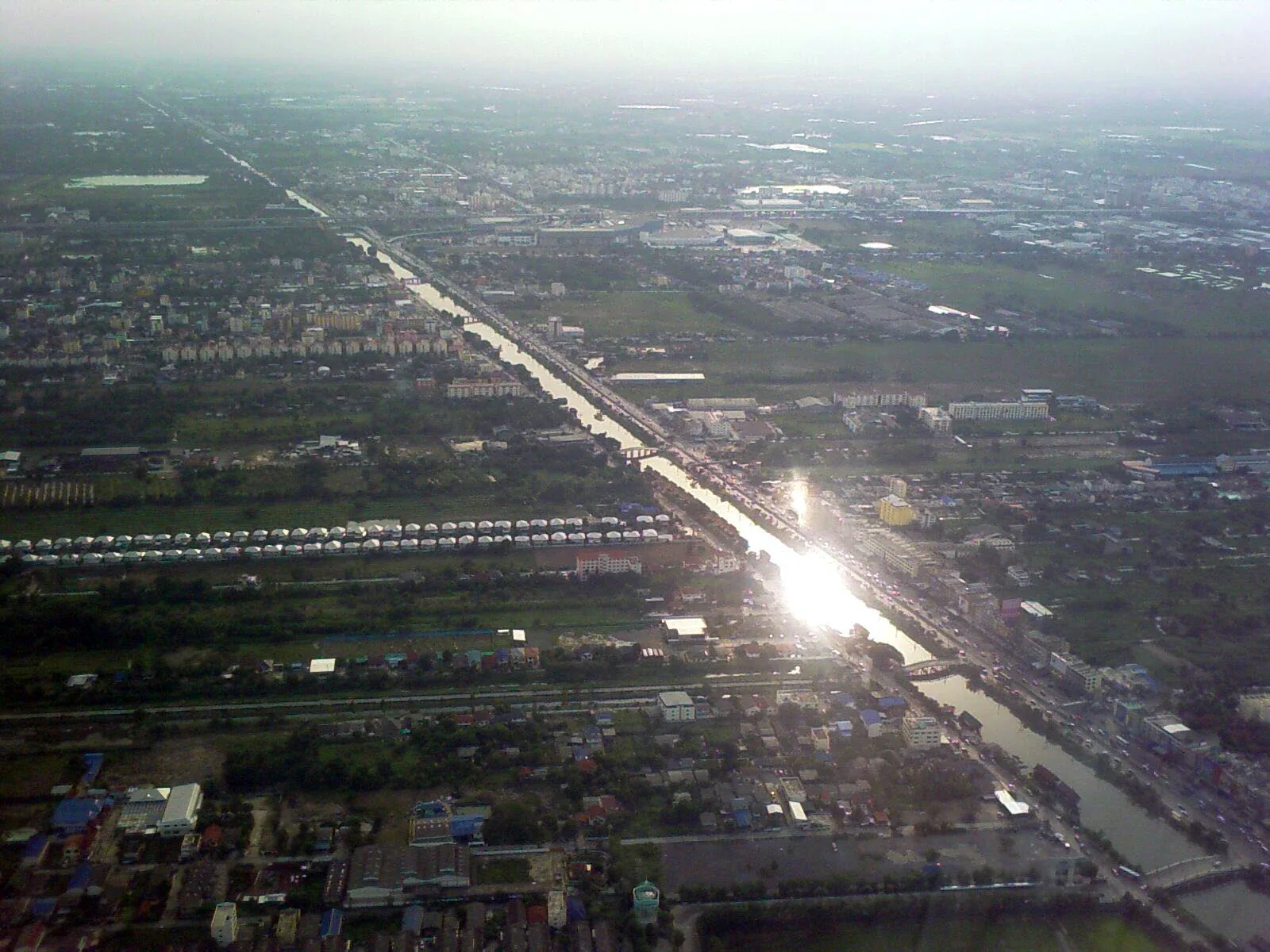
Pathum Thani occupies an unusual position—close enough to Bangkok to function as a bedroom community, far enough to maintain agricultural identity. The province demonstrates Thailand's ongoing urbanization in real time. New condominiums rise along the Rangsit corridor while lotus farmers maintain ponds their grandfathers dug. Shopping malls like Future Park Rangsit anchor highway intersections while morning markets operate from wooden stalls unchanged in decades.
This duality creates opportunities and tensions. Bangkok workers can afford larger living spaces. Provincial Thais face rising costs as development spreads. Foreign residents get authentic Thailand with metropolitan escape routes. The balance shifts yearly as the capital expands northward.
For visitors, Pathum Thani offers a glimpse of the Thailand that exists between tourism zones and complete rural isolation. It's neither Phuket beaches nor Chiang Mai coffee culture. It's morning glory farms and commuter traffic, lotus ponds and airport approach paths, wholesale markets and gold-domed mega-temples. The province makes sense to people who understand that Thailand contains multitudes—and who want access to several of them simultaneously.
Monthly Budget
Getting There
From Bangkok
Bus from Mo Chit 2 (30-50 min, 40-60 THB). BTS Sukhumvit extension reaches Lam Luk Ka. SRT Red Line commuter rail terminates at Rangsit. Don Mueang Airport just over the Bangkok border.
Local Transport
Motorcycle rental essential (2,500 THB/month). Limited public transport outside main routes.
Who It's For
Good Match
Bangkok commuters, remote workers, retirees seeking authentic Thailand, agriculture enthusiasts, budget travelers, those comfortable with Thai community life
Poor Match
English speakers needing support services, families requiring international schools, expats wanting established community, nightlife seekers
Best Time to Visit
Nov-Feb (Cool)
Perfect weather 16-28°C. Lotus blooming season.
Mar-May (Hot)
Intense heat 35-42°C. Lower prices.
Jun-Oct (Rainy)
Flooding risk. Check area history before renting.
Nearby Destinations
Bangkok
35-45 km, 40-60 min
Ayutthaya
40 km north, UNESCO site
Nonthaburi
25 km, floating markets