Provinces
🦅Phatthalung Province
Thailand's Birdwatcher's Paradise - Lakes, Mountains, and Authentic Culture
Thailand's Birdwatcher's Paradise - Lakes, Mountains, and Authentic Culture
Before dawn breaks over Thale Noi wetlands, the air fills with sounds that have drawn ornithologists here for decades. Thousands of migratory birds—herons rising from lotus fields, ibis gliding over still waters, rare waterbirds from Siberia and China settling into the marsh. This is Phatthalung at its most magical: a province where nature still dictates the rhythm of life, where freshwater lakes meet limestone mountains, and where you can live spectacularly well on what you'd spend on rent alone in Bangkok.
Tucked into southern Thailand's interior between the Banthat Range and the western shore of the vast Songkhla Lake system, Phatthalung Province is what happens when tourism development skips over a place entirely. The roughly 519,000 people living across its 3,424 square kilometres enjoy something increasingly rare in modern Thailand—authentic provincial life untouched by resort complexes and tour buses. Here, fishing communities still work Thale Sap with traditional yor lift-nets, rice farmers follow the same monsoon calendar their grandparents used, and the provincial capital moves at a pace that feels like stepping back thirty years.
For expats—particularly those working remotely, seeking exceptional value, or drawn to nature rather than nightlife—Phatthalung offers something approaching a secret. You can rent a lakeside apartment for what a closet-sized room costs in tourist areas. Fresh fish from this morning's catch costs less than a coffee in Chiang Mai. And the Thale Noi Waterfowl Reserve attracts serious birdwatchers from around the world, creating a small but passionate international community centered on environmental appreciation rather than bar hopping.
"Phatthalung is what happens when tourism development skips over a place entirely—and the result is something approaching a secret for those who discover it."
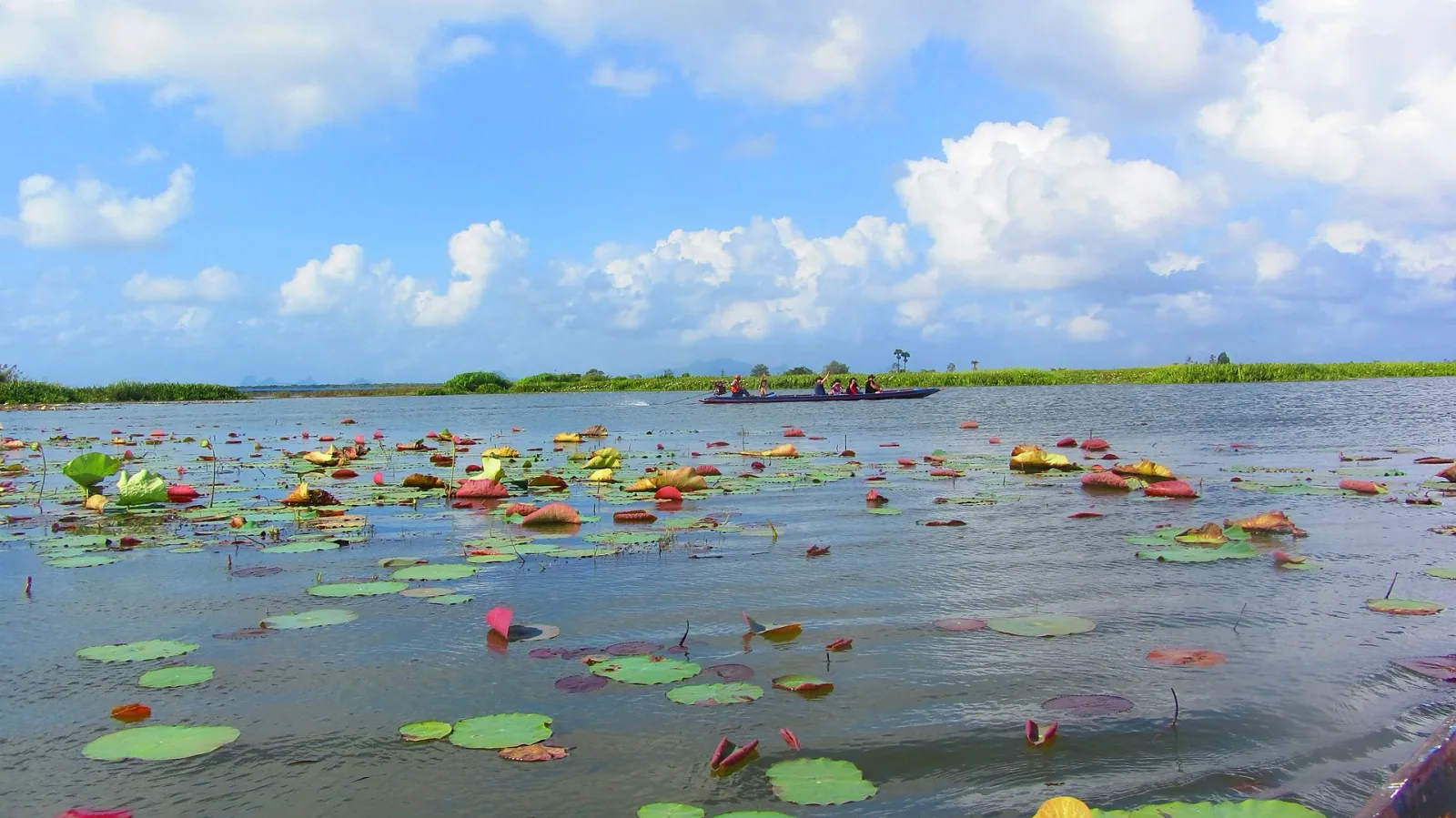
The crown jewel of Phatthalung, the one that puts it on international maps, is Thale Noi. The shallow northern arm of the Songkhla Lake system, this Ramsar-listed wetland sprawls across waters carpeted with lotus and red water-lily — one of Southeast Asia's most important bird sanctuaries. Between November and March migratory species arrive from as far as Siberia; more than 280 species have been recorded. Local boat captains who've spent their lives reading the marsh's rhythms lead dawn longtail tours through narrow waterways where you'll spot lesser whistling ducks, openbill storks, purple swamphens and, if you're lucky, the resident pheasant-tailed jacanas walking across the lily pads.
The same wetland holds another international distinction: in 2022 the FAO designated the Thale Noi Buffalo Wetland as Thailand's first Globally Important Agricultural Heritage System (GIAHS). Several thousand semi-wild water buffalo wade chest-deep through the lotus marsh, herded between dry-season pastures and wet-season lake islands by farmers in flat-bottomed boats — a peat-swamp grazing system found nowhere else on the planet. At sunrise the buffalo emerge from the mist in long single-file lines; it is one of the most photographed scenes in southern Thailand.
Then there's Khao Ok Thalu, the "broken mountain" that serves as Phatthalung's most distinctive landmark and appears on the provincial seal. A natural tunnel pierces straight through the limestone peak, creating a dramatic frame visible for miles. The stair-and-rope climb to the upper viewpoint is steep but short, and the reward is 360-degree views: Thale Sap spreading silver to the east, rice paddies quilting the countryside to the west, the town itself looking miniature below. A cave temple at the mountain's base adds spiritual dimension, with Buddha images tucked into cool stone chambers where locals come to make merit.
On the province's western flank, Khao Pu–Khao Ya National Park straddles the border with Trang in a tangle of limestone karst, rainforest and multi-tier waterfalls. Trails run past Nam Tok Pha Phai and Pha Bon, through caves with stalactites, and into habitat for serow, dusky langur and gibbons. Inside town itself, Wat Khuha Sawan — a royal-rank monastery built into the foot of Khao Khuha — shelters a reclining Buddha and 18th-century murals in a deep limestone cavern, while in Lam Pam district Wat Wang and the wooden Old Governor's Mansion (Wang Kao) preserve the world of Phatthalung's pre-modern ruling Na Phatthalung family.
Phatthalung's cultural heart beats strongest in two living traditions. Nora — the masked, peacock-costumed southern dance-drama that has its heartland here and in neighbouring Nakhon Si Thammarat — was inscribed on UNESCO's Representative List of the Intangible Cultural Heritage of Humanity in 2021. Initiation rites, wai-khru ceremonies and Nora training schools are still actively practiced in Phatthalung villages, and you can watch performances at cultural centres in town and at Wat Tha Khae. Nang Talung, the buffalo-hide shadow puppet theatre also long associated with the province, runs in parallel: small family-run museums and workshops south of town show puppets being carved, voices being improvised, and stories being projected onto a backlit screen by lamplight.
The provincial capital itself, Phatthalung City, preserves charming riverside character with colonial-era architecture, traditional wooden shophouses, and temples that feel genuinely used rather than tourist attractions. Morning markets explode with fresh produce, lake fish still gleaming, and vendors who've occupied the same stalls for generations. It's small enough to navigate easily but substantial enough to provide everything expats need—banks, clinics, government offices, decent internet infrastructure, and that rare commodity in tourist Thailand: genuine local prices.
Phatthalung's identity flows from water. The province's two great lakes—Thale Sap and Thale Noi—dictate daily rhythms in ways that concrete-bound city dwellers find hard to imagine. Fishing families wake before dawn to check bamboo traps set the previous evening. Long-tail boats cut across glassy water, their distinctive engine sound echoing across the marsh. Women in conical hats harvest lotus stems from shallow waters, movements practiced and efficient from decades of repetition.
The lakeside villages—some built on stilts over the water itself—preserve a lifestyle that's becoming rare in developed Thailand. Traditional fishing techniques using bamboo traps and hand-thrown nets still work better than modern methods in these shallow, vegetation-choked waters. Boat races during festivals celebrate this maritime heritage, with teams paddling traditional vessels in competitions that draw entire communities to the lakeshore. The connection between people and water here isn't romantic tourism marketing; it's genuine livelihood maintained across generations.
Agriculture shapes the other half of Phatthalung's character. Rice paddies stretch to horizons, with the planting and harvest calendar still dictating community rhythms. But the province is equally famous for fruit cultivation—pomelo, mangosteen, rambutan grown in orchards that have supplied Bangkok's markets for decades. During harvest seasons, farmers markets overflow with produce at prices that make Bangkok expats weep with envy. The food culture ties directly to this agricultural abundance: fresh, seasonal, and deeply connected to what the land and water provide.
Phatthalung's cuisine reflects its dual water heritage. Fresh lake fish dominates every meal—grilled whole, steamed in banana leaves, turned into spicy salads, or simmered in southern-style curries heavy with turmeric and galangal. Coastal access brings seafood into the mix: blue crab, squid, prawns prepared with the bold, spicy flavors that characterize southern Thai cooking.
What strikes expats most is the price. An excellent meal at a local restaurant—fresh fish, rice, vegetables—costs 50-100 baht. The fish market sells this morning's catch for less than you'd pay for farmed fish in Bangkok. For those tired of tourist-area prices, Phatthalung's food scene feels like discovering a secret the rest of Thailand forgot to share.
The cultural traditions that set Phatthalung apart go beyond beautiful landscapes. Together, Nora dance-drama (a UNESCO Intangible Cultural Heritage tradition since 2021) and the older Nang Talung shadow-puppet theatre make this one of the south's deepest performance-arts heartlands — both still living rather than museum-preserved, with active masters, apprentices, ritual cycles and village-temple performances rather than tourist-stage demonstrations.
Phatthalung's quietness—part of its charm—means getting here takes more effort than arriving at a beach-resort destination. The province has no commercial airport. The nearest options are Hat Yai (HDY, ~1.5 hours southeast by minibus, 100–150 baht), Trang (TST, ~1 hour west) and Nakhon Si Thammarat (NST, ~2 hours northeast). Krabi sits 2.5–3 hours to the northwest and Trang an hour west, both useful alternate arrival points if you're touring the south.
The cleanest way from Bangkok is the train. Phatthalung is a stop on the State Railway of Thailand's Southern Line, ~840 km from the capital; long-distance services now depart Krung Thep Aphiwat Central Terminal (Bang Sue) rather than Hua Lamphong, with overnight sleepers arriving early morning (12–14 hours, 600–1,800 baht depending on class). Government buses from Bangkok's Southern Bus Terminal cover the same route in 12–14 hours for 400–700 baht.
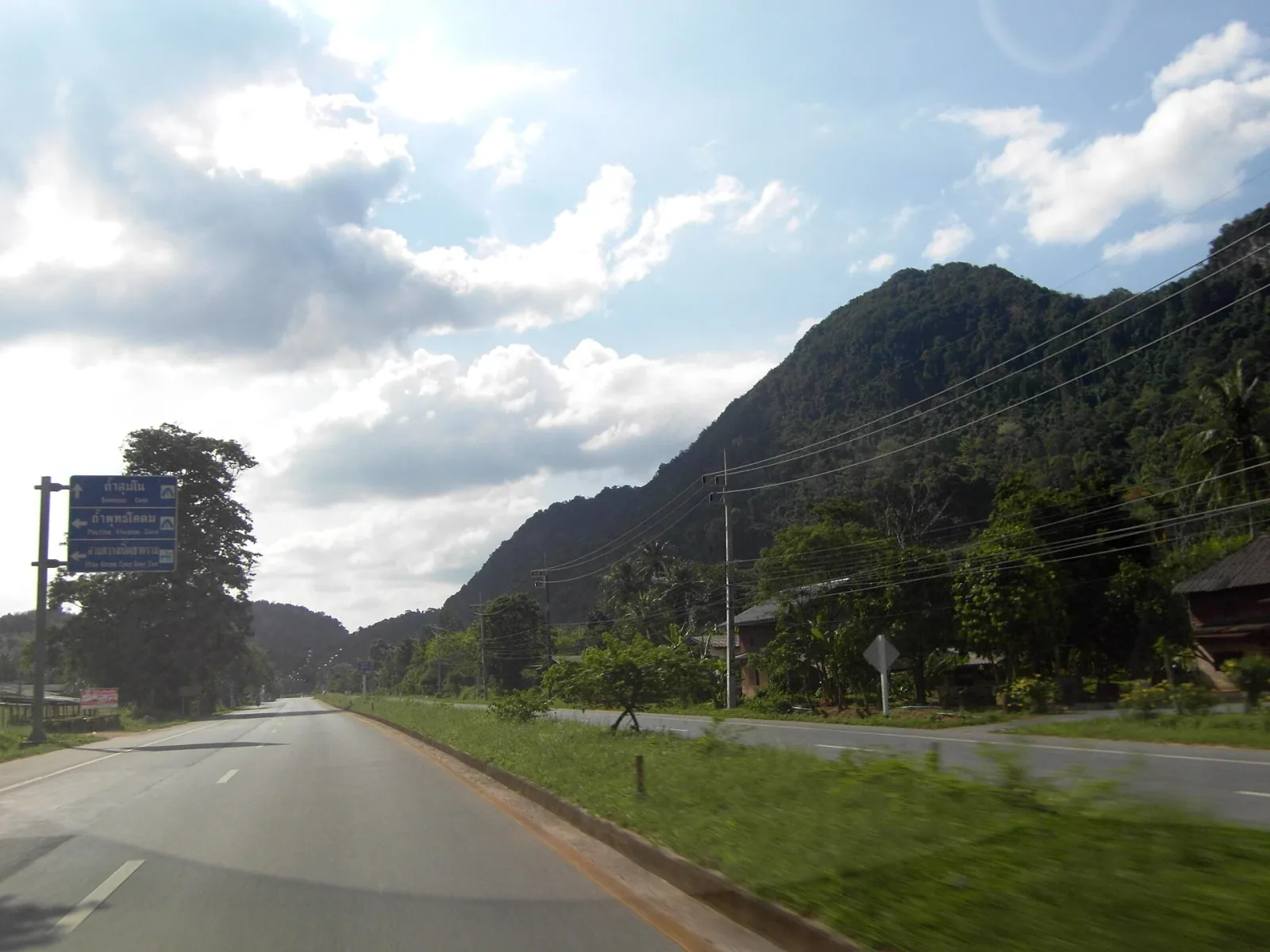
Once here, a motorcycle becomes essential for truly experiencing the province. Monthly rentals run 1,200-1,800 baht—cheaper than weekly tourist rentals elsewhere. Roads are well-maintained, traffic is light, and navigation is straightforward. Songthaews (shared pickup trucks) serve main routes for 15-30 baht per person, adequate for basic town transportation but limiting for lake access or national park visits. Grab and Bolt operate minimally in town. For proper exploration—finding the perfect lakeside sunset spot, visiting remote temples, accessing less-known beaches—you need your own wheels. For comprehensive guidance on getting a Thai motorcycle license and understanding local traffic regulations, check our driving guides.
Phatthalung's accommodation market operates on genuine Thai prices rather than tourist inflation. Budget apartments—basic Thai-style studios with fan, private bathroom, and minimal furnishings—rent for 3,500-7,500 baht monthly in Phatthalung Town or out near Lam Pam on the lake shore. They're clean and adequate, though don't expect Western amenities or English-speaking landlords.
Mid-range options (7,500-18,000 baht/month) offer modern studios or one-bedrooms with air conditioning, WiFi, private bathrooms, and sometimes pool access. These cluster in Phatthalung City center or near the coast, providing comfort suitable for longer-term settling. For digital nomads needing reliable internet and decent workspace, this tier delivers what you need without the premium prices charged in Chiang Mai or Bangkok.
The luxury tier—relatively speaking—includes beachfront bungalows, lakeside villas, and resort residences running 18,000-50,000+ baht monthly. These offer spectacular views of Thale Sap Lake or coastal scenery, full amenities, and the kind of setting that makes remote work feel like permanent vacation. Even at the top end, you're paying a fraction of comparable properties in developed areas.
→ Start with Facebook groups like "Phatthalung Expats" and Thai property pages
→ Plan to visit in person—many landlords don't advertise online
→ Best locations: Phatthalung City for convenience, Lam Pam for lakeside views, Khao Chaison for hot-spring setting
→ Negotiate 6+ month leases for 10-15% discounts
→ Face-to-face meetings work better than digital communication for securing properties
Internet infrastructure in Phatthalung is adequate for remote work but slower than major cities. Fiber optic service reaches Phatthalung City (500-700 baht/month for 50-100 Mbps from AIS, True, or 3BB), sufficient for video calls, cloud work, and streaming. Mobile data provides reliable backup at 10-20 baht per gigabyte. A few cafes offer WiFi and laptop-friendly seating, though don't expect the coworking scene you'd find in established digital nomad hubs.
The emerging remote worker community tends toward nature enthusiasts, bird photographers, and those prioritizing cost savings over urban amenities. Facebook groups connect the scattered expats, though social gatherings happen less frequently than in Bangkok or Chiang Mai simply due to smaller numbers. The advantage: everyone tends to know everyone, creating tight-knit community feel rather than anonymous crowds.
Healthcare quality handles routine needs adequately at significantly cheaper costs than Western standards. Phatthalung Hospital (public) and private clinics serve expats for basic consultations (300-600 baht) and specialist visits (600-1,200 baht). For serious medical issues, you'll travel to Hat Yai's Bangkok Hospital branch or larger southern centers. Health insurance remains recommended—Thai policies run 25,000-50,000 baht annually depending on coverage. For detailed guidance on visa requirements and banking setup, consult our expat essentials guides.
Phatthalung offers exceptional value for nature lovers and those seeking authentic provincial living. Actual costs vary based on accommodation location (town center vs. lakeside vs. coastal), dining choices, and activity frequency. Bird watching season may attract higher accommodation rates.
Phatthalung's tropical monsoon climate creates distinct seasons that dramatically affect the experience. November through February delivers perfect weather—temperatures hovering around 24-28°C, minimal rain, clear skies ideal for photography and outdoor exploration. This is peak bird watching season when migratory species fill the wetlands, making it both the best time and the busiest (relatively speaking—Phatthalung never feels crowded). Accommodation prices rise slightly but remain far below tourist-area rates.
The hot season (March-May) tests your heat tolerance with temperatures climbing to 32-37°C. Humidity increases, afternoon siestas become mandatory, and you'll understand why Thais schedule everything before 11am or after 4pm. But prices drop, crowds disappear entirely, and if you can handle the heat, you'll have natural attractions nearly to yourself.
Monsoon season (May-October, strongest June-September) brings heavy rains, occasional flooding, and landscapes so lush they seem to glow. Temperatures moderate to 28-32°C, and the province takes on atmospheric beauty—mist over the lakes, dramatic storm clouds, everything green and alive. This is the authentic season when tourism infrastructure nearly shuts down and you experience Phatthalung as locals do. Just know that national park access and lake activities can be limited by weather.
Phatthalung works brilliantly for a specific type of expat. If you're drawn to nature over nightlife, value authentic experiences over resort amenities, prioritize cost savings, and can handle limited English-speaking infrastructure, this province offers something rare in modern Thailand. Bird watchers find paradise here. Remote workers seeking maximum value for their budget discover they can live spectacularly well on modest income. Retirees tired of expat-heavy tourist towns appreciate the genuine Thai provincial character.
But Phatthalung demands compromises. The small expat community means limited Western amenities, few international restaurants, and social scenes that require effort to cultivate. Job opportunities beyond remote work barely exist. Healthcare facilities handle routine needs but serious medical issues require travel to larger cities. Internet infrastructure works adequately but won't match fiber speeds in Bangkok or Chiang Mai. Entertainment options cluster around nature and culture rather than bars and shopping.
Neighbouring provinces offer alternatives if you're touring southern Thailand. Trang sits an hour west with the Trang Islands archipelago and its own small Bangkok-served airport. Hat Yai and Songkhla, ~1.5 hours southeast, deliver urban amenities, the south's main international airport (HDY) and major hospitals. Nakhon Si Thammarat is ~2 hours northeast — historic Srivijaya capital and the other Nora heartland — and Krabi is 2.5–3 hours northwest for the Andaman beaches. Each makes a useful base for exploring Phatthalung's natural attractions while staying close to more services.
Phatthalung won't suit everyone, and that's precisely why it works for those it fits. In an increasingly homogenized Thailand where tourist areas blur into indistinguishable sameness, this province preserves something authentic. The birds still migrate as they have for millennia. Fishing families still work the lakes with traditional methods. Rice farmers still follow agricultural calendars their ancestors used. And you can still live here on a budget that would barely cover rent elsewhere, surrounded by natural beauty, experiencing Thailand as it was before mass tourism reshaped everything. For the right person, that's not a compromise—it's exactly the point.
Provincial Highlights
Specialty
Bird Watching Paradise
Main Attractions
Thale Noi wetlands, Khao Ok Thalu, Khao Pu–Khao Ya NP
Best For
Bird watchers, nature lovers, remote workers, eco-tourists
Peak Bird Season
November-February (migratory birds)
Quick Take
Phatthalung Province offers Thailand's best destination for nature lovers, bird watchers, and expats seeking authentic provincial living at exceptional value. Diverse natural attractions, peaceful lifestyle, and tight-knit community create ideal conditions for long-term settling. Perfect for remote workers and those embracing slower pace combined with environmental appreciation. Ideal for adventurers seeking genuine Thailand without tourist infrastructure.