Provinces
🌿Prachin Buri Province
Khao Yai's south side, Dvaravati ruins, and Thai herbal medicine
Khao Yai's south side, Dvaravati ruins, and Thai herbal medicine
The clinic queue at Chao Phraya Abhaibhubejhr Hospital starts forming before 7am. Locals in flip-flops, pilgrims from upcountry, a few Thai-speaking foreigners — all here for consultations that mix Western medicine with the herbal compounds the hospital is nationally famous for. The handsome yellow colonial-era building dates from 1909; the herbal-medicine programme dates from the 1980s, and its yellow-and-green branded products now sit on shelves in every Bangkok pharmacy. Stand on the hospital lawn at dawn and you can see what most outsiders miss about Prachin Buri Province: it's a quiet riverside place that does a few specific things — herbal medicine, Khao Yai's south side, the Dvaravati ruins of Si Mahosot — exceptionally well.
Prachin Buri sprawls across 4,762 square kilometers of eastern Thailand, about 135 kilometers from Bangkok, positioned between the capital's urban edge and the Cambodian border. Most travellers know it — if they know it at all — as one of the four provinces sharing Khao Yai National Park, Thailand's first national park and most accessible wildlife reserve. But that "gateway" label undersells the province. Until 1993, what is now Sa Kaeo was part of Prachin Buri; the older province retained the historical riverside capital and the central Dvaravati archaeological zone around Si Mahosot, the most significant ancient town in eastern Thailand outside Lopburi.
The capital, Prachin Buri City, is a quiet town strung along the Prachin Buri River — the upper course of what becomes the Bang Pakong before it reaches the sea. Shophouses selling farm equipment outnumber tourist-oriented businesses by ten to one. On weekends, Bangkok families drive out for the Abhaibhubejhr Museum, Khao Yai picnics, and herbal-cosmetic shopping. During the week, the province returns to its default state: provincial Thailand, unhurried and unconcerned with tourism, where the rhythm of life follows planting seasons and temple festivals rather than high and low tourist seasons.
"Stand on the hospital lawn at dawn and you can see what most outsiders miss about Prachin Buri: it's a quiet riverside place that does a few specific things exceptionally well."
The Chao Phraya Abhaibhubejhr Hospital, on the river in Mueang Prachin Buri, is the province's most quietly famous institution. It's a fully accredited general hospital under the Ministry of Public Health, but for the last forty years it has also run Thailand's leading programme to integrate Thai traditional medicine with conventional care. Its herbal-medicine factory and museum, set in a restored 1909 colonial-era hospital building, are open to the public; the in-house brand of teas, balms, soaps, and cosmetics — sold under the green Abhaibhubejhr label — has become a national favourite found in pharmacies from Bangkok to Chiang Mai.
Even if you aren't here for a consultation, the herbal museum and the shop are worth an hour. The downstairs gallery walks through the history of Thai traditional medicine, the cultivation of medicinal herbs in the province, and the painstaking work of standardising plant-derived treatments to modern pharmaceutical-grade standards. Upstairs, a small café serves butterfly-pea tea and herbal cookies. The shop sells everything the factory produces at a noticeable discount to Bangkok pharmacy prices.
Around the hospital, a small district of herbal pharmacies, traditional-medicine clinics, and Thai massage shops has grown up to serve patients and their families. The pace is calm and orderly, the way provincial hospital districts often are. It's the easiest place in Thailand to spend an afternoon learning how Thai herbal medicine actually works as a clinical practice, not a wellness aesthetic.
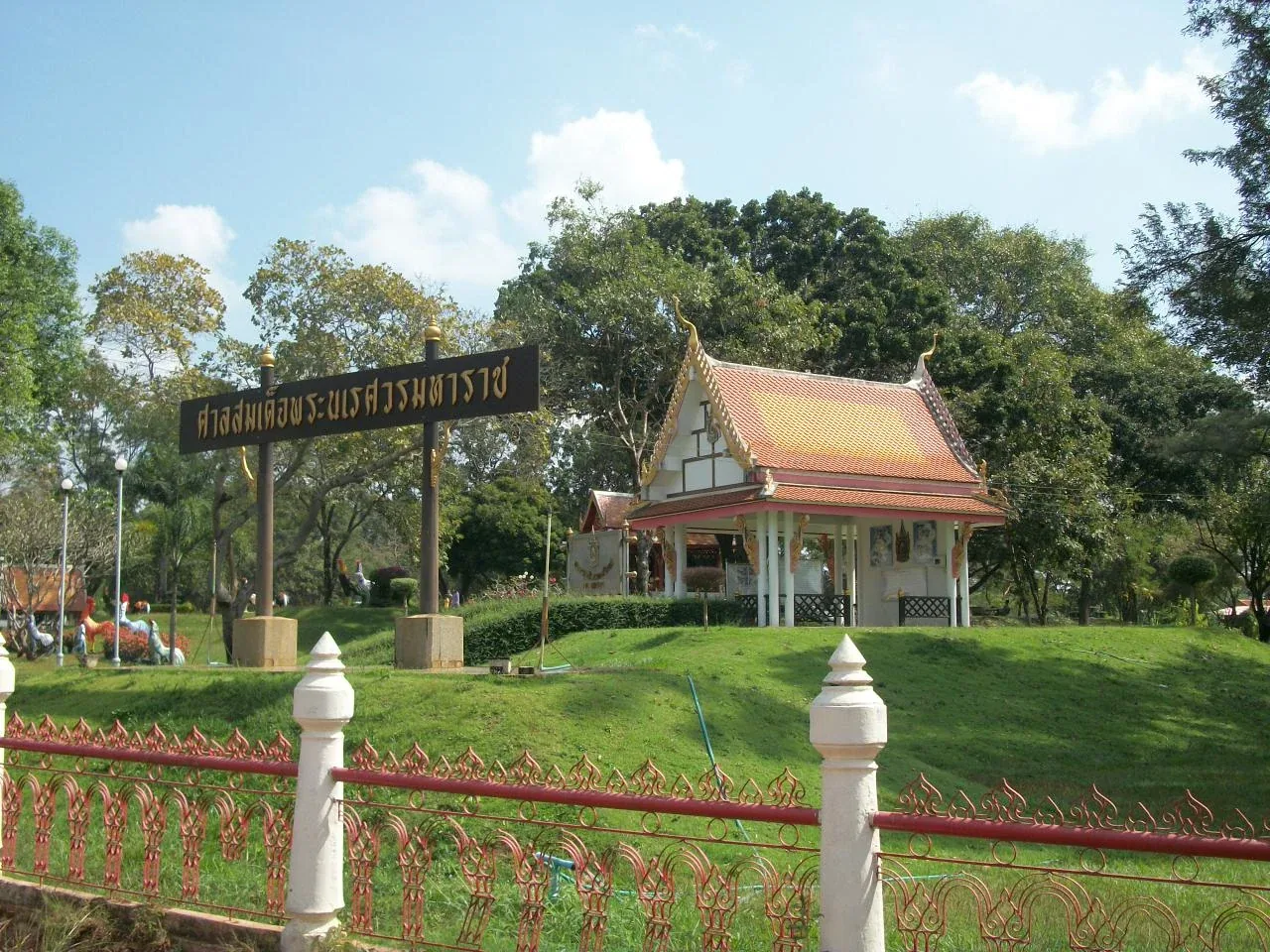
Khao Yai National Park is Thailand's wildlife superstar — 2,168 square kilometres of protected forest where elephants, gibbons, hornbills, and over 300 bird species live in one of Southeast Asia's most intact ecosystems, and the core of the UNESCO-listed Dong Phayayen–Khao Yai Forest Complex inscribed in 2005. Most visitors come in from the Pak Chong gates on the north side, where the tourism infrastructure (resorts, vineyards, animal sanctuaries) clusters. Prachin Buri's side, in the south, is quieter. The Haew Narok waterfall — Khao Yai's tallest, a three-tier drop of over 150 metres — falls on the Prachinburi side and is reached most easily from the southern gate near Na Di district.
From Prachin Buri town, the southern gate is about 60–70km by road. Local guesthouses and eco-lodges arrange guided wildlife treks (1,500-2,500 THB per day), night safaris for spotting nocturnal species like civets and porcupines, and multi-day camping expeditions. The southern sector is a good bet for hornbill and gibbon viewing, and during the dry season (November-February) elephants come down to the salt licks and remaining water sources. With patience and a guide who knows the trails, sambar, barking deer, and macaques are reliable sightings.
The park's diversity is staggering. Hornbills glide between canopy trees, their wingbeats audible from hundreds of metres away. Gibbons sing their dawn chorus, the sound carrying across valleys. Barking deer, wild pigs, and macaques appear along trails. Tigers are present in the broader Dong Phayayen-Khao Yai complex but the surveyed Khao Yai population is small — likely fewer than ten cats — and sightings are exceptionally rare. More likely you'll find tracks in muddy trail sections and hear from rangers where the most recent camera-trap photos came from.
Best time: Early morning (5:30-8am) and late afternoon (4-6pm) offer the highest wildlife activity. Midday heat drives most animals into shade.
Season matters: November-February (cool season) provides the best viewing as animals congregate near remaining water sources. March-May (hot season) makes wildlife spotting difficult as animals retreat to deep forest.
Hire local guides: Guides from Prachin Buri guesthouses know the eastern sector intimately, speak at least basic English, and cost 1,500-2,000 THB per day. Their knowledge dramatically increases your chances of significant wildlife encounters.
About 20km south of Mueang Prachin Buri, in the district that now bears its name, lie the moated remains of Si Mahosot — a Dvaravati-period town that flourished between roughly the 6th and 11th centuries, later overlaid by Khmer-era structures. The site sprawls across paddy fields and scattered groves: rectangular earthen ramparts enclose a town centre studded with brick foundation platforms, a sacred well, votive tablets, and the famous "Buddha's footprint" relief carved into laterite. The dig has been ongoing since the early 20th century and continues to turn up Roman beads, Chinese pottery shards, and locally cast bronze figures — evidence of how connected this small inland kingdom was to the long-distance trade networks of mainland Southeast Asia.
Si Mahosot Historical Park is run by the Fine Arts Department; a small museum on site (entry around 100 THB foreigners) interprets the finds. Don't expect Sukhothai-scale visitor crowds. On most weekdays you'll have the place largely to yourself, which suits the contemplative scale of the ruins.
Closer to town, the riverside Wat Kaeo Phichit — a royal-style wat built in the 19th century — is the most striking temple in Mueang Prachin Buri proper, with elegant carved wooden gables and a quiet riverside walk. Local weekend markets cluster along the Prachin Buri River and on the bridge approaches; they're working farmer-and-fish markets rather than the staged floating markets you'll find on Bangkok day trips, and the prepared food at the morning stalls (khao tom, grilled fish, fresh fruit) is excellent and cheap.
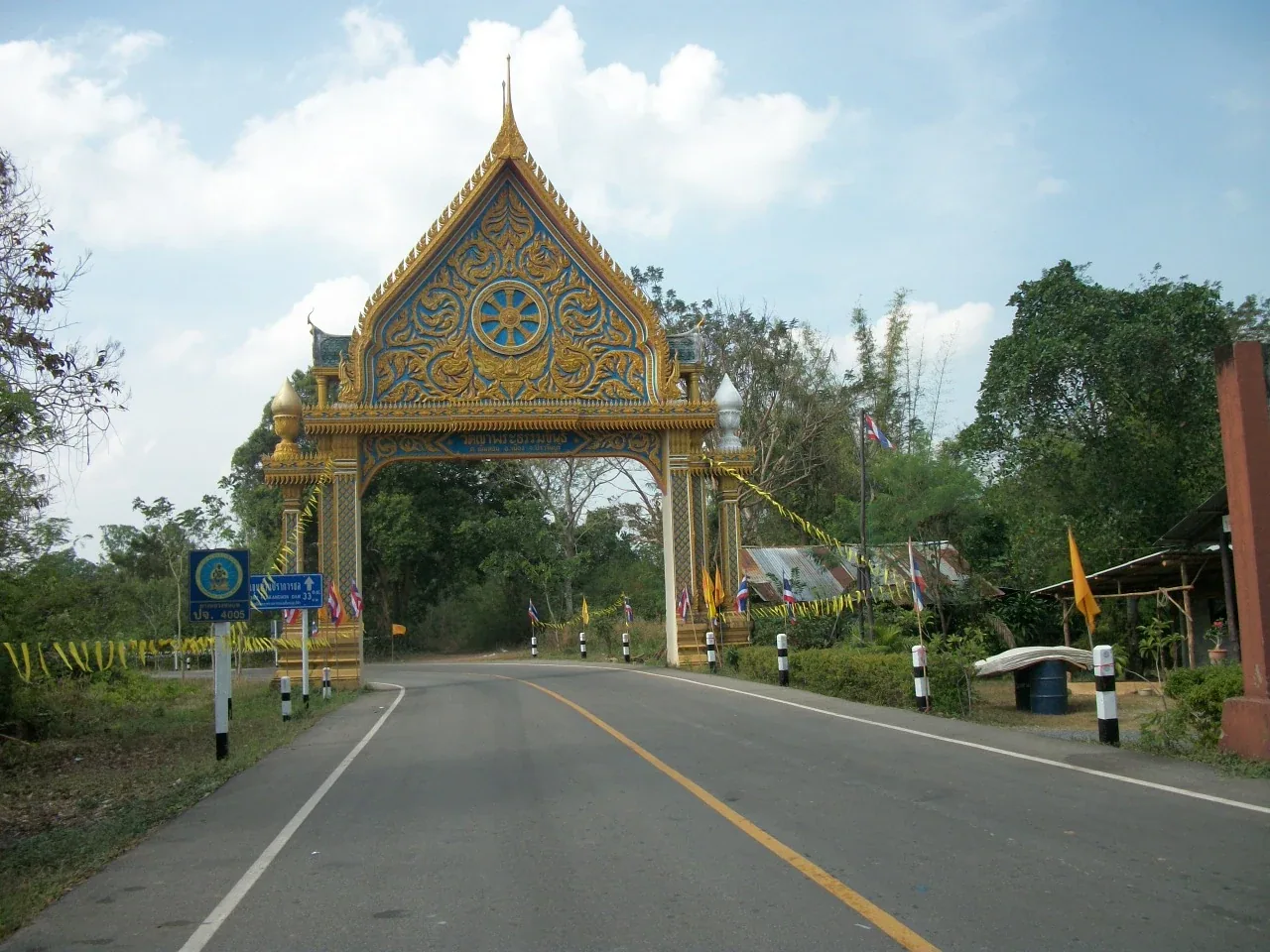
Here's the financial reality: you can live comfortably in Prachin Buri on 22,000 THB monthly. A simple but clean bungalow with AC, hot water, and WiFi runs 6,000-10,000 THB. Street food meals cost 30-60 THB. The morning market sells produce so cheap it feels like mathematical error. Scooter rental runs 2,500 THB monthly. Your biggest expense becomes activities—Khao Yai park entry, guide fees, occasional trips—but even those remain affordable by international standards.
The trade-off is infrastructure. Internet reliability ranges from adequate to frustrating. English outside guesthouses is rare. International restaurants don't exist—you're eating Thai food or Thai-Chinese food, period. Entertainment options consist of night markets, temple festivals, and whatever nature activities you organize. If you need regular access to international schools, advanced healthcare, organized expat activities, or diverse dining, choose Chiang Mai or Bangkok. Those cities exist precisely to provide such amenities.
But for wildlife photographers, nature enthusiasts, remote workers seeking minimal costs, retirees comfortable with rural life, or anyone using Thailand as a base for regional exploration, Prachin Buri offers something rare: authentic provincial Thailand within easy reach of Bangkok, surrounded by remarkable nature, at prices that make long-term stays genuinely sustainable. The small expat community (200-400 people, mostly transient) means you're forced to engage with actual Thai culture rather than retreating into expat bubbles.
Cool Season (November-February): Perfect weather with temperatures 18-28°C, clear skies, excellent wildlife viewing. This is when to visit. Khao Yai's elephants are most visible near water sources. Book accommodations and guides early—it's peak season.
Hot Season (March-May): Brutal heat reaching 35-40°C makes outdoor activities challenging. Wildlife becomes difficult to spot as animals retreat to deep forest shade. Waterfalls run low. Fewer tourists mean lower prices, but you'll understand why. Some accommodations close.
Rainy Season (June-October): Afternoon thunderstorms, lush green landscapes, moderate temperatures 28-32°C. Waterfalls at peak flow—spectacular. Not constant rain; usually sunny mornings with afternoon downpours. Wildlife viewing remains good. Hiking trails become muddy but manageable. Significantly fewer tourists and lowest prices. Actually quite nice if you don't mind getting wet.
Prachin Buri appeals to specific travelers: wildlife photographers who prioritize access to Khao Yai over resort comfort, nature lovers comfortable with basic infrastructure, remote workers seeking minimal living costs, retirees wanting rural Thai immersion, and anyone who's spent time in tourist areas thinking "I wish I could just live near the park."
It doesn't work for everyone. If you need regular social interaction in English, organised expat activities, diverse international dining, or reliable high-speed internet, you'll struggle here. Bangkok sits about 2-2.5 hours away by bus, car, or train for visa runs and occasional doses of urban energy; for routine medical needs Abhaibhubejhr Hospital is on your doorstep, but anything specialised typically means Bangkok or Chonburi.
What you get instead is Thailand as it exists outside tourist circuits. Morning markets where you're the only foreigner. Temple festivals where monks invite you to join ceremonies despite the language barrier. Neighbours who bring you fruit from their orchards and seem genuinely curious about your life. And, in the same hour's drive, access to the south side of one of Southeast Asia's most important national parks and the moated ruins of a 1,500-year-old town.
The province's obscurity is its appeal. Most travellers rush past Prachin Buri on their way to Khao Yai's Pak Chong gates or the Cambodian border, never stopping to discover what lies between. That's fine — it keeps prices low, experiences authentic, and the wildlife habitats undisturbed. If you understand what you're getting (and what you're giving up), Prachin Buri offers a particular kind of Thailand: a riverside town with a hospital that grows its own herbs, a Dvaravati ruin where you'll be the only visitor, and the quieter southern flank of Khao Yai for the days you want elephants and waterfalls.
Provincial Highlights
Famous For
Abhaibhubejhr herbal medicine, Khao Yai's south side, Si Mahosot
To Bangkok
~135km / 2-2.5 hours
Best For
Herbal-medicine pilgrims, archaeology buffs, quieter Khao Yai access
Quick Take
A quiet riverside province best known for Chao Phraya Abhaibhubejhr Hospital (Thai herbal medicine), the Dvaravati ruins at Si Mahosot, and the southern flank of Khao Yai National Park. Limited tourism infrastructure, low costs.
Living simply near world-class wildlife. Activities become main expense.
From Bangkok
Bus: 2-2.5 hours
~140-180 THB from Ekkamai / Mo Chit 2
Train
Eastern Line, Prachinburi station
From Krung Thep Aphiwat / Hua Lamphong, ~3 hours
To Khao Yai
~60-70km to south gate (Na Di)
Haew Narok waterfall on this side