Provinces
🏖️Prachuap Khiri Khan
Where pristine beaches meet wild elephants
Where pristine beaches meet wild elephants
The checkpoint guard glances at my passport, nods, and waves me through the Royal Thai Air Force base gates. Beyond the security booth, a kilometer of perfect white sand curves around turquoise water so clear you can count fish from shore. This is Ao Manao—Lime Bay—consistently rated among Thailand's most beautiful beaches and completely inaccessible without passing military security. It's also perfectly emblematic of Prachuap Khiri Khan province: stunning natural beauty protected by circumstances that kept mass tourism at bay, stretched along roughly 220 kilometres of Gulf of Thailand coastline where Thai fishing villages still operate as they have for generations, where wild elephants gather at watering holes you can actually visit, and where the cost of living remains so low that retirees from Hua Hin drive ninety kilometers south specifically to save money on groceries.
Prachuap Khiri Khan occupies Thailand's narrowest point—just twelve kilometers separate the Gulf of Thailand from the Myanmar border in some sections. This pinched geography creates dramatic landscapes where limestone mountains plunge directly into the sea, where national parks protect ecosystems ranging from mangrove wetlands to mountain forests, and where the Royal Thai Air Force established Wing 5 base, inadvertently preserving what might otherwise have become another overdeveloped beach resort. The provincial capital remains an actual working fishing town of around 30,000 people, where the morning fish market matters more than tourist attractions and where the Friday-Saturday walking street caters primarily to Thai families rather than international backpackers.
What Prachuap offers is increasingly rare in coastal Thailand: genuine beauty without performance. The beaches are spectacular not because developers maintained them for resorts but because fishing communities and military protection preserved them naturally. The culture is authentic not because it's been curated for tourists but because tourists simply haven't arrived in sufficient numbers to justify curation. The cost of living is exceptionally low not because it's remote—Bangkok is just four hours away—but because the province never developed the infrastructure that drives up prices elsewhere. If you've grown tired of Thailand's tourist circuit but aren't ready to abandon beaches entirely, Prachuap might be exactly what you didn't know you were looking for.
"Prachuap offers genuine beauty without performance—beaches spectacular not because developers maintained them, but because fishing communities and military protection preserved them naturally."
There's something delightfully absurd about one of Thailand's most pristine beaches requiring military security clearance. Ao Manao sits entirely within Royal Thai Air Force Wing 5 base, which means the price of admission is showing your passport (or ID for Thais) at the checkpoint — entry itself is free; the small fees you may pay are for beach chair rental and accepting that the beach closes around dusk when base access ends. The result of this military oversight is a beach so clean, so well-maintained, and so free from the usual coastal development chaos that it feels like stepping into Thailand from thirty years ago.
The three-kilometer crescent of white sand fronts calm, shallow water perfect for swimming year-round. Casuarina trees provide natural shade without the infrastructure of beach umbrellas and loungers found at tourist beaches. Seafood restaurants at the base entrance serve fresh catches at genuinely local prices—grilled fish, tom yum, fried rice for 60-120 baht. Thai military families picnic on weekends, creating a genuinely family-friendly atmosphere where aggressive vendors and beach hustlers simply don't exist because the air force doesn't permit them.
The inconvenience of showing ID and adhering to closing times is minor compared to what you gain: a beach experience that feels protected rather than commercialized. Weekdays see remarkably few visitors. Even weekends, when Thai families fill the sand, never approach the crowds of Pattaya or Phuket. Swimming here, the water so clear that small fish dart around your legs, you understand what Thai beaches offered before tourism became Thailand's dominant industry—and why people willing to live near military installations might accept the trade-offs.
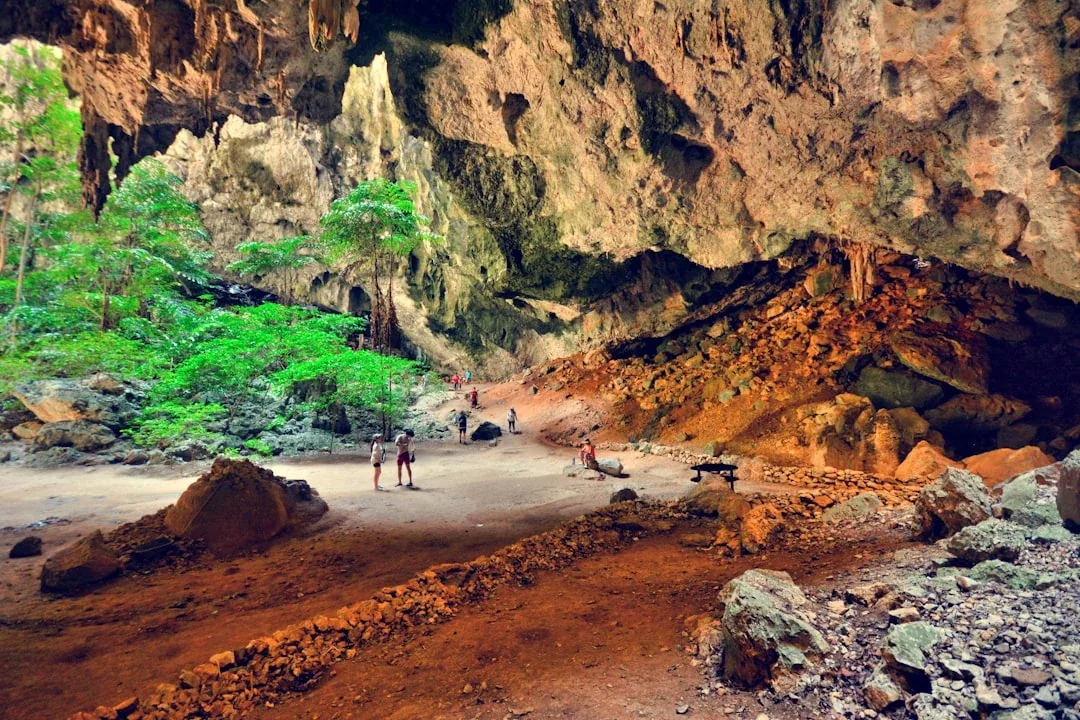
Sixty kilometers north of Prachuap town, Khao Sam Roi Yot National Park protects ninety-eight square kilometers of Thailand's most dramatic coastal scenery—limestone peaks rising three hundred meters from wetlands and beaches, creating the "Mountain of Three Hundred Peaks" that gives the park its name. But what draws most visitors is Phraya Nakhon Cave, where nature and Thai royalty converge in one of the country's most photographed scenes: a golden royal pavilion sitting inside a massive cavern, illuminated by a natural skylight that transforms the space into something between cathedral and throne room.
Getting there requires effort—a thirty-minute hike from Laem Sala Beach, much of it steep steps under full sun. The timing matters critically: arrive between 8-10 AM when the skylight angle creates the iconic lighting on the pavilion. Too early and shadows obscure it; too late and the light shifts wrong. But when you time it correctly and emerge into the cavern to see the golden Kuha Karuhas Pavilion bathed in celestial light, the hike earns its discomfort. Built in 1890 for King Rama V's visit and later used by King Rama VII, the pavilion represents Thai reverence for places where natural grandeur and human artistry meet harmoniously.
Beyond the famous cave, the park offers genuine wilderness: mangrove boardwalks where you might spot dusky langurs swinging through trees, secluded Sam Phraya Beach for swimming without crowds, and Tham Kaeo Cave with impressive stalactite formations. The diversity compressed into one park—coastal wetlands, mountain forests, limestone caves, beaches—creates opportunities for multi-day exploration that casual visitors driving from Bangkok for Phraya Nakhon alone completely miss. Park entry costs 200 baht for foreigners, and the investment rewards serious nature enthusiasts who commit more than a quick photo stop.
Thailand has dozens of elephant camps where you can ride, bathe, or feed captive elephants. Kui Buri National Park, ~30-40 kilometres north of Prachuap town in the inland hills of Kui Buri district, offers something fundamentally different: the chance to observe wild elephant herds in their natural habitat with near-guaranteed sightings during dry season. This isn't tourism infrastructure masquerading as conservation. It's actual wildlife management creating sustainable viewing opportunities without compromising animal welfare.
The park's evening safaris (departing 4-5 PM) transport visitors to viewing platforms overlooking watering holes and grasslands where elephants emerge from forest to drink and graze as temperatures cool. During peak dry season (January-April), herds numbering thirty to fifty elephants appear reliably, along with gaur (wild cattle), banteng, sambar deer, and diverse birdlife. The viewing distance is significant—binoculars or telephoto lenses essential—but that's precisely the point. You're watching truly wild animals behaving naturally rather than performing for tourists.
Park guides provide transport in covered trucks and spotting expertise, explaining elephant behavior and park conservation efforts. The safari truck/guide costs around 1,000-1,500 baht per group plus park entry (200 baht foreigners, 100 baht for kids), and bookings during high season should be made days or weeks in advance. The experience can't compete with elephant camps for close contact or Instagram-worthy selfies. But for those interested in wildlife conservation over entertainment, watching wild elephants emerge from jungle as sunset paints the grasslands gold creates memories that manufactured elephant encounters struggle to match.
Best Season: December through April offers highest elephant viewing probability as dry conditions concentrate animals at watering holes. January-March provides peak sightings—near 100% success rate during evening safaris.
Booking: Contact park directly or book through guesthouses in Prachuap. Peak season (December-February) requires 3-7 days advance notice. Rainy season (June-October) has lower sighting rates but fewer tourists and discounted rates.
What to Bring: Binoculars essential for viewing at safe distances. Long lens if photographing (200mm minimum). Insect repellent, sun protection, and water. Wear dark, neutral colors—bright clothing can disturb wildlife.
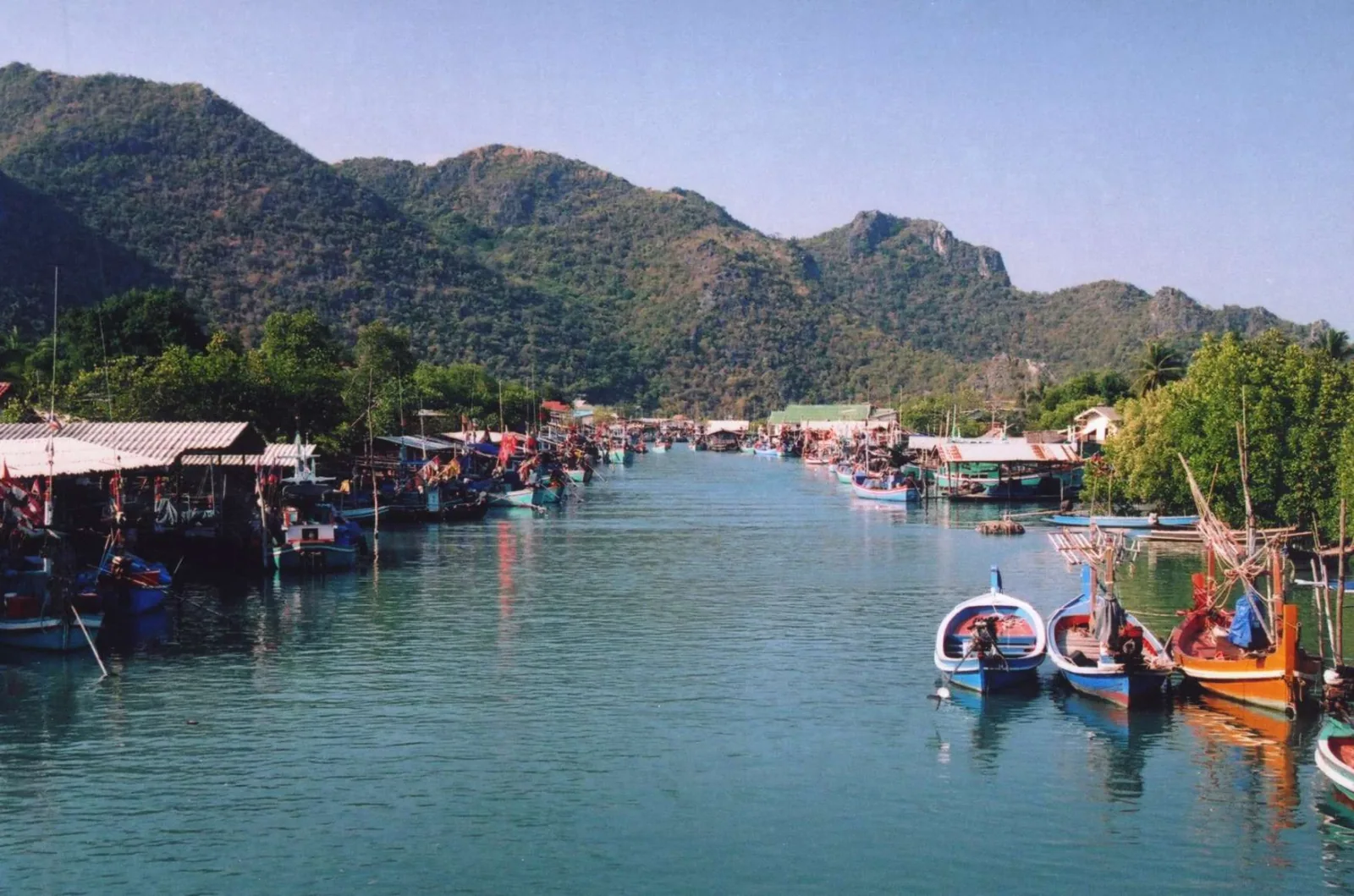
Prachuap Khiri Khan town itself is where the province's authentic character emerges most clearly. This is a real Thai fishing port where daily life centers on the Gulf's bounty rather than tourist expectations. The morning fish market (operating 5-8 AM) sees fishermen unloading catches—mackerel, squid, anchovies, crabs—sorted and sold to restaurants and processing facilities before most tourists wake. Colorful wooden boats crowd the harbor. Men repair nets on dock pilings. The smell of sea and fish hangs in the humid air. It's not picturesque in sanitized tourist-brochure ways. It's working coastal Thailand operating as it has for generations.
South of town, Ban Ao Noi fishing village extends over the water on weathered wooden stilts, connected by boardwalks where elderly women gut fish and men mend traps. Restaurants here serve the absolute freshest seafood—catches delivered directly from boats docking meters away. Pla tu (short-bodied mackerel), the local specialty, appears fried, grilled, in curries, or as spicy dip with vegetables. Southern-influenced dishes feature more chili heat and turmeric than central Thai cooking. Prices remain remarkably low: 100-250 baht buys generous portions that include rice, vegetables, and the day's catch prepared however you prefer.
The Friday-Saturday walking street (4-9 PM) transforms the seafront promenade into a night market that caters overwhelmingly to Thai visitors—families strolling, teenagers meeting friends, elderly couples seeking specific vendors they've patronized for years. Yes, there are tourists, but they're outnumbered by locals to the point where the market maintains authentic character. Street food quality is exceptional: grilled seafood skewers, som tam variations, southern curries, roti with condensed milk, coconut ice cream in actual coconut shells. Most items cost 20-60 baht. Arrive hungry, sample multiple vendors, and you'll spend maybe 200-300 baht eating yourself into a food coma while watching Thai life unfold around you.
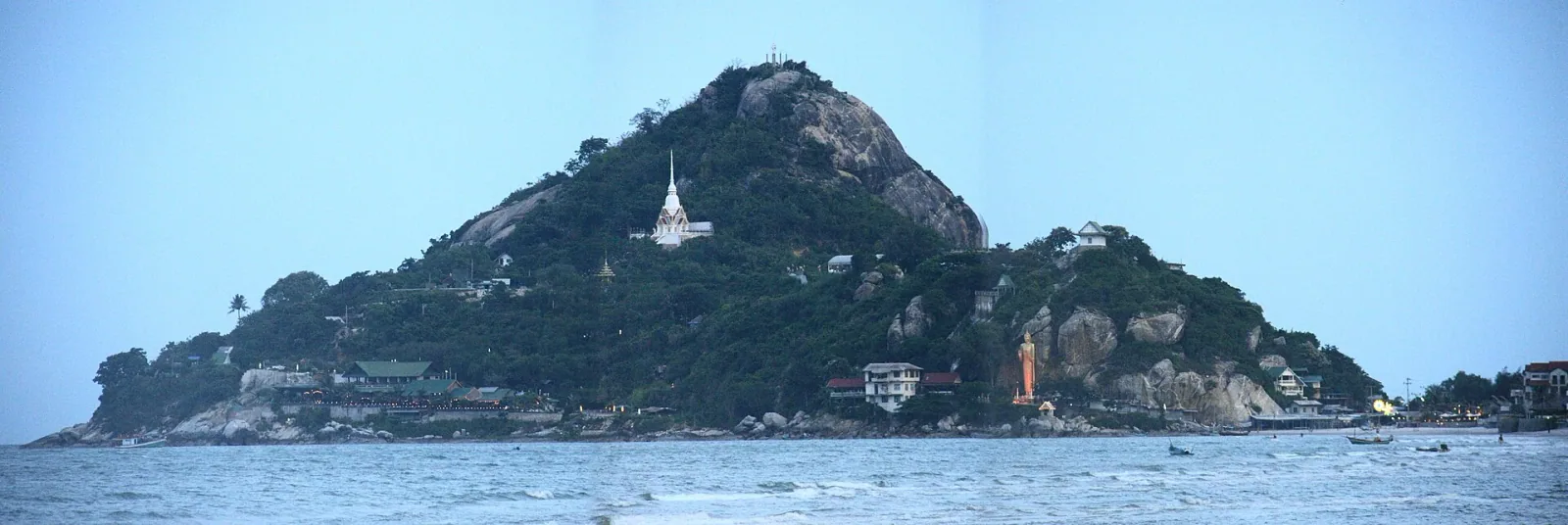
Khao Chong Krachok—Mirror Mountain—rises about 245 metres above the bay, crowned with a golden temple that requires climbing 396 steep steps. Start early, before 7 AM, both to avoid heat and to minimize confrontations with the resident macaque troops that control the mountain. These aren't the charming monkeys of tourist brochures. They're territorial, bold, and known for aggressive behavior toward visitors carrying visible food or bags. Don't bring anything they might want, don't make eye contact with dominant males, and climb steadily without pausing where they congregate.
The summit rewards the climb—and the monkey gauntlet—with panoramic views over Prachuap Bay, the fishing fleet at anchor, surrounding mountains, and the curve of coast extending north and south. The temple itself holds less interest than the vista, though locals come for serious merit-making and meditation in cave shrines at various levels. Sunset views are magnificent when you can time entry before the monkeys settle for evening, though descending in darkness presents challenges.
Wat Thang Sai, another hilltop temple accessed via scenic mountain road, offers similar views with fewer monkeys and tourists. The winding drive up provides excellent bay panoramas. Buddhist practitioners use the peaceful setting for meditation retreats during Buddhist holidays. These mountain temples aren't unique to Prachuap—hilltop wats appear throughout Thailand—but they demonstrate how spirituality and natural beauty intertwine in Thai Buddhism, where the best temple locations invariably offer the most dramatic views, as if elevation brings physical proximity to enlightenment.
Ao Noi & Ao Khan Kradai (~8 km north of town): Two adjacent fishing-village bays just north of Prachuap. Ao Khan Kradai has a long stretch of quiet sand and a cliff-side cave with a reclining Buddha; Ao Noi is the stilted village where most of the town's seafood lands.
Sam Phraya Beach (in Khao Sam Roi Yot): Casuarina-shaded beach inside the national park, reached by road via the park's south-eastern access — campsite, restaurant and parking on site. (Laem Sala Beach next door is the boat-and-stairs route used to reach Phraya Nakhon Cave.)
Ban Krut & Bang Saphan (~80-130 km south): A string of long, lightly-developed beaches with small Thai-owned resorts and fishing villages. Popular with Thai weekenders and a handful of European retirees seeking maximum tranquillity.
Here's what drew me initially to Prachuap, and what keeps a small but growing expat community here: you can rent a one-bedroom apartment in town for 5,000-8,000 baht monthly, a beachfront condo for 10,000-15,000 baht. Utilities run 1,500-2,500 baht. Eating local food at markets and simple restaurants means 6,000-8,000 baht covers all meals generously—fresh seafood dinners cost what a coffee costs in Bangkok. A comfortable monthly budget of 22,000-30,000 baht ($600-850 USD) provides quality of life that would require double or triple that amount in Hua Hin or Phuket.
The affordability isn't accidental. Prachuap never developed the tourism infrastructure that drives prices up elsewhere. There are no international hotel chains, no shopping malls, no international schools requiring expat-supporting ecosystems. The Royal Thai Air Force presence kept large resort developments at bay. The result is a provincial economy still based primarily on fishing and agriculture, where prices reflect local wages rather than tourist budgets. For retirees on fixed incomes or remote workers earning international salaries, the value proposition is exceptional.
But value comes with trade-offs. The expat community is tiny—mostly European retirees, scattered across town with no formal organizations or regular meetups. English is rarely spoken outside a few guesthouses. Healthcare is basic: Prachuap Hospital handles routine issues, but anything serious means driving to Hua Hin's Bangkok Hospital (90km, 90 minutes) or Bangkok itself (240km, 4-5 hours). There are no coworking spaces, no international restaurants beyond a few Western breakfast cafes. If you need extensive expat infrastructure, international schools, or regular English-language services, Hua Hin makes more sense. If you're willing to embrace Thai language, local culture, and provincial simplicity in exchange for spectacular beaches and exceptional value, Prachuap delivers.
Fiber internet is available in town and major beach areas through AIS, True, and TOT (500-1,000 baht monthly for 100-500 Mbps speeds). 4G mobile coverage is excellent in populated areas. The infrastructure supports remote work adequately for those with established income and clients.
What doesn't exist is coworking culture or digital nomad community. A few cafes offer WiFi but aren't designed for laptop work. Most remote workers set up home offices. If you need regular in-person collaboration, community atmosphere, or multiple backup connectivity options, this isn't your province. If you work independently and value beaches over networking, it works fine.
Ninety kilometers separates Prachuap from Hua Hin, but culturally they're different countries. Hua Hin is Thailand's premier beach resort town—royal palace, golf courses, international hospitals, expat infrastructure, cosmopolitan dining, shopping malls. It's comfortable, convenient, and considerably more expensive. Prachuap is a fishing town that happens to have spectacular beaches. The comparison matters because many people evaluating coastal Thailand consider both.
Some expats choose Prachuap specifically because it isn't Hua Hin—they want authentic Thai life, not international community. Others use Prachuap as a base while relying on Hua Hin for medical care, international groceries, and services the smaller town lacks. The ninety-minute drive makes this dual approach viable. You get Prachuap's affordability and authenticity for daily life, with Hua Hin's infrastructure available for monthly supply runs or medical appointments.
The sweet spot might be testing both. Spend a week in Prachuap to assess whether the provincial character suits you. Visit Hua Hin to understand what amenities you'd be sacrificing. Talk to expats in both places about their decisions. Some people discover they need more infrastructure than Prachuap offers. Others realize they'll happily trade Hua Hin's conveniences for Prachuap's pristine beaches and 40% lower living costs. Neither choice is wrong—they're just optimized for different priorities.
Prachuap follows the standard three-season Thai pattern but with Gulf coastal modifications. November through February brings the cool season—"cool" being relative at 24-30°C, but genuinely comfortable compared to the rest of the year. This is peak tourist season for good reason: pleasant temperatures, calm seas, minimal rain, and optimal conditions for hiking, temple climbing, and wildlife viewing. Kui Buri elephant sightings peak during these months as dry conditions concentrate animals at watering holes.
March through May delivers the hot season with temperatures reaching 32-38°C and high humidity. Locals retreat indoors during midday. Swimming and early morning activities work fine; hiking national parks becomes genuinely miserable. Accommodation rates drop except during Songkran (mid-April) when Thai tourists fill beaches. If you can handle the heat, hot season offers empty beaches and significant savings.
The rainy season (June-October) features afternoon thunderstorms—mornings often clear, then clouds build through early afternoon bringing heavy but brief downpours. Waterfalls run full, landscapes turn lush, and tourism drops significantly. Swimming remains mostly safe, though occasional storms create rough seas. For budget travelers willing to work around weather, rainy season provides the lowest rates and quietest beaches. October can bring heavy rain with localized flooding, making it the month to avoid if flexibility permits.
Prachuap works for retirees seeking affordable Thai beach life with nature access and reasonable Bangkok proximity. It works for remote workers with established income who value pristine beaches over digital nomad community. It works for nature enthusiasts drawn to wild elephants and national parks rather than nightlife and restaurants. It works for budget travelers wanting authentic coastal Thailand without tourist infrastructure markup. And it works for anyone who's visited overdeveloped beach resorts and thought "I wish I could find Thailand before tourism took over"—because in many ways, that's exactly what Prachuap still is.
It doesn't work for families with school-age children—there are no international schools in the province. It doesn't work for digital nomads requiring coworking spaces and international community for networking and social connection. It doesn't work for those needing extensive English-language services or immediate access to international-standard medical care. It doesn't work for people seeking vibrant nightlife, cosmopolitan dining, or entertainment variety. And it definitely doesn't work for anyone uncomfortable embracing Thai language and culture as primary rather than supplemental to expat community.
But if you're reading this and imagining swimming in Ao Manao's clear water while military jets occasionally roar overhead, if watching wild elephants emerge from jungle at sunset sounds more appealing than another beach club, if spending 25,000 baht monthly for beachfront living seems reasonable rather than suspiciously cheap, then Prachuap might offer what you've been seeking. It's Thailand's hidden coastal gem—hidden not because it's difficult to reach, but because it never developed the tourism infrastructure that puts places on travelers' radars. That's changing slowly as word spreads among retirees and budget-conscious expats. But for now, Prachuap remains largely what it's always been: a fishing province with spectacular beaches, where Thai life continues mostly undisturbed by foreign presence, and where you can still find Thailand operating on its own terms rather than tourists' expectations. For some people, that's exactly perfect. For others, it's dealbreakingly provincial. Only you can determine which category you occupy—ideally by visiting for a week and seeing whether pristine beaches compensate for limited infrastructure, or whether you'd rather trade authenticity for the conveniences that Hua Hin provides just ninety kilometers north.
Population
~554,000 (2024)
Capital
Prachuap Khiri Khan
From Bangkok
240 km (4-5 hours)
From Hua Hin
90 km (90 minutes)
Monthly Budget
22,000-35,000 THB
Best Season
Nov-Feb (cool & dry)
Best For
Retirees seeking affordability, nature lovers, budget travelers, remote workers valuing beaches over infrastructure, those escaping over-tourism, wild elephant enthusiasts
Not For
Families needing international schools, digital nomads requiring coworking, those needing extensive English services, nightlife seekers, anyone requiring immediate international medical care