Provinces
⛰️Ranong Province
Hidden Andaman Gem and Myanmar Gateway
Hidden Andaman Gem and Myanmar Gateway
Steam rises from natural springs pooling at 65°C, the mineral-rich water creating otherworldly mists in the early morning air. Around you, locals boil eggs in bamboo baskets suspended over the hottest vents while tourists soak their feet in cooler channels. This is Raksawarin, Ranong's famous hot springs, and it captures something essential about Thailand's least-visited Andaman province: it's gloriously, stubbornly uncommercial.
Wedged between Myanmar's southern tip and the northern reaches of Thailand's tourist-heavy Andaman coast, Ranong Province receives more rain than anywhere else in Thailand—up to 4,000mm annually. This deluge keeps the landscape impossibly lush and the tourist numbers refreshingly low. While millions flock to Phuket and Krabi each year, Ranong remains the domain of divers seeking pristine reefs, adventurers heading to Myanmar, and travelers who've grown weary of Thailand's well-trodden beach circuit.
The province stretches across 3,298 square kilometers of mountainous jungle, mangrove coastline, and scattered islands. Ranong town itself is a functional port city with Chinese shophouses and a frontier atmosphere rather than a destination in itself. But venture beyond the town and you'll find what brought you to Thailand in the first place: islands with more beaches than visitors, waters so clear you can see 30 meters down, and that increasingly rare sensation of discovering something before everyone else does.
"While millions flock to Phuket and Krabi each year, Ranong remains the domain of divers seeking pristine reefs, adventurers heading to Myanmar, and travelers who've grown weary of Thailand's well-trodden beach circuit."
Koh Phayam is what Koh Samui was forty years ago. No cars, no 7-Elevens, no fire dancers performing for Instagram. Just motorcycles navigating dirt roads between rubber plantations, bamboo bungalows steps from the sand, and two main beaches where you can still find stretches entirely to yourself. The island runs about 8 kilometers north to south, covered in cashew trees and coconut palms, with both of its main bays facing west. Aow Yai (Long Beach), on the south-western coast, offers legendary sunsets and a handful of simple restaurants serving whatever the fishing boats brought in that morning. Around the headland to the north-west, Ao Khao Kwai (Buffalo Bay) has calmer waters perfect for swimming and even fewer developments.
The journey to Phayam sets expectations perfectly. A 2.5-hour ferry from Ranong pier—or 45 minutes via speedboat if you're impatient—carries backpackers, Thai families, and the occasional package of supplies for the island's modest guesthouses. There's no pier, so boats anchor offshore and everyone wades in carrying their bags. It's the kind of slightly inconvenient arrival that filters out anyone expecting air-conditioned comfort and room service.
Then there's Ranong's own Koh Chang—not to be confused with the famous Trat province island. This smaller, less-developed alternative sits near the Myanmar maritime border, forested and peaceful, with basic bungalows, excellent snorkeling, and the kind of Robinson Crusoe atmosphere that vanished from most Thai islands decades ago. No ATMs, limited electricity, questionable WiFi. Bring cash, bring a book, bring patience. What you get in return is pristine coral reefs, abundant marine life, and genuine solitude.
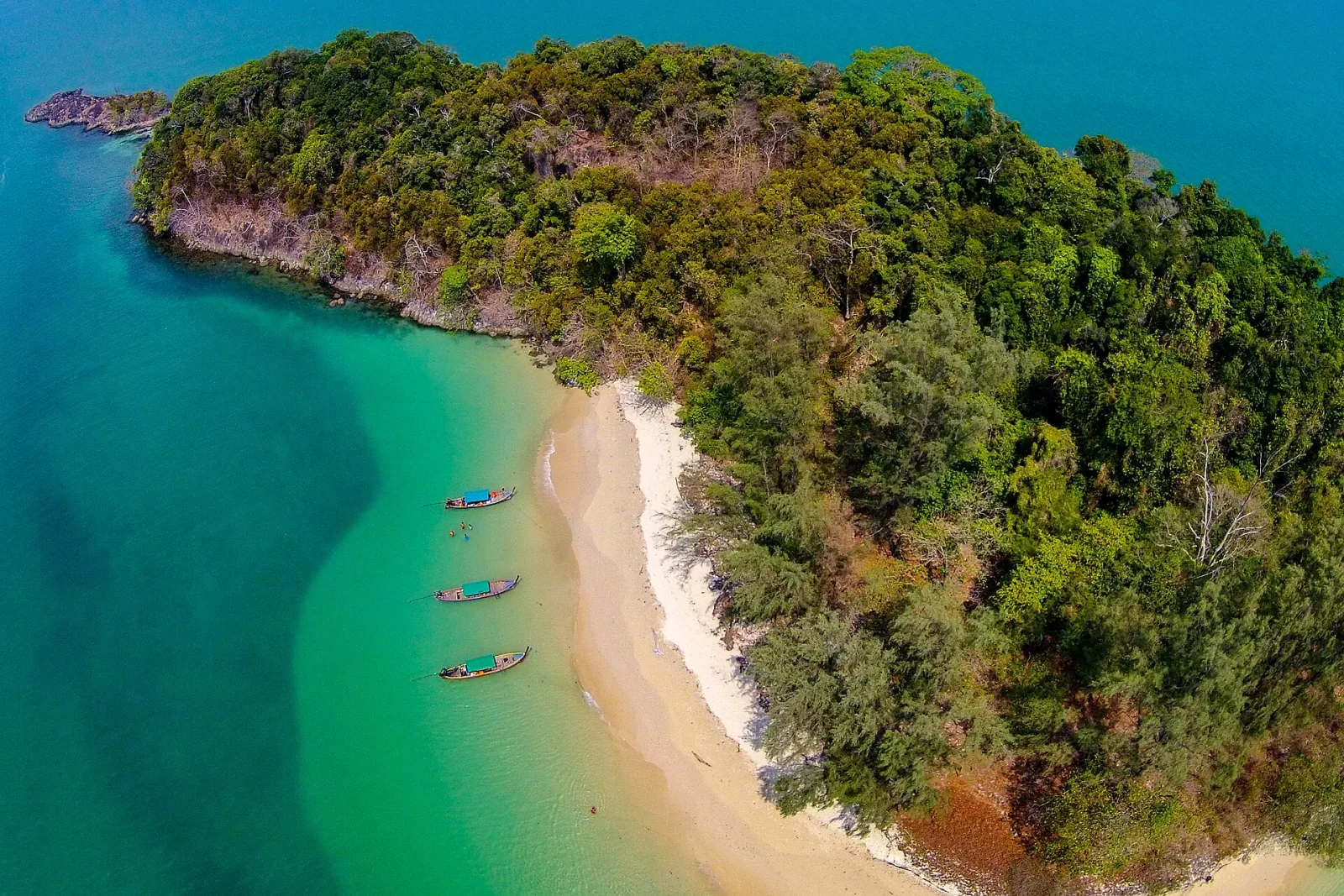
Laem Son National Park protects 315 square kilometers of this coastline, encompassing mangrove forests, wetlands, and several islands. Hat Praphat Beach offers long golden sands shaded by casuarina trees, while kayaking tours wind through mangrove channels where you'll spot monitor lizards, mudskippers, and kingfishers. The park sees a fraction of the visitors that crowd into Krabi's national parks, meaning you might have entire beaches to yourself even during high season.
Thailand has hot springs scattered throughout its northern provinces, but Ranong's Raksawarin Hot Springs hold a special status. The water emerges from deep underground at a scalding 65°C (149°F), rich in minerals that locals swear by for circulation, skin conditions, and joint pain. The public park surrounding the springs is free, democratically accessible to everyone from elderly Thais seeking therapeutic soaks to curious tourists wanting to boil eggs in bamboo baskets.
What surprised me during my first visit was how social the experience becomes. You arrive thinking you'll soak in quiet contemplation, but instead find yourself sharing a pool with Thai families, comparing egg-cooking techniques with retirees, and learning about traditional medicinal uses from someone's grandmother. The adjacent Jansom Hot Spa Resort offers more private experiences—individual mineral baths, massage treatments, spa packages ranging from 300 to 2,000 THB—but you'd miss the communal energy that makes the public springs special.
A short drive from the springs takes you to another of Ranong's unexpected attractions: Wat Tapotaram, the hot-spring temple built directly over a thermal vent in the temple grounds. Pilgrims and visitors stop to soak their feet in the channelled mineral water before exploring the shrine hall. For panoramic views over Ranong town, the Andaman Sea, and—on clear days—the Myanmar coastline, head a few kilometres further to the hilltop pagoda at Khao Niwet Wat Bandon, reached via a forested staircase guarded by Chinese-influenced naga balustrades that reflect the city's Hokkien tin-mining heritage. Visit at sunset when golden light illuminates the town below and fishing boats return to harbor.
One of Ranong's unique draws is its proximity to Myanmar. Long-tail boats depart Saphan Pla pier for the roughly 30-minute crossing to Kawthaung (formerly Victoria Point), Myanmar's southernmost town. Bring your passport for immigration on both sides. A same-day border pass costs around 500 THB (~$10 USD) and your passport is retained by Myanmar immigration until you return that afternoon. If you want to travel beyond Kawthaung, you need a Myanmar eVisa (typically $50) arranged before arrival.
Kawthaung offers a completely different atmosphere from Thailand: colonial-era buildings, Burmese temples, local markets selling longyis (traditional sarongs), thanaka cosmetics, jade, and gems. Try Burmese tea shops and mohinga (fish noodle soup). Climb to Pyi Daw Aye Pagoda for bay views. Most visitors make it a day trip, returning to Thailand before 4pm.
Important: Border crossing regulations can change. Check current requirements before planning your trip, and note that this is generally used by tourists for day trips rather than serious Myanmar exploration.
Ranong's offshore waters offer some of Thailand's best diving, yet see a fraction of the traffic that overwhelms the Similan Islands. The Mergui Archipelago—Myanmar's vast island chain—is accessible from Ranong via multi-day liveaboard diving safaris. These trips venture into remote waters with pristine coral reefs, abundant pelagic species, and dive sites that see perhaps a dozen divers monthly rather than daily.
Visibility in Ranong waters can reach 30 meters during the November-to-April high season, when calm seas and clear skies create ideal diving conditions. The underwater landscape includes dramatic pinnacles, coral gardens, swim-throughs, and walls dropping into the deep Andaman. Encounters with manta rays, whale sharks, and sea turtles happen with surprising regularity. Because the area is so lightly dived, the coral remains healthy and the fish populations robust.
For those not ready to commit to multi-day liveaboards, local operators run day trips and shorter excursions. Half-day kayaking tours combine mangrove exploration with island snorkeling, typically costing 1,200-1,800 THB including guide, equipment, and lunch. The tours time routes to catch high tide in the mangrove channels and often finish at sunset, when the light turns everything golden and the Andaman reveals why photographers become obsessed with it. For more information about Thailand's diving opportunities, check our guide to Phuket diving, though Ranong offers far fewer crowds.
I should be honest: Ranong isn't for everyone. The small expat community—perhaps 300-700 people, many seasonal—consists mainly of dive instructors, adventurous retirees, and business people involved in cross-border trade. There's no organized expat infrastructure, no weekly meetups, no international school. Guesthouses serve as informal information hubs, and Facebook groups provide minimal connection, but you're largely on your own.
Healthcare facilities are basic. Ranong Hospital handles general consultation for 300-600 THB but has limited specialist services. For anything serious, you're heading to Phuket (3 hours south) or Bangkok. Health insurance is essential, and evacuation coverage valuable given the limited local medical infrastructure.
Internet reliability is acceptable for flexible remote work but variable. Home connections through AIS, True, or 3BB run 500-800 THB monthly for 20-40 Mbps, which works most of the time but can fluctuate during heavy rains—which is to say, frequently. Mobile 4G provides decent backup. There are no coworking spaces, few laptop-friendly cafes. This is remote work in the literal sense: you're remote from infrastructure, community, and the safety net that places like Chiang Mai or Bangkok offer.
What Ranong does offer is authenticity and affordability. Monthly living costs can run around 28,000 THB if you live modestly—beach bungalow or simple apartment, local food, scooter transport. Fresh Andaman seafood appears daily at markets and restaurants for a fraction of what you'd pay in tourist centers. The wet climate produces abundant tropical fruits and vegetables. Street food runs 30-80 THB for complete meals, local restaurants 80-150 THB, and even beach restaurants with sunset views rarely exceed 300 THB for fresh grilled seafood.
November-February: The golden season. Calm seas, clear skies, comfortable temperatures (25-30°C), perfect diving conditions. This is when to visit. Accommodations and ferries can be busy—book ahead.
March-April: Still decent conditions with occasional rough seas. Fewer tourists, better prices. Water activities remain possible, though weather becomes more variable.
May-October: The wet season. Ranong earns its title as Thailand's wettest province with frequent afternoon thunderstorms, rough seas, ferry disruptions, and reduced visibility for diving. Landscapes turn impossibly lush, tourist numbers drop to near-zero, prices plummet. Not ideal for beach holidays, but fascinating for those who want to see tropical rainforest at its most dramatic.
What makes Ranong distinctive isn't just what it has but what it lacks. There's no nightlife to speak of, minimal international restaurants, limited shopping beyond basic supplies, few of the comforts that make modern expat life easy elsewhere in Thailand. The provincial capital preserves charming Sino-Portuguese shophouses along Ruangrat Road, old coffee shops (kopi stalls) serving condensed milk-heavy coffee, traditional bakeries, and the city's small Hokkien shrines tucked among the limestone hills above town.
The morning market (6-10am) bursts with fresh seafood, Southern Thai breakfast dishes, and local snacks rarely seen in tourist areas. Walking through these markets and narrow sois reveals Ranong's multicultural history—Thai, Chinese, and Burmese influences blending in architecture, food, and daily customs. The proximity to Myanmar creates a unique border culture evident in Burmese workers, goods, and that indefinable frontier atmosphere of places where countries meet.
This is Ranong's appeal and limitation: it's genuinely Thai, genuinely working-class, genuinely unconcerned with tourist expectations. If you want Thailand to accommodate your lifestyle, choose Bangkok or Chiang Mai. If you want to accommodate yourself to Thailand—to live more simply, more affordably, closer to fishing communities and rubber plantations than resort culture—Ranong offers that increasingly rare opportunity.
The province appeals to divers, budget-conscious beach lovers, adventurers seeking pristine nature, and anyone who's spent time in Phuket thinking "I wish I'd seen this twenty years ago." Well, here's your time machine. Ranong is what the Andaman coast was before the airports expanded, before the resorts multiplied, before Thailand became Thailand™. Visit during the dry season, stay in a bamboo bungalow on Koh Phayam, dive the clear waters, soak in the hot springs, cross to Myanmar for the afternoon. And enjoy it before the secret gets out.
Provincial Highlights
Famous For
Hot springs, diving, pristine beaches
Main Islands
Koh Phayam, Koh Kam, Koh Chang (Ranong)
Best For
Divers, adventurers, budget travelers
Annual Rainfall
Up to 4,000mm (Thailand's wettest)
Quick Take
Ranong is Thailand's hidden Andaman gem offering world-class diving, pristine beaches, and hot springs with authentic character. Perfect for adventurers and budget travelers seeking alternatives to Phuket. Best visited Nov-Feb.
Budget assumes modest lifestyle mixing local food with occasional beach dining, basic accommodation, and regular water activities.
From Bangkok
Bus: 8-9 hours, 350-500 THB
Departs Southern Bus Terminal
Via Phuket
Fly to Phuket, then drive 3 hours north
Often faster than direct bus
To Islands
Ferry: 2.5 hours to Koh Phayam
Speedboat: 45 minutes