Provinces
🛂Sa Kaeo Province
Thailand's Cambodian frontier — border markets, Khmer ruins, and wild forest
Thailand's Cambodian frontier — border markets, Khmer ruins, and wild forest
The motorbike trolleys rumble through the gate at Ban Khlong Luek before sunrise, loaded with electronics, knock-off football kits, and sacks of dried fish. By 7am the Rong Kluea market is in full swing on the Thai side of the Cambodian border. Vendors switch between Thai, Khmer, and just enough English to close a sale. Day-workers from Poipet stream in with their border passes; visa runners drag their wheeled suitcases the other direction. This is Sa Kaeo Province, where Thailand's eastern frontier meets Cambodia, and where the country's main overland route between Bangkok and Siem Reap passes through every single day.
Sa Kaeo Province stretches along Thailand's border with Cambodia, roughly 245 kilometers east of Bangkok. Home to around 558,000 people across 7,195 square kilometers, it's a thinly populated province of farmland, dry forest, and the long border road. Sa Kaeo was split off from Prachinburi as a separate province in 1993, and that newness shows in the modest provincial capital and the way most national attention still focuses on its eastern edge, where Aranyaprathet meets Poipet at the busiest land crossing in eastern Thailand.
This isn't a province you stumble upon accidentally. There's no beach to lure package tourists, no backpacker trail winding through. But the dismissive line that Sa Kaeo has no heritage misses the mark: Ta Phraya National Park, in the province's north, is part of the UNESCO-listed Dong Phayayen–Khao Yai Forest Complex, inscribed in 2005. Prasat Sdok Kok Thom, an 11th-century Khmer sanctuary in Khok Sung district, is one of the most important Angkorian sites in Thailand, restored in the 2000s and home to the inscription that records the founding mythology of the Khmer royal cult. The big draws for visitors are still the border, Khao Yai's quieter east flank, and these Khmer ruins.
"Sa Kaeo is where Bangkok–Siem Reap traffic crosses overland, where Angkorian stones still stand in the rice fields, and where the dry forest of Dong Phayayen–Khao Yai meets the Cambodian plain."
The serious gem business in Thailand is rooted in Chanthaburi and Trat to the south, not Sa Kaeo. What Sa Kaeo has, instead, is the border. Stones cut and sorted in Pailin, on the Cambodian side, have moved through Aranyaprathet for decades, and a small cluster of jewellery shops near the Ban Khlong Luek crossing still trades in them. If you wander past a row of cutters working under desk lamps in a shopfront, you're seeing the tail end of that trade rather than a Sa Kaeo mining industry — a useful distinction if you're tempted to buy.
The far bigger draw, and the reason most visitors come, is Rong Kluea Market itself. Spread across blocks of stalls and warehouses on the Thai side, it runs as a wholesale and retail bazaar for cross-border goods: secondhand clothing in industrial bales, electronics, household plastics, motorcycle parts, Cambodian silk, dried fish, and brand-name imitations of every variety. Most foreigners come for the spectacle as much as the shopping. The market opens early — by 6am vendors are already trading — and the energy holds through midday before fading in the afternoon heat.
If you do plan to buy coloured stones, take the standard precautions: don't carry large cash, get a written invoice, and pay for an independent certificate (500–1,500 THB at gem labs in Chanthaburi or Bangkok) before any significant purchase. Many of the "Sa Kaeo sapphire" stones on sale at the border are heat-treated, glass-filled, or simply not what the seller claims. Browsing is free and genuinely interesting; spending real money on the strength of a shopfront pitch usually isn't.
Aranyaprathet, 50 kilometers from the provincial capital, thrums with the chaotic energy unique to border towns. The Rong Kluea Market—the commercial heart of the crossing—sprawls across blocks of stalls selling everything imaginable. Electronics from China. Textiles from Cambodia. Gemstones from Sa Kaeo. Artwork, furniture, motorcycles, livestock. The market operates primarily for cross-border trade rather than tourism, which gives it a grittier, more authentic feel than the sanitized markets in tourist zones.
The border crossing itself fascinates anyone interested in Southeast Asian geopolitics and culture. On the Thai side, orderly immigration facilities process the steady stream of Cambodian day-workers, Thai visa runners, and international travelers. Step through to the Cambodian side at Poipet, and the atmosphere shifts dramatically—more chaotic, more desperate, with casinos clustered near the border to serve Thai gamblers (gambling being illegal in Thailand). The contrast between the two countries becomes visceral in a way that no amount of reading can convey.
For expats living in Sa Kaeo, the border provides practical utility. Need a visa run? It's a 50-kilometer drive rather than a flight to Laos or Malaysia. Want to explore Cambodia? Angkor Wat sits just a few hours beyond the border. The frontier location also influences local culture—Khmer is widely spoken among border traders and day-workers in Aranyaprathet alongside Thai, and Khmer culinary and linguistic influences show up in the eastern districts. The blend gives Sa Kaeo a noticeably different feel from provinces further west.
Aranyaprathet to Poipet: The Ban Khlong Luek / Poipet crossing operates daily, typically 6am–10pm (confirm current hours before travel). Thai citizens cross freely. Foreign nationals need an appropriate visa — Cambodia offers visa on arrival (30 USD cash, USD bills in good condition), and an e-visa is available online; arriving with the e-visa avoids the inflated "fee" demands that crop up at the land border.
Visa runs: Many expats use this crossing for Thai visa runs. Exit Thailand, stamp into Cambodia, have lunch in Poipet, return the same day. Confirm current Thai entry rules first — visa-exempt allowances and re-entry policies have shifted several times in recent years.
Safety note: The border area is generally safe during daylight hours. Avoid walking alone at night, especially on the Cambodian side. Keep valuables secured. Use official border facilities only—unofficial crossing points exist but carry legal risks.
I met David, a British retiree, in a Sa Kaeo coffee shop. He'd lived in the provincial capital for two years after tiring of Pattaya's bar scene and Chiang Mai's rising costs. "I pay 7,000 baht monthly for a two-bedroom house with a garden," he told me. "In Chiang Mai, that wouldn't get me a studio. Here, I have space, peace, and my budget stretches unbelievably far." His monthly expenses total roughly 20,000 baht including rent, food, utilities, and entertainment. "The tradeoff," he admitted, "is there's basically nothing happening here. No expat events. Limited restaurants. If I want international food or social life, I drive to Bangkok once a month."
David's experience reflects Sa Kaeo's double-edged appeal. The cost of living is extraordinarily low even by Thai standards. Rent that would be 15,000-20,000 baht in Chiang Mai runs 6,000-10,000 baht here. Street food costs 30-50 baht. Local restaurants serve full meals for 50-80 baht. Fresh produce at markets sells at prices that make Bangkok seem expensive. A comfortable life can be maintained on 25,000-30,000 baht monthly including all expenses—roughly half what you'd need in popular expat destinations.
The compromises are significant. The foreign community in Sa Kaeo is small — a mix of visa runners, cross-border traders, and a handful of retirees in the provincial capital and Aranyaprathet — with none of the expat infrastructure you'd find in Chiang Mai or Pattaya. Healthcare runs through Sa Kaeo Provincial Hospital and a few private clinics; anything serious typically means a transfer to one of the larger hospitals in Chachoengsao or Bangkok (roughly 1.5–3 hours by car, depending on destination). Fiber broadband from AIS, True or 3BB is widely available in the main towns at 300 Mbps–1 Gbps for around 500–700 THB/month; coverage is patchier in rural areas. Remote work is workable if you stay near a town with fiber; the True-DTAC merger (2023) means DTAC SIMs now run on the combined 4G/5G network for backup. For more, see our guide to internet reliability across Thailand.
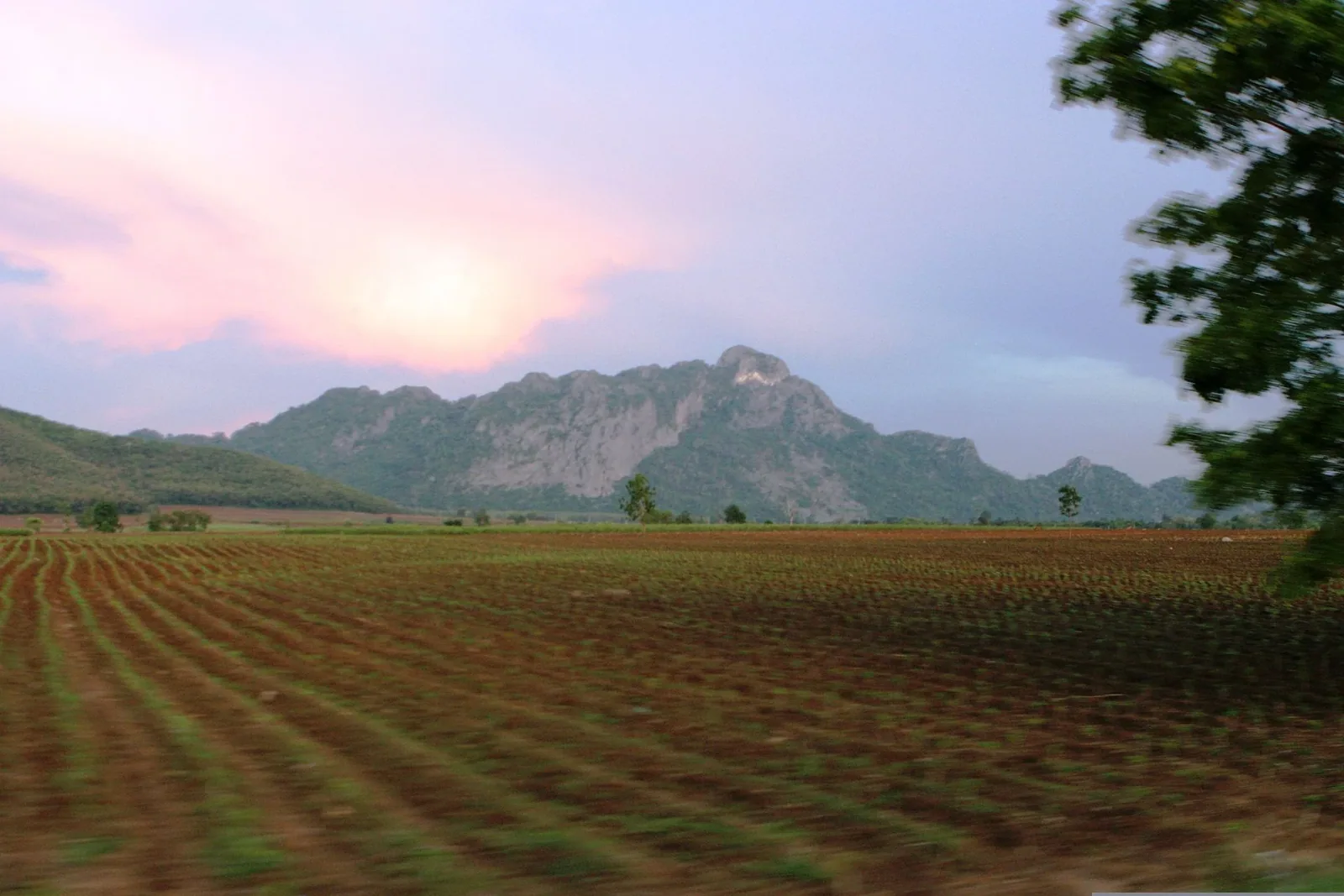
Sa Kaeo's two big protected areas are Pang Sida National Park and Ta Phraya National Park, both on the eastern flank of the Sankamphaeng Range. Ta Phraya is part of the Dong Phayayen–Khao Yai UNESCO World Heritage Site, and the two parks together form a continuous wildlife corridor with Khao Yai itself. You'll see far fewer visitors than at Khao Yai's main gates, and the trails — particularly the climb to Pha Takhian Ngam viewpoint in Pang Sida — feel genuinely remote. Wildlife sightings tend to be deer, hornbills, and butterflies (Pang Sida is well known for its diversity of swallowtails); elephants and big cats are present but rarely seen.
Pang Sida Waterfall is the easiest cascade to visit — a short walk from the park headquarters, with the strongest flow in the rainy season (June–October). Other falls inside the park, including Pha Tako, take an hour or more on foot. There are no restaurants or shops at the trailheads beyond the park canteen, so bring water and snacks.
The province's real cultural anchor is Prasat Sdok Kok Thom, an 11th-century Khmer sandstone sanctuary in Khok Sung district, about 35km from Aranyaprathet near the border. The temple is best known for the long Khmer inscription found here that records the genealogy of the devarāja (god-king) cult through several generations of Angkor monarchs — a document that has shaped a century of scholarship on Khmer history. The site was extensively restored in the 2000s, with a small interpretation centre on site (entry 100 THB foreigners; open daily). It's one of the most rewarding day trips in eastern Thailand if you have any interest in Angkor-era architecture.
→ Rent (basic apartment/bungalow): 7,000 THB
→ Utilities (electric, water, WiFi): 1,000 THB
→ Food (local restaurants and markets): 6,500 THB
→ Transportation: 1,000 THB
→ Activities and exploration: 2,000 THB
→ Entertainment: 1,500 THB
→ Healthcare/supplies: 700 THB
Total: 19,700 THB/month (approximately $550 USD)—among Thailand's lowest costs of living
Buses depart Bangkok's Eastern Bus Terminal (Ekkamai) and Mo Chit 2 for Sa Kaeo and Aranyaprathet every 1-2 hours throughout the day. The journey takes 3.5–4 hours and costs roughly 200-280 THB depending on bus class. Minivans run more frequently at around 230 THB. The State Railway's Eastern Line also runs from Bangkok all the way to Aranyaprathet — the cheap, slow third-class service is a long-standing visa-run favourite (about 6 hours, departing from Krung Thep Aphiwat / Bang Sue with a stop at the old Hua Lamphong; confirm current timetable before relying on it). Most expats drive — the route via Highway 33 is straightforward, and having personal transportation dramatically improves quality of life in a province with limited public transit.
Within Sa Kaeo, the provincial capital is small and walkable for errands. Motorcycle rentals run 100-150 baht daily and are essential for exploring attractions, markets, and Aranyaprathet. Songthaews connect major points within town for 20-40 baht. Tuk-tuks charge 30-80 baht for most trips. Grab operates in the main town but with limited availability compared to larger cities—don't count on it for time-sensitive transport.
Accommodation in Sa Kaeo ranges from very basic guesthouses at 2,500-5,000 baht monthly to mid-range hotels and apartments at 6,000-14,000 baht. Long-term rates are always negotiable—monthly rentals typically discount 20-30% from daily rates. The stock is limited compared to tourist areas, but turnover is low, so asking around usually yields options. Most landlords speak minimal English; having a Thai friend or using translation apps helps negotiations considerably.
Sa Kaeo works for very specific people. It suits adventurous retirees who've exhausted the typical expat destinations and want a quieter, working-province pace. It appeals to anyone heading overland to Siem Reap who wants to see more of the border than a transit van window. It attracts remote workers with flexible schedules who'll trade infrastructure for ultra-low rents. It serves visa runners using the Poipet crossing. And it calls to travellers with a real interest in Khmer-era history, who would rather stand alone at Sdok Kok Thom than queue at Phimai.
It's fundamentally unsuitable for those requiring extensive expat infrastructure, regular English-language social interaction, international schools, major medical facilities, or a tourist nightlife scene. Entertainment options are minimal. International restaurants essentially don't exist. The English-speaking population is small. If you need these things, Sa Kaeo will frustrate rather than fulfil.
But if you're the right type of person—if you speak decent Thai or are willing to learn, if you embrace rather than resist quiet, if you find a working border more interesting than organised tourism—Sa Kaeo offers something increasingly rare. The Rong Kluea market operates for cross-border trade rather than tourists. The Khmer temples sit in rice fields rather than tourist parks. The forests of Pang Sida and Ta Phraya remain wild because they're at the far edge of the Dong Phayayen–Khao Yai complex where developers don't bother. For those seeking Thailand off the beaten path, the path doesn't get much more beaten than Sa Kaeo's quiet roads leading to the Cambodian frontier.
Provincial Capital
Sa Kaeo City
Population
~558,000 (province)
Distance from Bangkok
~245km (3.5-4 hours)
Border Crossing
Aranyaprathet to Poipet, Cambodia
BEST FOR
NOT IDEAL FOR