Provinces
✈️SAMUT PRAKAN
Bangkok's coastal gateway and home to Thailand's main airport
Bangkok's coastal gateway and home to Thailand's main airport
The replica of Ayutthaya's Wat Mahathat rises three stories high, surrounded by temples from every corner of Thailand compressed into 320 acres shaped like the country itself. You can cycle from a Southern mosque to a Northern chedi to a Bangkok shrine in fifteen minutes at Ancient City, passing Thai families picnicking under rain trees and photographers capturing angles that look impossibly authentic. This is Samut Prakan—a province where Thailand's entire architectural history fits into an afternoon, where jets descend toward Suvarnabhumi Airport while fishermen mend nets at Pak Nam market, where Bangkok sprawl meets Gulf of Thailand tides.
The province occupies a strange position in Thai geography— technically separate from Bangkok but functionally inseparable. The BTS Sukhumvit Line extends here now, connecting Samrong and Bearing stations to the capital's transit network. Housing costs drop 30-50% once you cross the provincial line, yet you're only 45 minutes from Siam by train. The province's 1.3 million residents include airport workers, factory employees, and Thai families who've fished the Chao Phraya delta for generations.
At the river mouth, Pak Nam retains rows of old Sino-Thai shophouses and Chinese shrines from its trading port days, anchored by Phra Samut Chedi—the riverside stupa King Rama II commissioned in 1827—visible from the Chao Phraya ferry crossing. Morning markets sell squid and mackerel landed overnight. By afternoon the same vendors head home while jets roar overhead—Suvarnabhumi Airport, the busier of Bangkok's two airports, sits entirely within Samut Prakan's borders in Bang Phli district, though most travelers never realize they've left the capital.
"I pay 10,000 baht for a condo that would cost 22,000 in Thong Lor. Same BTS line, just fifteen stations further. The math made moving east an easy decision."
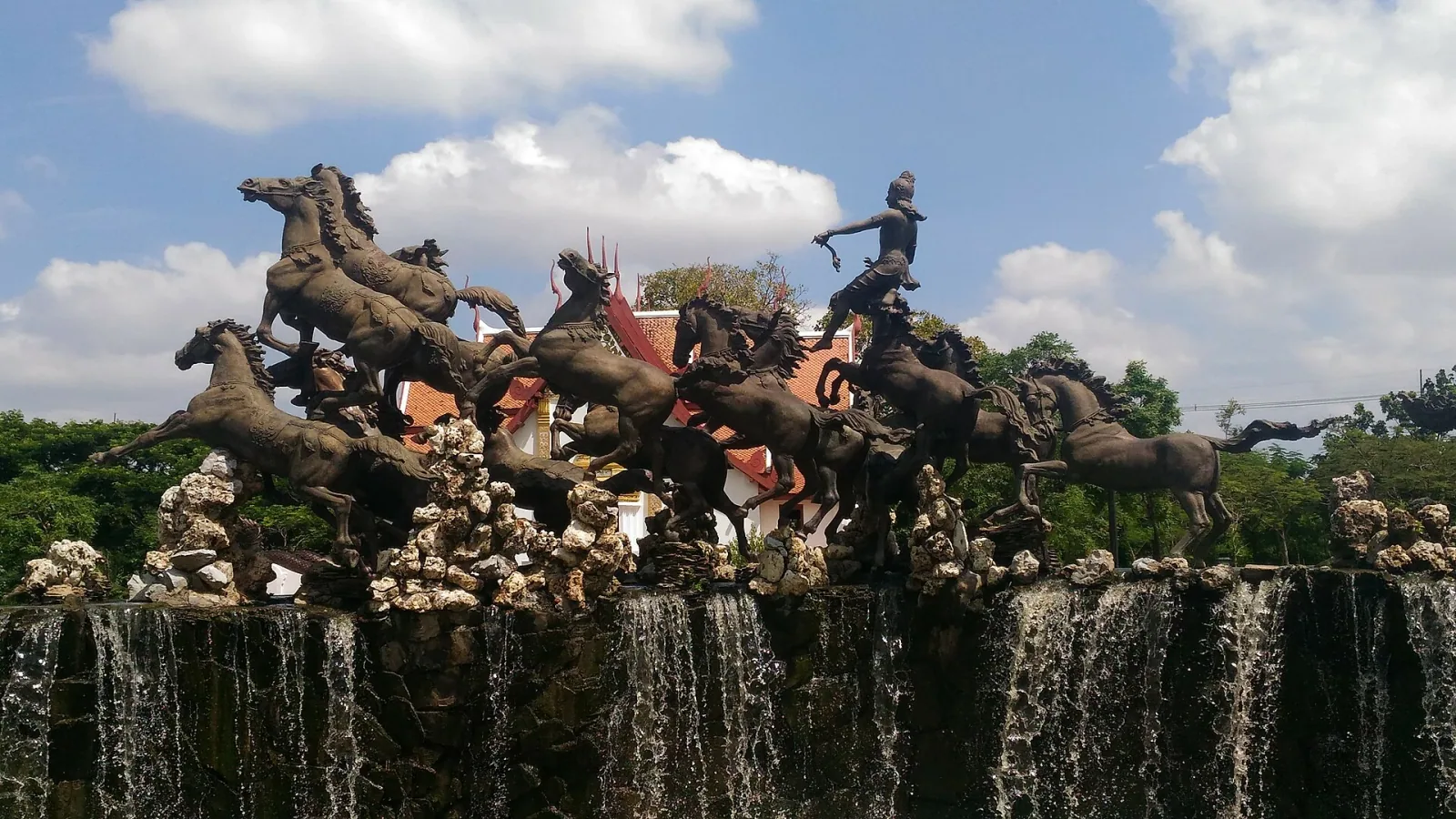
Ancient City (Muang Boran) covers around 200 acres shaped like Thailand's map, with more than 120 monuments positioned roughly where they'd appear geographically. Southern structures cluster near the bottom, Northern architecture sits at the top, Bangkok replicas occupy the center. The scale varies—some buildings full-size, others reduced proportionally—but the craftsmanship stays meticulous throughout.
Entry costs 700 baht for foreigners. Bicycle rental adds 400 baht and makes sense—walking the entire grounds takes five hours. The museum opened in 1972, a private project by businessman Lek Viriyaphan who wanted to preserve Thai architectural heritage as modernization threatened original structures. Some buildings here represent demolished originals. Others stand while their real counterparts decay.
Thai families dominate the crowds on weekends, treating the park as picnic grounds and photo opportunities. International tourists arrive in smaller numbers, usually Bangkok-based expats killing an afternoon. The place offers something rare—comprehensive Thai architectural education without museum stuffiness. You can touch the buildings, walk through halls, sit in pavilions. It's Disneyland filtered through Thai historical consciousness, simultaneously educational and artificial.
A few kilometres up the road, the same family behind Ancient City built the Erawan Museum—a 29-metre, three-headed bronze elephant standing on a domed hall of Buddhist and Hindu antiquities. You spot it from the expressway, impossibly green against the sky, and most travellers heading inland from Suvarnabhumi pass it without realising what it is. Entry is 400 baht for foreigners, and the stained-glass interior is worth at least an hour.
Bang Pu Recreation Centre sits on the Gulf coast a few kilometres east of the Chao Phraya river mouth, on land originally run by the Royal Thai Army as a seaside retreat. A long wooden pier and the over-water Sala Sukhajai restaurant extend across the mudflats, popular for sunset views year-round. Between November and March, brown-headed gulls migrate south from China and Mongolia by the thousands, wheeling and diving for snacks tourists toss from the walkway before flying north again.
Seafood restaurants line the waterfront—simple Thai places with plastic chairs and metal tables, nothing fancy. Grilled fish costs 100-150 baht, steamed crabs 200-300 baht depending on size, tom yum with fresh prawns maybe 180 baht. The food tastes better here than equivalent restaurants in Bangkok, partly because proximity guarantees freshness, partly because competition keeps prices honest.
Early mornings at Pak Nam market show the supply chain—fishing boats unload squid, mackerel, and shrimp between 5-9am. Vendors buy wholesale and start prep for lunch service. The market occupies old Sino-Portuguese shophouses, Chinese shrines tucked between seafood stalls. Come early, bring cash, and don't expect English. This is working Thailand, not tourist Thailand.
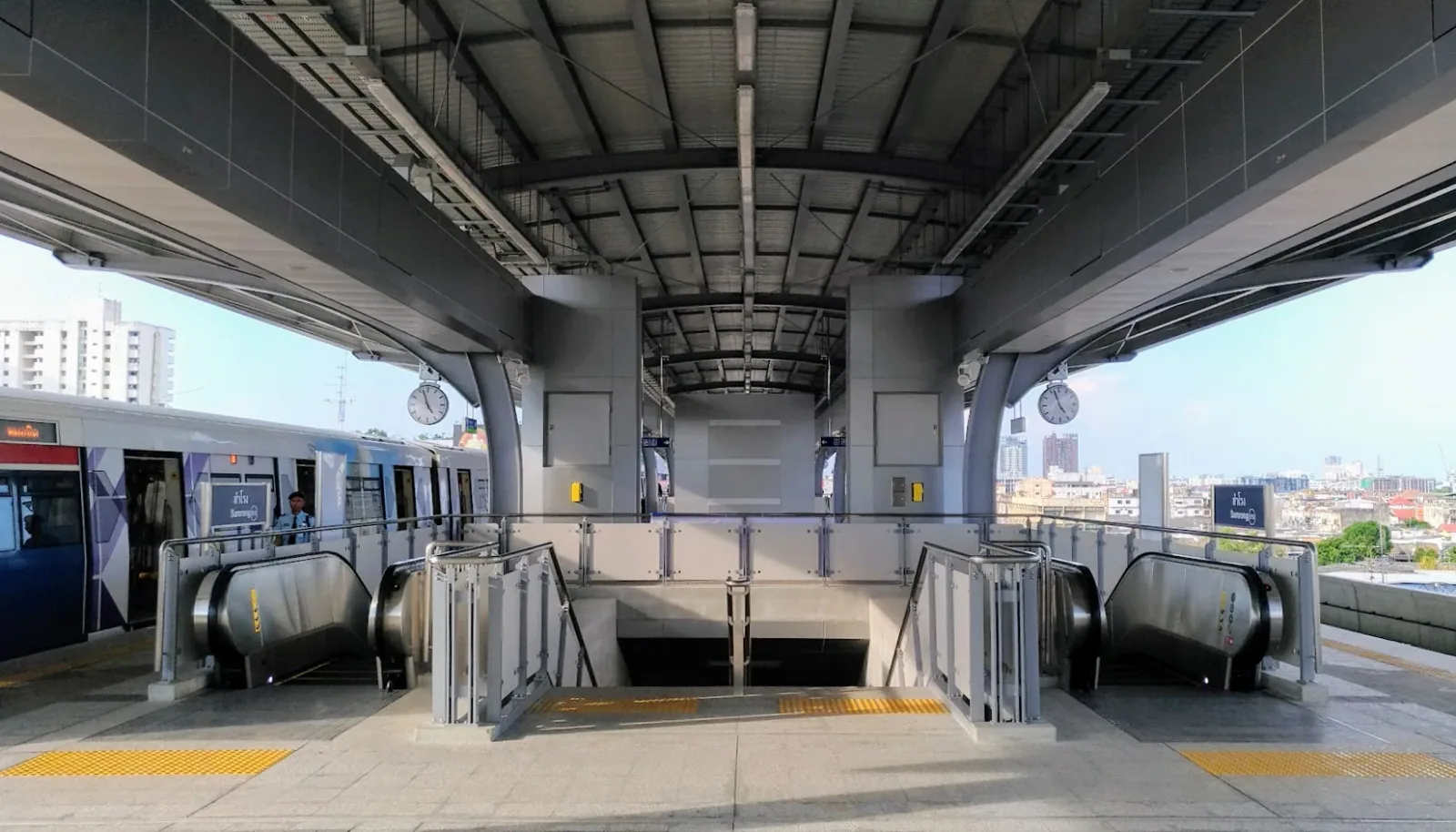
A one-bedroom condo near BTS Samrong or Bearing runs 10,000 baht monthly—half what equivalent space costs in Bangkok's Sukhumvit corridor. Utilities add 2,500 THB including internet adequate for remote work. The BTS extension transformed these areas from provincial outskirts to viable Bangkok bedroom communities starting in 2018.
Food costs depend on eating habits. Local Thai restaurants charge 50-80 baht per meal, seafood places near Bang Pu 100-200 baht. Pak Nam market sells fresh fish and vegetables at wholesale prices if you cook. Budget 8,000 THB monthly for mix of dining out and home cooking. International food requires trips to Bangkok—Samut Prakan has limited Western restaurants beyond shopping mall food courts.
Transportation costs stay minimal if you work remotely or locally. BTS to Bangkok runs 2,000+ baht monthly for daily commuters, less for occasional trips. Within the province, songthaews cost 10-20 baht per ride, motorcycle taxis slightly more. Most long-term residents eventually buy motorcycles—public transport outside BTS stations remains limited.
The BTS Sukhumvit Line extended into Samut Prakan in two phases (Bearing–Samrong in 2017, Samrong–Kheha in 2018) and now serves nine in-province stations from Samrong to Kheha. Journey from Samrong to Siam takes 40-45 minutes. Suvarnabhumi Airport sits within provincial borders—taxis to Pak Nam cost 150-200 THB.
Highway 7 motorway connects to Chonburi and Pattaya. Bangna-Trad Highway runs toward Rayong and Trat. Most residents need personal vehicles for exploring beyond BTS corridor.
"The expat community here is mostly airport workers and factory managers. You won't find digital nomad cafes or English-language meetups. But the authentic Thai experience beats Bangkok's expat bubbles—if that's what you're seeking."
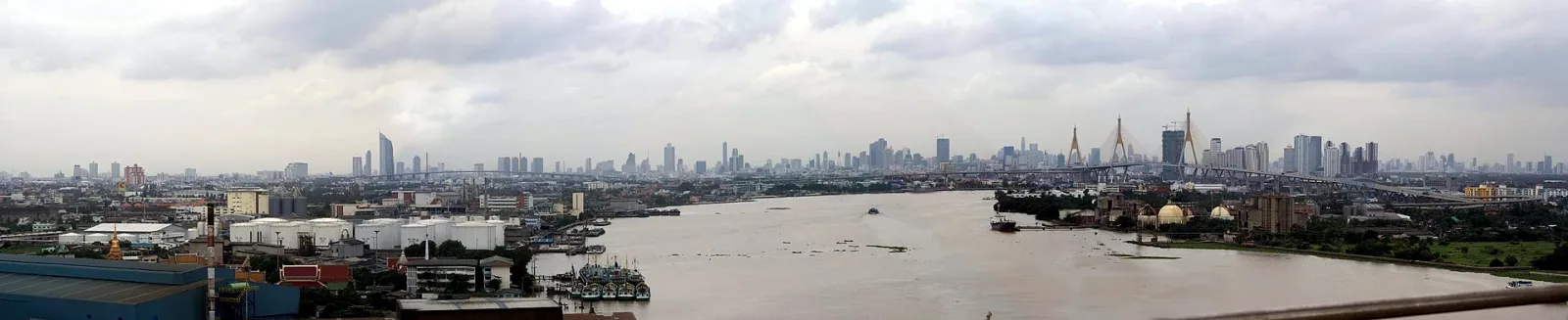
The small expat population concentrates around specific industries. Airlines and aviation companies employ foreigners at Suvarnabhumi— pilots, cabin crew, maintenance technicians living nearby to handle irregular schedules. Industrial facilities in Bang Phli and Phraeksa districts attract managers and technical specialists. A few Bangkok-based expats moved here for cheaper rent while maintaining capital jobs via BTS commute.
English proficiency stays limited outside these specific circles. No coworking spaces cater to digital nomads. No international schools attract families. No organized expat social infrastructure exists. The province rewards people comfortable navigating Thai community life—those who see limited English as opportunity for language practice rather than obstacle.
Healthcare quality sits between provincial and Bangkok standards. Bangkok Hospital Samutprakan provides competent care (300-700 THB consultations). Serious conditions still send people to Bangkok's international hospitals, accessible in 30-40 minutes. The setup works for healthy adults, less ideal for families with young children or retirees with complex medical needs.
Samut Prakan occupies transitional space—too urbanized for rural Thailand experience, too provincial for Bangkok convenience. The province demonstrates Thailand's ongoing metropolitan expansion in real time. Condominiums rise beside rice fields. Shopping malls anchor intersections while vendors sell morning glory from wooden carts three blocks away.
The appeal depends entirely on perspective. Bangkok workers seeking cheaper rent while maintaining capital access find excellent value. Airport employees appreciate proximity to work. Cultural tourists visit Ancient City and move on. Long-term foreign residents remain rare—this isn't expat Thailand. It's commuter Thailand, industrial Thailand, fishing village Thailand gradually absorbed into Bangkok's gravitational pull.
The province makes sense for specific circumstances—frequent flyers valuing airport proximity, budget-conscious Bangkok workers willing to commute, people seeking authentic Thai experience with metropolitan escape routes. It makes less sense for digital nomads, retirees wanting established expat communities, or families needing international services. Samut Prakan rewards those who understand it's neither Bangkok nor truly separate—it's the buffer zone where Thailand's largest city slowly bleeds into the Gulf.
Monthly Budget
Getting There
From Bangkok
BTS Sukhumvit Line to Kheha (40-45 min from Siam). Nine in-province stations from Samrong to Kheha.
Local Transport
Songthaews 10-20 THB. Motorcycle taxis common. Limited public transport outside BTS corridor.
Who It's For
Good Match
Bangkok commuters, airport employees, frequent flyers, budget-conscious expats, those seeking authentic Thai coastal culture with capital access
Poor Match
Digital nomads seeking community, families needing international schools, expats requiring English services, those wanting nightlife or beach resorts
Best Time to Visit
Nov-Feb (Cool)
Perfect weather 25-32°C. Seagull migration at Bang Pu.
Mar-May (Hot)
Intense heat 33-38°C. Avoid outdoor activities.
Jun-Oct (Rainy)
Afternoon storms. Possible coastal flooding.
Nearby Destinations
Bangkok
40-45 min via BTS
Chachoengsao
30-40 min, floating market
Chonburi/Pattaya
90 min via Highway 7