Provinces
🦐Samut Sakhon Province
Thailand's shrimp capital: where working fishing culture meets Bangkok accessibility
Thailand's shrimp capital: where working fishing culture meets Bangkok accessibility
The fish market starts at 5am when the overnight boats return, their holds filled with squid, mackerel, shrimp, and fish species you've never heard of. By the time dawn breaks over the Gulf of Thailand, the auction is in full chaos—buyers shouting prices, ice being shoveled into crates, workers hauling baskets of writhing shrimp onto scales, the smell of the sea so thick it feels tangible. This is Samut Sakhon at its most authentic: a working fishing province where the rhythm of life follows tides and catches, where entire families make their living from the water, and where the smell of fish isn't a tourist attraction but the scent of economic survival. Twenty-five kilometers from Bangkok's skyscrapers, it might as well be a different country.
Samut Sakhon Province occupies Thailand's central Gulf coast where the Tha Chin River meets the sea. With around 591,000 residents packed into 866 square kilometers, it's one of the country's smallest and densest provinces—essentially a coastal industrial zone dedicated to turning marine resources into economic output. The nickname "Shrimp Capital" understates reality: Samut Sakhon produces a massive percentage of Thailand's farmed shrimp, operates one of the country's largest fishing fleets, and processes seafood that ends up in restaurants from Tokyo to London.
What makes Samut Sakhon interesting isn't tourism infrastructure—there essentially isn't any—but rather its authenticity and peculiar economics. You can live here for 40% less than Bangkok while remaining just 30 minutes from the capital's jobs, entertainment, and international airports. The seafood is phenomenal because you're eating it where it's caught and farmed, at prices that make Bangkok's "fresh" fish seem absurdly expensive. And you'll experience genuine Thai coastal culture that hasn't been sanitized for visitors, complete with Buddhist fishing village traditions, morning fish auctions conducted in rapid-fire bargaining, and the particular character of communities whose fortunes rise and fall with the sea.
Exceptional value: 40% cheaper than Bangkok center. Modern 1-bedroom apartments 7,000-11,000 THB monthly. Total comfortable living 22,000-32,000 THB. Seafood costs fraction of Bangkok prices.
Bangkok proximity: 25-35km from capital. Commute 45-90 minutes depending on traffic. Access to Bangkok jobs, entertainment, airports while living at provincial costs.
Authentic culture: Working fishing communities maintaining traditional practices. No tourist polish or expat bubbles. Genuine Thai coastal life with Buddhist fishing traditions, morning auctions, boat building.
Seafood paradise: World-class fresh catches daily. Grilled fish, shrimp, squid, crab at unbeatable quality and prices. Markets, restaurants, wholesale access to Thailand's fishing bounty.
"Samut Sakhon smells like fish, looks industrial, and lacks polish. But if you want to understand where your Thai seafood actually comes from, experience genuine fishing culture, and live near Bangkok for remarkably little money, it's one of the most honest places in Thailand."
Drive through Samut Sakhon's outskirts and you'll pass kilometer after kilometer of shrimp ponds—rectangular pools separated by earthen berms, aerators churning water, workers monitoring salinity and feeding schedules. This is industrial aquaculture at massive scale, the infrastructure that makes Thailand one of the world's largest shrimp exporters. The ponds replaced rice paddies starting in the 1980s when farmers discovered they could earn more from shrimp than grain, transforming the landscape and economy.
Several operations offer tours showing the full cycle: larvae imported from hatcheries, grown in carefully controlled ponds, harvested when they reach market size, then processed and frozen for export or sold fresh to local markets. The tours are educational rather than entertaining, explaining the science of salinity management, disease prevention, feeding ratios, and harvest timing. You'll learn why farmed shrimp costs what it does, understand the labor involved, and appreciate the technical knowledge required to prevent the diseases that can wipe out entire ponds overnight.
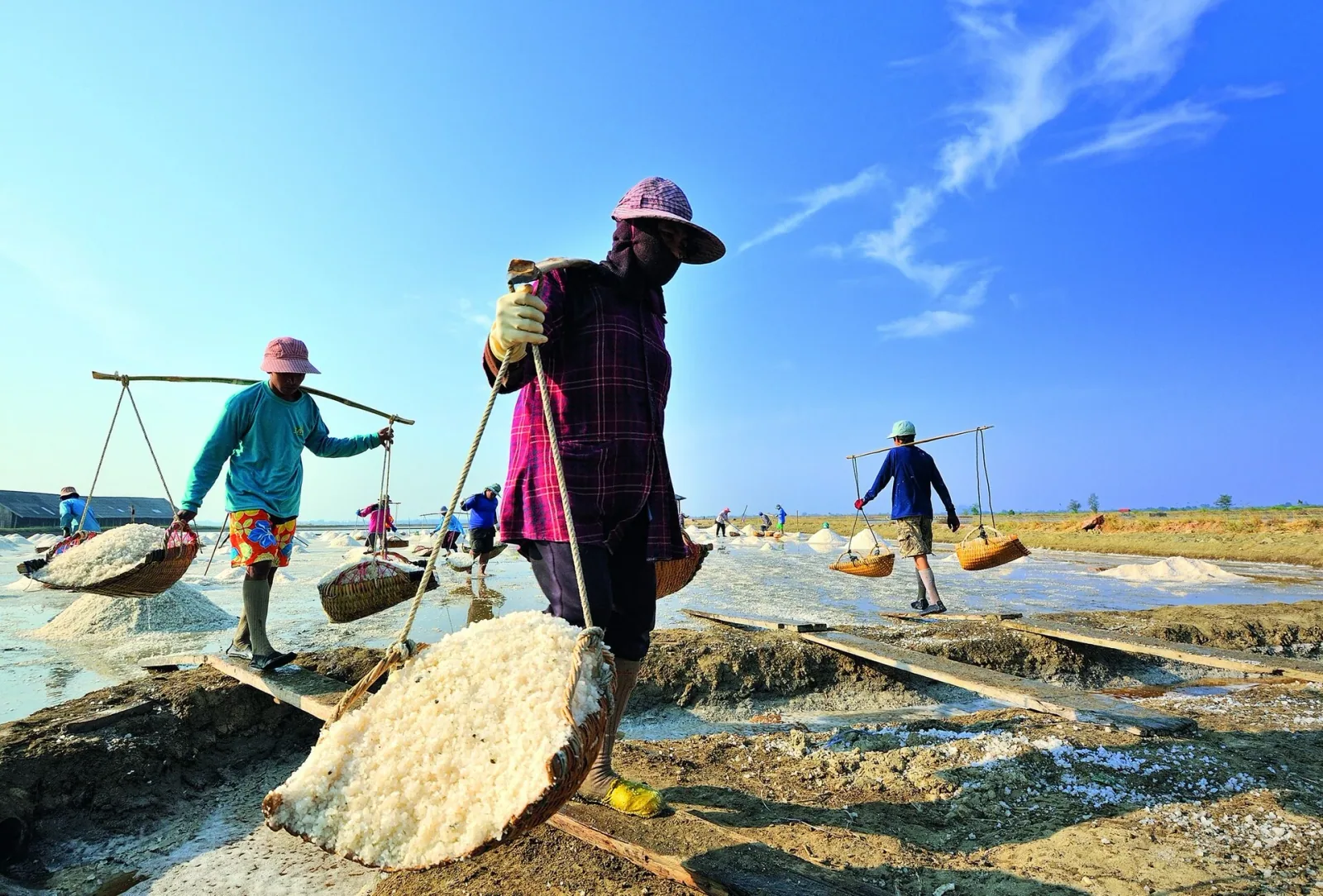
The economic impact is visible everywhere: processing plants employing thousands, cold storage facilities, truck depots loading seafood bound for Bangkok and beyond, and markets where wholesale buyers purchase shrimp by the ton. The industry has attracted migrant labor from Myanmar and Cambodia, creating diverse working-class communities. It's not glamorous—much of the work is repetitive, hot, and physically demanding—but it's the economic engine that makes Samut Sakhon function and keeps shrimp affordable in Thai markets and restaurants worldwide.
For visitors and residents, the shrimp industry means access to incredibly fresh product at source prices. Wholesale markets sell shrimp for 150-300 baht per kilogram depending on size and season—half or less of Bangkok retail prices. Restaurants serve massive grilled shrimp platters for 200-350 baht. The quality is exceptional because the supply chain is measured in hours rather than days, and the sheer volume creates competitive pricing that benefits consumers at every level.
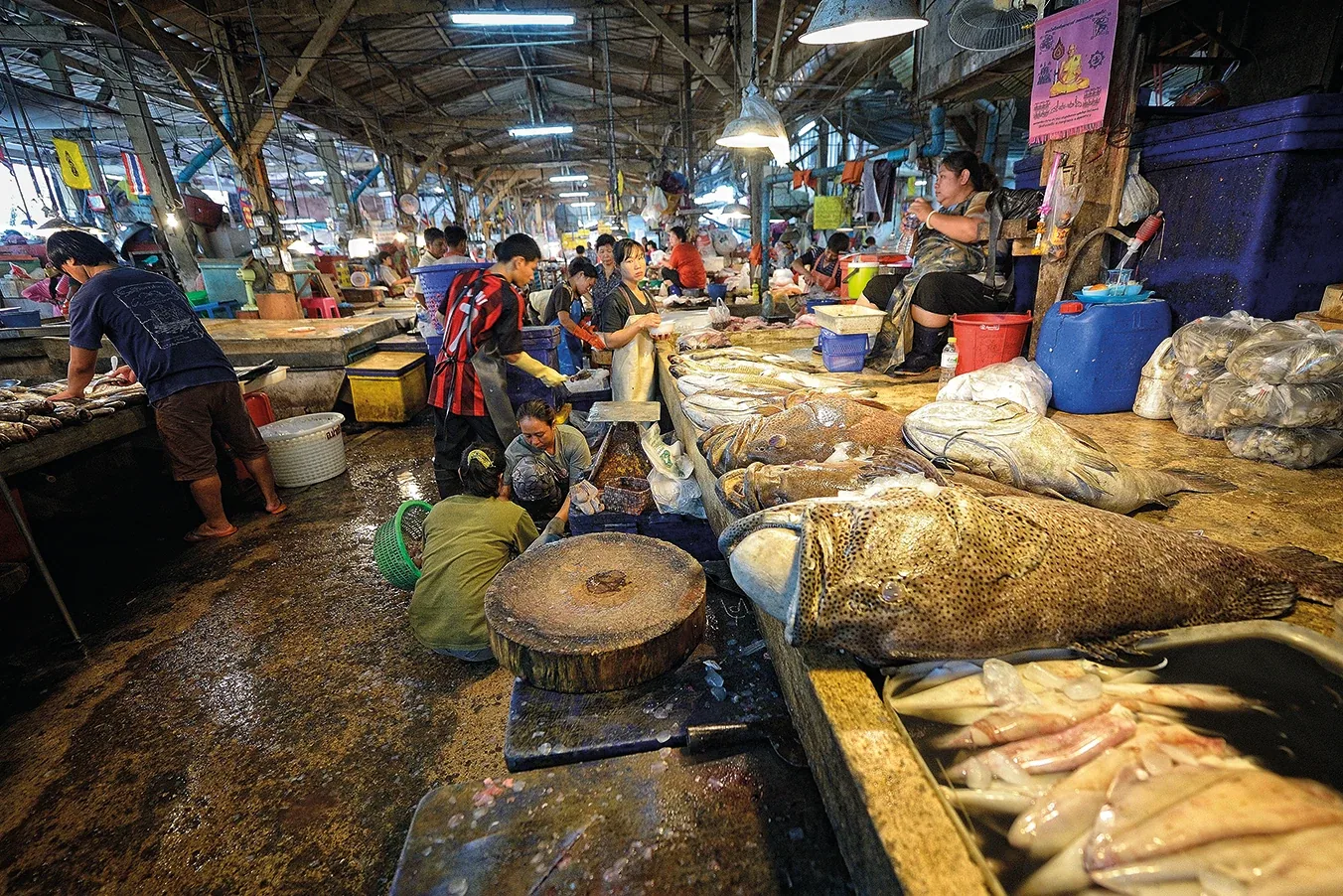
Beyond aquaculture, traditional fishing remains central to Samut Sakhon's identity. The harbor fills with boats ranging from small one-person craft to substantial trawlers that spend days at sea. Early morning is when the overnight fleet returns, boats laden with catches being unloaded by crews who've been working since yesterday. The auction that follows is rapid and intense—dealers examining quality, shouting bids, fish being sorted and iced with practiced efficiency. It's commerce that's been conducted here for generations, with rhythms and relationships built over lifetimes.
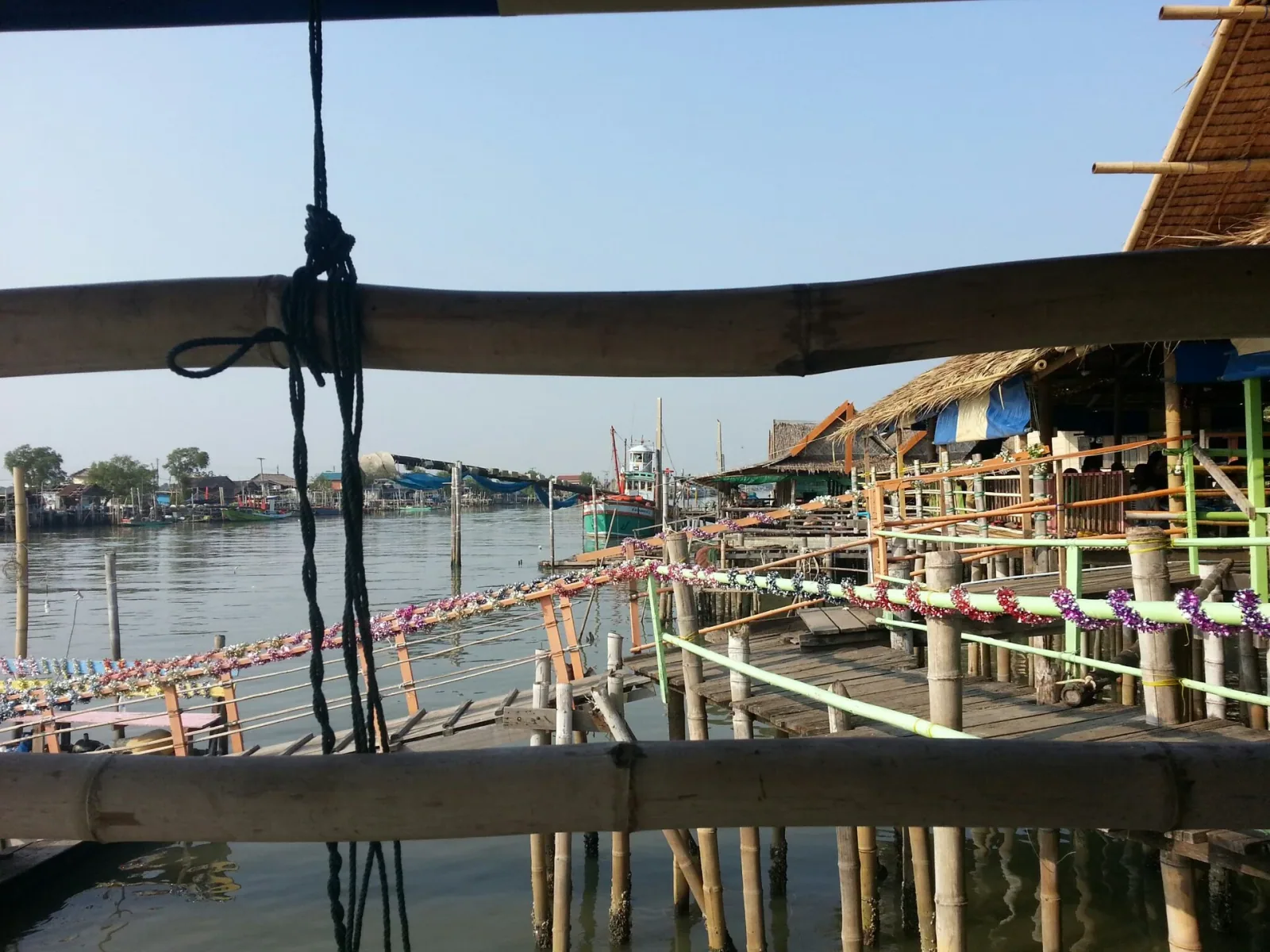
Fishing villages dot the coast, communities where entire families participate in the industry. Men crew the boats, women process catches and maintain nets, children grow up understanding tides and seasons before they learn to read. The work is dangerous—every family has stories of men lost at sea—which makes the Buddhist temples scattered through these communities especially important. They serve as spiritual anchors, places to make merit for protection, and social centers where funerals honor fishermen who didn't return.
Traditional boat building continues in some areas with master craftsmen constructing wooden vessels using techniques passed through families. Watching them work—selecting timber, shaping hulls by eye, fitting pieces without blueprints—reveals knowledge that can't be learned from books. These boats cost more than fiberglass alternatives but last longer and can be repaired indefinitely. Some families maintain the same boat for decades, wood wearing smooth from saltwater and use, each plank containing memories of catches and storms.
→ Morning fish market: Arrive 5-7am at main harbor to see boats returning, auctions, processing. Free to observe. Respectful photography usually welcomed.
→ Fishing villages: Scattered along coast accessible by motorcycle or car. Some families offer homestays 500-1,500 THB nightly. Genuine immersion but minimal English.
→ Boat building workshops: Some craftsmen welcome observers. Ask locals or guesthouse owners for introductions. Small tip appreciated (100-200 THB).
→ Temple visits: Buddhist temples throughout fishing communities. Observe respectfully, dress modestly. Morning and evening chanting times offer insight into local spiritual life.
→ Mangrove tours: Boat trips through preserved mangrove forests show ecosystem and traditional fishing methods. 800-1,500 THB, best early morning for wildlife.
The culture carries awareness that the sea giveth and taketh away. Fishermen make merit before dangerous trips, maintain shrines to maritime spirits, and observe seasonal taboos passed down through generations. Festivals celebrate peak catches and honor those lost at sea. It's a worldview shaped by dependence on unpredictable nature, creating communities bound by shared risk and mutual support. Understanding this context transforms Samut Sakhon from "that smelly fishing province" into a place where people maintain meaningful traditions while navigating modern economic pressures.
The evening walking market along the riverside is where Samut Sakhon's seafood abundance becomes delicious reality. Operating 4pm-10pm daily, it transforms into a pedestrian street lined with vendors grilling fish, prawns, squid, and species you won't find at Bangkok's sanitized markets. The smoke from dozens of charcoal grills creates haze, the smell shifting from appetizing to overwhelming depending on wind direction. Prices are absurdly low: a massive grilled fish with sticky rice and som tam costs 80-120 baht. A plate of grilled prawns runs 100-150 baht.
The quality matches or exceeds expensive Bangkok restaurants because the supply chain is essentially nonexistent. Fish grilled tonight was swimming this morning. Shrimp came from ponds thirty minutes away. Squid arrived on boats before dawn. There's no cold storage, no transportation, no middlemen adding markups—just direct connection between sea and grill. The difference in taste is noticeable even to non-connoisseurs: flesh is firmer, flavors cleaner, the kind of freshness you can't preserve through supply chains no matter how efficient.
The floating market operates early mornings (6-10am) with vendors selling produce, prepared foods, and fresh catches from boats navigating narrow canals. It's less touristy than famous floating markets elsewhere, functioning primarily for local shopping rather than visitor entertainment. You'll see elderly vendors who've been working this market for decades, boats laden with vegetables from surrounding farms, and the particular commerce that happens when everyone's bobbing on water. The food is simple but authentic: boat noodles, fresh fruit, grilled fish wrapped in banana leaves.
For those cooking at home, the wholesale market offers seafood at 50-70% below restaurant prices. Early morning (5-8am) brings the best selection when catches are being distributed. You'll navigate narrow aisles between stalls piled with ice and fish, vendors calling prices, buyers examining gills and eyes for freshness indicators. It's chaotic, wet, and smelly—and you'll leave with bags of shrimp, fish, and squid for what you'd pay for a single restaurant meal in Bangkok. Learning to select fresh seafood and negotiate prices becomes part of living here, skills that enrich the experience beyond simple cost savings. For more on Thai food culture and markets, see our guide to Thai cuisine across regions.
Evening walking market: 4pm-10pm daily. Grilled seafood 40-150 THB per dish. Best 5-8pm when grills are hottest. Bring cash—most vendors don't take cards.
Floating market: 6-10am, best before 8am. Boat noodles 40 THB, fresh produce, grilled fish. Hire boat tour 300-500 THB or visit from shore.
Wholesale market: 5-8am peak activity. Fresh shrimp 150-300 THB/kg, fish 80-250 THB/kg depending on species. Bring ice chest if buying quantity.
Signature dishes: Grilled fish with salt, tom yum talay (seafood soup), pad goong (stir-fried shrimp), steamed fish with lime, crab curry, squid with holy basil, fish cakes. All incredibly fresh at local prices.
"The seafood in Samut Sakhon costs so little and tastes so good that Bangkok restaurants seem like a scam by comparison. This is what 'fresh' actually means—caught this morning, grilled tonight, served for the price of a coffee elsewhere."
The economics of Samut Sakhon are straightforward: you pay 40% less than Bangkok while remaining accessible to the capital's jobs and amenities. Modern one-bedroom apartments in town centers rent for 7,000-11,000 baht monthly—half of equivalent Bangkok properties. Add utilities (1,400 baht), food (7,000 baht—more than typical because seafood is so cheap you eat better), transport (1,000 baht), and miscellaneous costs (3,000 baht), and comfortable living runs 22,000-32,000 baht monthly. For Bangkok commuters, the 8,000-15,000 baht monthly savings easily justifies the 45-90 minute commute.
Getting to Bangkok involves buses running every 15-30 minutes (30-60 baht), trains from certain stations (slower but scenic), or driving Highway 35 which connects directly. Rush hour traffic adds significant time, making flexible work schedules valuable. Remote workers avoid the commute entirely, enjoying Bangkok proximity for weekends and social occasions while living cheaply during the week. The calculation works especially well for couples where one works in Bangkok and the other works remotely—housing savings offset one person's commute costs.
Infrastructure is adequate rather than excellent. Internet through AIS, True, or 3BB provides fiber optic in modern buildings (100-500 Mbps for 500-700 baht monthly), sufficient for remote work though not optimized like Bangkok's best connections. Coworking spaces essentially don't exist—remote workers use cafes or apartments. Healthcare comes from government hospitals (basic care, minimal English) or private clinics (better service, some English, Bangkok hospitals 30-60 minutes away for serious issues). Doctor visits run 300-600 baht without insurance.
The expat community is minimal—you'll be one of very few foreigners outside migrant workers from Myanmar and Cambodia. English proficiency is low. Thai language skills or translation apps become necessary for daily life. There's no expat social scene, no international school, no Western restaurants beyond a few chains. This isolation appeals to some—genuine Thai immersion without expat bubbles—and drives others back to Bangkok within months. Know yourself before committing. For perspectives on living in Thailand's less-touristy provinces, see our guides to living in Thailand and cost of living considerations.
Climate is coastal Thailand standard: cool-ish season November-February (20-28°C, most pleasant), hot season March-May (32-40°C, oppressively humid), rainy season June-October (25-32°C with afternoon storms). The salt air is constant, accelerating corrosion on electronics and metal, requiring more frequent cleaning and maintenance. And yes, the fishy smell is unavoidable—it's literally the scent of the economy. Some days it's mild, some days overwhelming, but it's always present. Acceptance is required.
Samut Sakhon works brilliantly for specific types of people. Bangkok commuters seeking maximum housing value find the 40% cost savings transformative—8,000-15,000 baht monthly adds up to 96,000-180,000 baht annually, enough for international vacations, increased savings, or simply less financial stress. The commute is real but manageable, especially with flexible schedules that avoid peak rush hours. For couples where one person works remotely, the economics become even more compelling.
Remote workers and digital nomads prioritizing affordability over social scenes find Samut Sakhon delivers exceptional value. Monthly costs of 22,000-32,000 baht for comfortable living mean more runway for business building, more savings, or simply less pressure to earn. The lack of distractions—no nightlife scene, no expat hangouts, limited entertainment—can boost productivity if you have self-discipline. Bangkok is close enough for weekend socializing while weekday focus remains undiluted.
Seafood enthusiasts and food lovers fascinated by fishing culture find Samut Sakhon endlessly interesting. The daily fish auctions, shrimp farm tours, boat building workshops, and market access provide education about where food comes from and how coastal communities function. The quality and variety of fresh seafood at absurdly low prices makes every meal an opportunity for culinary exploration. Learning to select fish, negotiate prices, and prepare catches yourself becomes part of the experience.
Samut Sakhon doesn't work for everyone. Those needing English-speaking environments, Western amenities, active social scenes, or nightlife will be disappointed. The fishy smell genuinely bothers some people—it's not subtle, and you can't escape it. Families need international schools found only in Bangkok. Those requiring extensive healthcare should stay closer to Bangkok's hospitals. And anyone uncomfortable being the only foreigner in authentically Thai environments should look elsewhere. But for those seeking genuine coastal Thai culture, exceptional seafood, Bangkok proximity, and remarkable affordability, Samut Sakhon delivers something increasingly rare: a place that hasn't been discovered, sanitized, or priced according to tourist economics. The boats return at dawn. The fish market erupts in chaos. The shrimp farms churn through their cycles. And somewhere in Samut Sakhon, someone is grilling the freshest fish you'll eat all year, charging you less than what Bangkok tourists pay for mediocre pad thai. The province smells like fish because that's what honesty smells like. For more on Bangkok-adjacent provinces and suburban living options, explore our guides to Thai provinces and Bangkok living.
ESSENTIAL INFO
From Bangkok
25-35km (30-90 min)
Population
~591,000
Main Industry
Shrimp farming, fishing
Nickname
Shrimp Capital
BEST FOR
CLIMATE
Cool Season
Nov-Feb: 20-28°C, best weather
Hot Season
Mar-May: 32-40°C, oppressive
Rainy Season
Jun-Oct: Afternoon storms
40% cheaper than Bangkok center
From Bangkok: Buses every 15-30 min (30-60 THB, 45-90 min depending on traffic)
By car: Highway 35, 25-35km from Bangkok center
Train: From Wong Wian Yai station (60-90 min, scenic)
Airports: 50-60km from Suvarnabhumi/Don Mueang