Provinces
🚢Samut Songkhram
Home to Thailand's most famous floating market
Home to Thailand's most famous floating market
The vendor's wooden boat glides through the narrow canal, piled high with fresh vegetables, grilled seafood smoking on tiny charcoal grills, and tropical fruits arranged in perfect pyramids. She's one of dozens navigating the waterways of Amphawa Floating Market, trading and chatting from boat to boat, exactly as her grandmother did, and her grandmother before that. This is Samut Songkhram Province—Thailand's smallest by area but richest in maritime heritage, where waterways aren't just transportation routes but the foundation of entire communities.
Located where the Mae Klong River meets the Gulf of Thailand, Samut Songkhram represents Thai waterway culture at its purest. The province covers just 416 square kilometres—you can cross it end to end in under an hour—but what it lacks in size it compensates for in cultural density. Amphawa Floating Market, operating weekends in patterns unchanged for generations, draws Thai tourists by the thousands while remaining genuinely functional commerce rather than staged performance. The Mae Klong Railway Market adds surreal spectacle: vendors who calmly fold their awnings and pull back their produce as trains pass within centimeters, then immediately reassemble the market as if nothing happened.
For expats and long-term visitors, Samut Songkhram functions best as a Bangkok day trip or short-term cultural immersion rather than permanent residence. The province is deliberately undeveloped—accommodation options are limited, international amenities essentially nonexistent, English rarely spoken. But these limitations are precisely what preserves its authenticity. While Bangkok sprawls and Pattaya caters to tourism, Samut Songkhram remains profoundly itself: a fishing province where communities rise with the tides, markets float on canals, and the smell of grilled seafood mingles with salt air.
"What Samut Songkhram lacks in size it compensates for in cultural density—Thailand's smallest province by area but richest in authentic maritime heritage."
Most of Thailand's "floating markets" are floating in name only—vendors sell from fixed stalls at canal edges while tourist boats cruise past. Amphawa is different. Vendors actually work from boats, navigating narrow waterways, trading boat-to-boat, selling to customers in other boats or standing on canal banks. The market operates Friday through Sunday, with peak activity Saturday evening when locals and Thai tourists flood the area, creating an atmosphere that's part commerce, part festival, wholly authentic.
Arrive around 5pm on a Saturday, and you'll witness the transformation. Boat vendors appear from residential canals, setting up charcoal grills on their vessels, arranging produce, hanging lanterns. The water becomes a maze of wooden boats—this one grilling fresh squid and river prawns, that one selling som tam pounded to order, another offering tropical fruits cut into intricate shapes. Smoke from dozens of boat grills creates a haze over the water. The smell is extraordinary: grilled seafood, tamarind, lemongrass, charcoal smoke, all mixing with the natural canal scent.
Unlike tourist-focused markets where vendors aggressively call for business, Amphawa vendors wait calmly, chatting with neighbors, preparing food with practiced efficiency. Many are multi-generational—grandmothers manning boats while daughters manage the grills and granddaughters handle money. The transactions happen in Thai, prices are reasonable (50-150 baht for generous seafood plates), and the entire scene exists primarily for Thai customers rather than international tourism. Yes, foreigners are welcome and increasingly common, but the market doesn't perform for them—it simply continues its weekend routine. For more insights into Thai food culture, see our Thai cultural traditions guide.
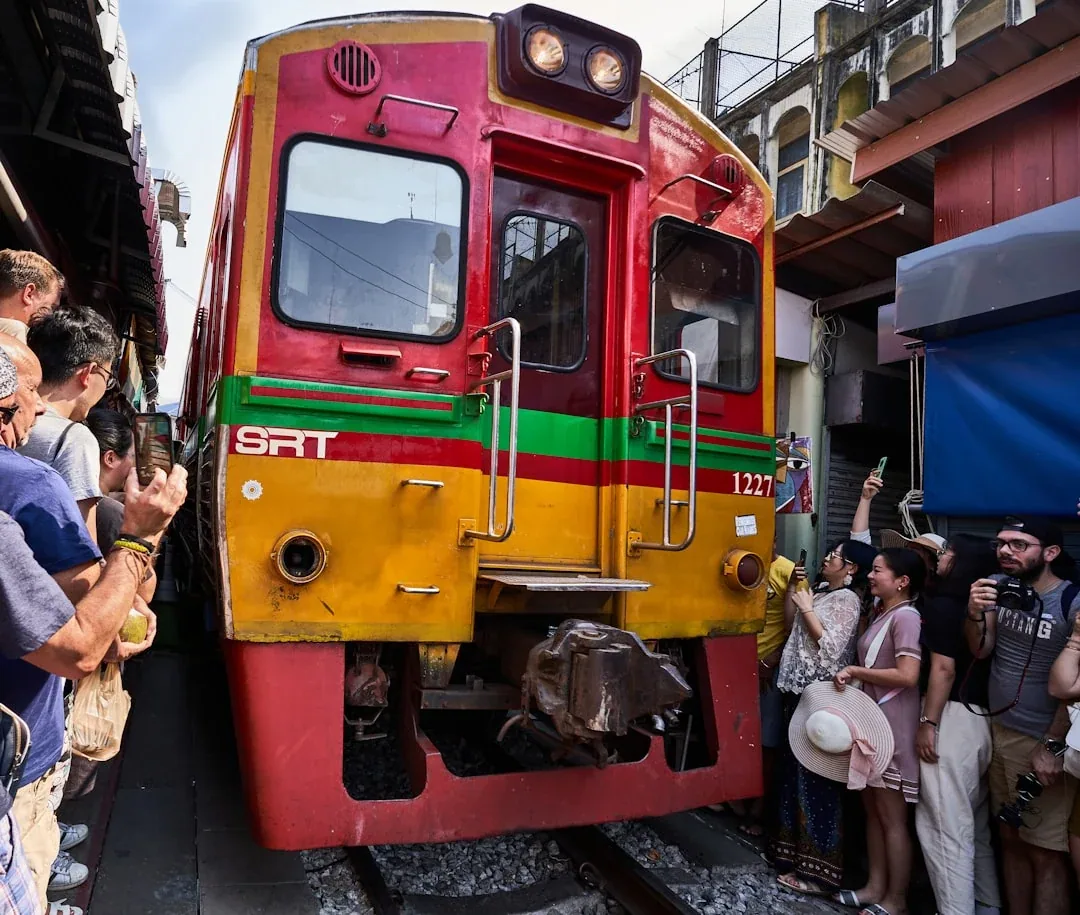
Mae Klong Railway Market shouldn't work. Vendors spread produce, seafood, clothing, and household goods directly on and beside active railway tracks. Eight times daily (roughly every 1.5-2 hours), trains pass through at walking speed, forcing a market transformation that happens so smoothly it seems choreographed despite being purely practiced routine.
About ten minutes before each train, a bell rings. Vendors begin a practiced dance: awnings fold back like umbrellas closing, produce tables slide away from the tracks, baskets of fish and vegetables get pulled to safety. The transformation takes perhaps three minutes. Then the train arrives, moving so slowly that passengers can make eye contact with market vendors standing centimeters away. The train cars brush the awning supports. Wheels pass within inches of fresh vegetables. And then it's gone, and immediately—before the last car clears the market—vendors are already reassembling, awnings unfurling, tables sliding back into position.
What makes this remarkable isn't the spectacle (though watching for the first time is genuinely thrilling). It's the casual competence. Vendors chat with customers while folding awnings. Nobody panics or rushes. Old women seated on plastic stools barely interrupt their conversations. This has been daily routine for decades—the train comes, the market adjusts, business continues. It's quintessentially Thai: creative adaptation to logistical challenges without abandoning tradition or complaining about circumstances. The market was here first; the railway came later; both learned to coexist.
Trains pass through Mae Klong Market roughly at 8:30am, 11:10am, 2:30pm, and 5:40pm (times vary slightly). Arrive 30-45 minutes early to see the market in full operation, buy snacks, position yourself for photos, and watch the transformation. The morning trains are less crowded with tourists. Amphawa Floating Market operates Friday-Sunday, with peak activity Saturday evening from 5pm-8pm.
Amphawa and the Mae Klong Railway Market are about 8 km apart (a 10–15 minute drive)—easily combined in a single day trip from Bangkok or as an overnight stay. Grab and songthaews connect both markets inexpensively.
Samut Songkhram's defining characteristic—beyond the famous markets—is seafood. The Gulf of Thailand yields daily catches that move through the province's markets at wholesale prices. River prawns the size of your fist sell for 200-400 baht per kilogram. Fresh squid costs 150-250 baht per kilo. Fish that would cost triple in Bangkok restaurants appear here still glistening from the morning catch.
The preparation methods are simple because the ingredients don't need enhancement. Whole fish grilled over charcoal with garlic, lime, and chilies. Tom yum soup built around fresh river prawns and morning-caught squid. Stir-fried razor clams with Thai basil. Steamed fish with lime and ginger so fresh it practically melts. At Amphawa, you can eat grilled seafood direct from boat vendors for 50-150 baht per portion—prices that seem impossible until you remember you're buying from fishermen's families selling their own catches.
For those staying longer or cooking at home, the morning wholesale markets offer even better value. Wake at 5am, visit the fish markets, and you're buying at prices 60-70% below Bangkok supermarkets. The quality difference is stark—this seafood was swimming yesterday, not sitting in supply chains. Local restaurants understand this advantage; their menus are dictated by morning catches rather than frozen inventories. What the boats bring determines what you eat, creating seasonal variation that restaurants in tourist areas can't match.
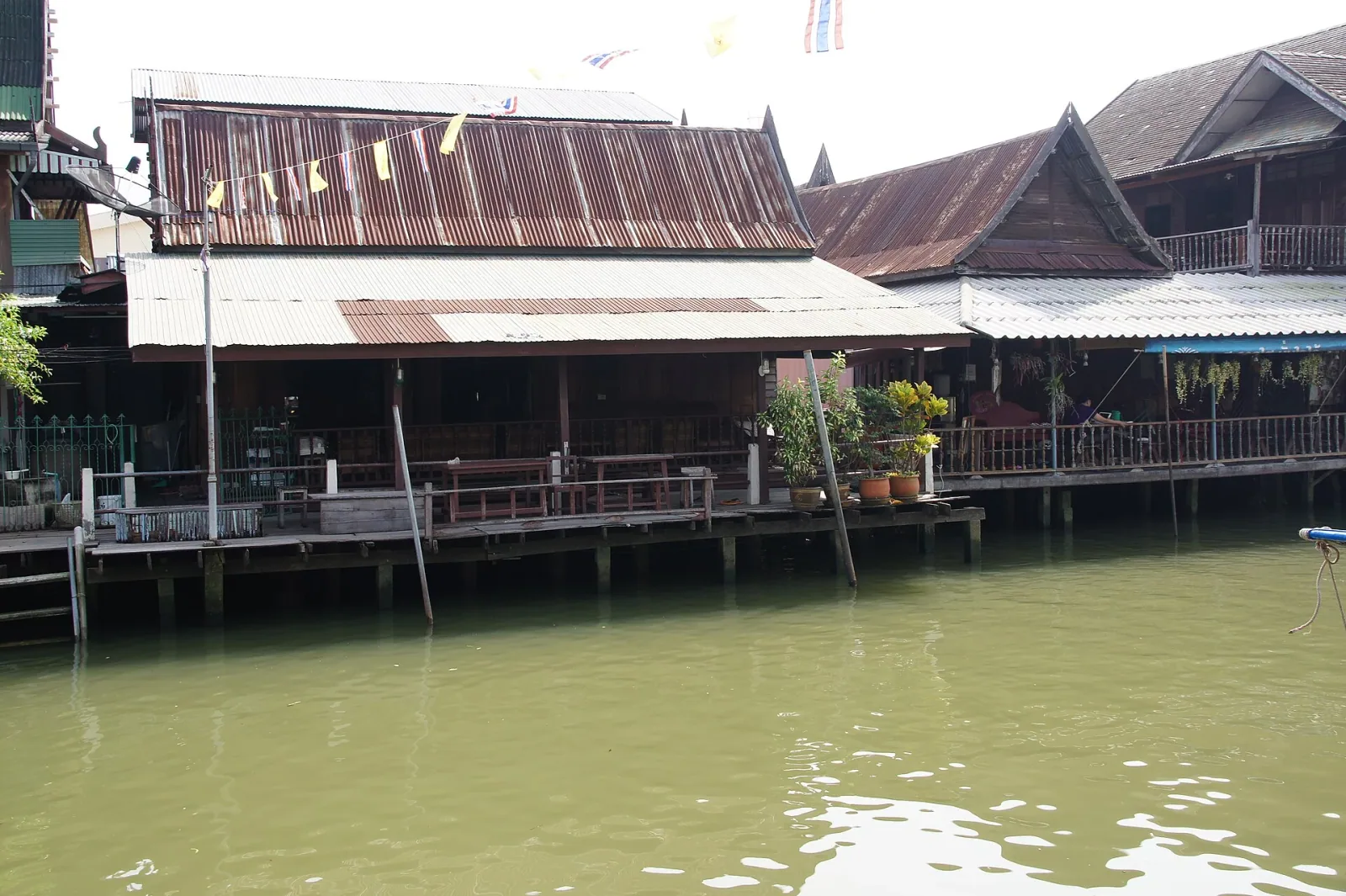
Beyond the markets that draw visitors, Samut Songkhram's identity rests in fishing villages where families have worked the waters for generations. Traditional wooden boats are still built in family workshops using techniques passed through centuries. Net-making, fish processing, boat repair—these aren't heritage crafts maintained for tourists but actual livelihoods sustaining communities.
The rhythm of life follows tidal patterns and fishing seasons. Boats depart before dawn, returning mid-morning with catches that move immediately to markets. Afternoons are for net repair, boat maintenance, and family time. Evenings bring market activity and social life. Buddhist temples anchor communities spiritually and socially, with morning alms-giving ceremonies and weekend festivals maintaining religious observance alongside commercial routines.
Mangrove forests line coastal areas, providing ecosystem functions that local communities understand intimately. Boat tours through mangroves reveal bird species, traditional fishing methods still practiced, and the delicate balance between commercial activity and environmental preservation. These aren't eco-tours designed for tourists—they're glimpses into actual working environments where fishing families maintain sustainable practices because their livelihoods depend on healthy ecosystems.
Accommodation: Very limited options concentrated in Amphawa town. Basic guesthouses 300-600 THB/night. Monthly rentals 6,000-12,000 THB exist but require direct negotiation and Thai language. Modern developments are rare.
Language barrier: Almost no English outside tourist-facing market vendors. Daily life requires Thai or translation apps and patience.
Best approach: Bangkok day trips (60-75 minutes), overnight weekend stays, or short-term cultural immersion (1-2 weeks). Permanent residence challenging without Thai language and comfort with limited amenities. For long-term stays near Bangkok, consider our guide to Bangkok neighborhoods.
Samut Songkhram is exceptional for day trips and short stays. The markets alone justify the journey from Bangkok—they're among Thailand's most authentic and visually spectacular cultural experiences. Weekend trips allow deeper exploration of fishing villages, mangrove tours, coastal areas, and temple festivals. The cost of living is remarkably low, seafood is exceptional, and cultural immersion is total.
But permanent residence is challenging. Accommodation options are genuinely limited—this isn't false modesty or exaggeration. The province wasn't developed for residential tourism, so rental infrastructure barely exists outside basic guesthouses and a handful of small apartment buildings. Healthcare is basic, requiring Bangkok access for anything beyond routine issues. Entertainment and nightlife are essentially nonexistent. The fishy smell from markets and harbors is constant and strong—charming for weekends, potentially overwhelming long-term.
Most importantly, the language barrier is real. Outside market areas accustomed to tourists, almost nobody speaks English. Daily tasks—finding accommodation, negotiating rent, buying groceries, getting medical care, asking directions—all require Thai. Translation apps help but aren't sufficient for genuine community integration. This isn't Bangkok or Chiang Mai where expat services and English speakers are common. This is provincial Thailand functioning for itself.
For remote workers or retirees theoretically drawn by the low costs and proximity to Bangkok, the neighbouring province of Samut Sakhon (and, a little further inland, Ratchaburi or Nakhon Pathom) offers better residential infrastructure while keeping Samut Songkhram's markets and cultural sites within easy reach. Living in a more developed nearby province while visiting Samut Songkhram on weekends combines accessibility with authenticity.
"Samut Songkhram works best as a Bangkok day trip or short-term cultural immersion. The Amphawa Floating Market represents one of Thailand's most authentic experiences—far superior to tourist-heavy alternatives."
Buses depart Bangkok's Southern Bus Terminal every 30-60 minutes, reaching Amphawa in 60-90 minutes depending on traffic (80-120 baht). The journey is straightforward on Highway 35. Trains from Wong Wian Yai Station offer more scenic routes but take longer. Many visitors opt for organized day tours (800-1,500 baht) that handle transportation and combine both markets, though independent travel is easy and much cheaper.
Within the province, songthaews (shared pickup trucks) connect main areas for 15–40 baht. Grab operates but availability is limited—don't count on it working everywhere. Renting a motorcycle (200–300 baht/day) provides flexibility for exploring fishing villages, coastal areas, and smaller temples. The province is small enough that driving from one side to the other rarely takes more than an hour, making independent exploration practical even for short visits.
Samut Songkhram is perfect for cultural travelers seeking authentic Thai maritime heritage without tourism infrastructure. It's ideal for food lovers—particularly seafood enthusiasts—who want to experience ingredients at their source. Photographers find endless material in floating markets, railway market transformations, fishing villages, and mangrove landscapes. Weekend warriors from Bangkok discover an easy escape into genuinely different Thailand.
The province works less well for permanent expat residence, first-time Thailand visitors (who need more support infrastructure), anyone requiring Western amenities, digital nomads seeking coworking spaces and cafe culture, or people uncomfortable with strong fish-market smells and humid coastal weather.
What Samut Songkhram offers is genuine access to Thai waterway culture that's increasingly rare as Thailand modernizes. The floating market vendors aren't performing heritage crafts—they're conducting actual commerce in patterns their grandparents taught them. The railway market vendors aren't staging spectacle—they're solving daily logistical challenges with pragmatic Thai ingenuity. The fishing communities aren't museums—they're living economies where families still earn livelihoods from the sea. For those seeking this authenticity, willing to accept limited amenities and language challenges, Samut Songkhram delivers experiences that Bangkok's tourist markets can never match. Visit for weekends, return regularly, and you'll understand why this tiny province remains one of Thailand's cultural treasures—small in size, vast in significance.
Distance from Bangkok
60-75 KM
Province Area
416 km² (smallest in Thailand)
Population
~187,000 (smallest in Thailand)
Provincial Capital
Mae Klong (Mueang Samut Songkhram)
Sample Monthly Budget
Best For
Not Suitable For
Amphawa Floating Market
Friday-Sunday
Peak: Saturday 5pm-8pm
Mae Klong Railway Market
Daily, trains ~8:30am, 11:10am, 2:30pm, 5:40pm
Arrive 30 min early