Provinces
🏝️Satun Province
Thailand's Last Frontier - Pristine Islands and Natural Beauty
Thailand's Last Frontier - Pristine Islands and Natural Beauty
Stand on the deck of the ferry cutting through the Andaman Sea toward Koh Tarutao, and you'll witness Thailand as it existed before mass tourism discovered it. No jet skis tearing across the water. No parasailing operations or banana boat rides. No beach clubs blasting EDM. Just limestone islands rising from impossibly blue water, pristine beaches backed by jungle that's never been cleared for resort development, and the kind of silence that makes you remember what "remote" actually means.
Tucked into Thailand's far southwestern corner where it nearly touches Malaysia, Satun Province covers 2,479 square kilometers of mainland and Andaman archipelago. Around 327,000 people live here, most clustered in Satun town on the mainland, and the demographic mix is unusual for Thailand: roughly two-thirds Muslim, with deep historical and linguistic ties to the former Kedah-Perlis sultanate. The real draw—the 51 islands of Mu Ko Tarutao National Park and the additional islands of Mu Ko Phetra—remains protected and refreshingly uncommercial.
Unlike Pattani, Yala, Narathiwat and the four southern districts of Songkhla, Satun has never been placed under the Emergency Decree that governs the Deep South insurgency zone. Foreign travel advisories treat it as a regular Thai province. For expats seeking island life without the tourist circus that's consumed places like Phuket and Koh Samui, Satun offers something increasingly rare: genuine island authenticity at prices that feel like traveling back in time. You can rent beachfront bungalows for what a Bangkok studio costs, fresh seafood sells for less than instant noodles in tourist areas, and the entire province is now part of the Satun UNESCO Global Geopark—the only one in Thailand—designated in 2018 for its 400-million-year-old Paleozoic rock record.
"Satun offers something increasingly rare: genuine island authenticity at prices that feel like traveling back in time."
The centerpiece of Satun Province is Mu Ko Tarutao National Park, Thailand's first marine national park established in 1974. Protected status means the 51 islands here remain largely undeveloped—no mega-resorts, no jet ski rentals, no beach massage hustlers. The largest island, Koh Tarutao, carries fascinating history as a former prison colony that once held notorious criminals and political prisoners. Today, the ruined prison buildings stand silent in the jungle while the island offers pristine beaches, hiking trails through dense forest, and wildlife including monitor lizards, monkeys, and wild boar roaming freely.
Basic bungalows and camping facilities let you stay overnight, waking to absolute silence except for waves and jungle sounds. The island was famously a pirate hideout in earlier centuries, and exploring the coastline—much of it still accessible only by boat—makes you understand why. Hidden coves, dramatic rock formations, waters so clear you can see fish from twenty feet above the surface.
Ko Adang, the second-largest island in the archipelago, lies a short long-tail ride across the channel from busy Ko Lipe. Mountainous and covered in jungle, the island is mostly national park: park bungalows and a campground line a long white beach, and the steep Chado Cliff trail above the beach is the classic sunrise hike. Across the channel, Ko Lipe is the lived-in island of the group, home to an Urak Lawoi (Chao Le) sea-nomad community whose families have fished these reefs for generations.
For divers, Ko Rawi and the smaller islands of the Tarutao group deliver healthy coral reefs and granite formations dropping into deep water—the famous Eight Mile Rock pinnacle near Ko Yang is one of the south's better advanced dives. Day boats from Ko Lipe reach most sites in 30–60 minutes; the more distant Hin Daeng and Hin Muang pinnacles are normally booked out of Ko Lanta in Krabi, not from Satun.
Back on the mainland, Satun town rewards a slow day. The Kuden Mansion (now the Satun National Museum) was built in 1902 for the last governor sent down from Bangkok after the 1909 Anglo-Siamese Treaty transferred Satun from the Kedah sultanate to Siam—the architecture is a striking blend of Sino-Portuguese and colonial Malay. Khao Phaya Wang, a karst hill on the river's edge, gives a panoramic view over rice paddies and the mangrove fringe. Morning markets, Chinese-Thai shophouses, and the central mosque all sit within walking distance of one another.
Thale Ban National Park, on the Malaysian border in Khuan Don district, protects a freshwater swamp lake ringed by limestone mountains and rainforest. Kayaking, bird watching, and short jungle trails are the main draws, with basic park bungalows and a campground for overnight stays.
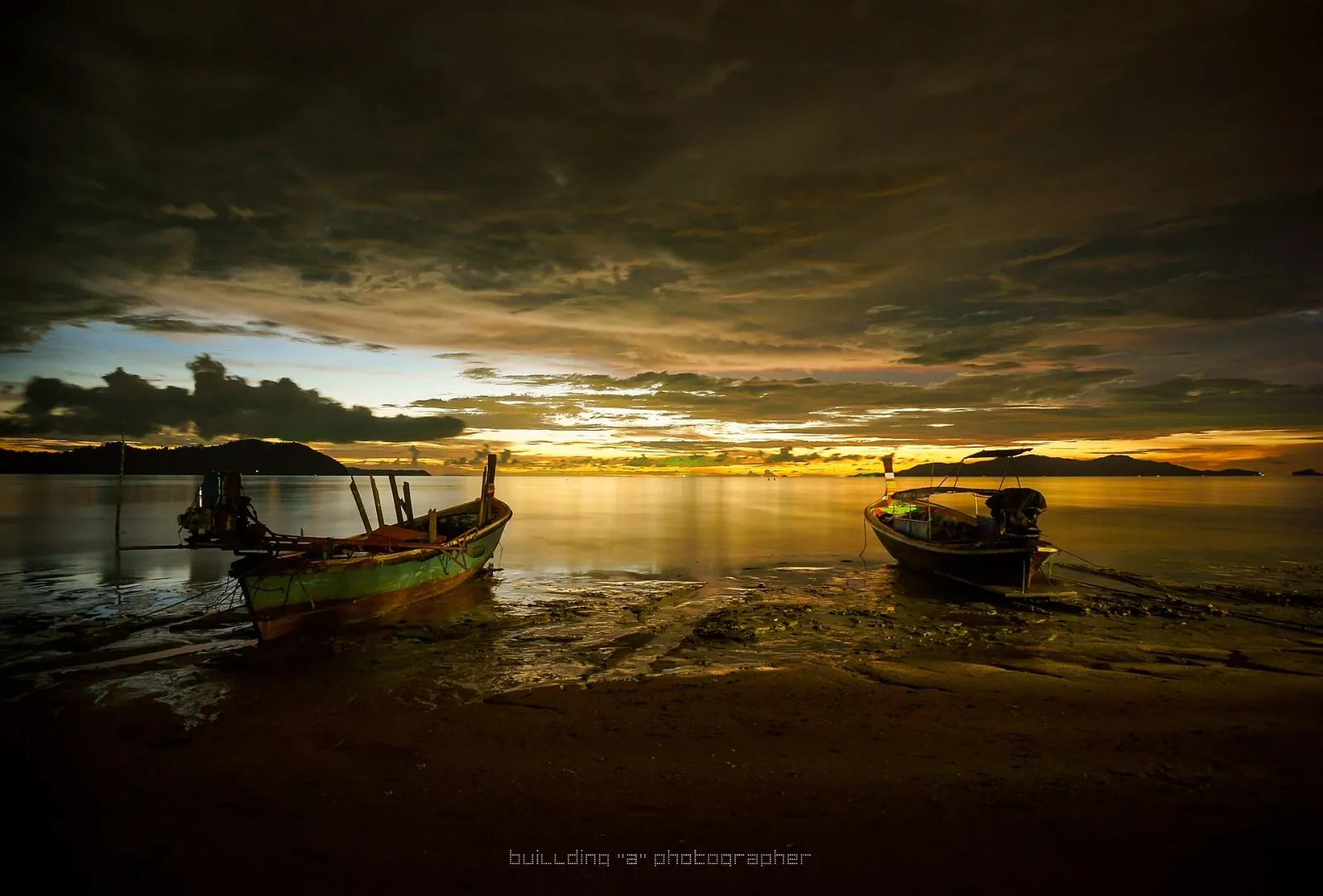
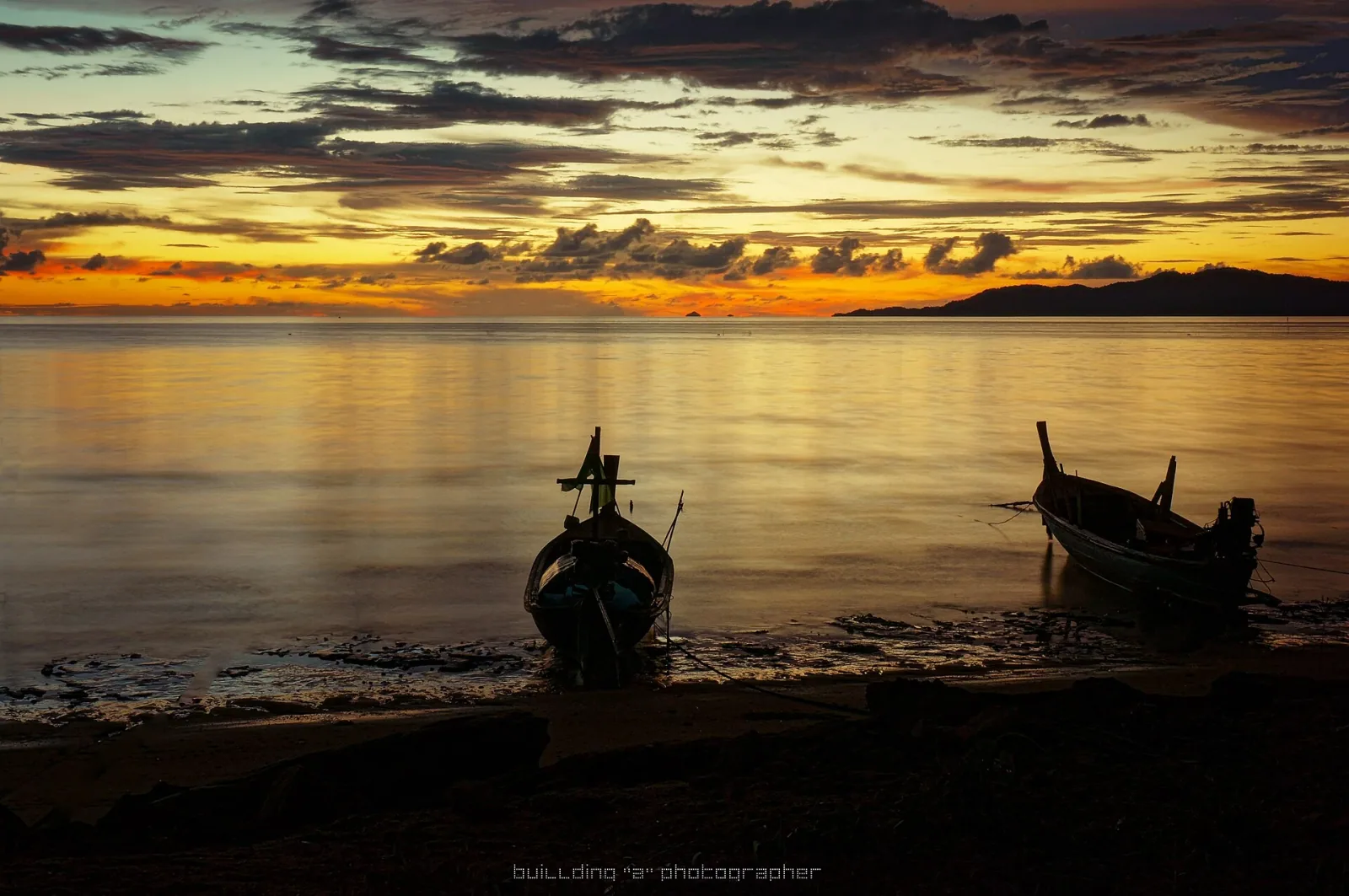
Fishing isn't just Satun's livelihood—it's the province's identity. Traditional wooden boats bob in harbors throughout the coastal areas, many built using construction techniques passed through families for generations. Daily fish markets showcase the cultural importance of seafaring, with catches brought ashore before dawn and sold by vendors who've occupied the same market stalls their parents worked.
The island communities, particularly the Urak Lawoi village on Ko Lipe and the smaller fishing settlements scattered through Mu Ko Phetra, preserve lifestyles increasingly rare elsewhere in southern Thailand. Stilt houses, hand-built long-tail boats, and free-diving for sea cucumbers and shellfish are still part of daily life, even as Ko Lipe's beachfront has filled in with bungalow operations and bars. The pace of life still follows tidal rhythms and monsoon closures rather than tourist seasons.
Satun's Muslim majority—around 67% of the province—is a direct legacy of its history as part of the Kedah-Perlis sultanate until the 1909 Anglo-Siamese Treaty. Mosques and Buddhist temples coexist peacefully; the local Malay dialect (Bahasa Melayu Satun) is widely spoken alongside Thai, and Islamic festivals punctuate the calendar. For expats, this means light awareness of Muslim customs—particularly during Ramadan and in village settings away from Ko Lipe—but it also means access to distinctive southern cuisine where Thai, Malay, and Muslim culinary traditions blend: roti, nasi dagang, mataba, fish curries built on turmeric rather than coconut, and grilled seafood by the kilo.
Satun's food scene centers entirely on what the sea provides. Morning fish markets display extraordinary variety—giant prawns, blue crab, squid, grouper, snapper, fish species you won't recognize but should absolutely try. Grilled seafood cooked while you watch costs 50-100 baht for meals that would command premium prices in tourist areas.
Local specialties include seafood satay, fish cakes, steamed fish in banana leaves, and spicy southern curries heavy with turmeric and chili. The Malaysian influence shows in dishes you won't find in Bangkok—roti served with curry, coconut-heavy desserts, grilled fish with turmeric that stains everything golden. Most expats here embrace the seafood-heavy lifestyle; it's hard not to when the alternative costs three times as much and tastes half as good.
Satun's remoteness requires commitment. The province has no commercial airport; the practical gateway is Hat Yai International (HDY) in Songkhla, about 100 km east and 1.5–2 hours by minibus (~150–250 THB). Trang Airport (TST), roughly two hours north, also works. From Bangkok, the bus from Mo Chit to Satun town runs around 14 hours (700–1,000 THB for VIP/sleeper services). Long-distance southern trains now depart from Krung Thep Aphiwat (Bang Sue Grand), not the old Hua Lamphong station, with Hat Yai the nearest mainline rail hub.
The signature transport option: ferry from Tammalang pier (about 10 km south of Satun town) to Kuah on Langkawi, Malaysia—roughly 75–90 minutes, around 300 THB one way, with Thai immigration on the pier. Land border crossings into Perlis/Kedah are also possible at Wang Prachan (Khuan Don) and at Bukit Kayu Hitam via Sadao further east.
Island access runs through Pak Bara pier in La-ngu district, the main departure point for Mu Ko Tarutao and Mu Ko Phetra. Speedboats to Ko Lipe take roughly 90 minutes (around 650–750 THB one way) during the November–April high season; service thins out or stops entirely during the monsoon. Onward long-tail and snorkel-trip charters between Ko Lipe, Ko Adang, Ko Rawi and the smaller islands run 1,500–3,000 THB per day. For mainland life, a rented motorbike (1,200–1,800 THB/month) is essential—roads are decent, traffic is minimal, and most of the Geopark sites only make sense if you can drive yourself.
Accommodation in Satun splits between mainland and islands, each offering different advantages. On the mainland, Satun City delivers genuine Thai prices: basic apartments with fan and private bathroom rent for 3,000-7,000 baht monthly. They're simple but adequate, though English-speaking landlords are rare. Mid-range options (7,000-18,000 baht) provide air conditioning, WiFi, and modern amenities suitable for longer stays—enough comfort for remote work without the premium charged in tourist hubs.
Island properties skew toward beachfront bungalows and small resorts (18,000–50,000+ THB monthly), with spectacular views and direct beach access. Ko Lipe has the most established year-round accommodation, though most operations close or shrink dramatically during the May–October monsoon. Long-term rentals on the islands often lack online listings—direct contact in person works far better than digital searches.
→ Satun town and Pak Bara for year-round mainland living
→ Ko Lipe for in-season beachfront life, with a mainland fallback May–October
→ Local Facebook groups (e.g. "Satun Expats", "Koh Lipe Community") for sublets
→ Walk in: many landlords still don't advertise online
→ Negotiate 6+ month leases for 10–20% discounts
Internet infrastructure in Satun lags behind major cities but works for most remote work. AIS, True, and 3BB fibre reaches Satun town, Pak Bara, La-ngu and most district centres, with typical packages around 500–700 THB/month for 300 Mbps to 1 Gbps; mobile data (10–20 THB/GB) makes a reliable backup. Ko Lipe has 4G and patchy resort fibre but should be treated as a soft-launch workspace rather than a primary base. If video calls matter, anchor yourself on the mainland and treat the islands as weekends.
The foreign community here is small—a handful of long-term residents on Ko Lipe, a thinner scatter on the mainland—creating an intimate but sometimes isolating social landscape. Facebook groups like "Satun Expats" and "Koh Lipe Community" connect the scattered residents, though organised events happen infrequently. The upside: everyone tends to know everyone personally, and you have genuine room to shape your own lifestyle rather than joining an established expat circuit.
Healthcare handles routine needs at prices far below Western standards—general consultations run 250–500 THB at clinics, 500–1,000 THB at private hospitals. Satun Hospital (Mueang) is the provincial referral centre; for anything serious, the standard play is Hat Yai's Bangkok Hospital or Hatyai Hospital, or onward to Bumrungrad/Bangkok Hospital in Bangkok. Some long-stay residents also use Penang or Kuala Lumpur via the Langkawi ferry. Health insurance remains essential—Thai policies run 25,000–50,000 THB annually depending on coverage. For long-term logistics, see our guides to visa options and rental contracts.
Satun offers excellent value for island living. Actual costs vary based on accommodation choice (mainland vs. island), dining preferences, and activity frequency. Island properties typically cost more but offer direct beach access.
Satun's tropical monsoon climate creates dramatic seasonal shifts that fundamentally alter the island experience. November through February delivers perfect conditions—temperatures around 24-28°C, minimal rain, calm seas ideal for diving and snorkeling. This is peak season when accommodation prices rise (modestly by tourist-area standards) and islands see their busiest periods. It's also the only time you're guaranteed access to all islands, as rougher seas can close ferry routes during other seasons.
The hot season (March-May) challenges with temperatures reaching 32-38°C. Seas remain relatively calm, swimming is still excellent, but you'll schedule everything around the heat. Afternoon siestas become mandatory. Prices drop significantly, crowds disappear, and if you can handle intense tropical heat, you'll have beaches nearly to yourself.
Monsoon season (May-October, strongest June-September) transforms Satun entirely. Heavy rains, rougher seas, and occasional island closures mean beach activities become weather-dependent. Some islands close entirely when ferries can't safely operate. But temperatures moderate to comfortable 28-32°C, landscapes turn impossibly lush and green, and you experience authentic island life when tourism infrastructure essentially shuts down. September-October brings the heaviest rains—plan accordingly or embrace getting very, very wet.
Satun works for a specific type of person: those who prioritize pristine nature over developed amenities, value authenticity over convenience, and can handle genuine remoteness. If you're drawn to islands that actually feel like islands—where development is minimal, environmental protection is real, and tourist infrastructure barely exists—Satun delivers what Thailand's famous islands promised before they sold out to mass tourism.
But the compromises are real. The tiny expat community offers intimacy but can feel isolating. Limited English-speaking infrastructure means basic tasks require more effort. Healthcare facilities handle routine needs but serious medical issues require travel. Island accessibility depends on weather and season—monsoon months can cut you off from the mainland for days. Job opportunities beyond remote work don't exist.
Neighbouring provinces provide context: Trang (~2 hours north) delivers similar quiet Andaman islands with a livelier provincial capital. Hat Yai and Songkhla (~2 hours east) offer the south's main airport, hospitals, and shopping. Krabi (~5 hours north) is where Andaman tourism shifts to full-volume—Railay, Ao Nang, the Phi Phi ferries—and Phuket (~5–6 hours) takes that further still. Langkawi sits about 90 minutes south by ferry from Tammalang pier, making duty-free shopping and Malaysian food an easy overnight rather than a day trip.
Satun represents Thailand's last island frontier—the place where national park protection actually means something, where environmental conservation wins over resort development, where fishing communities still work traditional boats using methods their grandparents taught them. It's not for everyone. The remoteness that preserves its character also limits convenience. The lack of tourist infrastructure that keeps beaches pristine also means fewer Western amenities. The protected status that ensures future beauty also restricts present development. But for those it fits—remote workers with solid income and flexible schedules, retirees seeking peace over party, nature enthusiasts valuing environment over entertainment—Satun offers what Thailand's developed islands can never reclaim: genuine island authenticity at prices that make extended stays possible rather than prohibitive. The choice isn't whether Satun is good or bad. It's whether you're the right person for what Satun actually is.
Provincial Highlights
Marine Parks
Tarutao & Phetra (51+ islands)
Headline Island
Ko Lipe – beaches, reefs, sea-nomad community
UNESCO Status
Satun Global Geopark (designated 2018) – not a World Heritage Site
Best For
Island lovers, divers, remote workers, eco-tourists
Special Access
Tammalang–Langkawi ferry (~90 min, ~300 THB)
Quick Take
Satun is Thailand's southwestern Andaman frontier: a Muslim-majority, Malay-influenced province built around Mu Ko Tarutao and Mu Ko Phetra national parks and the country's only UNESCO Global Geopark. It is not part of the Deep South Emergency Decree zone. Best for remote workers, divers, and travellers willing to trade Phuket-style infrastructure for quieter beaches, lower costs, and easy ferry access to Langkawi.