Provinces
🏛️Sukhothai
Thailand's ancient capital and historical heartland
Thailand's ancient capital and historical heartland
Dawn arrives slowly at Sukhothai Historical Park. The Buddha image at Wat Mahathat sits in eternal meditation, silhouetted against pink-orange sky, surrounded by crumbling columns that once supported a roof seven centuries gone. Mist rises from lotus ponds, birds announce the morning, and you're alone with history—riding a bicycle through the birthplace of Thai civilization, watching light transform ancient stones from shadow to gold. This isn't just another temple complex. This is where Thailand began.
Sukhothai Province, occupying fertile plains in north-central Thailand, preserves the capital of the first unified Thai kingdom (1238-1438 AD). This wasn't just a political entity—it was a cultural revolution. The Sukhothai Kingdom produced the artistic traditions, architectural styles, religious expressions, and even the written language that define Thailand today. The graceful Buddha images, lotus-bud chedis, and walking Buddha poses you see throughout Thailand? They originated here, created by artists working under royal patronage during what Thais call their golden age.
The province offers something increasingly rare: profound cultural significance combined with comfortable modern infrastructure. Unlike remote Isan provinces demanding serious adventurous spirit, Sukhothai provides its own airport, reliable internet, modern apartments, and growing expat community while preserving authentic Thai character. You can spend mornings exploring UNESCO World Heritage temples, afternoons working from cafes with good WiFi, and evenings eating exceptional Northern Thai cuisine for less than you'd spend on a sandwich in most Western cities. This combination—deep cultural meaning plus practical modern amenities plus exceptional affordability—makes Sukhothai compelling for a specific type of traveler.
"This is where Thailand began—where artists created the aesthetic traditions and where King Ramkhamhaeng invented the Thai alphabet still used today."
Sukhothai Historical Park sprawls across 70 square kilometers preserving over 190 temple ruins from the kingdom era. The central zone alone contains 21 major monuments, each telling parts of the story about how Sukhothai established Thai cultural identity. Since late 2023, entry is ticketed by zone: Central Zone 200 THB for foreigners, Northern and Western Zones 120 THB each (the old combined ticket has been discontinued). Bicycle rental runs 30-50 baht. You'll want the bicycle—the park is massive, roads are flat and well-maintained, and cycling is the perfect pace for absorbing the atmosphere. Start at dawn when the park opens at 6am. The morning light is spectacular, temperatures cooperate, and you'll have an hour or two before tour buses arrive.
Wat Mahathat sits at the spiritual heart—the most important temple complex, featuring the iconic seated Buddha surrounded by remaining columns creating that memorable silhouette you've seen in photographs. The central chedi represents the pinnacle of Sukhothai architecture, its distinctive lotus-bud shape becoming the standard for Thai religious buildings. Multiple smaller chedis and Buddha images in various states of preservation demonstrate the artistic sophistication that flourished here. The layout represents Mount Meru, the center of Buddhist cosmology, with the main sanctuary symbolizing the peak where heaven and earth meet.
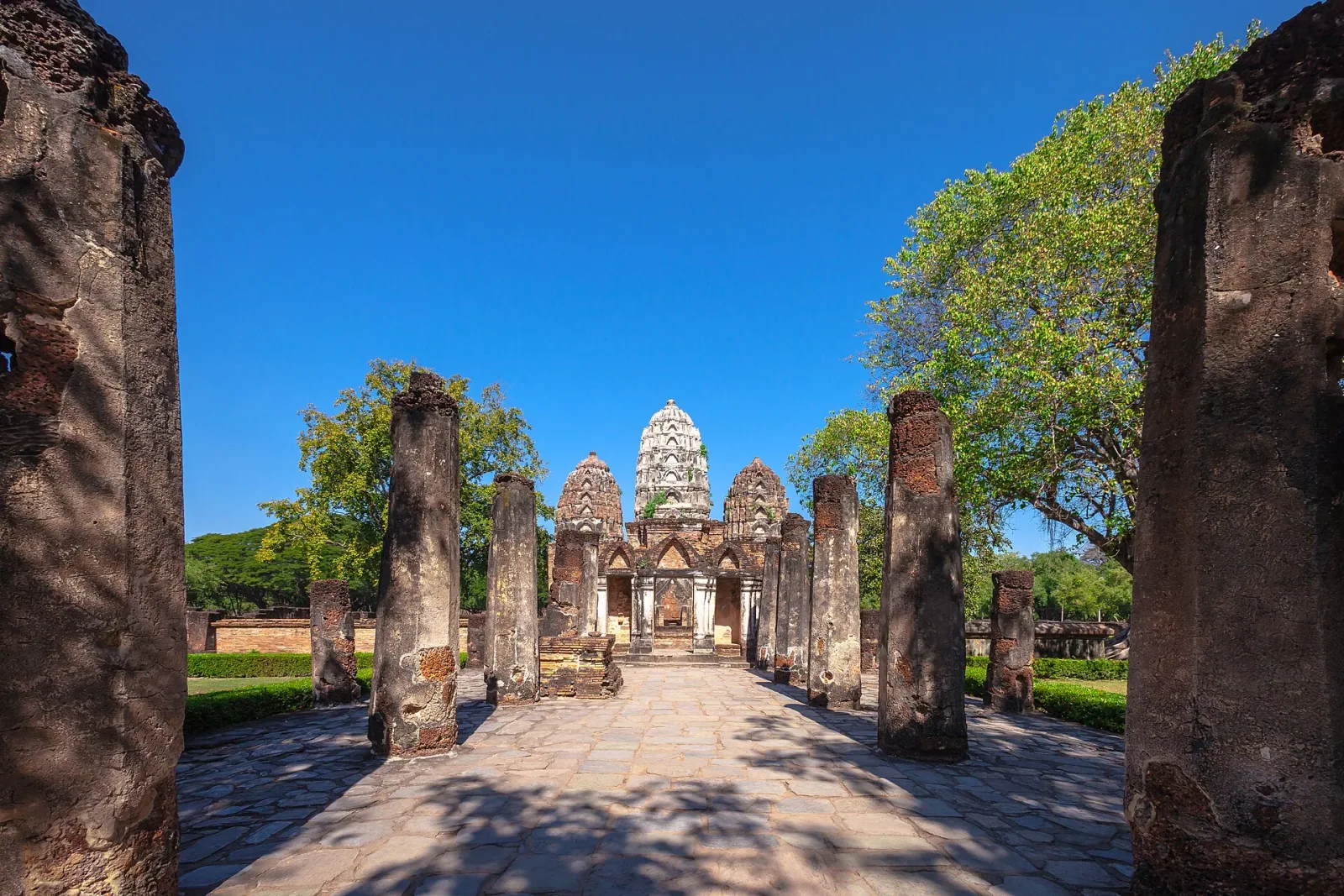
But Wat Si Chum demands equal attention. Located in the northern zone (requiring a bit more cycling), this temple houses Phra Achana—a massive 15-meter seated Buddha viewed through a dramatic narrow opening in the mondop (square building). As you approach, the Buddha's serene face gradually reveals itself through the entrance, creating one of Thailand's most photographed moments. The scale is staggering. The artistic achievement—even more so. This Buddha image has sat in meditation for seven centuries, weathering monsoons and occupations, remaining peaceful through Thai history's turbulence. Originally, priests could speak through a hidden passage behind the Buddha, creating an oracle effect that reinforced religious authority. You can climb the narrow internal staircase (flashlight helpful) to see where these "divine messages" originated.
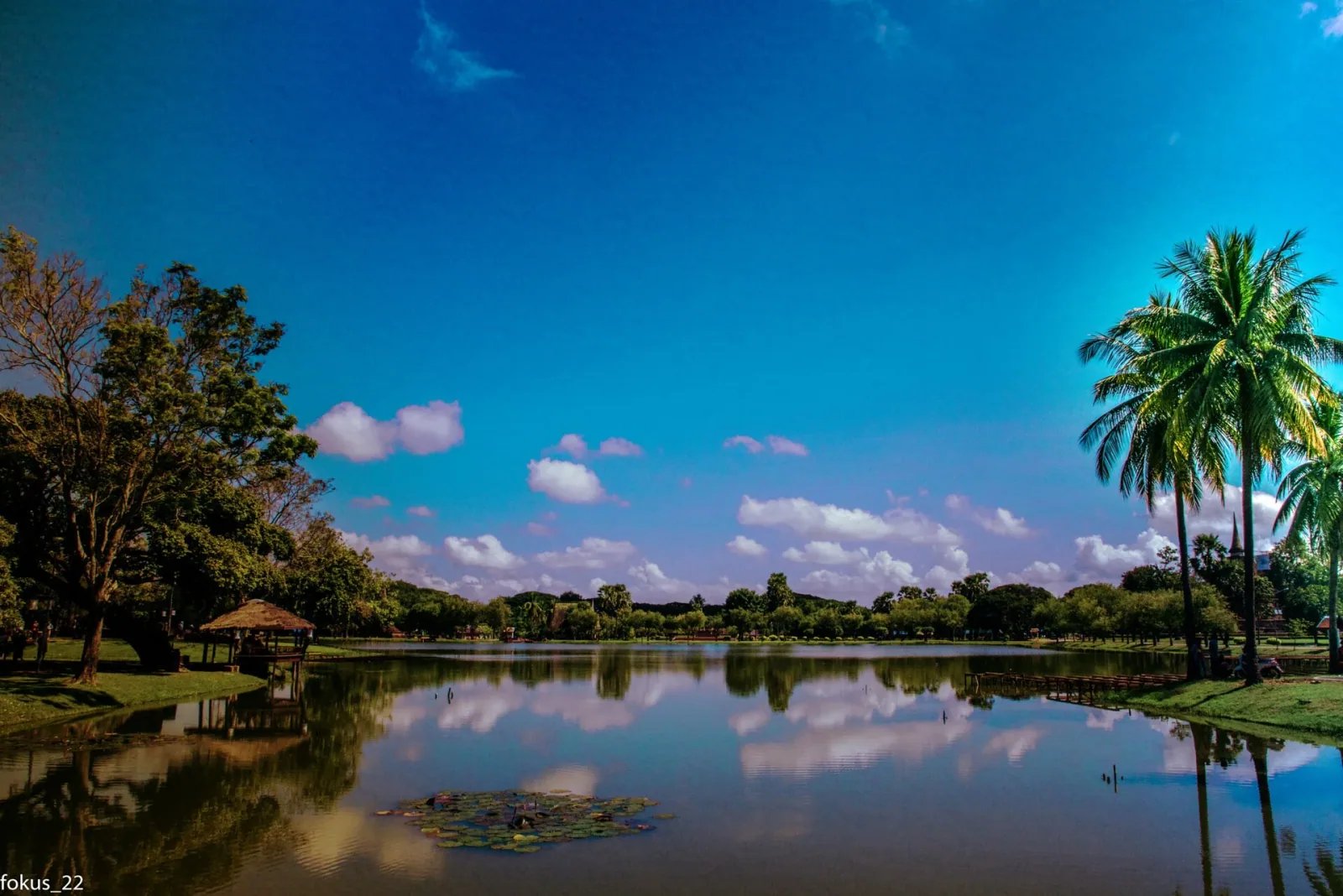
Wat Trapang Thong: Most photogenic temple, surrounded by lotus pond creating perfect reflections. Located near park entrance. Sunrise and sunset photography exceptional.
Wat Sa Si: Island temple accessed by restored bridge. Sri Lankan-style bell chedi and walking Buddha statues. Late afternoon light creates warm glow on ancient stones.
Ramkhamhaeng National Museum: Air-conditioned museum with Sukhothai artifacts, pottery, and the famous 1292 AD inscription—earliest Thai writing. Entry 150 THB. Visit before exploring temples for historical context.
Sukhothai translates to "Dawn of Happiness," and there's something poetic about how that name still fits. The province offers happiness through cultural richness and exceptionally low costs. A comfortable lifestyle—modern apartment, mix of home cooking and dining out, motorcycle for getting around, occasional weekend trips to nearby provinces—runs 22,000-28,000 baht monthly. For context, that's what many people spend weekly in Bangkok or monthly in less expensive Western cities.
The province has two main areas. Old City (Muang Kao) sits near the historical park—quieter, more traditional, walkable or bikeable to the temples. Rent runs 4,000-7,500 baht monthly for basic but adequate apartments. New City (Muang Sukhothai), about 12 kilometers away, offers modern infrastructure—better restaurants, shops, services, newer apartments with reliable WiFi. Rent here runs 5,000-9,000 baht monthly. Most long-term visitors choose New City for convenience, cycling or motorcycling to the historical park when the temple exploration mood strikes.
Internet connectivity in New City works well for remote work—fiber broadband delivering 50-100 Mbps suitable for video calls and online tasks. Several cafes provide work-friendly environments with reliable WiFi and decent coffee. There's no dedicated coworking space, but the peaceful provincial atmosphere enables focused productivity without Bangkok's chaos. The growing digital nomad presence means finding like-minded professionals easier than in truly remote provinces. Check the "Sukhothai Expat Community" Facebook group—it's small but active, organizing occasional meetups and sharing practical living advice.
"A comfortable lifestyle runs 22,000-28,000 baht monthly—what many people spend weekly in Bangkok or monthly in Western cities."
Sukhothai's signature dish is Sukhothai noodles—found nowhere else in Thailand. Thin rice noodles swim in sweet-sour broth with pork, green beans, peanuts, and crispy pork crackling. Every vendor has their own variation on the sweet-sour balance. The best versions cost 40-60 baht and taste like concentrated regional identity in a bowl. Night markets (operating 5pm-11pm daily, expanded weekends) serve these alongside Northern Thai specialties—khao soi (curry noodles), kaeng hang lay (pork curry), grilled river fish, and sticky rice with everything.
Street food meals run 30-80 baht. Local restaurants charge 60-150 baht for substantial plates. The morning market (Talat Muang, 5am-11am) offers fresh produce and prepared foods at wholesale prices. Growing tourism means more international options than remote provinces—several Italian restaurants, burger joints, pizza places serving visitors for 150-300 baht, though quality varies. Bakeries and cafes serve Western breakfast and good coffee (80-180 baht). For deeper exploration of Thai food culture, the province offers genuine immersion without language barriers being as steep as truly remote areas.
Sukhothai has its own airport in Sawankhalok district, roughly 27 km north of the new city—privately owned and operated by Bangkok Airways, the only carrier serving it, with daily flights from Bangkok (1 hour, 1,500-3,000 THB depending on booking timing). The airport shuttle bus connects to town for around 180 THB; private taxis run higher. Alternatively, buses from Bangkok's Northern Bus Terminal (Mo Chit 2) take 6-7 hours (280-450 THB) with VIP and standard options. The nearest railhead is Phitsanulok, about 60 km east on the Northern Line from Krung Thep Aphiwat (Bang Sue Grand)—many travellers ride the train to Phitsanulok, then bus or van on to Sukhothai (1-1.5 hours, 100-150 THB). Sukhothai itself has no train station.
Locally, bicycles remain the best option for historical park exploration—flat terrain makes cycling easy and authentic. Rentals cost 30-50 baht daily. For broader exploration and accessing Si Satchanalai Historical Park (50km north, another UNESCO site with equally impressive temples but fewer tourists), rent a scooter or motorcycle (200-300 THB/day, 2,500-4,000 THB monthly). Red songthaews (shared pickup trucks) run between New City and Old City/historical park for 20-30 baht. Car rentals available for families or regional day trips (800-1,500 THB/day).
Sukhothai suits specific travelers. History enthusiasts who appreciate cultural depth and want to understand Thai civilization's origins. Remote workers maintaining location-independent income who need decent internet but don't demand Bangkok-level infrastructure. Photographers drawn to ancient temples, lotus ponds, and dramatic morning light. People seeking affordable long-term stays in Thailand with more comfort than remote provinces but more authenticity than major tourist centers.
It doesn't work for everyone. If you need vibrant nightlife, diverse international dining, or cosmopolitan social scenes, you'll feel limited. If you need specialized medical care beyond routine healthcare, you'll travel to Bangkok or Chiang Mai. If you need local employment rather than remote work, job opportunities are minimal. The expat community is small but growing—large enough for occasional social connection, too small for extensive networking. The province primarily attracts independent travelers and remote workers, not those seeking conventional expat infrastructure.
Climate follows Northern Thailand's three-season pattern. Cool season (November-February) delivers comfortable 15-28°C temperatures—ideal for temple exploration with clear skies and pleasant cycling weather. Hot season (March-May) punishes with 30-38°C heat making midday activity unpleasant (April peaks particularly brutal). Rainy season (June-October) brings afternoon thunderstorms but cooler temperatures than hot season (25-32°C), lush green landscapes, and fewer tourists. The best time to visit coincides with most of Thailand—November through February when weather cooperates and nature blooms. For practical considerations about managing finances in provincial Thailand, Sukhothai offers good value with adequate banking infrastructure.
Years later, specific temple names fade. Budget details blur. What remains is the feeling of cycling through mist at dawn, watching Buddha images emerge from darkness. The taste of perfect Sukhothai noodles from the vendor whose name you never learned but whose stall you visited weekly. The afternoon you spent at Wat Saphan Hin, the mountain temple requiring a 30-minute uphill walk that filters out casual tourists, watching sunset paint the plains gold while a 12.5-meter standing Buddha looks across centuries of Thai history. The conversations with expat friends at the night market, comparing notes on temple photography and debating which noodle stall makes the best version of the local specialty.
Sukhothai doesn't offer beach parties or mountain trekking or urban sophistication. It offers connection to Thai cultural roots, comfortable affordable living, and the rare combination of profound historical significance with practical modern amenities. If that appeals to you—if you want to understand where Thai aesthetic traditions, religious architecture, and written language originated while maintaining productivity and comfort—Sukhothai delivers. Just remember to arrive at the historical park by 6am. Trust me on this. The dawn light on those ancient Buddha images is why you came.
KNOW BEFORE YOU GO
Population
~583,000
Monthly Budget
22,000-30,000 THB
Best Season
November-February
Airport
Sukhothai THS (Bangkok Airways only, ~27km)
MUST-DO
TYPICAL COSTS
→ History & culture enthusiasts
→ Remote workers (good WiFi)
→ Temple photographers
→ Budget-conscious travelers
→ Those seeking authentic Thailand
Sukhothai noodles: Unique sweet-sour broth found nowhere else
Khao soi: Northern curry noodles
Kaeng hang lay: Rich pork curry
River fish: Grilled fresh from local waters