Provinces
🏯Suphan Buri Province
Where history flows with the river
Where history flows with the river
The taxi driver glanced at me skeptically when I told him I was moving to Suphan Buri instead of staying in Bangkok. "But why?" he asked, genuinely puzzled. "There's nothing there." He was half right. Suphan Buri doesn't have the international restaurants, shopping malls, or expat bars that define most foreigners' Thailand experience. What it has instead is something increasingly rare—a provincial capital that maintains its historical character and agricultural roots while sitting comfortably within two hours of Bangkok's international airport.
Suphan Buri translates roughly to "City of Gold," from the Sanskrit suphan. The province was a fortified Dvaravati-era city—the ruined ancient town of U Thong on its western edge was one of the era's important urban centres—and later a strategic outpost on Ayutthaya's western flank. Today those layers of history sit visible everywhere: in surviving fragments of old city moat and walls, in temples that predate the Ayutthaya period, and in the Don Chedi monument commemorating King Naresuan's elephant duel. Modern Suphan Buri's other badge of identity is political: it was the home base of former prime minister Banharn Silpa-archa, whose long career left the province with disproportionate civic infrastructure, including the 123-metre Banharn-Jamsai observation tower that still dominates the city skyline.
But history alone doesn't explain why a growing number of expats are discovering Suphan Buri as a long-term base. The real appeal lies in that Goldilocks sweet spot of accessibility and authenticity. You're close enough to Bangkok—around 110 km north-west—that urban amenities remain within reach for occasional weekends. You're a short drive from Ayutthaya, letting you day-trip to UNESCO World Heritage sites. Yet daily life feels genuinely Thai—morning markets selling new-season rice and silver-barb river fish, monks actually doing alms rounds rather than performing for cameras, evening scenes of families gathering along the Tha Chin River as they have for generations.
"The real appeal lies in that Goldilocks sweet spot of accessibility and authenticity—close enough to reach urban comforts, yet far enough that daily life feels genuinely Thai."
The Tha Chin River—locally called the Suphan Buri River, and one of the four main distributaries of the Chao Phraya—has shaped this province's identity in ways the bigger river system never gets credit for. This is a working river: you won't find dinner cruises or riverside luxury hotels, just traditional wooden houses on stilts, fishing boats heading out at dawn, and the kind of riverside life that novels about old Thailand try to capture but rarely quite manage.
I discovered the river's importance accidentally during my first week in town. Lost while cycling through neighborhoods I couldn't yet distinguish from one another, I followed a promising path that led to a small riverbank park. It was around 5 PM, when the brutal afternoon heat finally breaks. Dozens of locals had gathered—families with children feeding fish, teenagers on awkward dates, elderly men engaged in the slow, contemplative smoking that seems to be the universal language of riverside reflection. No one looked twice at the sweaty foreigner wheeling his bicycle through their community space. This wasn't a tourist attraction—it was just Tuesday evening in Suphan Buri.
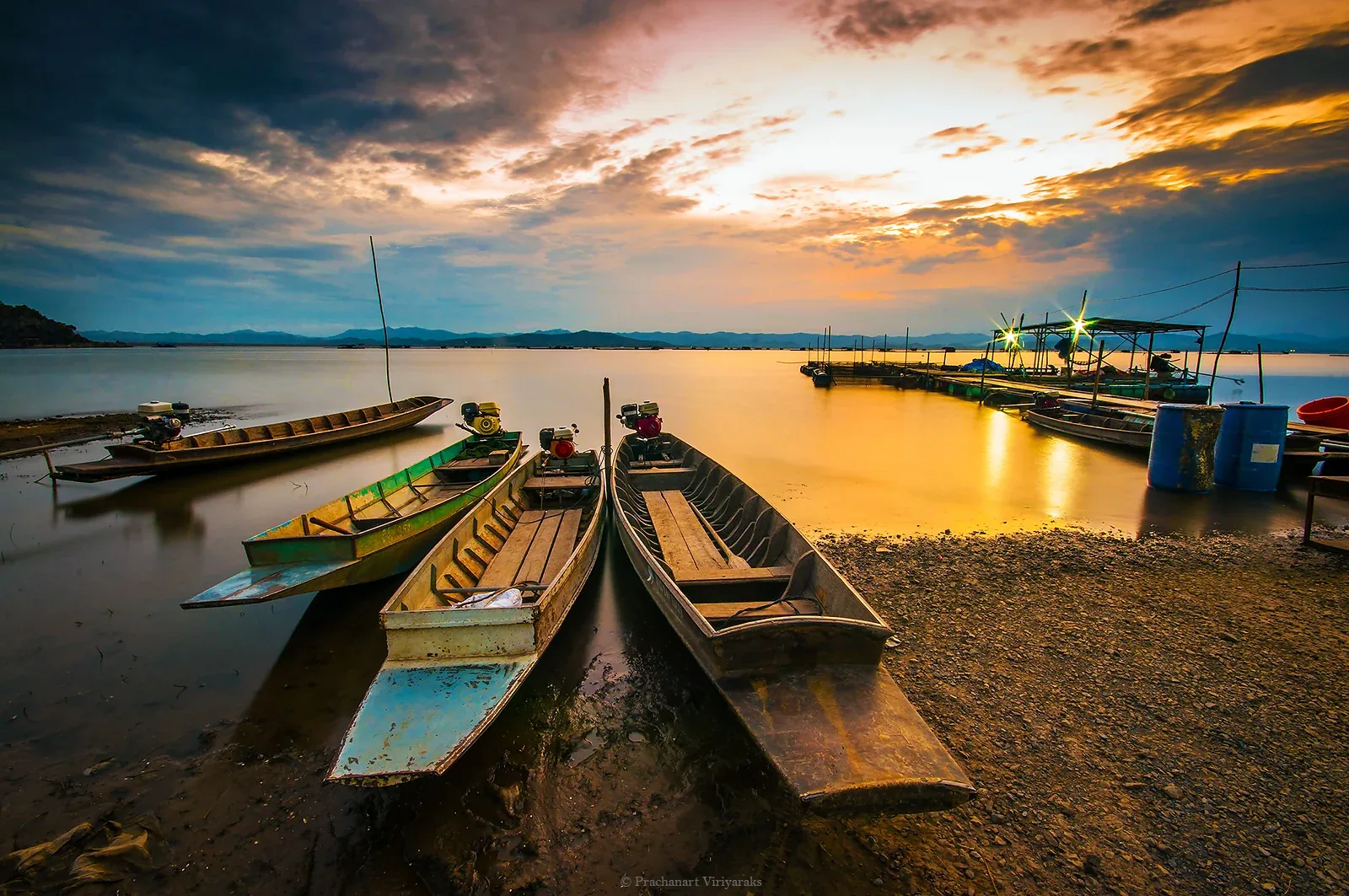
River tours are available if you want a structured experience, and they're worth doing once to see how the landscape shifts from urban to agricultural within minutes. But the real education comes from simply spending time along the banks. Watch long enough and you'll notice patterns—the morning departure of fishing boats, the afternoon arrival of produce barges, the evening gathering of teenagers who treat the riverside walkway like their personal social club. The river remains central to how people conceptualize space and time here, even as motorcycles and mobile phones have theoretically made water transport obsolete.
On weekends, the Saphan Khong Floating Market in Bang Pla Ma district offers a taste of traditional water-based commerce without the overwhelming tourist crowds of Bangkok's famous floating markets. Vendors sell from boats and stilt platforms over the water—fresh vegetables, tropical fruits, traditional Thai desserts, grilled river fish—and the more substantial Sam Chuk Old Market upriver (a wooden century-old riverside market, not strictly floating) draws Thai weekend visitors in steady numbers. Neither is a reconstruction or theme-park version; both are how some people still prefer to trade, using infrastructure that has worked perfectly well for generations.
Let's talk about money, because this might be Suphan Buri's most compelling practical advantage. I rented a one-bedroom apartment in a decent neighborhood—furnished, air-conditioned, fifth floor with a small balcony—for 5,500 baht monthly. Not 55,000 baht, which would get you a nice place in Bangkok. Not 5,500 USD, which is what friends back home pay for studios in American cities. 5,500 Thai baht. About $150 USD at current exchange rates.
My utilities run around 800 baht monthly—electricity for the air conditioner I use probably more than I should, water that costs next to nothing, and fiber internet fast enough for video calls back home. Food costs whatever you decide it should cost. Eat exclusively at local restaurants and markets and you'll spend 150-200 baht daily on three excellent meals. That's $4-5 USD. The morning market vendor who sells my breakfast—rice porridge with pork and century egg, plus Thai tea—charges 45 baht. She's never raised her price in two years. I keep suggesting she should, if only to keep up with inflation. She waves me off like I'm being ridiculous.
→ One-bedroom apartment, furnished with A/C: 4,500-7,000 THB
→ Utilities (electric, water, fiber internet): 700-1,000 THB
→ Food (mix of markets and local restaurants): 5,000-7,000 THB
→ Motorcycle rental or songthaew transport: 1,200-2,500 THB
→ Weekend activities, temple visits, trips: 1,500-3,000 THB
→ Miscellaneous (phone, personal items, etc.): 800-1,500 THB
Total: 13,700-22,000 THB monthly ($380-610 USD) for a genuinely comfortable lifestyle. Bangkok would require 2-3x this budget for equivalent quality of life.
The affordability isn't about deprivation—it's about what economists call purchasing power. Your money simply goes further when you're not paying urban premiums. You get fresh fruit from farmers who grew it, not supermarkets that marked it up three times. You rent from individual landlords who haven't consulted international real estate trends. You eat at family-run restaurants operating on decades-old margins that wouldn't survive Bangkok rent.
The Don Chedi monument sits about 30 kilometers west of the city centre, commemorating one of Thailand's most celebrated historical moments. In January 1593, King Naresuan of Ayutthaya met the Burmese Crown Prince Mingyi Swa in single combat atop war elephants. The Thai king won. This elephant duel—probably embellished over centuries of retelling—has come to symbolise Thai independence and military prowess. The monument itself is striking: a bell-shaped chedi visible for kilometres across flat agricultural land.
What makes Don Chedi interesting isn't just the history—it's seeing how that history functions in contemporary Thai life. School groups arrive on field trips, their teachers explaining national heritage. Families come to make merit and picnic. The annual festival in January features elephant shows and historical reenactments. For many Thais, this isn't ancient history—it's foundational mythology that informs national identity.
Throughout town, you'll stumble across remnants of old city fortifications—sections of wall, gates, earthen berms—incorporated into modern neighborhoods. Archaeological sites dot the province, most with minimal signage or interpretation, which means they're either frustrating (if you expect curated experiences) or fascinating (if you enjoy piecing together mysteries yourself). The small provincial museum helps contextualize what you're seeing, with exhibits on pottery, weapons, and daily life objects recovered from various periods.
Wat Pa Lelai Worawihan, the province's most important temple, dates to the Ayutthaya period and remains an active center of religious life. Visit during morning alms rounds or evening chanting to see Buddhism as practiced rather than performed. The temple grounds are peaceful, shaded by mature trees, perfect for the kind of contemplative wandering that Thai temple architecture encourages. Unlike famous tourist temples, you'll likely be one of very few visitors, which changes the experience entirely. No one's managing your behavior or herding you through designated paths. You're simply a guest in a working spiritual space.
Don Chedi Memorial: Best visited early morning or late afternoon to avoid heat. Entry 40 THB for foreigners. The small museum provides context about the elephant duel and Ayutthaya military campaigns. Annual festival in January offers cultural performances.
Temple circuit: Rent a motorcycle or bicycle to visit multiple temples in a day. Wat Pa Lelai Worawihan, Wat Phra Si Ratana Mahathat, and several smaller temples create a circuit revealing different architectural periods and artistic styles.
Archaeological sites: The old city walls and gates are scattered throughout town. The provincial museum (entry 40 THB) helps contextualize these ruins and provides maps of significant sites. English information is limited but improving.
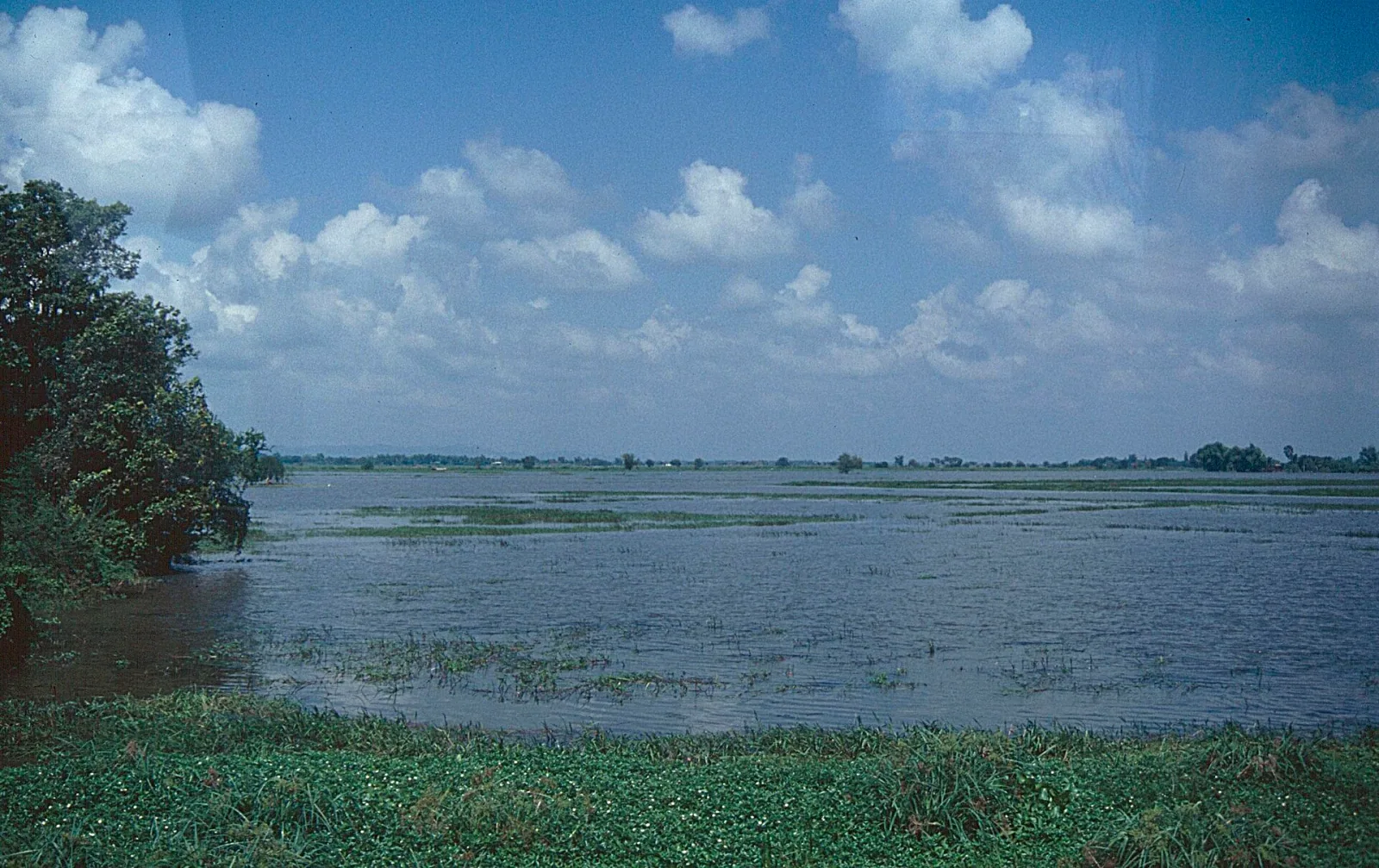
Suphan Buri's wealth has always come from its fertile flood plains. Drive in any direction from the city center and within 10 minutes you're surrounded by rice paddies, fruit orchards, and vegetable farms stretching to the horizon. This isn't tourist-oriented agrotourism—it's working agriculture that feeds Bangkok and beyond. But it creates a landscape that rewards exploration.
I've developed a weekend routine of aimless motorcycle rides through the countryside. The roads are paved but minimally traveled. You'll pass through villages that probably see one foreigner monthly, if that. Water buffalo still work the rice paddies here, massive animals moving through shallow water with surprising grace. During harvest season (November-December), the fields transform into coordinated chaos—families working together to cut rice, load it onto trucks, spread it for drying.
Suphan Buri's signature produce is rice—it's one of central Thailand's main rice baskets—and the silver-barb freshwater fish locals call pla taphian, which appears grilled, steamed in banana leaf, or fried at almost every village restaurant. Roadside stalls during harvest sell new-season rice, river fish, and seasonal fruit directly from the farm at prices that seem like errors. The first time I bought a bag of rice, the farmer threw in a couple of small pla taphian at no charge, apparently concerned that I might suffer some sort of protein deficiency. This hospitality isn't strategic—there's no expectation of review or repeat business from a foreigner passing through. It's just how things work in agricultural communities where abundance is shared rather than hoarded.
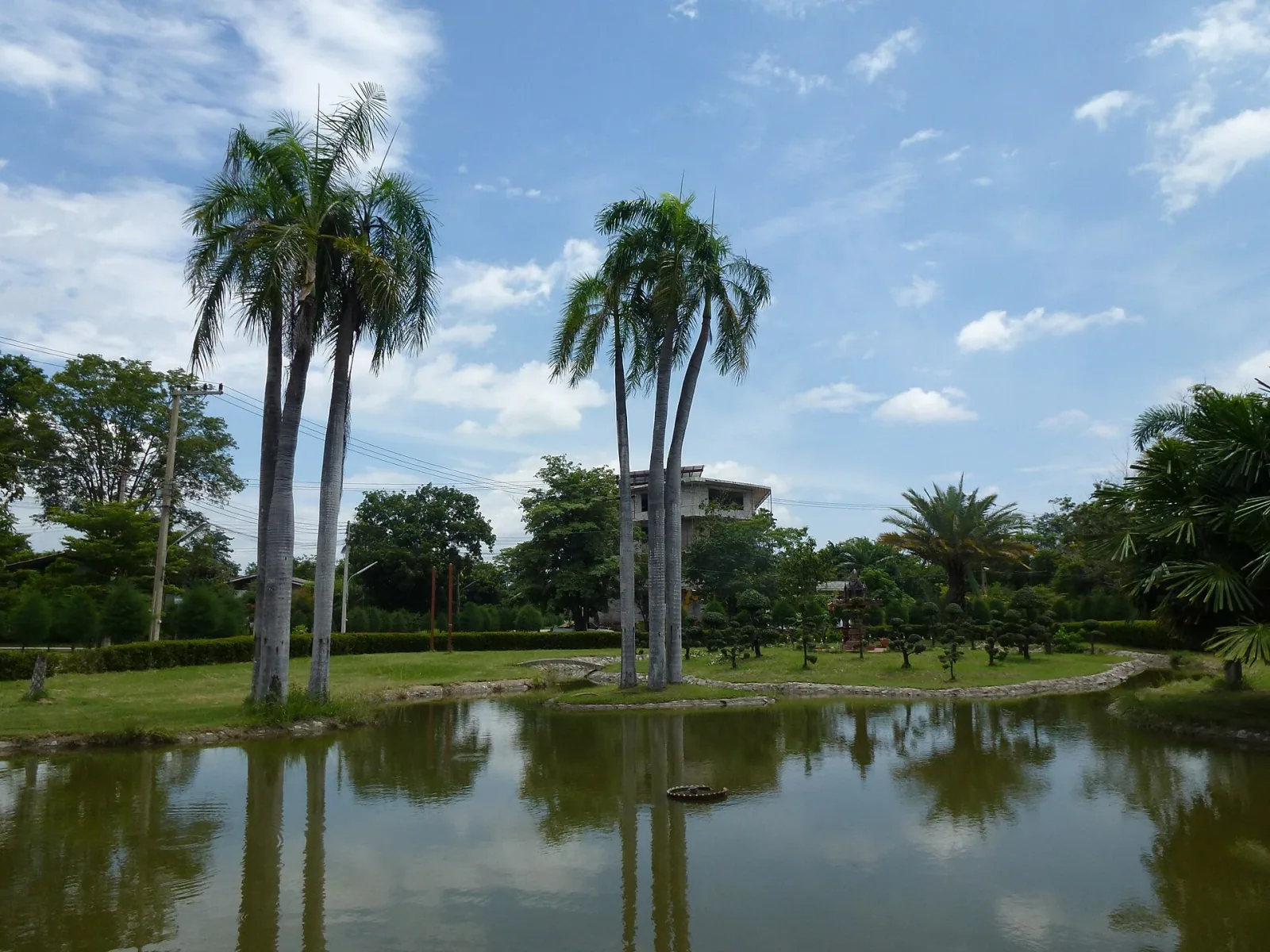
Some farms offer picking experiences or tours, especially during fruit season. These are informal arrangements—you show up, ask politely, and usually get invited to walk through orchards while farmers explain cultivation methods through a combination of broken English, basic Thai, and enthusiastic gesturing. It's the opposite of curated agrotourism experiences in tourist areas. No one's been trained to deal with foreign visitors. They're just farmers willing to share their knowledge with anyone genuinely interested.
For remote workers: Internet is reliable (fiber available in town) and cafés with A/C serve as impromptu coworking spaces. The quiet environment and low cost of living make it viable for anyone whose income comes from elsewhere. Bangkok is close enough for occasional meetings or coworking space access.
For slow travelers: The province works as a base for exploring central Thailand without tourist-area prices. Day trips to Ayutthaya, Kanchanaburi, and Bangkok are all feasible. Monthly rentals are easy to arrange through Facebook groups or local agents.
For language learners: Limited English forces Thai practice in daily interactions. Locals are patient with learners, and you'll improve faster than in areas where everyone switches to English. Several schools offer private Thai lessons for 200-300 THB/hour.
Suphan Buri isn't a perfect solution for everyone, and it's worth being honest about limitations. The expat community is small—you'll likely be one of maybe two dozen foreigners living long-term in the province. If you need regular English conversation or expat social life, you'll be lonely here. The language barrier is real. Outside of basic tourist interactions, almost no one speaks English. You'll need functional Thai for daily life, or be comfortable with lots of pointing and Google Translate.
Healthcare is adequate for basic needs—the provincial hospital handles routine issues competently—but anything serious means traveling to Bangkok. Entertainment options are limited to what you create for yourself. There's no cinema showing English-language films, no Western-style bars or restaurants, no evening activities beyond markets and temples. The climate is punishing during hot season (March-May), with temperatures regularly exceeding 38°C and humidity that makes the air feel solid.
But for those whose work is portable, who value affordability and authenticity over amenities, who find peace in provincial rhythms rather than urban energy—Suphan Buri offers something increasingly rare in modern Thailand. It's a chance to live within Thai culture rather than adjacent to it, to understand how most Thais actually live outside the tourist zones, to build genuine connections in communities where foreigners remain novel enough to inspire curiosity rather than transactional interactions.
The province sits in that sweet spot between accessible and authentic. Close enough to Bangkok that you maintain connection to urban conveniences, international airports, and occasional Western comforts. Near enough to Ayutthaya and other central Thailand destinations that weekend exploration remains effortless. Yet far enough from tourist circuits that daily life proceeds in genuinely Thai patterns—markets setting their own rhythms, temples functioning as community centers, rivers maintaining their historical importance despite theoretical obsolescence.
That taxi driver who questioned my decision to live here wasn't wrong about Suphan Buri having "nothing." It has no international restaurants, no expat bars, no carefully curated experiences designed for foreign consumption. What it has instead is something harder to quantify—the opportunity to experience Thailand as it actually exists beyond the tourist gaze, with all the challenges and rewards that authenticity entails. For some people, that absence of "everything" is exactly what they're looking for. For others, it's precisely why they'll prefer to stay in Bangkok. Understanding which type of person you are makes all the difference.
VITAL STATS
Population
~822,000
From Bangkok
~110 km / ~1.5-2 hours by bus
Monthly Budget
18,000-38,000 THB
Rent Range
4,000-8,000 THB/month
BEST FOR
NOT IDEAL FOR
Ayutthaya
~60 km / ~1 hour
UNESCO World Heritage ancient capital
Bangkok
~110 km / ~1.5-2 hours
Capital city, airports, urban amenities
Kanchanaburi
~80 km / ~2 hours
River Kwai, western Thailand gateway