Provinces
🏺Udon Thani Province
Where ancient civilizations, natural wonders, and modern comforts converge in Isan
Where ancient civilizations, natural wonders, and modern comforts converge in Isan
At 6:30am on a January morning, your boat glides across Nong Han Kumphawapi Lake as the sun breaks the horizon. Then you see it: millions of pink lotus flowers stretching to every edge of vision, their blooms open to the dawn, turning the open water into an impossible carpet of pink. The boat's motor cuts. In the silence, you drift through flowers that rise on stems like a waterborne forest, each blossom perfect, the scene so surreal your camera feels inadequate. This is the Red Lotus Sea—Talay Bua Daeng—and it happens every winter in Udon Thani, a province that somehow balances two UNESCO World Heritage sites — Bronze-Age Ban Chiang and the Phu Phrabat sema-stone landscape inscribed in 2024 — with one of Thailand's largest expat communities, Vietnamese pho restaurants, and pink-lotus phenomena into a package that shouldn't work but absolutely does.
Udon Thani occupies a curious position in Thailand's geography and consciousness. It's the fourth-largest city in northeastern Thailand (Isan), sitting 560 kilometers from Bangkok but just 60 kilometers from the Laos border. The city evolved from a small 19th-century trading post into a strategic American air force base during the Vietnam War, then transformed again into Isan's most internationally-connected provincial capital. Today, it hosts more Western expats than anywhere in the northeast outside of tourist zones, creating a surprisingly cosmopolitan atmosphere where you'll overhear German at the café, see British pub signs next to som tam carts, and watch Thai retirees and American veterans shooting pool at the same bar.
But beneath the modern malls and international restaurants lies profound history. Just 50 kilometers east, Ban Chiang archaeological site revealed one of Southeast Asia's most important Bronze-Age cultures — currently dated to around 3,500 years ago — producing pottery so exquisite it rewrote regional prehistory and earned UNESCO World Heritage status in 1992. The province's natural wonders extend beyond the lotus sea: mystical sandstone formations at Phu Phrabat — inscribed by UNESCO in 2024 as a witness to the early Dvaravati sema-stone tradition — balance impossibly on stone pillars, forest temples nestle in mountain caves, and waterfalls cascade through jungles where prehistoric humans left paintings thousands of years ago. Udon Thani offers something increasingly rare: authentic Isan culture and profound history, wrapped in modern infrastructure that makes long-term living not just possible but genuinely comfortable.
Established community: One of Thailand's largest Western expat populations outside tourist areas. Active social scene, established support networks, easy integration.
Modern infrastructure: Fiber internet (500-1000 Mbps), quality hospitals (Bangkok Hospital, AEK Udon Thani), international airport with daily Bangkok flights, modern malls with Western goods.
Affordability: Monthly costs 25,000-40,000 THB for comfortable living. Modern condo 9,000-15,000 THB. Restaurant meals 30-150 THB. Excellent value compared to Bangkok or Chiang Mai.
Laos access: Just 60km to Nong Khai and the Friendship Bridge to Vientiane. Easy visa runs, weekend trips to Laos capital, cross-border shopping and exploration.
"Udon Thani proves that Thailand doesn't force you to choose between authentic culture and modern comfort. Here you get both—along with a lotus sea that looks photoshopped even when you're floating through it."
The Red Lotus Sea isn't a sea at all—it's Nong Han Kumphawapi Lake, a shallow freshwater lake of roughly 36 km² about 45 kilometers southeast of the city (not to be confused with the larger Nong Han in Sakon Nakhon). For most of the year, it looks like any large Thai lake: murky brown water, fishing boats, unremarkable shores. Then December arrives. Underground stems that have been dormant since March begin pushing shoots toward the surface. By mid-December, the first flowers appear. By January, the lake's lotus zones explode into a phenomenon that draws Thai tourists from across the country and produces Instagram posts that people assume are heavily filtered. They're not.
The mechanics are simple: these are wild lotus flowers (not the cultivated kind in temple ponds) that bloom in cool season when water temperatures drop. The reality is transcendent. Your boat—long-tail vessels holding 4-6 people for 200-300 baht—navigates channels through stems as thick as your wrist, each topped with a pink flower the size of your hand. The blooms open at dawn and close by mid-morning as temperatures rise, which means serious photographers arrive at first light. The peak bloom period runs January through early February, though December has flowers and March sees the last stragglers.
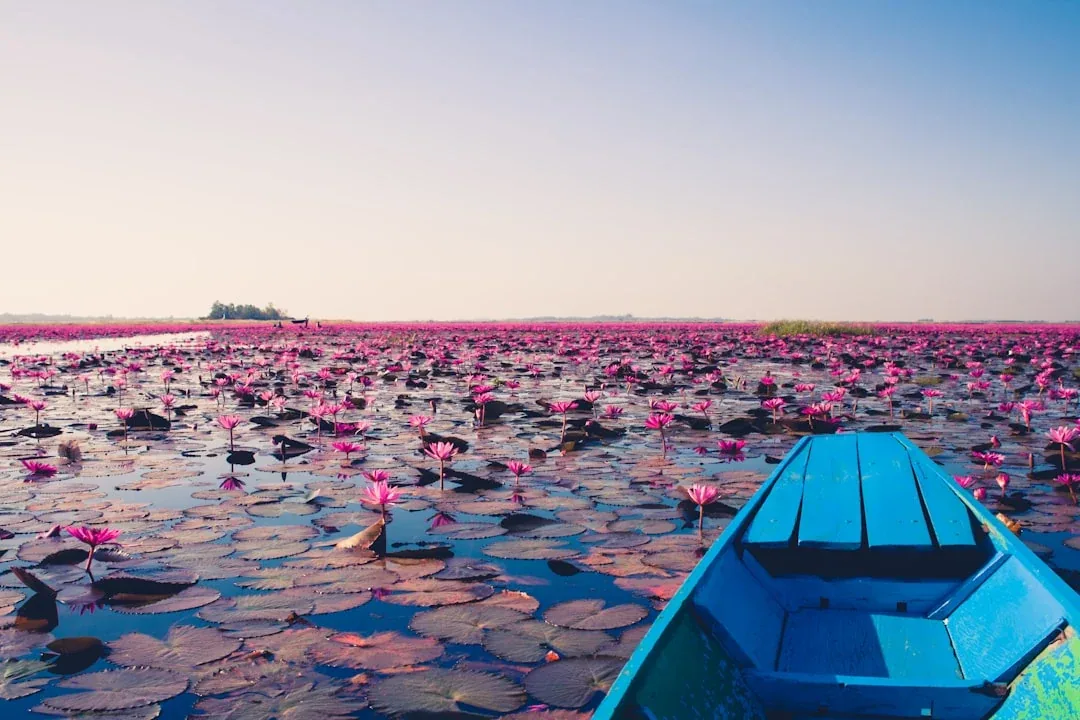
What surprised me wasn't just the visual spectacle but how genuinely happy it makes Thais. This is a point of regional pride—northern Thailand has mountains and beaches, but Isan has the lotus sea. During peak season, Thai families from Bangkok drive ten hours just to spend a morning among the flowers. Local vendors sell lotus-shaped snacks, lotus tea, lotus everything. It's become Udon Thani's signature attraction, the thing that puts this Isan city on domestic tourism maps and gives locals something to brag about when relatives visit.
Timing is critical. Miss the January-February window and you'll find a brown lake with a few scattered flowers, wondering what the fuss was about. Arrive at 10am and the flowers will be closing. But catch it right—dawn in late January, boat gliding through flowers that stretch to the horizon—and you'll understand why people return year after year. It's one of those rare natural phenomena that exceeds the hype, a spectacle that feels both impossible and perfect, somehow encapsulating Thailand's ability to surprise you even when you think you've seen everything.
In 1966, an American student named Steve Young was living in Ban Chiang village, 50 kilometers east of Udon city. He stumbled—literally—over tree roots and exposed pottery fragments that looked unusual. The subsequent excavations revealed one of Southeast Asia's most significant archaeological discoveries: evidence of a Bronze-Age culture currently dated to around 1500 BCE — roughly 3,500 years ago — far earlier than anyone had expected for this region. The pottery—distinctive red-on-buff designs with swirling patterns—was so sophisticated it suggested advanced society. Bronze tools, rice cultivation, domestic animals—Ban Chiang had it all, millennia before historians thought possible for mainland Southeast Asia.
Today, Ban Chiang Archaeological Site is a UNESCO World Heritage Site and well worth the day trip. The museum displays those spectacular ceramics—pottery that looks modern despite being ancient—alongside bronze tools, jewelry, and burial artifacts. The real highlight is the excavation pit where you can see skeletons still in place with their burial goods: pots arranged around bodies, bronze bracelets on wrist bones, the literal layers of human occupation stacked through millennia. It's one thing to see artifacts in cases; it's another to see them exactly as archaeologists found them, understanding that humans lived, died, and were buried here continuously for thousands of years.
The site connects to broader themes about how we understand human civilization. Ban Chiang proved that Bronze Age technology emerged independently in Southeast Asia, not simply diffused from China or the Middle East as earlier theories suggested. Those pottery designs—so distinctive you can spot Ban Chiang ceramics instantly—represent aesthetic sophistication that challenges assumptions about "primitive" prehistoric societies. Walking through the museum, handling replica pottery, seeing the elegance of those swirl patterns, you realize these weren't simple subsistence farmers. These were people with art, culture, and technical skills that rivaled civilizations elsewhere.
→ Location: 50km east of Udon city. Hire car/taxi (600-800 THB round trip) or rent scooter (200-300 THB/day).
→ Entry: 150 THB including museum and excavation site. English signage adequate.
→ Time needed: 2-3 hours for thorough visit. Museum first, then excavation pit, then village exploration.
→ Best time: Morning to avoid heat. Combine with countryside lunch at local restaurants in Ban Chiang village.
→ Photography: Allowed without flash. The excavation pit with in-situ skeletons is particularly photogenic and haunting.
Beyond Ban Chiang, Udon Thani's history extends through other sites less known internationally but equally fascinating. Phu Phrabat Historical Park, 65 kilometers northwest, features bizarre rock formations—sandstone pillars weathered into shapes that resemble mushrooms, animals, and abstract sculptures. Ancient humans sheltered in these rock overhangs, leaving paintings and artifacts dating back thousands of years. Walking the forest trails connecting these formations, you encounter a landscape that feels mythical, where geology and prehistory merge into something that seems designed rather than natural.
Here's what you don't expect in an Isan provincial city: German bakeries. British pubs serving Sunday roasts. Italian restaurants where the chef actually came from Rome. Western sports bars screening Premier League matches. Expat social clubs organizing golf tournaments, pool leagues, and weekly meetups. Yet Udon Thani has all of this, the result of decades of Western settlement that began with the US Air Force presence at Udorn (1964-1976) during the Vietnam War and evolved into one of Thailand's largest non-tourist expat communities.
The demographics span age ranges and nationalities. British and Australian retirees drawn by affordable living and quality healthcare. American veterans who served at the air base and returned to retire. English teachers working at the numerous language schools and international programs. Business owners who opened restaurants, bars, real estate agencies. And increasingly, remote workers discovering that Udon offers reliable fiber internet (500-1000 Mbps for 500-800 baht monthly), modern condos with all amenities, and living costs that make Bangkok look expensive—all while staying firmly in authentic Thailand rather than tourist-bubble Chiang Mai.
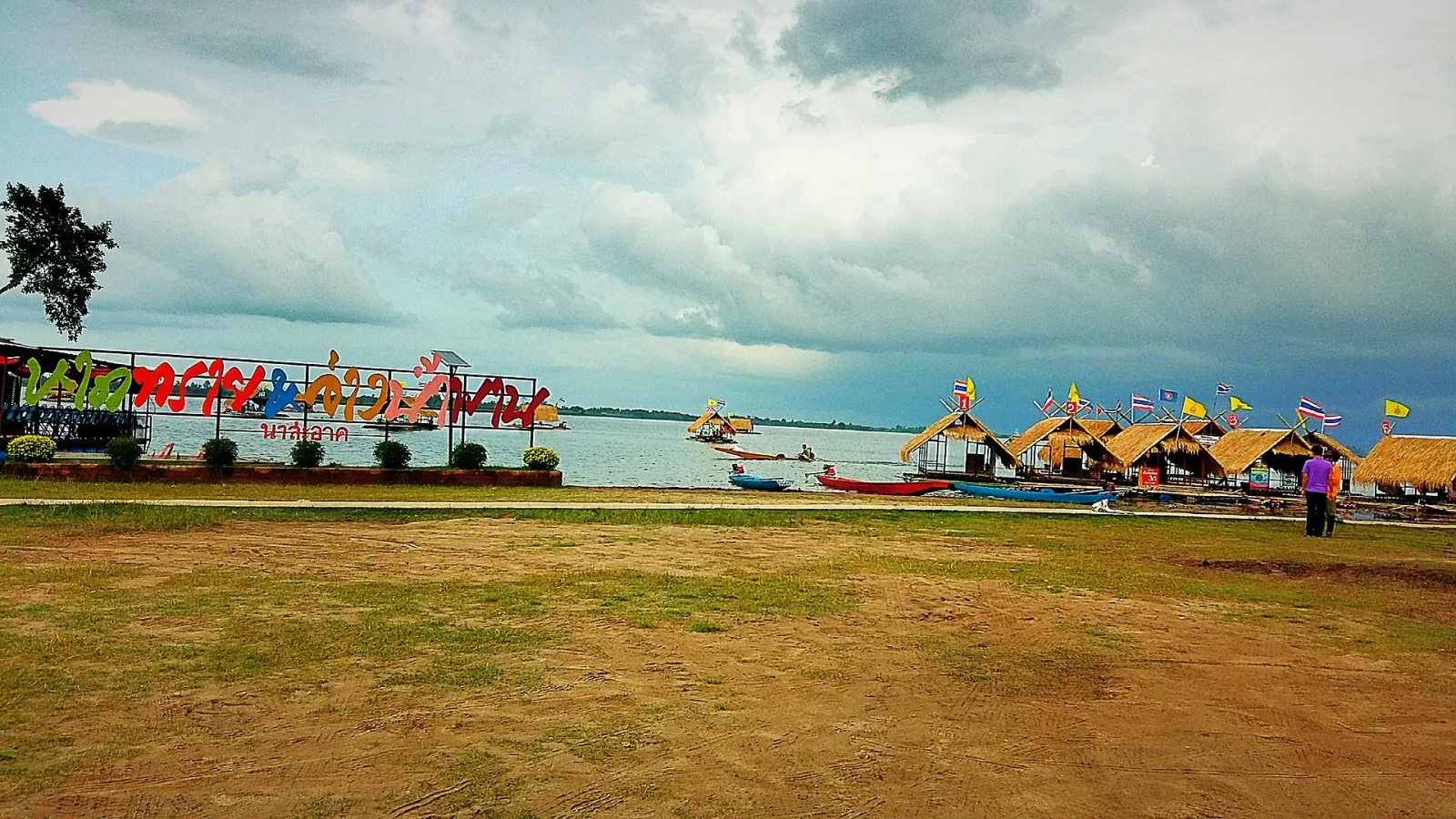
What makes Udon's expat scene work is scale and diversity. With several thousand Western residents, you're never the only foreigner in the room, but it's not so large that it becomes a self-contained bubble. Active Facebook groups around the Udon expat community share advice, organise meetups and help newcomers integrate. Regular social events—quiz nights, barbecues, charity fundraisers—create natural networking opportunities. The community is old enough and large enough that infrastructure exists: property agents who speak English, hospitals with international departments, restaurants catering to homesick expats craving specific cuisines.
Healthcare deserves special mention. Bangkok Hospital Udon and AEK Udon Thani Hospital offer international standards at Isan prices—specialist consultations 800-1,500 baht, routine visits 400-600 baht, medical procedures at 40-60% of Bangkok costs. English-speaking doctors, modern equipment, and the ability to handle serious conditions without evacuating to Bangkok make Udon attractive to retirees concerned about healthcare access. The proximity to Nong Khai (60km) and the Friendship Bridge to Laos means visa runs are a simple day trip rather than the logistical nightmare they become in southern Thailand. For insights into other expat-friendly locations, see our guide to retirement in Thailand.
"The best description I've heard: Udon Thani is like Chiang Mai was fifteen years ago—affordable, authentic, and welcoming—except with better internet and an airport that actually connects you to the world."
Walk through Udon's old market area and you'll notice something unusual for Isan: elderly women in conical hats selling Vietnamese herbs, bánh mì stalls operated by families speaking Vietnamese among themselves, restaurants with signs advertising phở and gỏi cuốn in both Thai and Vietnamese. Udon Thani hosts one of Thailand's largest Vietnamese communities, descended from refugees who fled conflicts in Indochina over the past century. What started as displacement evolved into cultural enrichment, creating food fusion found nowhere else in Thailand.
The Vietnamese food in Udon is exceptional by any standard—not "good for Thailand" but genuinely authentic, prepared by multi-generational families maintaining recipes from Hanoi and Saigon. Morning phở at the long-established Vietnamese stalls clustered around the old market features broth that's been simmering overnight, rice noodles made fresh daily, and the precise balance of herbs, lime, and chili that Vietnamese cuisine demands. You'll pay 50-80 baht for bowls that would cost triple in Bangkok and more in actual Vietnam. Bánh mì sandwiches—baguettes with pâté, pickled vegetables, cilantro, chili—appear at markets for 30-40 baht, afternoon snacks that bridge French colonial history and Vietnamese adaptation.
But it's not just Vietnamese food—it's the way Vietnamese and Isan cuisines coexist and occasionally merge. You'll find restaurants serving both som tam and gỏi cuốn (fresh spring rolls), combining Isan's fierce chili heat with Vietnamese herbal freshness. Night markets offer sections dedicated to Vietnamese specialties alongside classic Isan grilled chicken and sticky rice. Coffee culture shows Vietnamese influence too: strong, sweet cà phê sữa đá (iced coffee with condensed milk) competes with Thai-style kopi, creating caffeine options that span regional traditions.
Vietnamese specialties: Breakfast phở at the Old Market Vietnamese stalls (50-80 THB). Bánh mì sandwiches from market vendors (30-40 THB). Gỏi cuốn fresh spring rolls (40-60 THB for set).
Isan classics: Som tam (20-40 THB), gai yang grilled chicken (80-150 THB), sai krok Isan fermented sausages (40 THB), khao niao sticky rice (10 THB), larb minced meat salad (60-80 THB).
Udon specialties: Khao piak sen (Lao noodle soup rarely found elsewhere, 40-60 THB). Night market exploration—budget 100-150 THB for feast sampling multiple stalls. Nong Prajak lakeside restaurants for sunset dining (150-300 THB per person).
The Western food scene, driven by expat demand, offers surprising quality. German restaurants serve schnitzel and sausages, British pubs do proper fish and chips, Italian places make fresh pasta. You won't mistake it for Europe, but it's substantially better than most provincial Thai cities where "Western food" means spaghetti with ketchup. This matters for long-term residents—the ability to occasionally eat something from home, prepared competently, reduces the homesickness that drives some expats out of authentic Thai locations after a few months.
Getting to Udon Thani is straightforward, which matters for long-term living. Udon Thani International Airport (UTH) has multiple daily flights to/from Bangkok (Don Mueang and Suvarnabhumi), taking just over an hour and costing 900-3,000 baht depending on booking timing and airline. Thai AirAsia, Nok Air, Thai Vietjet and Thai Lion all compete on the route, meaning frequent availability; a handful of regional international routes (mostly to China) come and go seasonally. The airport sits about 5 kilometres southeast of the city centre—a 150-200 baht taxi ride—making arrivals and departures painless.
Overnight trains from Bangkok offer a more romantic but slower option: 9-10 hours in a second-class sleeper from Krung Thep Aphiwat (Bang Sue Grand) — which replaced Hua Lamphong as Bangkok's main long-distance hub in 2023 — for 500-900 baht, arriving at dawn. Buses take 8-9 hours (450-650 baht for VIP) but involve cramped seats and toilet stops. Most expats fly unless they're transporting large items. Once in Udon, local transport relies on red songthaews (shared pickups, 10-20 baht), Grab and Bolt ride-hailing apps (60-150 baht across town), and motorcycle rentals (3,000-4,500 baht monthly). The city is flat and navigable, with a grid system inherited from the air-base era that makes navigation easier than typical Thai cities.
Accommodation options span from basic to surprisingly nice. Budget apartments near markets run 4,000-9,000 baht monthly—simple, older buildings with fan or basic AC, popular with teachers on tight budgets. The mid-range (9,000-18,000 baht) offers modern condos with pools, gyms, and security, clustered near UD Town mall and Central Plaza Udon Thani — Western-standard living at prices that seem absurdly low if you're coming from Bangkok. Premium serviced apartments (18,000-35,000 baht) include furnishings, utilities, and services that approach luxury hotel standards while still costing less than basic Bangkok studios.
Internet deserves specific praise. Fiber optic coverage is excellent, with 500-1000 Mbps connections available for 500-800 baht monthly through AIS, True, or 3BB. This isn't "good for Thailand"—it's objectively fast, reliable internet that supports serious remote work, video calls, cloud services, and everything digital nomads require. A handful of co-working spaces have opened around UD Town and the university area, though many remote workers simply work from condos or cafés. The growing number of laptop-friendly cafés around Nong Prajak Park and near the universities suggests Udon is developing genuine digital nomad infrastructure, albeit without the self-conscious "nomad scene" that can make Chiang Mai feel performative. For more on remote work in Thailand, see our guide on internet and connectivity.
While the Red Lotus Sea gets most attention, Udon Thani's natural attractions extend into genuinely spectacular territory. Wat Pa Phu Kon, roughly 120 kilometres west of the city in the mountains on the Udon/Loei/Nong Khai border, ranks among Thailand's most beautiful modern temples. Its centrepiece is a large white-marble reclining Buddha — about 20 metres long — set inside a purpose-built sanctuary on the forested ridge, lit by shafts of natural light. The temple grounds spread across forested mountainside with views stretching to hazy horizons, creating a setting that combines natural drama with Buddhist serenity.
The drive to Wat Pa Phu Kon through winding mountain roads offers its own rewards—forested slopes, morning mist in valleys, glimpses of village life in areas that see few foreigners. This is real Isan countryside: rice fields between mountains, cattle wandering near roads, wooden houses on stilts, life moving at agricultural pace. The temple visit takes half a day including travel—perfect for a weekend escape from city life, returning with photos that capture Thailand's spiritual and natural beauty simultaneously.
Closer to town, Nong Prajak Park serves as the city's green lung and social center. This large lake surrounded by parkland fills with joggers at dawn, families on weekends, and couples taking evening walks around the 4-kilometer perimeter. Paddle boats rent for 40-60 baht, lakeside restaurants serve fresh fish and som tam while you watch the sunset, and night fountain shows add entertainment. It's not wilderness—it's urban park—but it provides the breathing room that makes cities livable, a place where Thais and expats overlap naturally, exercising, eating, watching life pass without agenda.
For serious nature and history together, Phu Phrabat — inscribed in 2024 as a UNESCO World Heritage Site for its early Dvaravati-era sema (boundary) stones — combines prehistoric rock shelters with otherworldly sandstone formations. Weathering has created pillars and mushroom-shaped rocks that balance impossibly, inspiring local legends about giants and spirits. Ancient humans sheltered in the rock overhangs, leaving paintings and stone tools dating back millennia; later Buddhist communities planted carved sema slabs around the formations to mark sacred precincts. Forest trails connect the sites through landscape that feels designed by surrealist artists — rocks stacked in defiance of physics, caves opening into clearings, formations resembling animals and abstract sculptures. It's a 3-4 hour exploration that rewards good shoes and willingness to climb, offering both geological spectacle and human history layered across thousands of years.
Udon Thani excels for specific types of residents and travelers. Retirees seeking affordable living with quality healthcare, established expat community, and proximity to Laos for visa purposes find it nearly ideal. The monthly costs—25,000-40,000 baht covers rent, food, entertainment, and healthcare—stretch retirement income substantially further than Western countries or even Bangkok. The social scene prevents isolation, and the medical facilities provide peace of mind. Many retirees I've met consider Udon the sweet spot: authentic Thailand without sacrificing modern comforts.
Remote workers and digital nomads attracted to Isan but wary of isolation find Udon's combination of fast internet, modern amenities, and emerging co-working scene appealing. It's significantly cheaper than Chiang Mai while offering comparable internet and more authentic Thai immersion. The expat community means you're not completely alone even if your Thai language skills are limited. And the Red Lotus Sea provides that one spectacular photo opportunity that justifies the Instagram posts about working remotely from Thailand.
History enthusiasts and cultural travelers drawn to UNESCO sites, Bronze Age civilizations, and authentic Isan culture without tourist polish find Ban Chiang and the broader region fascinating. This isn't Thailand for people seeking beaches and parties—it's Thailand for people interested in prehistory, rural traditions, and cultural immersion that extends beyond tourist-facing performances. The Vietnamese influence adds another layer of cultural complexity rarely available elsewhere in Thailand.
Udon Thani doesn't work for everyone. If you need mountains or beaches, you'll be disappointed—this is flat Isan plain. If you want Bangkok's endless entertainment and dining options, you'll find Udon provincial. The hot season (March-May) is genuinely brutal, with temperatures exceeding 40°C regularly. And while the expat community is large, it's not as international or diverse as Bangkok or Chiang Mai. But if you value affordability, authenticity, community, and the peculiar magic of floating through pink lotus flowers on a January dawn, Udon Thani delivers something special: real Thailand with enough modern comforts to make long-term living genuinely sustainable. The lotus sea blooms every winter. The Bronze Age pottery sits in museum cases waiting for the curious. The phở steams in bowls every morning. And somewhere in Udon, an expat is probably writing home about how they can't believe they get all this for what they used to spend on rent alone. For more information on other provinces in northeastern Thailand, explore our guide to Thai provinces and major cities.
ESSENTIAL INFO
Capital
Udon Thani City
Population
1.6 million (province)
Airport
Daily Bangkok flights (1 hour)
To Laos Border
60km (Nong Khai)
BEST FOR
RED LOTUS SEA
Best time
January - early February
Visit time
6-9am (flowers close as temperature rises)
Cost
200-300 THB boat (4-6 people)
Best: Nov-Feb
Cool season, 17-28°C, Red Lotus Sea blooms
Hot: Mar-May
Extreme heat 33-42°C, stay indoors midday
Rainy: Jun-Oct
Afternoon storms, 28-33°C, fewer tourists