Northern Thailand
🏔️Uttaradit Province
Langsat capital and mountain paradise
Langsat capital and mountain paradise
The eight-hour train ride from Bangkok to Uttaradit remains one of Thailand's great overlooked journeys—steel carriages rattling through rice paddies and teak forests, the landscape gradually rising from central plains into northern mountains, vendors hawking grilled chicken and sticky rice at every provincial stop. I've taken this journey a dozen times, and each arrival in Uttaradit feels like stepping off tourist Thailand's conveyor belt into something older, quieter, more authentically provincial.
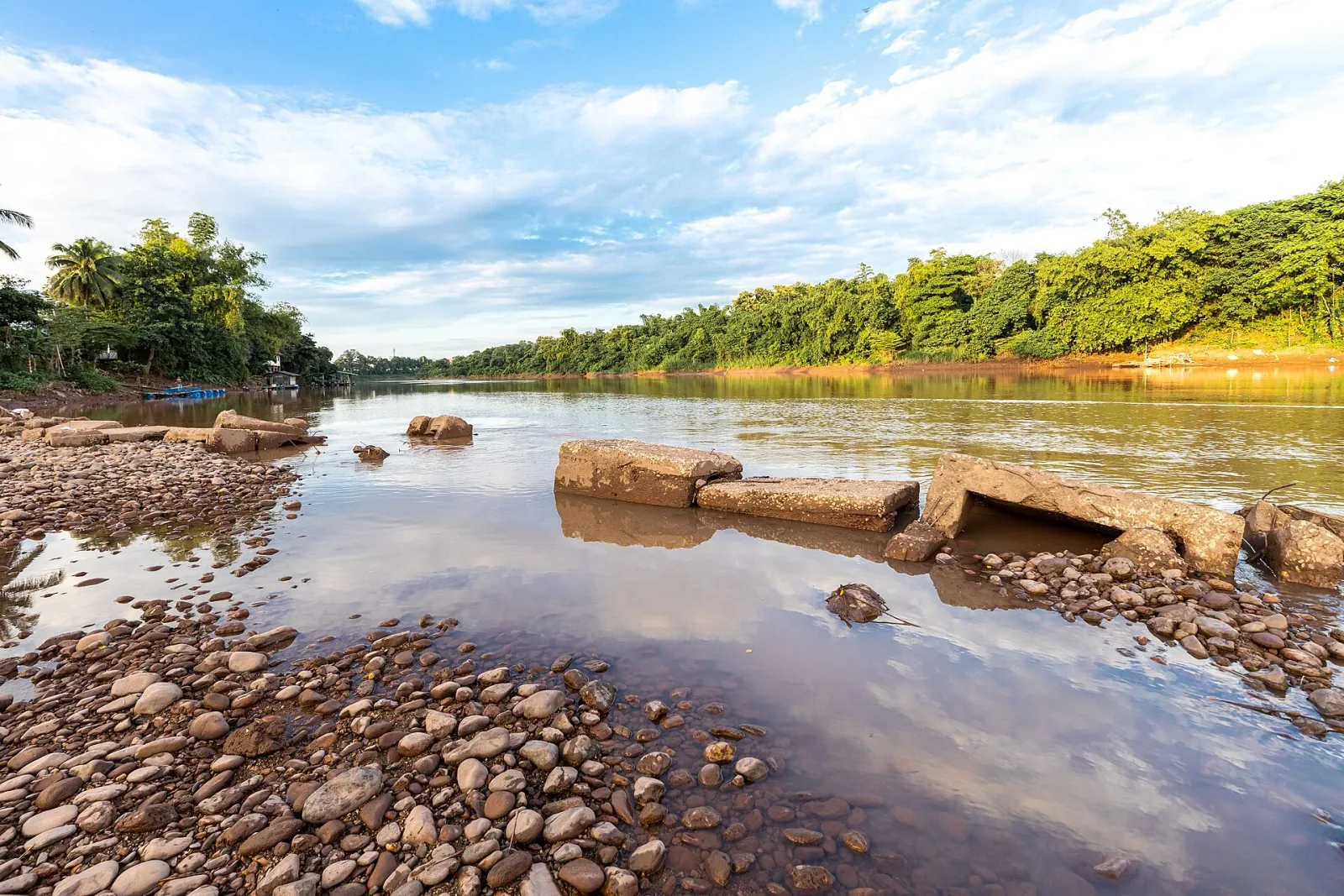
Uttaradit sits in that transitional zone where Thailand's flat agricultural heartland begins climbing toward the northern highlands. The Nan River cuts through the province, its banks lined with morning markets and historic wooden buildings from the teak logging era. Mountains rise to over 2,000 meters in protected national parks where seas of mist drift through pine forests each winter morning. And from July through October, the province transforms into Thailand's langsat capital, its signature fruit appearing at every market stall and roadside stand.
With a population of around 436,000 spread across roughly 7,900 square kilometers, Uttaradit maintains the relaxed, unhurried character of provincial Thailand that's increasingly rare near major cities. The province doesn't appear on tourist itineraries between Bangkok and Chiang Mai. It doesn't have the temples of Sukhothai or the beaches of Southern Thailand. What it has is something more elusive: authenticity without performance, beauty without crowds, and costs so low that your monthly budget approaches fiction.
"Uttaradit doesn't appear on tourist itineraries. What it has is something more elusive: authenticity without performance, beauty without crowds, and costs that approach fiction."
Phu Soi Dao National Park straddles Uttaradit and neighbouring Phitsanulok along the Lao border, with its main summit rising to 2,120 metres—Thailand's fifth-highest peak. From November through February, when cool-season temperatures drop to 5-10°C at elevation, the park becomes one of Northern Thailand's premier destinations for sea-of-mist viewing. Wake before dawn, drive the winding mountain roads to the viewpoint, and watch as fog fills valleys between peaks, creating the illusion of islands floating in a white ocean. The sunrise hitting this scene—pink light burning off mist to reveal layer after layer of mountain ridges fading to blue distance—ranks among Thailand's most spectacular natural phenomena.
The park's pine forests feel almost un-Thai, more reminiscent of temperate climates than tropical Southeast Asia. Trails wind through these forests to waterfalls—Phu Soi Dao Waterfall cascades impressively during and after rainy season, though it reduces to a trickle by hot season's end. Camping is permitted and popular with Thai families during cool season weekends. The facilities are basic but adequate: designated camping areas, simple toilets, occasional food vendors. Bring warm sleeping gear if camping November through February—those predawn temperatures aren't joking.
While Phu Soi Dao draws Thai tourists during cool season, Sirikit Dam—Thailand's largest earth-fill dam, completed in 1974 on the Nan River and named for the late Queen Sirikit, with a reservoir of about 259 square kilometres—remains remarkably peaceful year-round. The reservoir stretches between mountains, its waters so clean you can swim without concern. Floating raft houses dot the reservoir, ranging from basic bamboo structures (400-500 baht nightly) to comfortable resorts with restaurants and activities (1,200-1,800 baht). Stay overnight on these rafts and you'll understand why Thais love this experience: complete silence except for water lapping against bamboo, stars undimmed by light pollution, fish grilled fresh for dinner, and mountain views in every direction.
But Uttaradit's defining identity centers on langsat fruit. From July through October, during the rainy season harvest, orchards throughout the province hang heavy with clusters of these translucent, sweet-tart fruits. The langsat grown in Uttaradit is considered Thailand's finest—larger, sweeter, with thinner skin and minimal seeds compared to langsat from other regions. The annual Langsat Fair in July or August celebrates this with beauty pageants, cultural performances, eating contests, and market stalls overflowing with fresh fruit. During harvest season, you'll see langsat everywhere: sold from motorcycles, offered by vendors at every corner, piled high at markets for 40-80 baht per kilogram. The fruit is delicate and doesn't travel well, which is why Uttaradit langsat rarely appears elsewhere in Thailand—you have to come here to experience it properly.
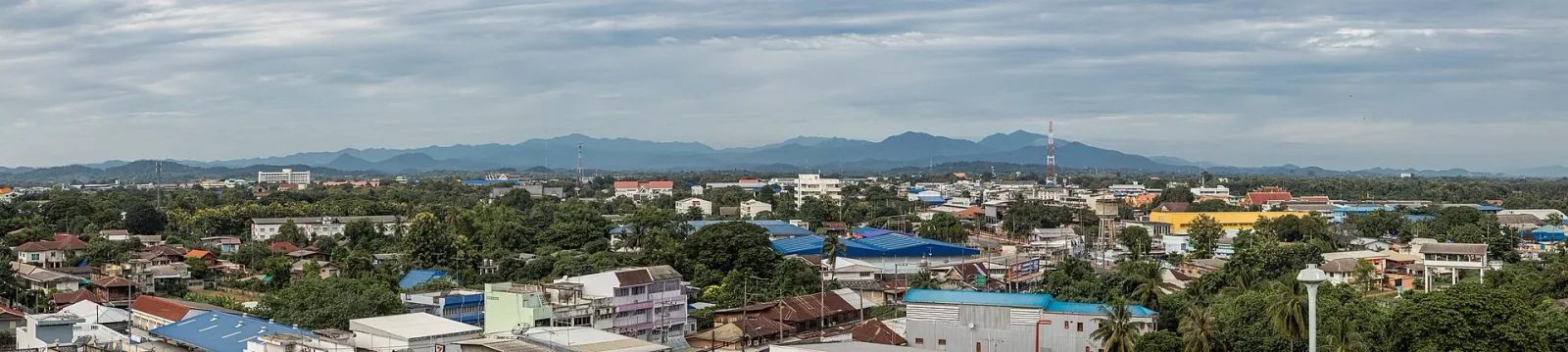
Uttaradit city itself unfolds along the Nan River, centred around one of Thailand's more historically resonant railway stops. The original Jugendstil station designed by the German architect Karl Döhring opened in 1909 and was destroyed in the Second World War; the present building was rebuilt and reopened in 1951, and most long-distance trains now actually use the nearby Sila At station, which took over as the main hub in 1958. The town station still functions as a stop on the Northern Line connecting Bangkok to Chiang Mai, and standing on the platform as a northbound train pulls in remains one of those small, satisfying experiences that mark out the lower-northern provinces.
The morning market near the station erupts before dawn with vendors arriving by motorcycle to spread out vegetables, tropical fruit, prepared curries, and sticky rice. This is provincial Thailand at full volume—the chaos of motorcycles, the calls of vendors, the smell of grilling meat and fish sauce, the bustle of locals doing their daily shopping. Prices reflect local economics rather than tourist inflation: a bag of fruit costs 30-50 baht, prepared food 40-70 baht, fresh fish and meat at rates that would seem suspiciously cheap anywhere near Bangkok. The market operates roughly 5am-10am daily, tapering off as heat intensifies.
Living costs in Uttaradit are exceptional even by provincial Thailand standards. Studio apartments in the city center run 3,500-6,000 baht monthly. One-bedroom places with air conditioning, furniture, and wifi cost 4,500-7,000 baht. That's $100-$200 USD for your entire monthly rent. Food is similarly affordable—eating at local markets and restaurants, you're looking at 4,000-5,500 baht monthly for three solid meals daily. Your total monthly costs, living quite comfortably with occasional motorbike transport and entertainment, might not exceed 18,000-25,000 baht ($500-$700). And that includes everything.
Entertainment in Uttaradit means whatever you create for yourself. There's Kaeng Sai Ngam, a stretch of Nan River rapids in Tron district where locals gather for picnics on the rocks at low water; Wat Phra Borommathat Thung Yang, the old chedi-temple a few kilometres west of town in Laplae district; and Wat Phra Yuen Phutthabat Yukhon, the hilltop "Buddha footprint" temple in Laplae with valley views that are particularly good at sunset. The evening scene along the river includes simple restaurants serving fresh river fish and Northern Thai specialties. But if you're expecting nightlife, international restaurants, or tourist attractions, you'll be disappointed. Uttaradit is authentically provincial—its appeal lies in what it isn't rather than what it is.
Studio apartment (city center): 4,000-6,000 THB
Utilities (electric, water, internet): 800-1,200 THB
Food (markets, street stalls, occasional restaurants): 5,000-6,500 THB
Transportation (motorbike rental or songthaew): 1,200-1,800 THB
Entertainment, activities, miscellaneous: 2,500-4,000 THB
Total: 17,500-23,500 THB/month (~$500-$670 USD)
Part of Uttaradit's appeal is getting there. The train journey from Bangkok's Krung Thep Aphiwat station takes around 6 hours on the fastest services and 8-9 hours on the slow ones, departing several times daily in various classes from third-class seats (roughly 70-120 baht on ordinary trains) through second-class fan (around 250 baht) to first-class air-conditioned sleepers (800+ baht). This isn't express rail—it's old-school Southeast Asian train travel, stopping at every provincial station, slow enough that vendors hop on to sell food and drinks before jumping off at the next platform. The scenery transitions gradually from Bangkok's urban sprawl to rice paddies to forested hills, providing a visual education in Thailand's geographical variety.
Buses from Bangkok's Mo Chit Northern Terminal take 6-7 hours (350-450 baht) and are faster, more efficient, and less romantic. From Chiang Mai, buses take 5-6 hours. From nearby Phitsanulok—a larger city around 100 kilometres south with better transport connections—buses run constantly (around 1h 40m, about 80 baht). Most visitors use Phitsanulok as a hub, flying there from Bangkok or taking the train, then continuing to Uttaradit by bus.
Within Uttaradit, transportation means songthaews (shared pickup trucks on fixed routes, 15-20 baht), motorbike taxis (30-60 baht for short trips), or renting your own motorcycle (200-300 baht daily, 2,000-2,500 baht monthly). For exploring Phu Soi Dao, Sirikit Dam, and rural attractions, your own transport is essential—public options are minimal to nonexistent. The roads are generally good, traffic is light, and distances are manageable. Just remember that mountain roads to Phu Soi Dao can be challenging for inexperienced riders, particularly the final winding ascent to the park.
Let's be clear about what Uttaradit isn't: it's not a digital nomad hub with coworking spaces and fast internet everywhere. It's not a destination with extensive English services or international amenities. Healthcare exists at Uttaradit Hospital with basic services, but serious medical issues require travel to Phitsanulok or Bangkok. The expat presence is minimal—maybe a few dozen Westerners, mostly teachers and retirees married to locals. You won't find organized expat groups or English-language meetups.
Internet quality in the city is adequate for remote work—fiber connections offer 200-400 Mbps in urban areas, though reliability can be inconsistent. Cafes with good wifi for working are rare. Most remote workers operate from their apartments. Mobile 4G coverage is solid in town but spotty in mountains and at Sirikit Dam. If your work requires absolutely reliable high-speed connectivity, verify your specific location's service carefully before committing.
The climate follows typical northern patterns: cool season (November-February) with temperatures dropping to 12-18°C at night, perfect for mountain exploration. Hot season (March-May) brings intense 38-40°C heat when outdoor activities become challenging and air conditioning transitions from luxury to necessity. Rainy season (June-October) features daily afternoon downpours but importantly coincides with langsat harvest, making it actually one of the better times to visit despite the rain. For broader context on visa requirements, our guides cover the essentials.
→ Spectacular mountain scenery and sea of mist at Phu Soi Dao
→ Peaceful raft house stays on Sirikit Dam reservoir
→ Thailand's finest langsat fruit during July-October harvest
→ Historic railway journeys through Northern Thailand
→ Morning markets where you're the only foreigner
→ Monthly costs that make long-term stays financially effortless
→ Language barriers requiring patience and basic Thai skills
Uttaradit works beautifully for nature enthusiasts drawn to mountain scenery and outdoor activities. Remote workers seeking extreme affordability and escape from tourist infrastructure often discover that provincial life suits their work rhythms—quiet mornings for focused productivity, afternoons exploring rivers and forests, evenings at local markets. Retirees looking to stretch pension income while experiencing authentic Thai provincial culture find Uttaradit's combination of low costs and genuine hospitality appealing.
It doesn't work for everyone. If you need extensive English services, Western restaurants, active nightlife, or cosmopolitan social scenes, Uttaradit will feel impossibly provincial. If you require consistent high-speed internet for work, you'll face occasional frustrations. If you want to be near international airports for frequent travel, the 8-9 hour journey to Bangkok becomes tiresome. And if you're not genuinely interested in Thai culture and willing to learn at least basic Thai language, the isolation will feel oppressive rather than peaceful.
Teaching opportunities exist at local schools (typically 25,000-35,000 baht monthly), though positions are less plentiful than in larger cities. What Uttaradit offers instead is the chance to live in Thailand on minimal budget while experiencing daily life in a working agricultural province—a Thailand that exists for Thai people rather than performing for tourists. You'll wake to temple bells, shop at markets where vegetables are still measured by old Thai units, watch farming seasons progress through the valley, and participate in festivals that haven't been packaged for international consumption. For insights into Thai Buddhist culture, our guides provide essential context.
"Uttaradit offers the chance to experience daily life in a working agricultural province—a Thailand that exists for Thai people rather than performing for tourists."
Uttaradit's location makes it a useful base for exploring Northern Thailand. Phrae, famous for its historic teak mansions and authentic Northern culture, lies about 75 kilometres north. Nan Province with its quiet temples and mountain scenery is roughly 190 kilometres by road to the north-east. Sukhothai's UNESCO World Heritage historical park sits about 100 kilometres west. And Phitsanulok, with its famous Wat Phra Si Ratana Mahathat temple and better transport connections, is around 100 kilometres south.
What keeps me returning to Uttaradit, despite easier options elsewhere in Northern Thailand, is precisely its resistance to becoming a destination. It's a province where life proceeds according to agricultural cycles and Buddhist calendars rather than tourist seasons. The mountains stand magnificent whether anyone's there to photograph them or not. The langsat ripens each rainy season regardless of visitor numbers. The morning markets operate for locals, not tourists. The railway station serves commuters, not sightseers. And somehow, being in a place that doesn't need you—that exists entirely for its own purposes—feels more authentic than any experience carefully curated for foreign consumption. The mountains, the fruit, the train journey, the affordable simplicity—Uttaradit offers all this for less per month than a week's accommodation would cost in Chiang Mai or Bangkok. And that's a rarity worth preserving.
ESSENTIALS
Population
~436,000
Area
~7,900 km²
Monthly Budget
17,500-23,500 THB
Studio Rent
3,500-6,000 THB
BEST FOR
• Nature & mountain enthusiasts
• Train journey lovers
• Budget-conscious expats
• Fruit season travelers (Jul-Oct)
CLIMATE
Phu Soi Dao National Park
2,120 m summit, sea of mist, pine forests
Sirikit Dam
Massive reservoir, raft houses, fishing
Langsat Orchards
Thailand's finest fruit, Jul-Oct harvest
Railway Station
Historic 1900s architecture, active station
By Train
~6-9 hours from Krung Thep Aphiwat
~70-800 THB (3rd to 1st class)
By Bus
6-7 hours from Bangkok
350-450 THB
Via Phitsanulok
~100 km south, ~1h 40m
Good transport hub