Provinces
🎋Chumphon Province
Authentic Thai Gateway Between North and South
Authentic Thai Gateway Between North and South
The overnight train from Bangkok lurches to a stop at precisely 5:47am. You step onto the platform at Chumphon Railway Station, and something shifts. The architecture is the same colonial-era charm you've seen further north, but the air tastes different—saltier, heavier with humidity. The food vendors on the platform sell not just pad thai but khao yam, that distinctly southern rice salad. The language tilts toward the musical cadence of the south. This is the boundary, the place where northern Thailand ends and the south begins, marked not by a line on a map but by a gradual transformation you can taste, hear, and feel.
Chumphon Province occupies this liminal space both geographically and culturally. Located 480 kilometers south of Bangkok, it's the point where the narrow Kra Isthmus begins, where the Gulf of Thailand comes into view, where the character of the country shifts from central plains to coastal south. Most travelers speed through on their way to famous islands—Koh Samui, Koh Phangan, Koh Tao. They're making a mistake.
What Chumphon offers is something increasingly rare in Thailand: authenticity without performance. This isn't a beach town that's been packaged for tourism. It's a working fishing community that happens to have stunning coastline, a provincial capital where life proceeds according to Thai rhythms rather than tourist seasons, a gateway to world-class diving that hasn't yet realized it could charge gateway prices. For travelers tired of the well-worn circuit, Chumphon represents a chance to see coastal Thailand as it exists for Thais, not as it's been reimagined for foreign visitors.
"Chumphon offers something increasingly rare in Thailand: authenticity without performance. This isn't a beach town that's been packaged for tourism."
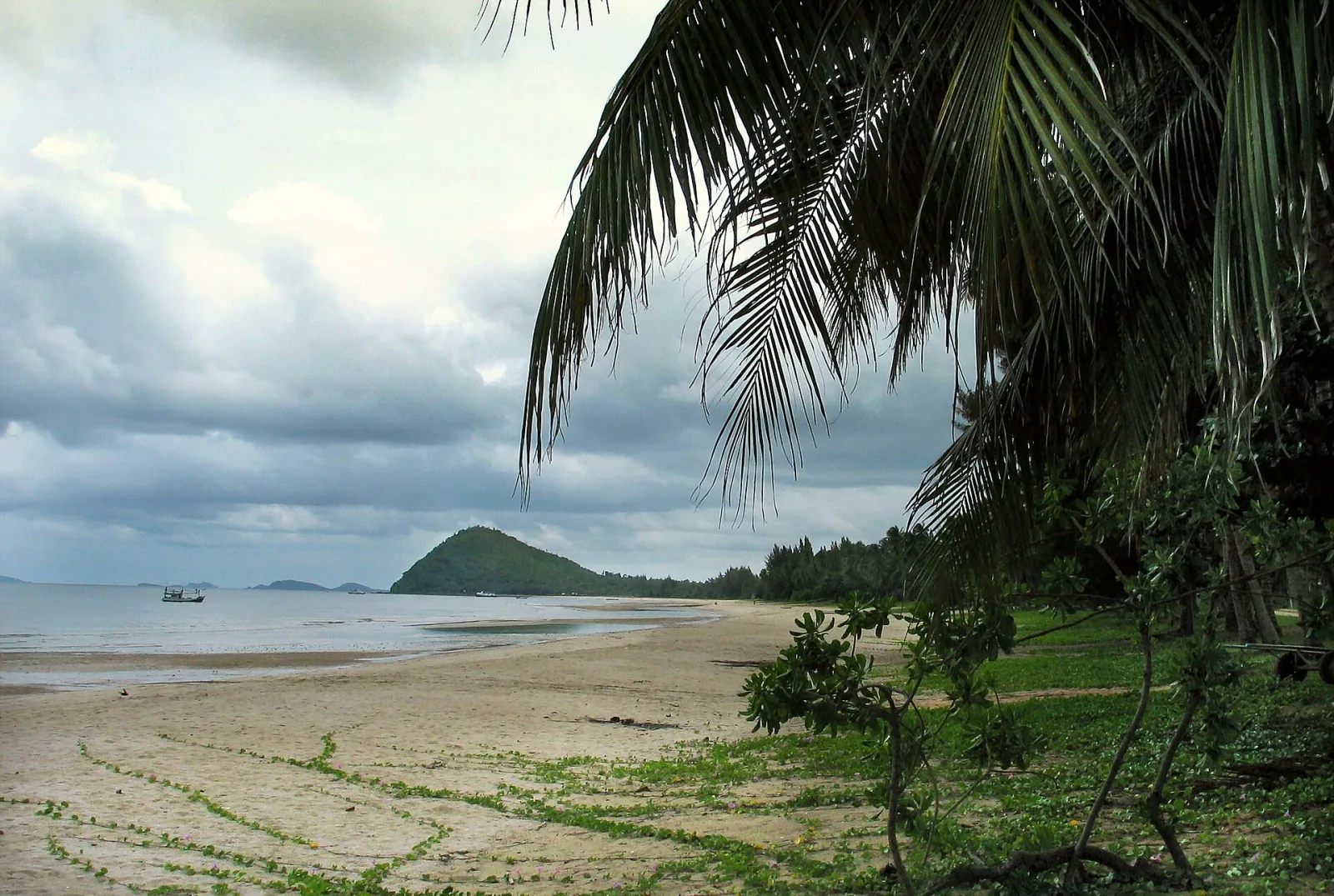
Thung Wua Laen Beach stretches roughly four kilometres along Chumphon's coast in Pathiu district, a crescent of golden sand backed by casuarina trees that provide natural shade. This is not Phuket. There are no jet skis screaming across the water, no aggressive tuk-tuk drivers, no beach massage hawkers working their way down the sand. Instead, there are Thai families picnicking under the trees on weekends, a handful of small resorts that have been run by the same families for decades, and a pace of life that feels profoundly unhurried.
The southern end of the beach transitions to rocky areas where snorkeling reveals colorful fish and modest coral formations—nothing compared to the reefs around Koh Tao, but enough to provide a pleasant hour in the water. Several beachfront restaurants serve the day's catch at prices that seem lifted from a decade ago: whole grilled fish with rice for 150 baht, tom yum goong fragrant with lemongrass for 80 baht, fresh fruit smoothies for 40 baht.
I've spent enough time on Thai beaches to recognize what's missing here: the infrastructure of mass tourism. No parasailing operators. No banana boat rides. No beach clubs with infinity pools and 400-baht cocktails. What you get instead is the quiet pleasure of swimming in calm, clean water while Thai pop music drifts from a nearby restaurant, the satisfaction of finding your own patch of sand without navigating a gauntlet of vendors, and sunsets that belong to whoever's present rather than serving as Instagram backdrops.
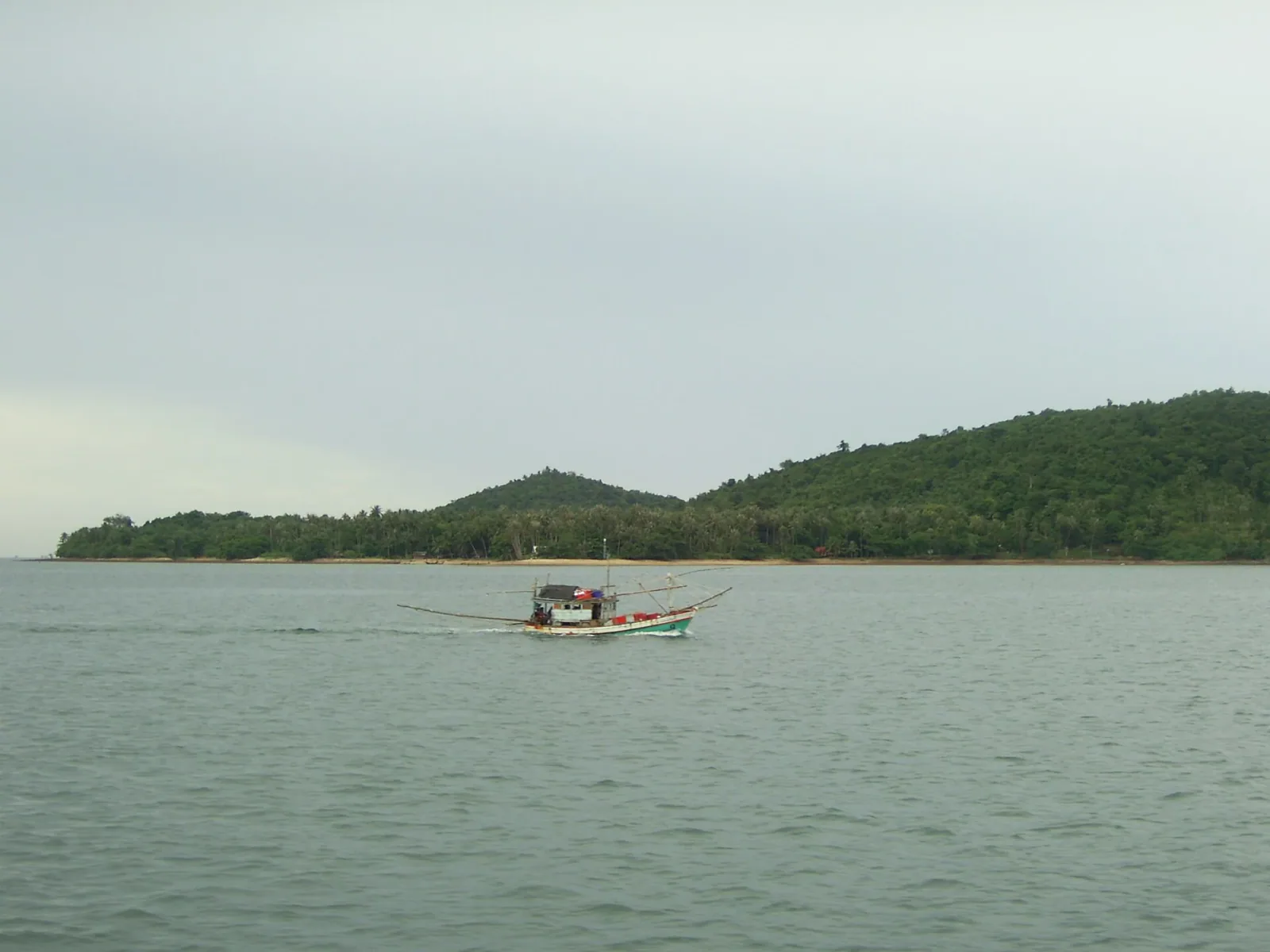
Chumphon's practical importance lies in its ferry connections to Koh Tao, Thailand's diving mecca, which is administratively part of Surat Thani Province. Several operators run daily boats from Pak Nam Chumphon: the Lomprayah high-speed catamaran makes the journey in about 1.5–2 hours, Songserm runs a slower ferry, and an overnight wooden sleeper-boat takes around six hours, depositing you at the island at sunrise. Current one-way fares run roughly 600–800 baht depending on the operator and season; book through the operator's website or any guesthouse the day before.
But here's what's interesting: many savvy travellers are discovering that Chumphon itself offers excellent diving without Koh Tao's crowds and commercialization. The islands of Koh Ngam Yai and Koh Ngam Noi, around 20–25 kilometres offshore inside Mu Ko Chumphon National Park, feature healthy coral reefs, good visibility (10–20 metres most of the year), and marine life that includes reef fish, rays, and occasional whale shark sightings. Day trips run 1,200–2,000 baht including equipment, guide, and lunch—still less than equivalent diving in more famous locations.
The difference is atmosphere. Where Koh Tao's Sairee Beach is lined with dive shops competing for your business, Chumphon's diving operations are small, personal affairs. You're likely to be one of just four or five people on the boat. Your guide might be the boat captain's cousin. The equipment is well-maintained but not brand-new. Everything feels less like an industry and more like local people sharing their backyard.
From Bangkok: Direct buses from Southern Bus Terminal (Sai Tai) run every 2-4 hours, taking 7-8 hours for 300-450 THB. The overnight sleeper train is the romantic option—11-12 hours with berth sleepers from 500-900 THB. Book trains through State Railway of Thailand.
Local transport: The town center is walkable, but a motorbike rental (100-150 THB/day) opens up the province. Tuk-tuks run 30-80 THB for short trips. Songthaews operate fixed routes to beaches for 20-40 THB.
To the islands: Ferry tickets to Koh Tao are available at the train station, travel agencies, and guesthouses. Book ahead during peak season (November-February).
Stand at Chumphon Railway Station and you're at one of the more meaningful waypoints on the Southern Railway Line—the place where travellers heading south sense the country starting to change. From Chumphon onward, the food gets spicier, the language takes on different tones, the architecture shows more Malay influence, and Islamic communities become more common alongside Buddhist temples. The province itself sits squarely on the narrow Kra Isthmus, where Thailand is barely 50 kilometres wide from gulf to Andaman.
The province's namesake, Prince Chumphon (Prince Abhakara Kiartiwongse), is revered as the father of the Royal Thai Navy. His shrine and the retired HTMS Chumphon warship-memorial sit at Hat Sai Ri in Pak Nam Chumphon, a beautifully maintained complex where navy personnel and locals come to pay respects. Every 19 May—the day of the prince's death—the annual memorial ceremony draws large crowds, with a second wreath-laying held on his birthday in December. If you're visiting around either date, expect hotels to fill up.
But Chumphon's real cultural treasure is its markets. The morning fresh market (Talad Sod) erupts with life from 5am to 11am—vendors expertly butchering fish pulled from boats hours earlier, mountains of tropical fruit, and food stalls serving breakfast dishes you won't find in Bangkok. Try khanom jeen, those delicate rice noodles served with southern-style curry, or jok, the rice porridge that Thais swear cures everything from hangovers to heartbreak. This is where you see Chumphon as it exists for locals, not as it's been staged for visitors. For more insights into Thai culture and daily life, explore our cultural guides.
The economics of Chumphon reveal why some travelers choose to base themselves here rather than on the islands. A basic but comfortable guesthouse room runs 5,000-8,000 baht per month. Beachfront bungalows with air conditioning, hot water, and WiFi go for 10,000-15,000 baht monthly. Compare that to Koh Samui's 20,000-40,000 baht for equivalent accommodation, and the appeal becomes clear.
Eating follows the same pattern. Street food meals cost 30-60 baht. Local restaurants serve complete meals for 60-100 baht. Fresh fish at harbor-side restaurants—the kind of meal that would cost 500-800 baht in tourist areas—runs 150-250 baht here. A full monthly food budget eating well but locally rarely exceeds 7,000 baht.
The night market along Kromluang Chumphon Road (5pm-10pm) showcases southern Thai specialties: grilled seafood, moo ping (those addictive grilled pork skewers at 10 baht each), som tam pounded fresh to your preferred spice level, and khanom krok—coconut rice cakes cooked in clay pots over charcoal. Saturday nights bring the biggest crowds and best energy, with live music and a genuine Thai market atmosphere.
→ Basic guesthouse: 5,000-8,000 THB/month
→ Beachfront bungalow: 10,000-15,000 THB/month
→ Street food meal: 30-60 THB
→ Restaurant meal: 60-120 THB
→ Fresh seafood dinner: 150-250 THB
→ Motorbike rental: 100-150 THB/day, 3,000-4,000 THB/month
→ Total monthly budget (comfortable): 20,000-25,000 THB
Let's be clear about what you won't find in Chumphon. There's no international hospital—the local Chumphon Hospital handles basic care, but serious medical issues mean roughly a three-hour drive south to Surat Thani (Bangkok Hospital Surat is the usual fallback) or evacuation onward to Bangkok. English is limited outside the main guesthouse areas. The expat community is tiny, maybe a few hundred people, mostly passing through rather than settled. Internet reliability is inconsistent—you'll have connectivity, but video conferences might be challenging during peak hours.
There's no nightlife in any conventional sense. A few beach bars stay open until midnight, but this isn't Phuket or Bangkok. Shopping is limited to local markets and a few small malls. Fine dining doesn't exist. The coffee shop scene is minimal. If you need regular access to international services, English-speaking professionals, or urban amenities, Chumphon will frustrate you.
But if what you're seeking is genuine Thai coastal life at prices that allow extended stays, if you're content with excellent local food instead of international variety, if you prefer quiet beaches to party scenes, if you want access to world-class diving without staying in a dedicated dive resort—then Chumphon's limitations become part of its appeal.
"Chumphon's limitations become part of its appeal—genuine Thai coastal life at prices that allow you to stay, explore, and actually live rather than just visit."
Chumphon's climate follows southern Thailand patterns. November through February brings the cool season—"cool" being relative, with temperatures around 20-28°C, clear skies, calm seas, and perfect conditions for beach days and island trips. This is peak season, though "peak" in Chumphon means moderately busy rather than overwhelmed.
March through May turns brutally hot. 35-40°C with high humidity makes outdoor activities exhausting. Prices drop, crowds thin, but you'll understand why—the heat is oppressive. June through October brings the rainy season, though rain here isn't the constant deluge some imagine. You'll typically get sunny mornings and afternoon thunderstorms. Seas can be rough, limiting boat trips, but the landscape turns lush and green. This is Chumphon at its most affordable and least crowded.
If you're planning a visit, come November-February for the best weather. If you're on a tight budget and don't mind heat or occasional rain, the low season offers excellent value. Just check ferry schedules during monsoon season—services sometimes reduce frequency or cancel during particularly rough weather.
Most travelers treat Chumphon as a waypoint—somewhere to sleep before catching the morning ferry to Koh Tao. They're seeing it backwards. Chumphon is the destination. Koh Tao is the day trip.
This approach flips the economics and experience. Base yourself in Chumphon at 10,000-15,000 baht per month for beachfront accommodation. Eat incredible seafood for 150 baht instead of 600. Take the morning speedboat to Koh Tao for a day of diving (1,500 baht return trip plus diving costs), then return to your peaceful beach bungalow in the evening. You get the best of both worlds—world-class diving access and authentic Thai coastal living—without paying island prices or dealing with island crowds.
The travellers who appreciate Chumphon most are those who've grown tired of Thailand's tourist circuit, who want to slow down and actually live somewhere rather than tick it off a list. They're the ones who spend afternoons at Wat Tham Khao Phlu or one of the other limestone-cave temples tucked into the karst west of the city, where Buddha images sit among stalactites and sunlight filters through natural openings. They're the ones who've made friends with their guesthouse owner and get invited to family gatherings. They're the ones who've found their regular spot at the morning market where the vendor knows their preferred spice level.
Chumphon won't suit everyone. It's too quiet for party seekers, too simple for luxury travelers, too Thai for those who need constant English and international amenities. But for independent travelers seeking authenticity, budget-conscious explorers who want to extend their stays, and anyone tired of performing tourism in places designed for tourists—Chumphon sits there quietly on the gulf, marking the place where Thailand changes direction, waiting to be discovered. For those ready to explore beyond the tourist trail, check out our guides to living in different regions of Thailand.
Provincial Capital
Chumphon City
Population
~510,000 (province)
Distance from Bangkok
480 km south
Best Time to Visit
November-February
BEST FOR
NOT IDEAL FOR
Emergency Numbers
Koh Tao (Surat Thani)
Ferry 1.5–3 hrs (day) or ~6 hrs (overnight sleeper) · World-class diving
Ranong Province
~2 hours west across the isthmus · Hot springs, Myanmar border
Surat Thani
~3 hours south · Gateway to Samui/Phangan