Provinces
🐵Lopburi Province
Where monkeys rule ancient temples and history collides with chaos
Where monkeys rule ancient temples and history collides with chaos
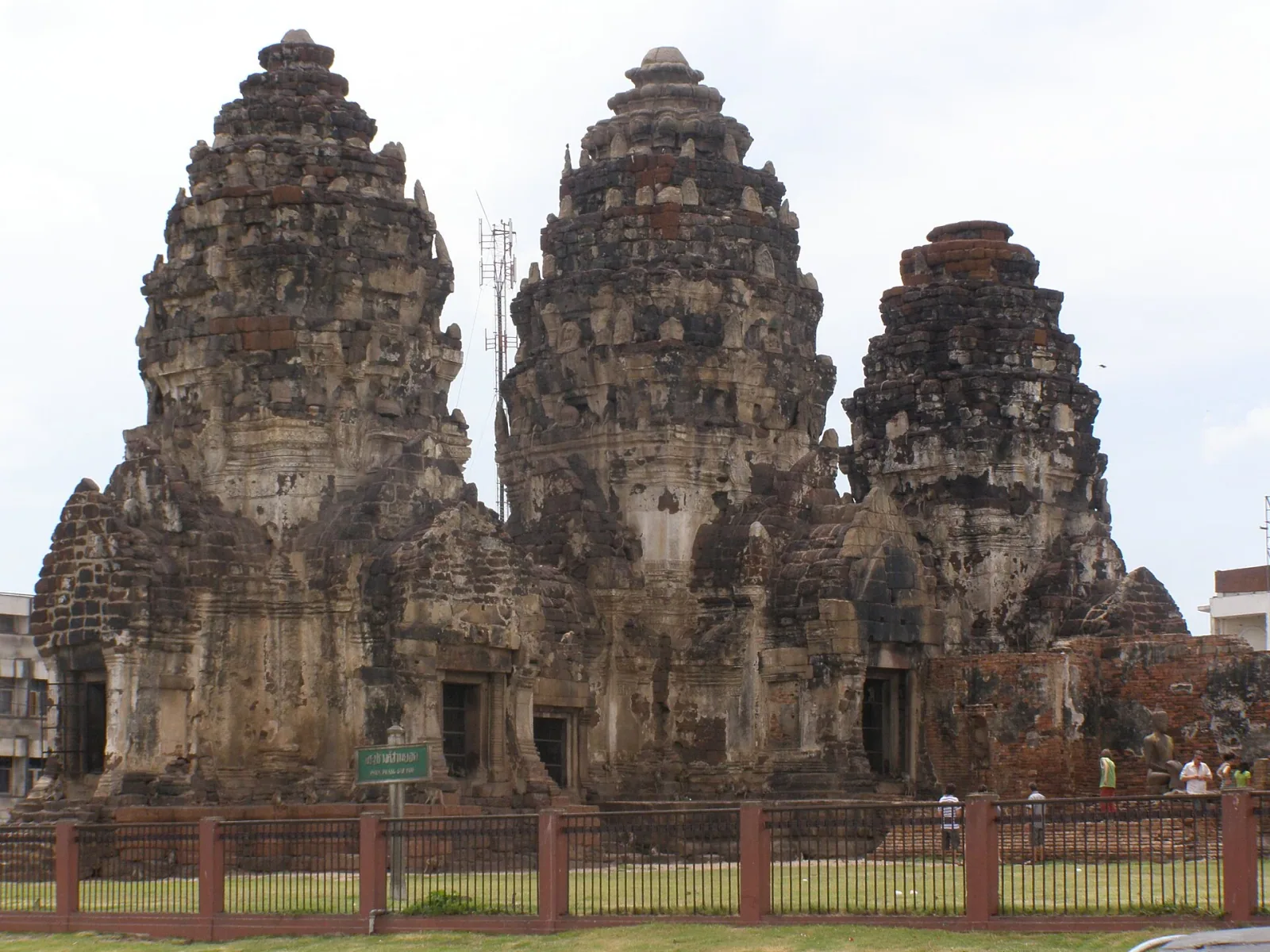
A macaque monkey snatches sunglasses off a tourist's face at the Phra Prang Sam Yot temple, scampering up the ancient Khmer prang with the prize while the victim yells helplessly below. Nearby, three more monkeys wrestle over a plastic bag containing snacks. A mother monkey nurses her infant on temple steps worn smooth by centuries of feet and paws. Behind them, the 13th-century laterite towers rise against blue sky, their Buddhist carvings weathered but still beautiful. This is Lopburi—the only city in Thailand where wild monkeys have literally taken over the historic center, creating a remarkable and occasionally maddening coexistence between wildlife, sacred temples, and modern urban life.
Lopburi Province sits about 155 kilometers north of Bangkok in central Thailand's agricultural heartland. About 725,000 people inhabit the province's 6,493 square kilometers, with around 58,000 living in Lopburi city itself. But what makes Lopburi internationally famous isn't its population, agricultural output, or even its military bases. It's the long-tailed macaque population — historically estimated in the thousands and partially relocated by authorities in 2024 — that roams the city center freely, treating 800-year-old Khmer temples as their personal jungle gym and creating wildlife encounters that range from charming to genuinely problematic.
Beyond the monkey spectacle, Lopburi holds serious historical significance. King Narai the Great made it his second capital during the 17th century, building a magnificent palace complex that hosted French ambassadors and European diplomats during the Ayutthaya Kingdom's most cosmopolitan era. Ancient Khmer ruins dot the province, remnants of the empire that dominated mainland Southeast Asia centuries before Thai kingdoms emerged. The combination—Khmer architecture, Ayutthaya-period grandeur, colonial-era European buildings, aggressive monkeys, and sleepy provincial atmosphere—creates something genuinely unique. Lopburi feels like nowhere else in Thailand, for better and worse.
"Lopburi offers Thailand's most unusual urban experience: watching wild monkeys claim ancient temples as their territory while locals adapt with monkey-proof everything, from windows to motorcycles."
Let's address the monkeys honestly. They're simultaneously Lopburi's main attraction and its primary nuisance. The macaque population exploded over decades as locals fed them for good fortune and Buddhist merit-making. Temple guardians actively encouraged monkey presence believing they brought blessings. Tourists began arriving specifically to see and photograph the monkeys. Vendors sold food for monkey feeding. The population grew unchecked. Now thousands of monkeys inhabit the city center, particularly concentrated around San Phra Kan shrine, Phra Prang Sam Yot temple, and the railway station.
The monkeys are wild animals, not cute pets. They snatch food, phones, cameras, sunglasses, and anything shiny or interesting. They've learned to open zippers, unscrew bottle caps, and raid motorcycles for valuables. Aggressive individuals—particularly males defending territory or food—will bite when threatened. Monkey bites can transmit rabies, requiring immediate post-exposure treatment. Local businesses install metal bars over windows and reinforce doors. Power companies deal with monkeys chewing electrical cables. Temple maintenance workers constantly repair damage. Residents have adapted completely: you learn which streets to avoid, how to secure belongings, when monkeys are most active (morning and late afternoon), and how to move through monkey territory safely.
Yet the monkeys remain remarkable to witness. Watching troops interact—grooming each other, playing, establishing hierarchy, mothers caring for infants—provides fascinating animal behavior observation in urban setting. The juxtaposition of monkeys climbing ancient Khmer architecture creates genuinely memorable imagery. Every November, the Monkey Buffet Festival attracts international media as locals prepare elaborate fruit and vegetable displays for the monkey population, creating spectacle that's simultaneously bizarre, generous, and deeply Thai in its approach to wildlife coexistence. Just come prepared: secure everything valuable, avoid direct eye contact, never feed monkeys yourself (they swarm aggressively), and seriously consider rabies pre-exposure vaccination if staying in Lopburi long-term.
Secure everything. Keep bags zipped and held close. Don't wear sunglasses, jewelry, or anything shiny. Monkeys are expert thieves targeting exactly what tourists value most. Insurance won't cover monkey theft.
Never feed them directly. Feeding creates aggressive swarms. If monkeys approach expecting food, back away slowly. Don't turn your back or run—appears like retreat-prey behavior.
Visit early morning (7-9am). Monkeys are less active and aggressive. Afternoon heat makes them lethargic. Late afternoon (4-6pm) they become active and demanding again as feeding time approaches.
Lopburi's historical importance extends far beyond monkeys. During the 17th century, King Narai the Great of Ayutthaya made Lopburi his second capital, escaping Ayutthaya's heat and building a palace complex that showcased the era's most sophisticated architecture. Phra Narai Ratchaniwet (King Narai's Palace) sprawls across a large compound featuring three sections: outer courtyards for royal ceremonies, middle section for government business, and inner residential quarters. The architecture blends Thai and European styles reflecting the cosmopolitan character of Narai's reign, when Ayutthaya maintained diplomatic relations with France, Portugal, and other European powers.
The palace now houses the Somdet Phra Narai National Museum, displaying artifacts from the Ayutthaya period including ceramics, religious objects, and remnants of international diplomacy. Walking these grounds conveys the scale of royal ambition—massive walls, elegant halls, lotus ponds, and reception areas designed to impress foreign ambassadors. The Vichayen House within the complex served as residence for Constantine Phaulkon, a Greek adventurer who rose to become Narai's chief minister before political intrigue led to his execution. The European-influenced mansion tells the fascinating story of international relations three centuries ago, when Lopburi functioned as meeting point between Siam and the West.
Ban Wichayen ruins—built in the 1680s to host French envoys and later occupied by Constantine Phaulkon—blend European arches with Thai elements, sitting in atmospheric decay. These remnants demonstrate how seriously European powers took diplomatic relations with Siam during this period. The ruins see fewer visitors than main temples, offering peaceful exploration of Lopburi's role in international history. Entry to the Somdet Phra Narai National Museum costs 200 baht for foreign visitors. The museum opens Wednesday-Sunday 9am-4pm; the palace grounds open daily 9am-4:30pm. For history enthusiasts, these sites rival monkey temples in significance, though they lack the social media appeal of macaque selfies.
Before Thai kingdoms dominated central Thailand, the Khmer Empire extended its reach here, building Hindu temples that later converted to Buddhist use. Wat Phra Si Rattana Mahathat showcases classic 12th-century Khmer architecture—a large laterite prang surrounded by galleries and smaller chedis. Though weathered by centuries, the temple remains an active Buddhist site with resident monks conducting daily ceremonies. The architectural evolution from Hindu shrine to Buddhist temple mirrors the religious transitions across mainland Southeast Asia. Early morning visits (before 9am) offer peaceful exploration before heat becomes punishing.
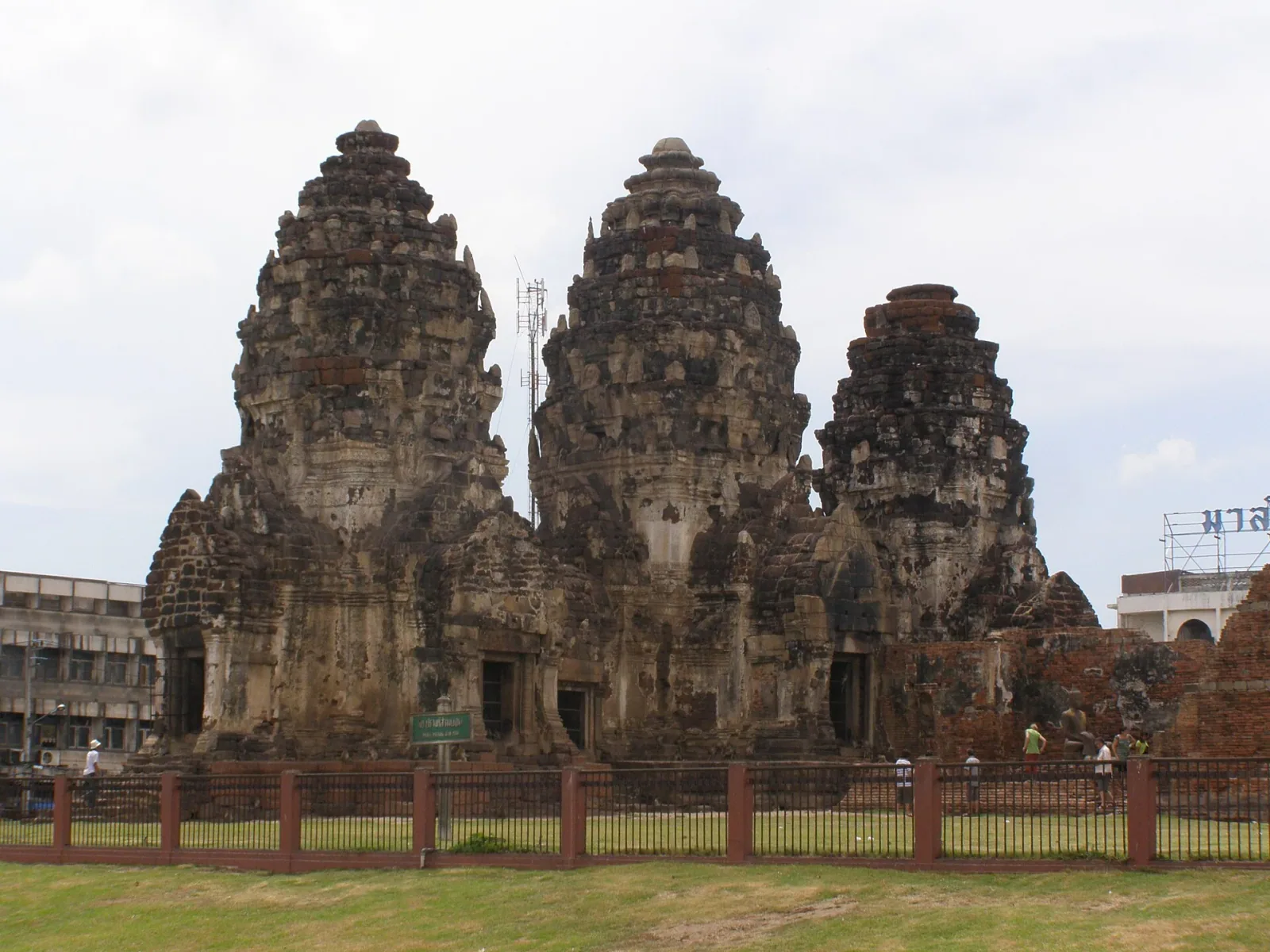
Phra Prang Sam Yot—the famous "Monkey Temple"—features three interconnected Khmer prangs dating to the 13th century. The towers originally honored Hindu gods before Buddhist conversion. Now the site operates as informal monkey headquarters, with hundreds of macaques claiming the temple and surrounding area as territory. Photographing the architecture requires strategic timing and positioning to avoid monkey interference. The 50 baht entry fee (foreigners) includes access to the main temple grounds. Security guards attempt to manage monkey-tourist interactions with mixed success. The blend of ancient Khmer art and modern wildlife chaos creates surreal atmosphere found nowhere else.
For travelers combining historical sites, Lopburi pairs naturally with Ayutthaya (60 kilometers south, 1 hour by bus) for two-day circuits through central Thailand history. The train journey between Bangkok and northern destinations stops at Lopburi station—itself charming wooden Thai architecture where monkeys gather on platforms creating unique photo opportunities. The strategic railway location makes Lopburi accessible as daytrip from Bangkok or overnight stop en route to northern Thailand. Most travelers choose day trips; the compact city center allows visiting major sites in 4-6 hours including generous monkey encounter time.
Lopburi operates primarily as military town, hosting significant Thai army bases and training facilities. The military presence shapes local culture and economy more than tourism ever has. This creates interesting dynamics for the small expat community (maybe 200-500 foreign residents total): very low living costs, genuine Thai provincial atmosphere, but limited Western amenities or English-language support. Studio apartments rent for 4,000-8,000 baht monthly. One-bedroom places with air-con cost 6,000-12,000 baht. Utilities run 1,200-2,000 baht. Food remains cheap when eating local—street meals 25-60 baht, market food 30-80 baht, cooking at home even less.
Total monthly comfortable living achieves 15,000-25,000 baht ($425-705 USD) including rent, utilities, food, transportation, and entertainment. Internet infrastructure works adequately (fiber from 3BB, AIS, True at 500-700 baht monthly for 100 Mbps). A few cafes near Rajabhat University offer wifi suitable for laptop work. But no coworking spaces exist. Healthcare stays basic—King Narai Hospital and the military Anandamahidol Hospital handle routine needs but serious medical issues require Bangkok (2.5 hours away). English remains rarely spoken outside a few guest houses. The expat community consists mainly of teachers at local schools and military-connected foreigners. No organized social infrastructure or regular meetups exist for foreign residents.
This combination—extreme affordability but minimal expat infrastructure—creates natural selection. The foreigners who thrive here tend toward independence, comfortable with Thai language basics and provincial life rhythms. Retirees on fixed incomes find exceptional value if they can handle limited medical care and Bangkok trips when needed. Remote workers seeking ultra-low costs while maintaining Bangkok proximity (2-2.5 hours by train or van) occasionally base here. But most foreigners visit Lopburi as daytrip rather than residence. The city isn't trying to attract international residents—it exists for Thai people, with military, agriculture, and domestic tourism driving the economy. Foreigners remain welcome but incidental.
→ Studio apartment (city center): 6,000 THB
→ Utilities (electric, water, internet): 1,500 THB
→ Food (local restaurants, markets): 6,000 THB
→ Motorcycle rental: 1,500 THB
→ Entertainment and activities: 2,000 THB
→ Miscellaneous: 1,000 THB
→ TOTAL: 18,000 THB (~$510 USD)
Ultra-budget living: 14,000-16,000 THB with shared housing. Comfortable with occasional Bangkok visits: 22,000-28,000 THB. One of Thailand's most affordable cities.
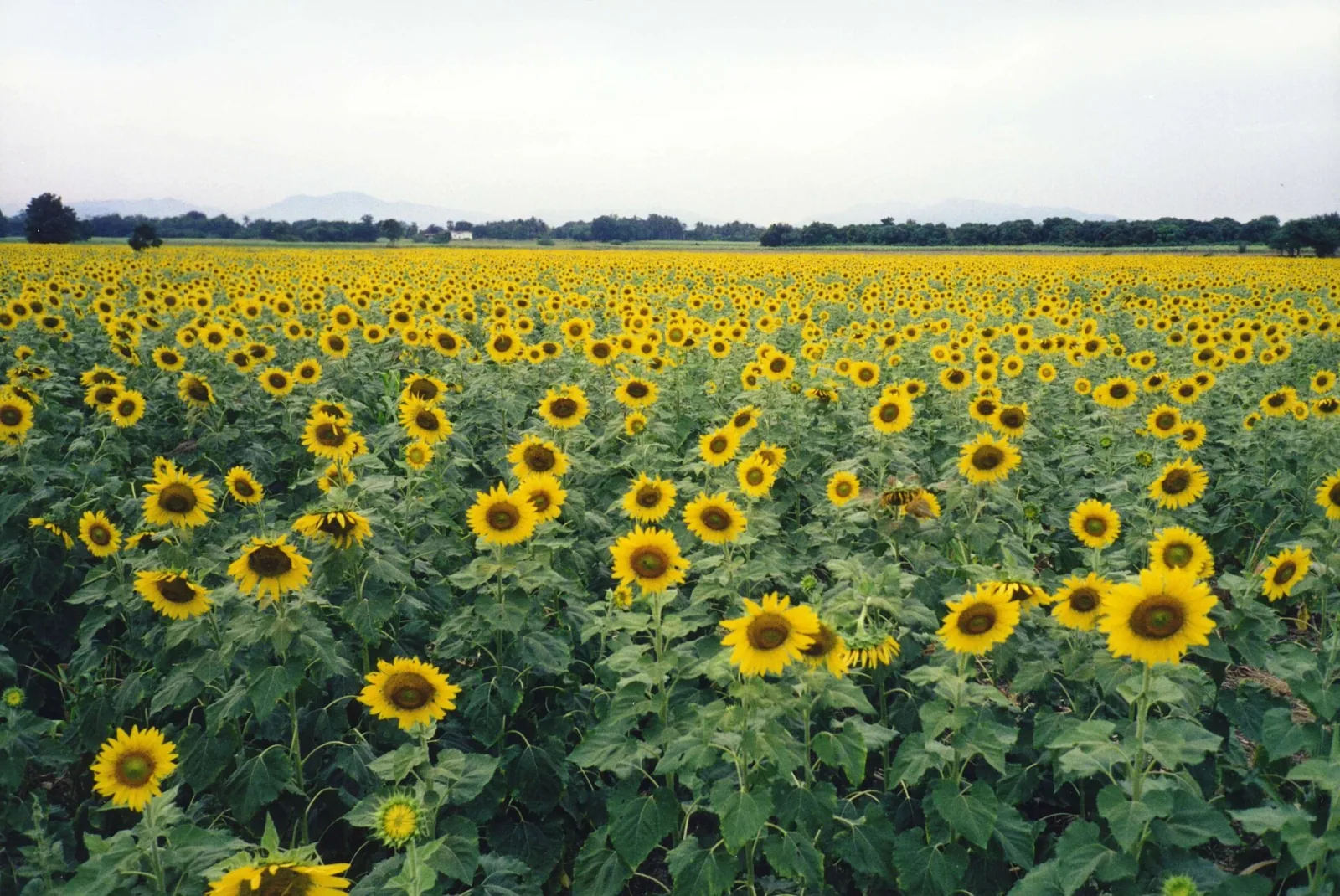
Beyond monkeys and temples, Lopburi's countryside transforms each January-February when sunflower fields bloom across agricultural plains. The phenomenon mirrors Saraburi's sunflower tourism but on smaller scale with fewer visitors. Thai domestic tourists drive from Bangkok for photos among golden blooms stretching toward distant horizons. Farmers charge modest entry fees (20-40 baht) to walk through fields that were originally planted for commercial sunflower oil production, not tourism. The agricultural beauty creates pleasant contrast to urban monkey chaos.
The fields lie scattered across countryside requiring private transport—rental scooters (200-250 baht daily) or cars work best. Local guesthouses provide directions. Peak bloom timing varies by planting schedule, but generally late January through early February offers best displays. Early morning (6-8am) and late afternoon (4-6pm) provide optimal photography light. The King Narai Reign Fair in February celebrates Lopburi's historical legacy with cultural performances, traditional markets, historical reenactments, and processions through the palace grounds. The week-long festival attracts Thai visitors interested in history and culture, creating the year's busiest tourism period besides the November Monkey Buffet Festival.
For nature beyond sunflowers, Khao Yai National Park sits about 125 kilometers southeast (around 2 hours by car)—Thailand's premier wildlife destination with elephants, gibbons, hornbills, and spectacular waterfalls. Day trips from Lopburi work logistically, though most visitors base in Pak Chong closer to the park. The combination of Lopburi's historical sites, monkey encounters, affordable accommodation, and proximity to Khao Yai creates potential for multi-day central Thailand exploration using Lopburi as budget base. Few travelers currently use this strategy, but those who do report excellent value and interesting daily variety moving between wildlife, history, and agricultural beauty.
Reaching Lopburi from Bangkok offers multiple options. Trains depart from Krung Thep Aphiwat (Bang Sue Grand) — the main long-distance hub since 2023 — with some commuter services still calling at Hua Lamphong, running every 1-2 hours (2.5-3 hours, 20-30 baht third class, 400 baht second class air-con). The scenic train journey remains recommended—comfortable, affordable, and delivers you directly to charming Lopburi station in the city center. Minivans from Mo Chit / Northern Bus Terminal run frequently (2 hours, 100-120 baht) arriving at Lopburi bus station. Private car via Highway 1 takes 2-2.5 hours covering about 155 kilometers. Regular buses from Mo Chit terminal provide another option (2.5-3 hours, 100-150 baht).
Within Lopburi, the compact city center makes walking viable for major sites. The distance from railway station to Phra Prang Sam Yot, San Phra Kan shrine, and King Narai's Palace covers maybe 2 kilometers total—entirely walkable though tropical heat suggests morning visits. Bicycle rental costs 50 baht daily, perfect for exploring without monkey-attractive motorcycles. Samlors (three-wheeled taxis) provide short trips for 30-50 baht. Motorcycle taxis cost 20-30 baht for quick hops. Songthaews run fixed routes for 10-15 baht but require local knowledge to navigate. Most day-trippers walk between sites, stopping for refreshment and monkey-free respite in air-conditioned cafes.
Accommodation ranges from basic guesthouses (300-600 baht/night) near temples to mid-range hotels (800-1,800 baht) with pools and restaurants. Lopburi Inn Hotel and Nett Hotel offer solid mid-range comfort. Budget travelers choose Noom Guesthouse or Lopburi Inn Resort for clean, affordable rooms. Luxury options barely exist—this isn't a destination where travelers expect upscale accommodations. Most visitors treat Lopburi as overnight stopover maximum, seeing the main sights in half-day, experiencing monkey encounters, then continuing elsewhere. The city works perfectly for this purpose: concentrated attractions, easy logistics, memorable experience, move on. Trying to extend stays beyond 1-2 nights creates diminishing returns unless you're genuinely interested in provincial Thai life or establishing budget base for regional exploration.
Lopburi works brilliantly for history enthusiasts interested in Ayutthaya period and Khmer architecture, wildlife enthusiasts who find urban monkey populations fascinating rather than frightening, photographers seeking unusual subject matter, budget travelers prioritizing cost over comfort, and train travelers exploring central Thailand without cars. The city provides excellent day-trip from Bangkok (leave 7am, return 6pm), or overnight stop between Bangkok and northern destinations. The compact attractions, train accessibility, and genuine uniqueness justify visits despite modest offerings.
Lopburi struggles for families with young children (monkey aggression concerns), travelers requiring Western amenities, anyone seeking sophisticatedAccommodation or dining, people with mobility issues (uneven temple grounds, aggressive monkeys), and those expecting organized expat community or English-language services. The monkeys aren't cute photo props—they're wild animals requiring caution and respect. Some travelers find the constant vigilance exhausting. Others love the unpredictable wildlife encounters. Your personality determines whether Lopburi feels like adventure or anxiety.
Ultimately, Lopburi matters because it refuses to sanitize or commercialize its defining feature. The monkeys create genuine problems—theft, property damage, occasional injuries. Yet authorities maintain the population, locals adapt lifestyle around wildlife, and the city celebrates its monkey identity annually with elaborate buffets. This acceptance of difficulty for the sake of unique character feels increasingly rare in Thailand's tourism development. Lopburi could trap the monkeys, relocate them, turn temples into controlled attractions. Instead, the city tolerates chaos, allows wild animals to behave wildly, and creates experiences impossible to replicate elsewhere. That commitment to messy authenticity over convenient sanitization makes Lopburi worth visiting, even if you leave grateful to escape the monkey madness.
Capital
Mueang Lopburi
Province Population
~750,000
City Population
~58,000
From Bangkok
~155 km north (2-2.5 hours)
Emergency
191 (Police), 1669 (Medical)
Quick Take
Thailand's most unusual urban experience—ancient temples literally overrun with wild monkeys. Fascinating history from King Narai's cosmopolitan capital, but monkey encounters require caution. Perfect day trip, challenging long-term residence.
Best For
History enthusiasts, wildlife photographers, adventure travelers, budget travelers, day trips from Bangkok, train travelers exploring central Thailand
Cool Season
Nov-Feb · Comfortable weather, Monkey Buffet Festival in Nov
Sunflowers
Jan-Feb · Blooming fields, King Narai Festival
Avoid
Mar-May · Extreme heat (38-42°C)
→ Phra Prang Sam Yot (Monkey Temple)
→ King Narai's Palace & Museum
→ San Phra Kan (Monkey Shrine)
→ Wat Phra Si Rattana Mahathat
→ Ban Wichayen (French Ambassador ruins)
→ Monkey Buffet Festival (November)
By Train
Krung Thep Aphiwat (Bang Sue) · 2.5-3hrs · 20-400 THB
By Minivan
Mo Chit terminal · 2hrs · 100-120 THB
By Car
Highway 1 · ~155km · 2-2.5hrs