Provinces
🌻Saraburi Province
Sacred pilgrimage, golden sunflower seas, and Thailand's gateway to the Northeast
Sacred pilgrimage, golden sunflower seas, and Thailand's gateway to the Northeast
You're standing on the steps of Wat Phra Phutthabat temple at dawn, watching waves of Thai pilgrims climb the mountain toward the golden shrine housing Buddha's footprint. Elderly women in traditional dress carry flowers and incense. Monks in saffron robes chant prayers that echo across the valley. Families make merit together, their devotion palpable in the cool morning air. Below, the Saraburi plains stretch toward distant limestone mountains. This is one of Thailand's most revered pilgrimage sites—tens of thousands of Thais arrive for annual festivals such as Tak Bat Dok Mai, yet foreign tourists remain mostly oblivious, driving straight through Saraburi on Highway 1 toward the Northeast without stopping.
Saraburi Province occupies central Thailand's strategic crossroads, 108 kilometers northeast of Bangkok where the Central Plains transition toward the Korat Plateau and Isaan region. Roughly 639,000 people live across Saraburi's 3,499 square kilometers—mostly engaged in agriculture, logistics, and cement production tied to the endless stream of vehicles flowing along Phahonyothin (Highway 1). The province capital, also called Saraburi, operates as a working Thai town where religious pilgrimage, agricultural markets, and industry create authentic provincial character untouched by international tourism.
What makes Saraburi remarkable isn't just the sacred Buddha's footprint drawing nationwide pilgrim traffic. It's the spectacular sunflower fields that bloom each cool season, transforming vast agricultural plains into golden seas stretching to the horizon. It's the still-below-Bangkok cost of living, where long-term stays remain feasible on 22,000-25,000 baht monthly if you live like a local. It's the complete lack of pretense or heavy tourism infrastructure, creating immersion in authentic Thai life. And it's the sheer convenience for exploring central and northeastern Thailand, positioned between Bangkok, Ayutthaya, Khao Yai, Lopburi, and Korat. Most travelers race through without stopping. Those who pause discover something increasingly rare: genuine Thailand operating for Thais, with outsiders welcome but incidental.
"Saraburi offers what happens when you strip away tourism entirely: authentic Thai life at rock-bottom prices, sacred sites operating for devotion not revenue, and agricultural beauty that exists whether you photograph it or not."
Wat Phra Phutthabat—Temple of the Buddha's Footprint—dominates Saraburi's identity and economy. According to legend, Buddha visited this mountain during his travels, leaving his footprint impressed in stone. King Songtham of Ayutthaya discovered the site in 1624 following a hunter's report, immediately recognizing its sacred significance. He ordered construction of a temple complex to enshrine and protect the footprint. Today, an ornate mondop (square building with pyramidal roof) houses the revered imprint, surrounded by halls, chedis, and pilgrimage infrastructure sprawling across the mountainside.
The scale of pilgrimage here still surprises first-time visitors. Tak Bat Dok Mai (Thai floral alms-giving) each July draws more than 10,000 devotees, while Makha Bucha (full moon of the third lunar month) regularly fills the mountain with candlelit processions and overnight worshippers. Families camp in temple grounds, vendors sell floral offerings, and monks conduct continuous ceremonies. Everyone climbs hundreds of steps to the mondop carrying flowers, incense, and gold leaf to offer at the footprint shrine. Thai pilgrims outnumber foreign visitors by orders of magnitude, so the experience reflects Buddhism practiced for locals rather than staged for outsiders.
The temple complex itself showcases Ayutthaya-period architecture—graceful proportions, gilt decoration, and artistic refinement that predates Bangkok's founding. Multiple chedis dot the grounds. Buddha images in various mudras fill halls. The footprint mondop's interior glitters with gold and mirrors in classic Thai temple aesthetic. Views from the mountaintop stretch across Saraburi plains toward distant peaks, the landscape a patchwork of rice fields, orchards, and cement factories. Entry remains free (donations expected, 20-100 baht typical), and the atmosphere stays genuinely devotional rather than commercial. For travelers seeking to understand Thai Buddhist practice beyond tourist performances, Wat Phra Phutthabat delivers authenticity in overwhelming doses.
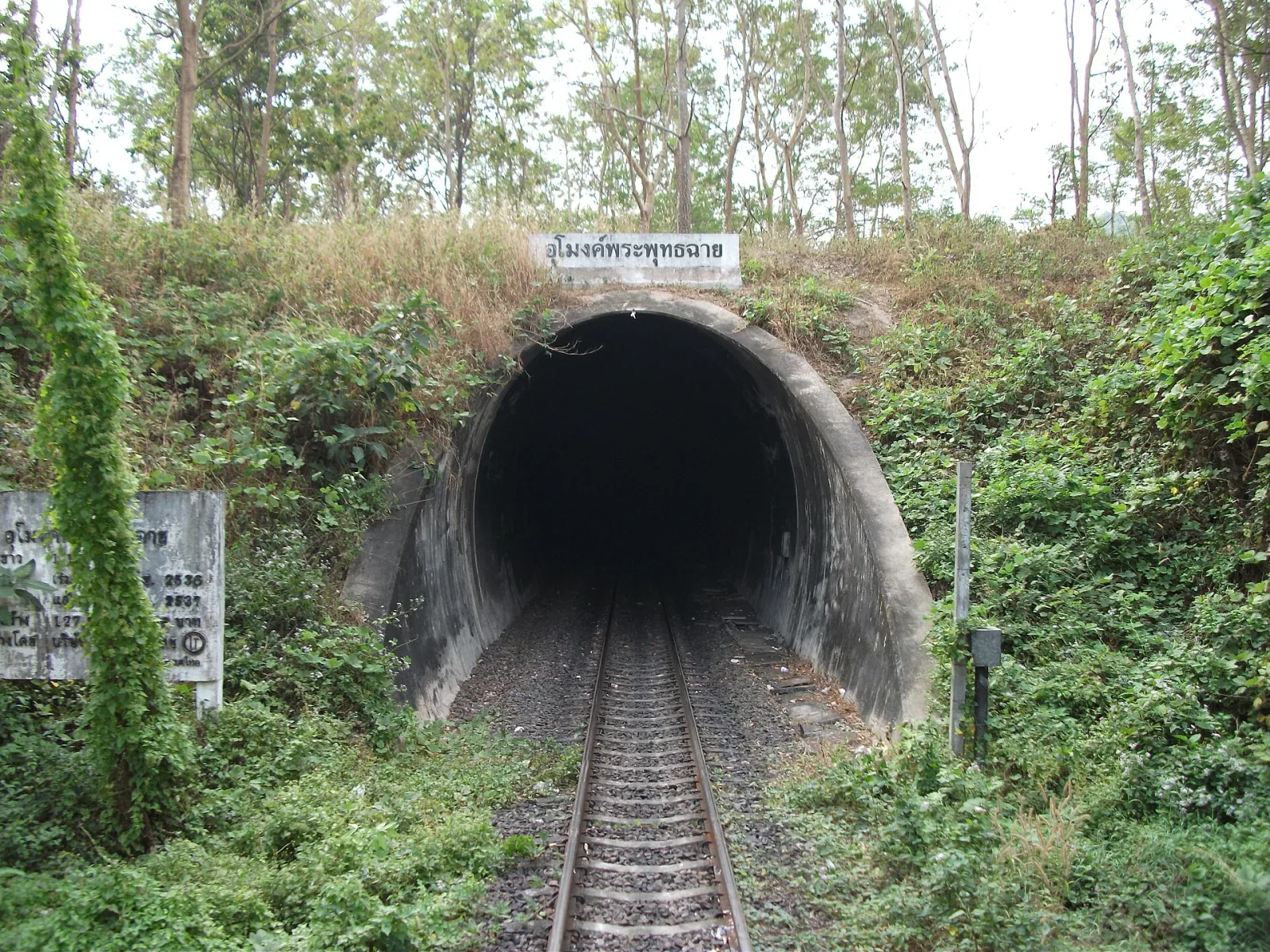
Every cool season, Saraburi transforms. Agricultural fields around Muak Lek and Wang Muang districts burst into bloom from mid-November through January as farmers stagger sunflower planting cycles. The sunflower craze began in the late 1990s when drought prompted farmers to switch from corn to sunflowers for oil and seed production; by the mid-2010s social media amplified the spectacle and the Tourism Authority began promoting “sunflower routes” linking plantations and roadside cafes. Expect peak bloom roughly late December through early January, though different farms plant successive plots so some fields stay photogenic into February.
The experience feels distinctly Thai. Families arrive by the carload wearing coordinated outfits for photos. Professional photographers set up elaborate portrait sessions. Food vendors sell grilled corn and fresh sunflower seeds. Farmers—initially bemused by selfie-seeking city folk—now charge symbolic entrance fees (10-20 baht) and provide viewing platforms, mapped walking lanes, or tractor shuttles to protect the crops. The vibe remains wholesome and domestic: this is Thailand discovering its own agricultural beauty rather than performing for foreigners. Some fields let visitors wander between towering sunflower rows that stretch seemingly forever, others focus on curated photo props overlooking nearby limestone ridges.
For photographers, timing matters enormously. Early morning (6-8am) offers the best light—golden hour illumination hitting the flowers at perfect angles, cool temperatures, and fewer crowds. Late afternoon (4-6pm) provides warm light but more visitors. Weekends become packed with Bangkok day-trippers. Weekdays stay relatively quiet. The fields lie scattered across the countryside requiring private transport—rental scooters (250-300 baht daily) or cars work best. Local guesthouses can provide maps and directions. The sunflower tourism has created a mini-economy benefiting farmers who now earn from both crops and visitor fees, a win-win that demonstrates Thai agricultural creativity.
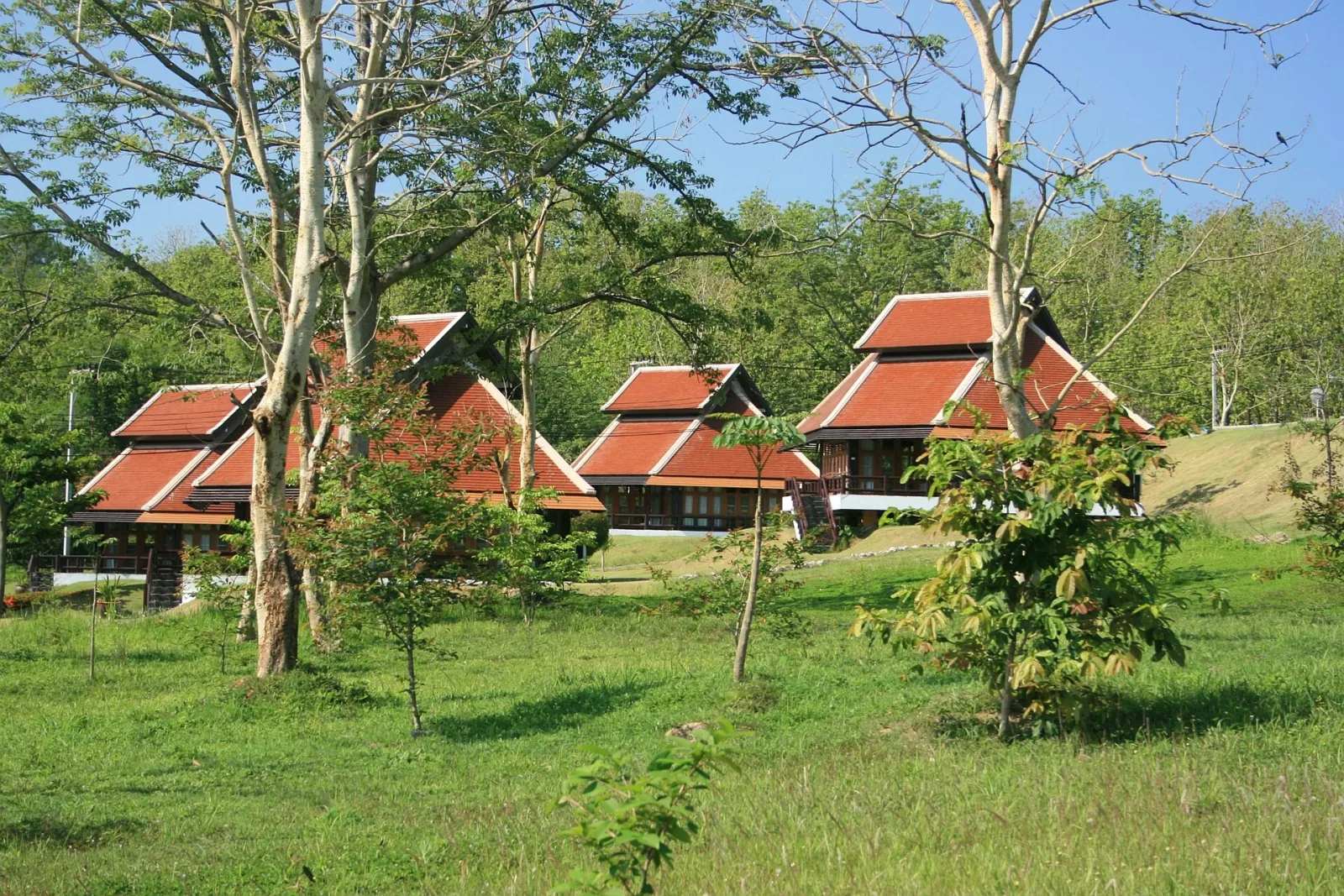
Saraburi still ranks among Thailand's cheaper provinces for actual living—not tourist stays but monthly residence. Studio apartments near the provincial capital list from roughly 4,500-7,000 baht on Thai rental sites. Modest one-bedroom places with air-con and furniture run 6,500-11,000 baht. Expect 3,000-3,500 baht for utilities (electricity spikes in the hot season) plus 600-800 baht for home internet. Food costs plummet if you eat like locals: street meals 40-60 baht, market curries 50-80, bulk produce inexpensive. Factor in a motorcycle rental or upkeep around 2,000 baht and you land at 22,000-25,000 baht for a comfortable, realistic single-person budget—still half of Bangkok's outlay.
The catch—and it's significant—is the near-total absence of expat infrastructure or Western amenities. Coworking spaces score “poor” on digital-nomad indexes because they basically don’t exist. English remains rarely spoken outside chain hotels. International food requires trips to Bangkok or a DIY kitchen. Healthcare runs basic; serious medical needs mean Bangkok hospitals two hours away. Entertainment options center on Thai markets, temples, and parks rather than bars, clubs, or cultural events. The tiny expat community consists mainly of teachers at local schools and technical workers at cement plants. No Facebook groups coordinate social life. No organized activities welcome foreigners. You're on your own, building connections with Thai neighbors and colleagues through language and effort.
But for retirees on fixed incomes, remote workers prioritizing savings, or long-stay travelers comfortable with deep immersion, Saraburi offers serious value. The province remains clean, safe, and well-connected. Fiber internet is available through TOT and 3BB, and 300 Mbps service typically costs 600-800 baht monthly; citywide median download speeds hover around 300 Mbps. Bangkok's top hospitals, international airport, and specialty groceries sit 1.5-2 hours south when you need them, while day-to-day life still costs a fraction of capital prices. It's not for everyone—probably not for most foreigners—but for people who thrive outside expat bubbles, Saraburi delivers Thailand's strongest cost-to-quality ratio outside the deep countryside.
→ Studio apartment: 6,500 THB
→ Utilities (electric, water, internet): 3,200 THB
→ Food (street + market cooking): 6,500 THB
→ Motorcycle rental + fuel: 2,200 THB
→ Healthcare / Bangkok buffer: 3,000 THB
→ Entertainment & misc: 2,000 THB
→ TOTAL: 23,400 THB (~$650 USD)
Ultra-budget only works with shared rooms and zero travel. A realistic comfort band lands between 22,000-25,000 THB monthly.
Saraburi's geography creates exceptional convenience for regional exploration. Bangkok sits 108 kilometers south (1.5-2 hours by car or bus, 2-2.5 hours by train). Ayutthaya's UNESCO temple ruins lie roughly 65 kilometers southwest (around an hour). Khao Yai National Park—Thailand's premier wildlife destination—is roughly 95 kilometers northeast (around 1 hour 45 minutes). Lopburi's monkey temples sit 45 kilometers northwest (45 minutes). Nakhon Ratchasima (Korat), gateway to Isaan, lies 140-150 kilometers northeast (about two hours). This positioning allows day trips in every direction from a budget base.
Highway 1 (Phahonyothin Road) meets Mittraphap (Highway 2) right outside town, so nearly every Bangkok-to-Isaan road trip passes Saraburi. The province functions as a logistics and rest hub with 24/7 fuel plazas, market-style food courts, and souvenir shops pushing local honey, dairy, and tamarind. Plenty of travelers only discover Saraburi after pulling off the expressway for coffee.
Transportation accessibility further enhances Saraburi's gateway role. The state-run Route 904 bus from Mo Chit ended in August 2025, but private vans operating from Chatuchak and Victory Monument still depart every 30 minutes between 5am-7:30pm (about 120 baht, 1.5 hours). Trains remain the most atmospheric option: ordinary third-class tickets start around 45 baht, rapid and special-express services range up to 950 baht in air-conditioned coaches, and there are usually 6-8 departures daily in each direction. Renting a car in Bangkok and basing in Saraburi creates flexible regional exploration at minimal accommodation cost. The strategy suits travelers prioritizing experience over luxury: save money living cheap, spend on day trips and activities.
Saraburi will be a core stop on Phase 1 of Thailand's Thai-Chinese high-speed rail, a 250.77-kilometer corridor running Krung Thep Aphiwat → Don Mueang → Ayutthaya → Saraburi → Pak Chong → Nakhon Ratchasima. State Railway dashboards put civil works progress at roughly 48% as of September 2025, with 250 km/h trainsets planned to slash Bangkok–Korat travel times well below the current three-hour drive before the line continues toward Nong Khai and the Laos–China network.
Contract 4-7 specifically covers the 12.99-kilometer Saraburi–Kaeng Khoi segment, the new Saraburi high-speed station, depot, power facilities, and access roads. Construction started in February 2021, passed the 60% mark, and recently received a 201-day extension pushing handover to December 25, 2025 after land approvals from the Royal Irrigation Department lagged. National planners now project the full 609-kilometer Bangkok–Nong Khai line to open by 2030, putting Saraburi on Thailand's first international high-speed spine.
Arrive early. Gates open around 6am. Visit between 6-9am for cooler temperatures, better light, and spiritual atmosphere before crowds arrive. The staircase ascent takes 30-60 minutes depending on fitness, so pace yourself.
Dress modestly. This is Thailand's most sacred pilgrimage site. Cover shoulders and knees, remove shoes at buildings. Inappropriate dress shows disrespect to millions of Thai Buddhists who hold this place sacred.
Avoid major Buddhist holidays unless you want to experience maximum crowds. Makha Bucha (February/March) draws tens of thousands of pilgrims to the mountain. Amazing culturally, overwhelming logistically. Choose wisely based on goals.
Beyond temples and sunflowers, Saraburi offers modest but genuine attractions. Provincial markets champion sweet tamarind sourced from nearby growers (especially Phetchabun's GI-certified orchards) and package it into everything from candies to spreads. Muak Lek's market doubles as a logistics point for shipping tamarind, dairy, and honey across Thailand, so sampling seasonal produce here feels like a crash course in central Thai flavors even if the fruit itself originates a province away.
Pull off Phahonyothin Road near downtown Saraburi or the Muak Lek bypass and you'll find entire blocks devoted to karipap stalls. Legacy shops such as Je Muay have been braiding spiral pastry for more than 40 years, frying thousands of mini puffs each dawn for motorists shuttling between Bangkok and the Northeast. Traditional fillings lean savory—chicken-potato, peppery pork, mixed vegetables—but bakers also churn out sweet taro, durian, and grape custard versions to satisfy Thailand's snack-obsessed palates.
Younger entrepreneurs are riffing on the classic. Puff Stick Khun Toy, for example, reengineered the pastry into baton-shaped sticks with fillings like bacon-cheese, corn custard, and seaweed crab, packaged for OTOP counters and Bangkok cafes. Whether you swear by Je Muay's braid or the new-wave sticks, curry puffs remain Saraburi's signature souvenir—cheap enough to buy by the dozen, sturdy enough to survive the ride south, and perfect with iced coffee at a Mittraphap rest stop.
Two national parks provide nature escapes. Chet Sao Noi Waterfall National Park features a seven-tiered cascade particularly impressive during and just after rainy season (June-October). Hiking trails wind through jungle to multiple waterfall levels where swimming in natural pools offers cooling relief. Foreign adults pay 100 baht admission (20 baht for Thai citizens). Namtok Sam Lan National Park showcases limestone cliffs and Sam Lan waterfall with fewer visitors than more famous parks and the same 100-baht foreigner / 20-baht Thai ticket. Neither site ranks among Thailand's premier natural attractions, but both serve local recreation well and provide easy half-day excursions.
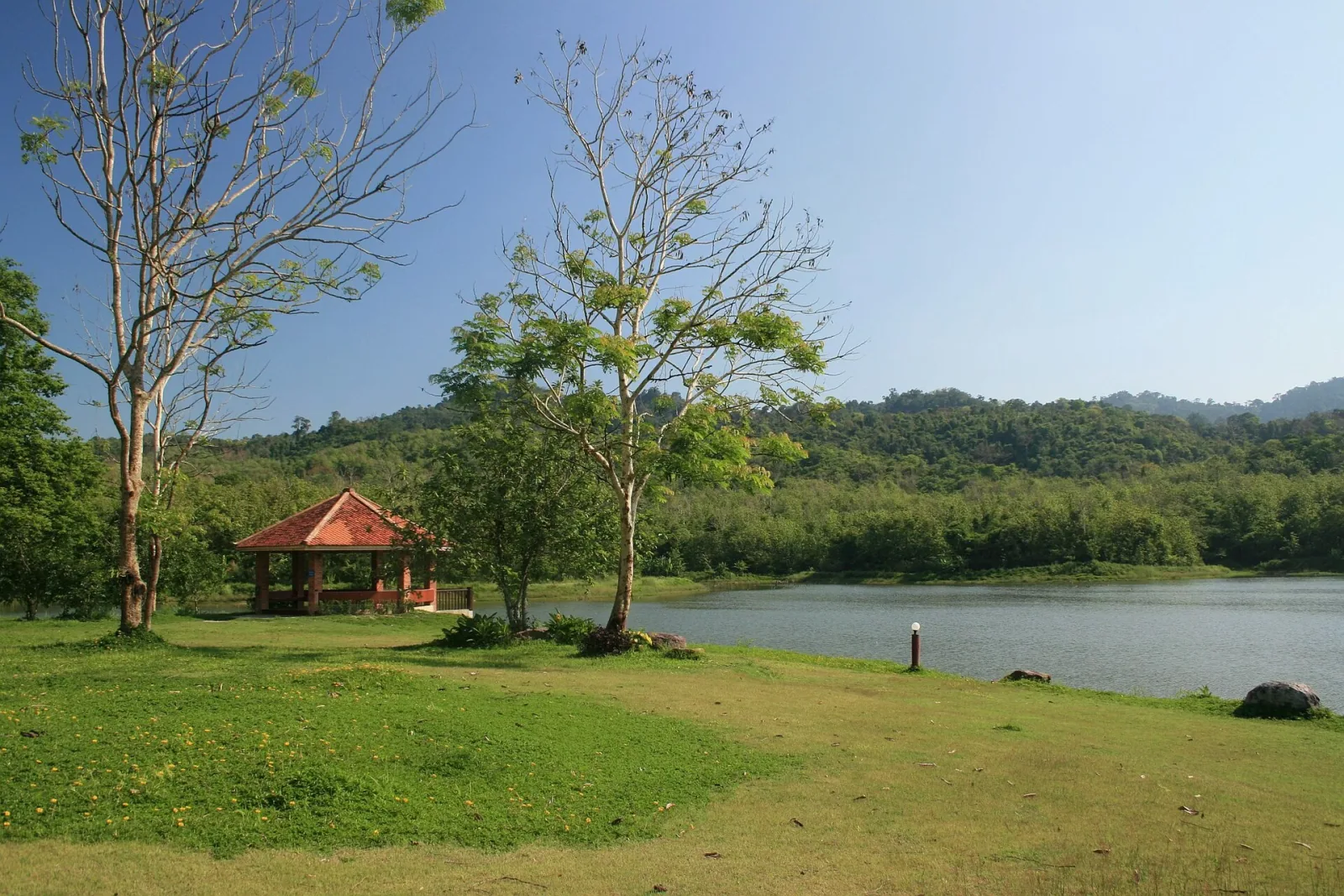
Saraburi isn't trying to attract anyone. It exists for Thai people—pilgrims seeking merit, farmers growing crops, workers producing cement, families traveling between regions. Foreigners remain statistical anomalies rather than target demographics. This creates both Saraburi's appeal and its limitations. If you require English-speaking services, Western food options, expat social infrastructure, or international-standard healthcare readily available, Saraburi disappoints. Look elsewhere.
But for specific types of travelers and residents, Saraburi delivers exceptional value. Budget-conscious retirees able to handle basic Thai language and medical trips to Bangkok when needed find remarkable affordability. Remote workers prioritizing minimal expenses and willing to sacrifice community for cost savings achieve survival-level budgets impossible in tourist destinations. Cultural enthusiasts seeking authentic Thai Buddhist practice and provincial life discover immersion unavailable in Westernized cities. Photographers drawn to sunflower fields and temple architecture find subjects without tourist hordes ruining compositions. Road-trippers exploring central Thailand appreciate the convenient, cheap base.
Saraburi demands independence, adaptability, and comfort with being genuinely outside your cultural element. No one will hold your hand. English rarely helps. You solve problems through Thai language, patience, and resourcefulness. But for travelers who've done easier destinations and seek deeper Thailand, or residents prioritizing budget over convenience, Saraburi offers what more popular provinces no longer can: Thai life operating completely for itself, where foreigners must adapt to local reality rather than locals adapting to foreign expectations. That reality won't suit most visitors. For those it does suit, Saraburi provides exceptional value and authenticity at prices that border on surreal. The province isn't trying to become anything other than what it is. That's precisely why it matters.
Capital
Saraburi
Population
~639,000
Area
3,499 km²
From Bangkok
108 km (1.5-2 hours)
Emergency
191 (Police), 1669 (Medical)
Quick Take
Thailand's most sacred pilgrimage site, spectacular winter sunflower fields, and rock-bottom living costs. Perfect for budget travelers, photographers (Dec-Jan), and cultural immersion. Not for tourists seeking Western comfort.
Best For
Buddhist pilgrims, sunflower photographers, budget travelers, retirees seeking ultra-low costs, day trips from Bangkok, road-trippers
Sunflower Season
Late Dec-Early Jan · Peak sunflower bloom, cool weather
Cool Season
Nov-Feb · Comfortable temperatures, pilgrimage season
Avoid
Mar-May · Extreme heat (38-40°C), uncomfortable
→ Wat Phra Phutthabat (Buddha's Footprint)
→ Sunflower Fields (Nov-Jan)
→ Chet Sao Noi Waterfall
→ Namtok Sam Lan National Park
→ Muak Lek Market & curry puffs
By Bus
Chatuchak / Victory Monument vans · 1.5-2hrs · ~120 THB
State Route 904 ended Aug 2025; private vans now run every 30 min.
By Train
Krung Thep Aphiwat (Bang Sue Grand) · 2-2.5hrs · 45-950 THB
By Car
Highway 1 / Mittraphap · 108km · 1.5-2hrs