Provinces
💎Chanthaburi Province
Where gem traders, Gothic cathedrals, and durian orchards create Thailand's hidden gem
Where gem traders, Gothic cathedrals, and durian orchards create Thailand's hidden gem
The Friday morning gem market begins at 6am, but dealers arrive earlier, claiming their spots along Si Chan Road before dawn. By the time sunlight breaks across Chanthaburi, hundreds of traders have spread blankets displaying rubies that catch the light like drops of frozen wine, sapphires ranging from cornflower blue to sunset pink, and stones so rare they don't have common names. An elderly Chinese dealer examines a ruby through his loupe, tilting it toward the sun, his expression revealing nothing. A Burmese trader argues price in Thai mixed with gems-trade jargon. This is Talat Ploi—one of Southeast Asia's most important coloured-gemstone markets—running Friday through Sunday mornings, rain or shine, trading stones worth millions of dollars on blankets spread on the street.
Chanthaburi Province occupies a peculiar position in Thailand's geography and identity. It's the country's easternmost coastal province, 245 kilometers from Bangkok, pressed against the Gulf of Thailand with Cambodia just beyond the mountains. The provincial capital shares the same name—Chanthaburi City—a compact riverside town that anchors a province of roughly 535,000 people and somehow balances being a major gem trading hub, Thailand's tropical fruit basket, home to the country's largest Catholic cathedral, and a repository of Vietnamese refugee culture from the Indochina wars.
What makes Chanthaburi remarkable isn't any single attraction but rather the improbable combinations. Gothic cathedral spires rise above Buddhist temples. Vietnamese pho restaurants sit next to Chinese shophouses. Fruit orchards heavy with prized Thai durian stretch between waterfalls and pristine beaches. French colonial architecture lines streets where gem dealers haggle in Thai, Mandarin, Burmese, Sinhala, and the workshop-jargon of the trade. It's one of Thailand's most culturally complex provinces, shaped by waves of migration and trade that created something found nowhere else—and somehow it's remained off most travelers' radars, a genuine hidden gem in both literal and figurative senses.
Gem trading hub: One of Southeast Asia's most important coloured-gemstone markets. Rubies, sapphires, and rare stones traded weekly. Heat-treatment workshops make "Chanthaburi stones" famous in the global trade.
Fruit paradise: Thailand's premier tropical fruit region. Montong durian, Chanee durian, mangosteen, rambutan, longkong—all at source prices during April-June harvest. Orchards offer tours and tastings.
Multicultural heritage: Vietnamese Catholic community maintains Gothic cathedral and cuisine. Chinese merchants built riverside quarter. French briefly occupied (1893-1905) leaving architectural legacy.
Affordability: One of Thailand's cheapest provinces. Monthly living 18,000-28,000 THB. Street food 25-50 THB. Rent 4,000-12,000 THB. Fruit and seafood incredibly cheap at source.
"Chanthaburi is what happens when gem traders, Catholic refugees, French colonists, and fruit farmers create a province together. The result shouldn't work, but somehow it's one of Thailand's most fascinating places—if you know where to look."
Understanding the gem market requires understanding that Chanthaburi isn't just a trading post—it's where rough stones become finished gems. The surrounding mountains, particularly near the Cambodia border, have yielded rubies and sapphires for centuries. But Chanthaburi's real innovation came through heat treatment: heating sapphires at precise temperatures to enhance color and clarity, transforming mediocre stones into valuable gems. "Chanthaburi stones" became shorthand for heat-treated sapphires, a process so widely adopted that most gemstones worldwide now undergo similar enhancement.
The Friday-Sunday morning market along Si Chan and Trok Kachang roads is where this heritage becomes tangible. It's not a tourist attraction—it's a working market where dealers from Myanmar, Sri Lanka, Madagascar, and across Southeast Asia gather to buy, sell, and trade. The atmosphere is intense: quiet negotiations over stones worth more than houses, magnifying loupes catching morning sun, dealers examining color and clarity with expertise developed over lifetimes. Scams exist for naive tourists, but mostly this is professionals doing business they've done for generations.
Visiting as a non-expert is fascinating even if you're not buying. Arrive early (6-8am) when the market peaks and temperatures remain tolerable. Watch the body language, the subtle negotiations, the way dealers handle stones with reverence and suspicion simultaneously. The market operates on trust built over decades—verbal agreements worth millions, stones changing hands on handshakes, reputations more valuable than any individual transaction. It's a window into commercial culture that hasn't changed fundamentally in centuries, somehow persisting in 21st-century Thailand.
Throughout town, small workshops continue the cutting and polishing work. Some welcome visitors to watch craftsmen using techniques passed through apprenticeships, turning rough stones into faceted jewels. The work requires steady hands, geometric precision, and understanding how light interacts with crystal structures. It's easy to romanticize, harder to master—which is why skilled cutters remain in demand despite mechanization.
The Cathedral of the Immaculate Conception dominates Chanthaburi's skyline with Gothic Revival spires that seem transplanted from France. It's Thailand's largest Catholic cathedral, a stunning architectural achievement that reflects a complicated history of displacement and faith. The first Vietnamese Catholic refugees arrived in Chanthaburi in the early 1700s, fleeing persecution in their homeland and building the original chapel here in 1711. Successive waves followed through the 19th century, each bringing architectural traditions, religious devotion, and culinary skills that transformed the province.
The present cathedral is the fifth building on the site—its foundation stone was laid in 1906 and the structure was inaugurated in 1909, replacing earlier chapels that had served the community for nearly two centuries. Roughly 60 metres long with twin spires of about 20 metres, it draws light through stained glass that splashes color across the interior. European Gothic details merge with tropical wood and Asian craftsmanship, creating something distinctly Chanthaburi rather than merely European. The building remains an active parish, serving the Vietnamese-Thai Catholic community that maintains both languages in services, both cuisines in their kitchens, and both identities in their families.
Around the cathedral, the Vietnamese community maintains restaurants serving exceptional phở, bánh mì, and gỏi cuốn—dishes prepared by families maintaining recipes from Hanoi and Saigon transmitted through generations in exile. The food is authentically Vietnamese but influenced by decades in Thailand, creating subtle fusion that exists only here. A bowl of phở for 50-80 baht rivals anything in actual Vietnam, served by elderly women who grew up speaking Vietnamese at home and Thai at school.
→ Location: Along Chanthaburi River, walking distance from cathedral. Beautifully restored heritage district.
→ Architecture: 300-year-old Chinese shophouses, Vietnamese buildings, French colonial structures. Colorful facades, wooden construction, traditional designs preserved.
→ Activities: Pedestrian riverside walkway with cafes, galleries, antique shops. Evening markets weekends. Sunset boat rides. Cultural performances.
→ Best time: Late afternoon through evening. Sunset light perfect for photography, cooler temperatures, cafes and markets open. Weekends more lively.
→ Food: Riverside cafes serve Thai desserts, coffee, light meals. Perfect for relaxing after cathedral visit while watching river life.
The Chanthaboon waterfront district preserves this multicultural heritage in beautifully restored form. Chinese temples sit next to Portuguese-influenced shophouses. French colonial buildings house modern cafes. Walking the riverside promenade at sunset, you pass through architecture spanning centuries and continents, all compressed into a few blocks beside the slow-moving Chanthaburi River. It's Thailand's most successful heritage preservation project that nobody talks about, probably because Chanthaburi lacks the tourist numbers that would threaten its authenticity.
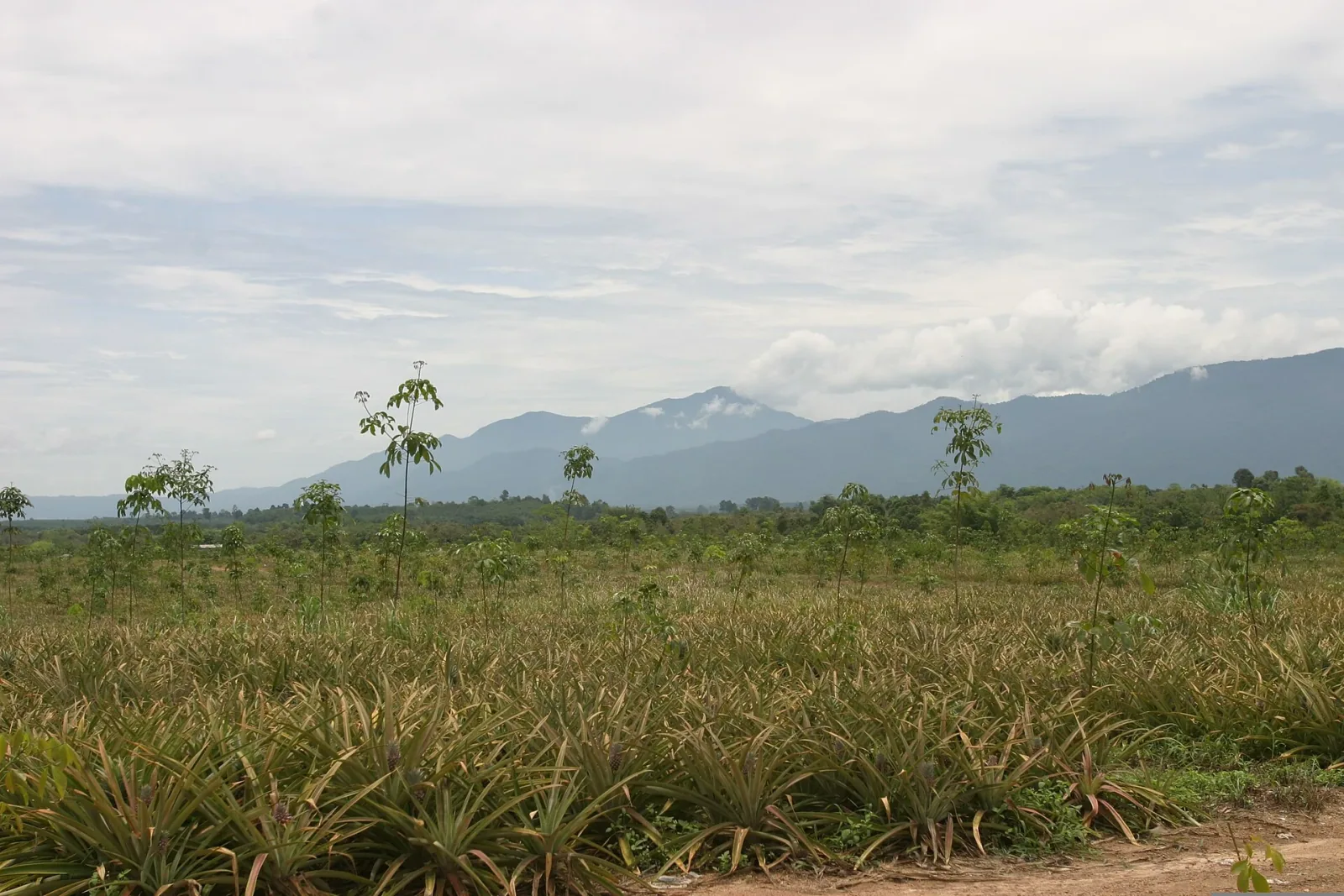
If the gem trade is Chanthaburi's historic wealth, tropical fruit is its agricultural soul. The province produces what many Thais consider the nation's finest durian—Montong and Chanee varieties cultivated in orchards that stretch across the inland hills. The soil, climate, and generations of horticultural knowledge combine to create durian so creamy, so intensely flavored, that Bangkok gourmets make pilgrimages during May-June peak season to eat fruit that will never taste this good after transport.
Durian's notorious smell—banned in hotels and public transport—becomes almost pleasant when you're eating freshly opened fruit under the tree it grew on. The flesh has custard texture, complex flavors ranging from sweet to savory, and intensity that polarizes: people either love durian or find it repulsive. There's rarely middle ground. But in Chanthaburi during harvest season, eating a Montong durian that ripened yesterday and was opened this morning reveals why Thais pay premium prices for this "king of fruits." It's genuinely transcendent if you can get past the smell.
Beyond durian, the province grows mangosteen (the "queen of fruits" with purple rinds and white segments), rambutan (hairy red shells concealing translucent sweet flesh), longkong (small tan fruits in clusters), longan (brown shells containing translucent fruit), and countless other tropical species. The provincial wholesale fruit market (talat phon-la-mai) in Tha Mai district operates as the loading hub where trucks collect fruit bound for Bangkok and beyond. During harvest season, the market overflows with abundance, prices dropping to fractions of Bangkok rates. You can sample fruit until you're genuinely tired of sweetness, buying kilos of mangosteen or rambutan for what you'd pay for a few pieces elsewhere.
Many orchards offer tours during harvest season, letting visitors pick fruit directly from trees, learn selection techniques (spotting ripe durian requires skill—wrong choice means hard, flavorless disappointment), and understand the agricultural knowledge required to produce quality fruit consistently. Some offer shipping services, letting Bangkok residents order durian delivered direct from orchard. It's agricultural tourism without pretense—working farms that happen to let curious visitors participate. For insights into Thai agricultural traditions across regions, see our guide to Thai food culture.
Durian: April-June peak season. Montong most popular variety for thick creamy flesh. Chanee offers different flavor profile. Prices 80-200 THB/kg at orchards vs. 200-400 THB in Bangkok.
Mangosteen: May-August. Purple rind should yield slightly to pressure. White segments inside. Perfectly balanced sweet-tart flavor. 40-80 THB/kg at source.
Rambutan: May-September. Red hairy shells, translucent white flesh, sweet flavor. 20-50 THB/kg. Longkong and longan similar seasons. World Durian Festival in May celebrates harvest with markets, contests, cultural shows.
Chanthaburi's natural attractions start with waterfalls. Namtok Phlio National Park, just 14 kilometers from the city, protects a spectacular multi-tiered waterfall cascading into pools filled with giant carp that swarm so thick the water seems to boil. Swimming is permitted, and the fish will nibble your feet—a natural spa treatment locals enjoy. The surrounding jungle shelters hiking trails leading to caves, viewpoints, and deeper forest where gibbons call and hornbills flash through canopy. There's a memorial to King Rama V and Queen Sunandha who visited the falls in the 1880s, adding royal history to natural beauty.
In Laem Sing district on the coast, Oasis Sea World runs daily shows with rare Irrawaddy dolphins and pink dolphins—one of the few places in Thailand where visitors can see both species close up. The park opened in 1990 as a small-scale research and breeding facility, and remains modest by industry standards: a circular show pool, shaded viewing terraces, and a handful of souvenir stalls. Adult entry runs around 130 baht and shows last about 30 minutes; the visit pairs well with a seafood lunch in nearby Laem Sing village.
Khao Khitchakut, a sacred mountain rising 1,085 meters, draws Buddhist pilgrims annually to a revered Buddha footprint shrine at the summit. The hike—steep, 3-4 hours through jungle—is physically demanding but spiritually rewarding according to devotees who make the pilgrimage, especially during the February festival when thousands climb by torchlight. The panoramic views from the peak stretch across the province to the Gulf of Thailand, rewarding the effort with perspective both literal and metaphorical. It's not casual tourism—it's genuine pilgrimage that welcomes respectful visitors.
The coast offers something rarer than beaches—genuinely peaceful beaches. Chao Lao Beach stretches three kilometers of golden sand backed by casuarina trees and coconut palms, with local seafood shacks, massage pavilions, and simple guesthouses rather than resort developments. Weekdays see almost no one. Weekends bring Bangkok families who've discovered this alternative to crowded Pattaya or expensive resort islands. The swimming is safe year-round, the sunset views reliably beautiful, and the seafood restaurants serve grilled fish and prawns at prices that make you check the bill twice because it seems too cheap.
Further south, Kung Wiman Bay maintains traditional fishing village character with boats, nets, and restaurants built on stilts over water. Watching fishermen unload catches, boats navigating mangrove channels, and the general rhythm of coastal life provides authentic glimpses that feel increasingly rare. The mangrove boat tours spot birds, mudskippers, crabs, and provide education about ecosystems that protect coastlines. Waterfront restaurant meals—incredibly fresh seafood, Gulf views, local prices of 150-300 baht for massive servings—create dining experiences that justify the journey alone.
"Chanthaburi's beaches won't win beauty contests against Andaman islands, but that's precisely their appeal. These are working coasts where fishing matters more than tourism, creating authenticity you can't manufacture at resorts."
Getting to Chanthaburi from Bangkok involves buses from Ekkamai (Eastern Bus Terminal), running every 30-60 minutes (4-4.5 hours, 160-220 baht), or minivans from the same terminal (3-3.5 hours, 200-250 baht) — Victory Monument's minivan ranks were relocated to the inter-provincial terminals in 2016. By car, most drivers take Motorway 7 to Pattaya and then Highway 3 (Sukhumvit) on to Chanthaburi (245 km, ~3.5 hours). The journey passes through Chonburi and Rayong, creating a scenic coastal route that's far more pleasant than the congested roads west of Bangkok. No commercial airport exists in Chanthaburi—the nearest is U-Tapao near Pattaya (around 2 hours away) with limited flights, so most visitors arrive overland.
Once in Chanthaburi, local transport relies on songthaews (10-20 baht) covering main city routes and motorcycle taxis (20-40 baht) for short trips. Grab operates minimally. Most long-term residents and visitors rent motorcycles (1,800-2,500 baht monthly) because beaches, waterfalls, and orchards spread across the province. The city itself is compact and walkable, with the waterfront district, cathedral, and central markets all within easy strolling distance. Bicycles work well for exploring the urban core.
Accommodation costs remain extremely low. Budget options run 3,500-6,000 baht monthly for basic apartments, while modern condos with pools and gyms cost just 8,000-12,000 baht—half what equivalent Bangkok housing demands. Short-term stays range from simple guesthouses (300-600 baht) to mid-range hotels in heritage buildings (1,000-1,800 baht) to the few upscale resorts (2,500-5,000 baht). The lack of mass tourism keeps prices anchored to local economics rather than inflated by visitor demand.
The expat community is minimal—primarily retirees seeking quiet coastal living away from tourist scenes, and some European gem traders working in the industry. No organized expat groups or regular meetups exist. This requires self-sufficiency and comfort integrating with Thai community. English speakers are rare outside hotels. It's authenticity through isolation—you get genuine Thai provincial experience because there aren't enough foreigners to create expat bubbles. Some people thrive in this environment. Others feel isolated and leave. Know yourself before committing. For broader perspectives on provincial Thai life, check our guide to living in Thailand and other provinces.
Healthcare centers on Phra Pokklao Hospital, the large provincial government facility, with Bangkok Hospital Chanthaburi providing a private alternative with some English-speaking staff and consultations from 500-1,200 baht. For serious conditions, Bangkok's hospitals sit three to four hours away—a distance that provides peace of mind but requires planning. Internet is adequate with fiber optic available (100-500 Mbps for 500-700 baht monthly) through AIS, True, and 3BB in urban areas. Remote work is feasible but infrastructure isn't optimized like Chiang Mai or Bangkok. Coworking spaces essentially don't exist—remote workers use cafes or accommodation.
Chanthaburi's food scene reflects its multicultural heritage and coastal location. The Vietnamese community maintains exceptional phở restaurants, bánh mì stalls, and gỏi cuốn specialists serving dishes prepared by families maintaining recipes through generations. Near the cathedral, small restaurants serve breakfast phở with broth simmered overnight and fresh herbs that transport you momentarily to Hanoi—except you're paying 50-80 baht instead of tourist prices.
Local Thai cuisine emphasizes fresh seafood from the Gulf and river fish. Khanom cheen nam ya—rice noodles with rich fish curry—is the breakfast and lunch staple, sold at markets and noodle shops for 30-50 baht. Khao kriap pak mor, a delicate steamed rice-flour skin wrapped around a sweet-savory pork and peanut filling, is one of the dishes Chanthaburi is best known for. Kaeng liang, a light vegetable-prawn soup, provides refreshing contrast to heavier curries. And during fruit season, every restaurant offers fruit plates featuring impossibly fresh durian, mangosteen, and rambutan as dessert.
The night market near the gem district serves every Thai street food imaginable—grilled meats, papaya salad, noodles, desserts—at local prices (30-80 baht per dish). Chao Lao beach restaurants let you select live seafood that's grilled or steamed to order, served at tables on the sand with sunset views, massive meals costing 200-400 baht total. The Chanthaboon waterfront cafes offer Thai desserts, coffee, and light meals in heritage building settings perfect for sunset relaxation. And the Tha Mai wholesale fruit market lets you taste before buying, with food stalls serving workers cheap noodles and rice dishes (30-60 baht) in authentically local atmosphere.
Chanthaburi rewards specific types of travelers and residents. It works brilliantly for independent retirees seeking affordable coastal living away from tourist scenes, comfortable with minimal expat community, and interested in genuine cultural immersion. The combination of low costs (18,000-28,000 baht monthly covers comfortable living), peaceful beaches, adequate healthcare, and authentic Thai provincial life appeals to those prioritizing value and authenticity over convenience and social scenes.
Cultural enthusiasts fascinated by multicultural heritage, colonial history, and religious diversity find Chanthaburi endlessly interesting. The Vietnamese Catholic community, gem trading traditions, French architectural legacy, and Buddhist pilgrimage sites create layered history unavailable in more homogeneous provinces. Architecture lovers appreciate the preserved waterfront district, the Gothic cathedral, and Chinese shophouses. History buffs can explore connections to Indochina conflicts, French colonialism, and Thai reunification under King Taksin.
Fruit enthusiasts and foodies planning trips around harvest season (April-June) get to experience Thai tropical agriculture at its peak—fresh durian, mangosteen, and rambutan at source prices, orchard tours, and markets overflowing with abundance. Gem and jewelry enthusiasts interested in the trade (even without buying) find the Friday-Sunday market fascinating for its cultural and commercial heritage. Beach lovers seeking peaceful coast without resort development discover Chao Lao and Kung Wiman Bay offer genuine alternative to crowded mainstream destinations.
Chanthaburi doesn't work for everyone. Digital nomads seeking coworking spaces and fast WiFi will be disappointed by limited infrastructure. Families need international schools found only in larger cities. Party seekers and nightlife enthusiasts will find the province quiet and conservative. Those requiring extensive expat support networks and English-everywhere convenience should look to Chiang Mai or Bangkok. And visitors allergic to durian should plan trips outside harvest season to avoid the omnipresent smell. But for travelers seeking Thailand's most multicultural province, where gem traders and Gothic cathedrals coexist with Buddhist pilgrimage sites and tropical fruit orchards, where Vietnamese phở meets coastal Thai seafood, and where genuine authenticity costs less than anywhere else in the Kingdom, Chanthaburi delivers something special: a hidden gem that rewards those who take time to discover it. The gem market opens every Friday morning. The cathedral bells ring across the waterfront. The durian ripens in May. And somewhere in Chanthaburi, a dealer is examining a ruby through a loupe, continuing commerce that's persisted here for two centuries. For more Eastern Thailand destinations, explore our guides to Trat Province and Rayong Province.
ESSENTIAL INFO
Capital
Chanthaburi City
Population
530,000
From Bangkok
245km (3-4 hours)
Famous For
Gems, durian, cathedral
BEST FOR
KEY SEASONS
Fruit Harvest
April-June (durian peak)
Best Weather
Nov-Feb (cool & dry)
Gem Market
Fri-Sun mornings (6am-noon)
Best: Nov-Feb
Cool season, 22-29°C, ideal for hiking
Hot: Mar-May
28-36°C, fruit harvest compensates
Rainy: Jun-Oct
Afternoon storms, waterfalls at peak