Provinces
🛶Phang Nga
Bay of Wonders & Ancient Rainforest
Bay of Wonders & Ancient Rainforest
From the speedboat, they appear impossible—hundreds of limestone karsts rising vertically from emerald water, their sheer cliffs crowned with jungle, their bases undercut by millennia of tides. This is Phang Nga Bay, one of the world's most photographed seascapes, made famous when James Bond arrived in 1974. But the bay, spectacular as it is, represents just one facet of Phang Nga Province's natural wealth. Climb inland and you reach Khao Lak-Lam Ru and Sri Phang Nga, two national parks protecting evergreen rainforest, waterfalls, and hilltop viewpoints over the Andaman coast. Head west to the open sea and discover the Similan Islands, consistently ranked among the planet's top diving destinations.
Sandwiched between Phuket's tourist infrastructure and Ranong's frontier remoteness, Phang Nga Province occupies 4,171 square kilometers of Thailand's Andaman coast. Most of the province is mountainous jungle, rubber plantations, and traditional Muslim fishing communities. While millions visit as day-trippers from Phuket, relatively few stay overnight, meaning Phang Nga retains an authenticity increasingly rare along Thailand's southern coast. The quiet beach town of Khao Lak serves as the main resort area, though even here the atmosphere remains peaceful compared to Phuket's bustle.
What makes Phang Nga remarkable isn't just the concentration of natural wonders but their diversity. Within a single day, you can kayak through mangrove tunnels at sea level, trek through ancient rainforest at 500 meters elevation, and watch sunset from a hilltop viewpoint overlooking the bay's dreamlike karst formations. The province protects multiple national parks and marine reserves, creating a continuous corridor of preserved ecosystems from mountain peaks to coral reefs. This is Thailand for nature lovers—less about nightlife and shopping, more about encountering landscapes that existed long before humans arrived and will endure long after we're gone.
"While millions visit as day-trippers from Phuket, relatively few stay overnight, meaning Phang Nga retains an authenticity increasingly rare along Thailand's southern coast."
James Bond Island—officially Khao Phing Kan—became shorthand for tropical paradise after "The Man with the Golden Gun" premiered in 1974. The distinctive limestone pinnacle jutting from the water appeared on posters, postcards, and travel agent brochures for decades. Today, it's touristy. Genuinely, unavoidably touristy, with speedboats arriving in waves throughout the day and vendors selling seashells to people who came by sea.
But here's the thing: it's still worth seeing. Not for the island itself—you can't really do much there except take photos and elbow through crowds—but because the journey reveals Phang Nga Bay's true magic. Your boat winds through a maze of karsts, each one uniquely shaped by erosion, each hosting its own ecosystem of cliff-clinging vegetation. Inside many karsts lie hidden lagoons called "hongs"—rooms in Thai—accessible only by kayak at low tide through narrow sea caves. These sheltered chambers, open to the sky but surrounded by sheer rock walls, shelter mangrove ecosystems with monitor lizards, kingfishers, and the occasional troop of crab-eating macaques on the cliff edges.
The floating Muslim village of Koh Panyee offers another perspective on the bay. Built entirely on stilts over the water, the village has existed for over 200 years, its residents maintaining traditional fishing practices alongside modern tourism. Most Phang Nga Bay tours stop here for lunch—tourist-oriented, yes, but the setting is extraordinary and the fresh seafood caught that morning makes up for the inevitable markup. Watch how the community has adapted to tourism while maintaining its cultural identity: children playing football on the stilted pitch, fishermen repairing nets beside souvenir shops, the mosque calling prayers over the hum of longtail boat engines.
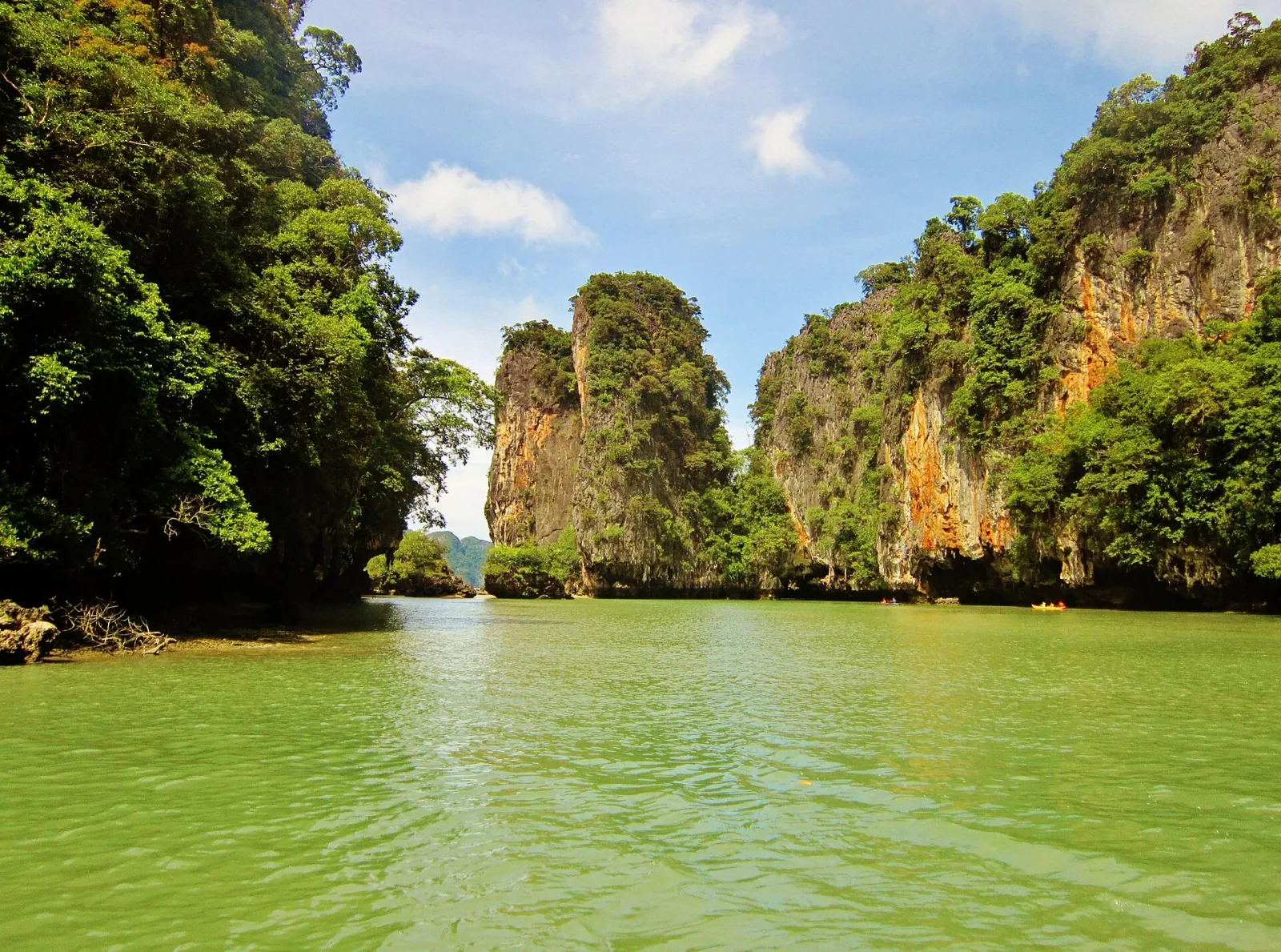
For a more intimate bay experience, book a kayaking tour with operators like John Gray's Sea Canoe, who pioneered eco-conscious exploration of the hongs. These full-day trips (3,000-4,500 THB) time their routes around tides, paddling through caves when water levels permit access to the hidden lagoons. Your guide explains the geology, points out wildlife, and ensures you're exploring responsibly. It's the bay experience the speedboat crowds miss—quieter, more contemplative, genuinely special. For more on Thailand's coastal destinations, explore our guide to neighboring Ranong Province.
Samet Nangshe Viewpoint offers what might be Thailand's most dramatic vista. From an elevated wooden platform, you look out over Phang Nga Bay's limestone karsts receding into layers of mist—the exact view that launched a thousand Instagram posts. The light at sunrise (arrive around 5:30-6am) or sunset creates that golden-hour magic photographers obsess over.
Standard entry is 30 THB, with an optional 90 THB shuttle truck if you'd rather not walk the steep access road; the newer Beyond Skywalk platform costs 500 THB extra. Yes, it gets crowded during peak times—the trade-off for accessible beauty. The viewpoint sits in Takua Thung district, about 40 km (around 45 minutes by car) from Phang Nga town, so it's easy to combine with bay tours. Bring water and arrive early to secure a good spot.
Phang Nga's coastline gets the postcards, but the interior is mountainous jungle—rubber plantations climbing into genuine rainforest. Khao Lak-Lam Ru National Park rises directly behind the Khao Lak resort strip, protecting around 125 square kilometers of evergreen forest that tumbles down to the Andaman Sea. Trails wind to Lam Ru and Ton Chong Fa waterfalls, hilltop viewpoints frame the coastline below, and hornbills, gibbons, and dusky langurs make their presence heard in the canopy. The park was hit hard by the 2004 tsunami when waves surged up the river valleys; the visitor centre rebuilt and continues to operate.
Further north, Sri Phang Nga National Park preserves another 246 square kilometers of largely untouched lowland rainforest, with Tam Nang Waterfall its most-visited feature. Few foreign tourists make it here, which is exactly why some travellers do—the wildlife is shyer, the trails quieter, the pace genuinely slow.
The most famous ancient-rainforest experience in this corner of Thailand, however, lies just over the provincial border. Khao Sok National Park is administratively in Surat Thani Province, but its visitor village and the road to Cheow Lan Lake are reached most easily by driving inland from Khao Lak (~70 km, around 90 minutes), and most Khao Lak-based operators sell trips there. The park protects forest scientists describe as among the oldest in mainland Asia, with limestone karsts—covered in jungle rather than ringed by sea—rising from the lake's surface in a freshwater echo of Phang Nga Bay.
A typical two-day Khao Sok trip runs 4,000-8,000 THB and includes boat transport, floating raft-house accommodation on Cheow Lan, meals, and guided activities: jungle treks, swimming, kayaking along cliff bases, and night safaris. The raft houses are simple—basic rooms, shared bathrooms, solar-powered electricity in the evening—but waking up on the lake as mist lifts off the water and gibbons begin their dawn songs is worth any amount of rustic comfort. Treat it as part of any Khao Lak itinerary even though, strictly speaking, you're crossing into the next province.
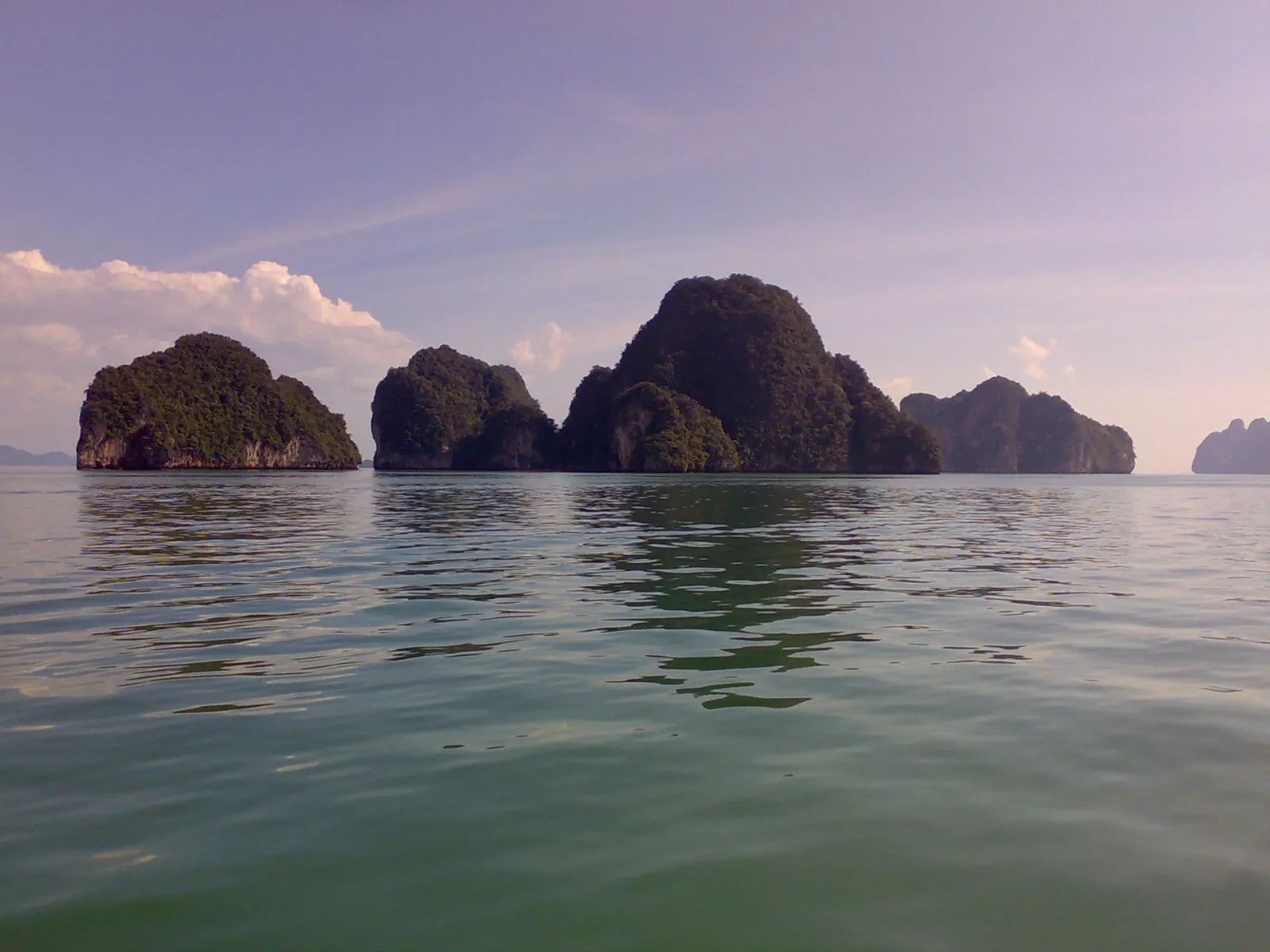
The Similan Islands consistently rank among the world's top diving destinations, and for good reason. Eleven islands (the original nine that gave the chain its Malay name, plus Ko Bon and Ko Tachai added to the park in 1998) with massive granite boulders create underwater landscapes unlike anywhere else in Thailand—pristine white sand beaches, water so clear you can see 30 meters down, and marine life so abundant it borders on overwhelming. Manta rays cruise along cleaning stations, whale sharks appear seasonally, sea turtles graze on seagrass, reef sharks patrol drop-offs, and the coral gardens explode in psychedelic color.
The Similans are only accessible from 15 October through 15 May—the rest of the year, they're closed for monsoon protection and marine recovery. Day trips from Khao Lak's Tap Lamu Pier run 4,500-6,000 THB including transport, lunch, snorkeling equipment, and national park fees. For serious divers, multi-day liveaboard safaris explore the Similans and nearby Surin Islands, spending 3-4 days sleeping on boats and diving 3-4 times daily. These trips venture to remote sites that day boats can't reach, maximizing your chance of big animal encounters.
Advanced booking is essential—the Similans are popular, and boat capacity is limited. The 60-80 minute speedboat journey can be rough; take seasickness medication if you're prone. On the islands themselves, crowds are managed through rotations, but you'll share beaches and dive sites with others. Despite the logistics and restrictions, the Similans deliver on their reputation. If you're coming to Thailand for diving, this is why. For more diving opportunities, check our guides to Phuket diving and Krabi's underwater sites.
Khao Lak isn't a town exactly—it's a 25-kilometer stretch of beach development north of Phuket, strung along the coast like pearls on a thread. No high-rises, no go-go bars, no tuk-tuk touts aggressively competing for your attention. Instead: mid-range resorts backed by jungle, seafood restaurants with sand floors, night markets selling southern Thai specialties, and beaches that still have uncrowded stretches if you walk far enough.
The area caters primarily to European package tourists—Germans and Scandinavians especially—who want beach holidays without Phuket's intensity. This means you'll find decent international restaurants (Italian, German, Swedish), dive operators with multilingual staff, and a general atmosphere of relaxed comfort rather than adventure. It's not backpacker territory, nor is it luxury resort destination. Khao Lak occupies that middle ground: affordable, comfortable, and perhaps a bit bland if you're seeking cultural immersion.
The 2004 tsunami devastated Khao Lak—the town bore some of the worst damage in Thailand. Memorials throughout the area remember the tragedy: Police Boat 813 sitting 2 kilometers inland where waves carried it, the wall of names at Ban Nam Khem, the museum documenting that day. These are sobering sites but important ones, telling stories of loss and remarkable community resilience. The rebuilt Khao Lak shows what's possible when tragedy forces reconstruction from scratch—better building codes, improved warning systems, and a community that remembers while moving forward.
High Season (November-April): Perfect weather, calm seas, ideal for bay tours and Similan diving. Temperatures 25-32°C, minimal rainfall. The Similans only open during this period (Nov 15-May 15). December-February offers the coolest, most comfortable conditions. March-April gets hot (33-35°C) but remains dry. Peak crowds during Christmas and Chinese New Year mean higher prices and advance booking essential.
Shoulder Season (May & October-early November): May sees increasing rain but tours still operate most days. October-early November shows improving weather, fewer tourists, better prices. Good for budget travelers. Similans closed but Phang Nga Bay and Khao Sok remain accessible.
Monsoon Season (June-September): Heavy rain, rough seas, reduced tour schedules. Many Khao Lak resorts close or reduce services. Waterfalls in Khao Sok become spectacular, jungle turns impossibly lush. Dramatic discounts (50-70% off high season). Best time for Khao Sok jungle trekking when waterfalls run strong. Not ideal for beach holidays or bay tours.
I should be direct: Phang Nga is primarily a destination for nature lovers and divers rather than a place for long-term settlement. The expat community is tiny—perhaps under 1,000 permanent foreign residents—mostly retirees in Khao Lak, dive professionals, resort workers, and nature enthusiasts. There's virtually no digital nomad infrastructure: no coworking spaces, limited cafes with reliable WiFi, minimal laptop-friendly environments.
Healthcare facilities are limited. Phang Nga Hospital in the provincial capital provides basic services at government rates. Khao Lak Hospital is a small private facility handling routine issues. For anything serious, most expats head to Phuket's international hospitals (1-2 hours away). Medical evacuation insurance is strongly recommended, especially for divers—hyperbaric chambers are in Phuket.
Cost of living runs very affordable for those embracing simple lifestyles. Around 25,000 THB monthly covers basic accommodation in Khao Lak, local food, scooter transport, and modest entertainment. Fresh seafood from local fishing boats, abundant tropical produce from rubber plantation areas, and street food keeps food costs low. However, limited long-term rental options and lack of urban amenities mean most expats considering the area ultimately choose Phuket or Krabi instead. Those who do settle here enjoy authentic Southern Thai living at very affordable prices, trading convenience for proximity to extraordinary nature.
Koh Yao Noi and Koh Yao Yai—twin islands in the middle of Phang Nga Bay—offer something increasingly rare: traditional Muslim fishing village life within easy reach of Phuket's airport. Rubber plantations cover the interiors, rice paddies occupy the valleys, water buffalo plow fields, and life follows rhythms determined by tides and prayers rather than tourist seasons.
The islands have resorts—some quite upscale, like Six Senses Yao Noi—but development remains limited and respectful. Most accommodations are boutique properties or homestays run by island families. Bicycling around the islands remains the main activity, along with kayaking, visiting local villages, and simply existing in a place where Thailand's modernization happened slowly enough to preserve traditional culture.
Speedboats from Bang Rong Pier in Phuket take about 30 minutes (typically 350-600 THB one-way), and the slower car-and-passenger ferry takes around an hour at lower fares—making the Yao islands perfect for escaping Phuket's tourist crowds while remaining close enough to the airport for convenience. Views stretch to Krabi's limestone cliffs on one side and Phang Nga Bay's karsts on the other. It's what Phuket might have been if development had proceeded more thoughtfully.
Phang Nga Province isn't trying to be Phuket. It has no nightlife districts, minimal shopping, few of the conveniences that make modern travel easy. What it offers instead is what drew people to Thailand in the first place: landscapes of breathtaking beauty, ecosystems of staggering biodiversity, and cultural experiences still tethered to tradition. Come for James Bond Island if you must—everyone does—but stay for Khao Sok's ancient forest, the Similans' underwater wonders, Khao Lak's peaceful beaches, and those unexpected moments when you round a bend and see something so beautiful it stops you mid-step. Phang Nga rewards those who come seeking nature rather than nightlife, who measure wealth in experiences rather than amenities, who understand that sometimes the best thing tourism infrastructure can do is stay minimal.
Provincial Capital
Phang Nga Town
Population
~265,000
Area
4,171 km²
Language
Thai, Southern Thai dialect
Emergency (Police)
191
Emergency (Medical)
1669
Time Zone
ICT (UTC+7)
Quick Take
Phang Nga offers Thailand's most spectacular natural scenery including iconic James Bond Island, world-class Similan diving, and ancient Khao Sok rainforest. Perfect for nature lovers and adventurers, less suitable for long-term living.
Major Attractions
Phang Nga Bay
Iconic limestone karsts
Khao Lak-Lam Ru NP
Coastal rainforest & waterfalls
Similan Islands
World-class diving
Khao Lak
Quiet beach town
Budget assumes simple lifestyle with local food, basic accommodation, and minimal entertainment costs.
By Air
Fly to Phuket Airport (HKT)
1-2 hours to Phang Nga
From Bangkok
Bus: 13-17 hours to Khao Lak
600-900 THB
To Similans
Tap Lamu Pier, Khao Lak
60-80 min speedboat