Provinces
🏔️Krabi Province
Limestone cliffs, pristine islands, and authentic southern Thai culture
Limestone cliffs, pristine islands, and authentic southern Thai culture
The first time you round the bend and see Railay Beach, it stops you cold. Towering limestone cliffs burst vertically from turquoise water, creating a natural amphitheater so dramatic it feels constructed—like someone designed paradise and carved it from stone. Tiny rock climbers dot the cliff faces like colorful insects, their ropes barely visible against the ancient karst. Below, longtail boats bob in crystalline shallows. Behind, dense jungle crawls up the cliffs. This is Krabi Province—where Permian-era limestone roughly 250 million years old meets modern adventure tourism, creating one of Thailand's most visually stunning destinations.
Krabi Province spans 4,709 square kilometers of southern Thailand's Andaman coast, encompassing over 150 islands, vast mangrove forests, national parks, and that iconic limestone landscape that defines the region. The province sits two hours south of Phuket and has evolved from a sleepy backwater into a premier destination while somehow maintaining more authenticity than its famous neighbor. Where Phuket went all-in on mass tourism decades ago, Krabi took a more measured approach, preserving pockets of genuine Thai life alongside its resort developments.
About 475,000 people call Krabi home, split between the provincial capital of Krabi Town—a working river port with night markets and genuine local atmosphere—and the tourism center of Ao Nang, where most visitors base themselves. But the soul of Krabi lies in its natural assets: Railay Beach, accessible only by boat and backed by those impossible cliffs. The Phi Phi Islands, featured in "The Beach" and still breathtaking despite tourist hordes. The Hong Islands' hidden lagoons. The Emerald Pool's mineral-fed turquoise waters. Tiger Cave Temple's punishing 1,237-step climb. These aren't just attractions—they're the reason people quit their jobs and move to Krabi, or at least the reason they dream about it for years after leaving.
"Krabi sits in that sweet spot—developed enough for comfort, wild enough for adventure, authentic enough to feel like you've actually gone somewhere."
Railay Beach embodies everything remarkable and complicated about Krabi. Technically a peninsula, Railay is cut off from mainland roads by sheer limestone cliffs, making it functionally an island accessible only by longtail boat (100 baht from Ao Nang, 15 minutes of bouncing across waves). This isolation created a unique ecosystem—no cars, no construction trucks, no rush. Just four beaches connected by jungle paths: Railay West with its sunset swimmers, Railay East with mangrove swamps and cheaper accommodations, Phra Nang with its iconic beach and princess cave, and Tonsai with its backpacker climbing scene.
What makes Railay genuinely special is the rock climbing. Several hundred bolted routes scale those limestone walls, ranging from beginner-friendly slabs to overhanging tufa lines that challenge elite athletes. Long-established climbing schools—including King Climbers, Real Rocks, and Hot Rock—have built a permanent international community. You'll meet French graphic designers who've been here three months, German engineers taking six-month climbing sabbaticals, American software developers who discovered they could code remotely while learning to climb. The scene feels similar to Chiang Mai's digital nomad community, but with more chalk dust and fewer MacBooks.
But Railay isn't cheap. That boat-only access means every bottle of water, every construction material, every vegetable arrives via longtail. Accommodations run 20-40% higher than equivalent mainland options. A simple bungalow that costs 600 baht in Ao Nang goes for 900 baht in Railay. Meals at beachfront restaurants hit 200-400 baht while the same dish costs 80 baht at a Krabi Town street stall. The trade-off? You're living in one of the world's most stunning natural settings, falling asleep to waves and waking to sunrise over impossible cliffs. For many visitors—and the expats who never quite leave—that's worth every extra baht.
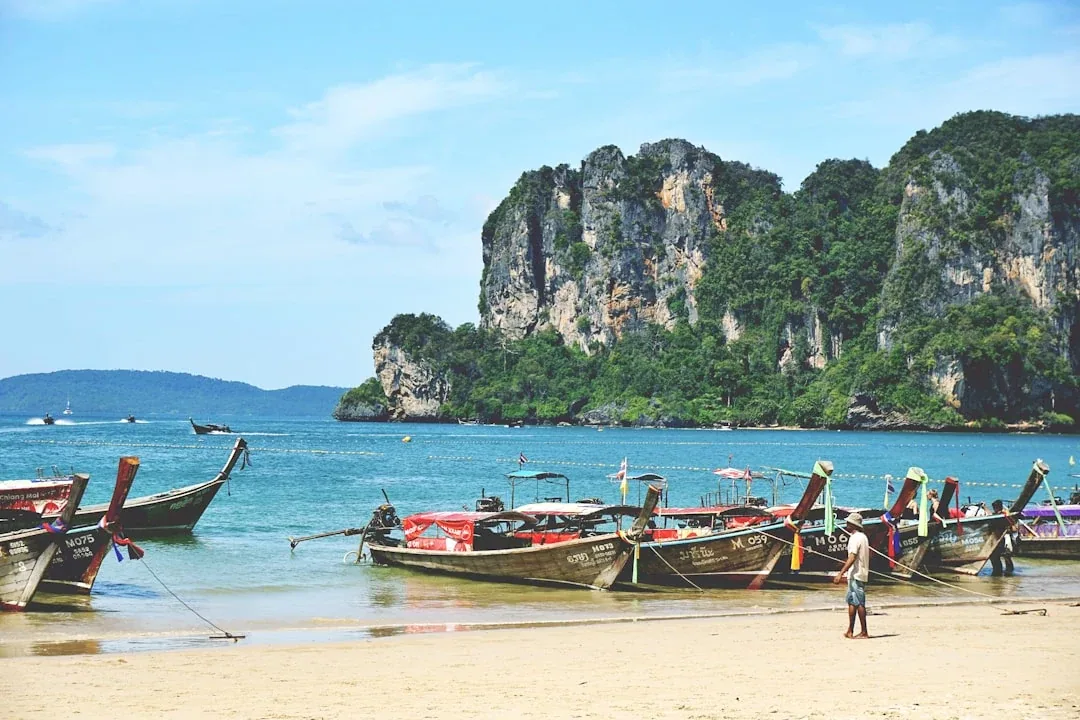
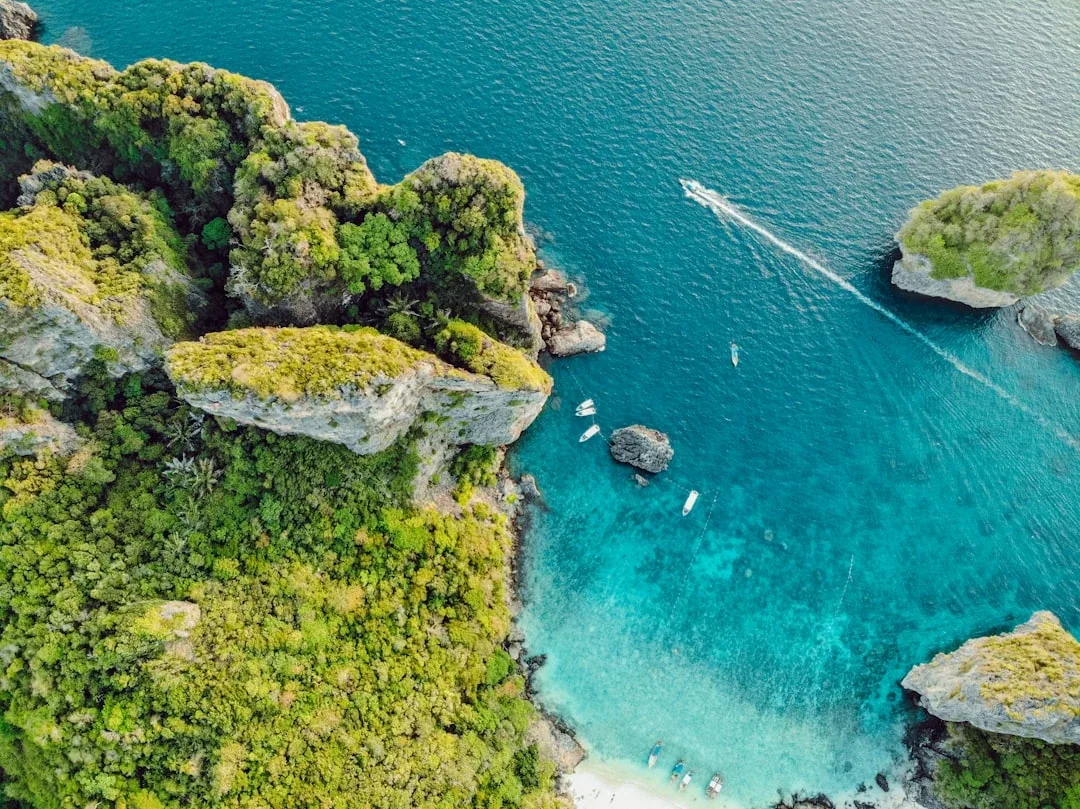
Krabi's islands are its crown jewels and its curse, depending on when you visit. The Phi Phi Islands—Phi Phi Don with its accommodation and party scene, Phi Phi Leh with Maya Bay—became globally famous after Leonardo DiCaprio's "The Beach." That fame brought consequences. By 2018, Maya Bay was receiving an estimated 4,000–5,000 visitors a day, destroying coral and beach ecology. Thai authorities closed it for rehabilitation in mid-2018 and reopened it in January 2022 under tight rules: a 380-person simultaneous cap, no boat anchoring inside the bay, and an annual closure from 1 August to 30 September each year. Boats now drop visitors at a floating pier on the island's back side, who then reach the beach via a short boardwalk.
Reaching Phi Phi requires either a ferry (400-600 baht, two hours of rolling across open sea) or speedboat (1,200-1,800 baht, one hour of bone-rattling jumps). Day trippers arrive by the hundreds during high season, turning pristine beaches into temporary theme parks. But stay overnight on Phi Phi Don, and you witness something different. After the last ferry departs around 3pm, the island exhales. Locals reclaim their beaches. The sunset crowd thins. By 10pm, only overnight guests and residents remain, and you remember why people fell in love with these islands decades ago.
The Hong Islands offer a less trampled alternative. Part of a protected marine park, the Hong archipelago features a hidden lagoon ("hong" means room in Thai) accessible only at low tide through a limestone cave tunnel. Kayaking through mangrove tunnels, snorkeling over coral gardens, and lounging on white sand beaches with a fraction of Phi Phi's crowds. Day tours run 1,500-2,500 baht depending on boat type and operator. The Four Islands tour—hitting Phra Nang Cave Beach, Tup Island's remarkable sandbar, Chicken Island, and Poda Island—represents excellent value at 1,000-1,500 baht for a full day of island hopping.
Book directly with beach operators, not hotel desks. That friendly hotel concierge marking up tours by 30-40%. Walk to Ao Nang beach in the morning, speak directly with longtail captains and tour companies. You'll save money and often get better service.
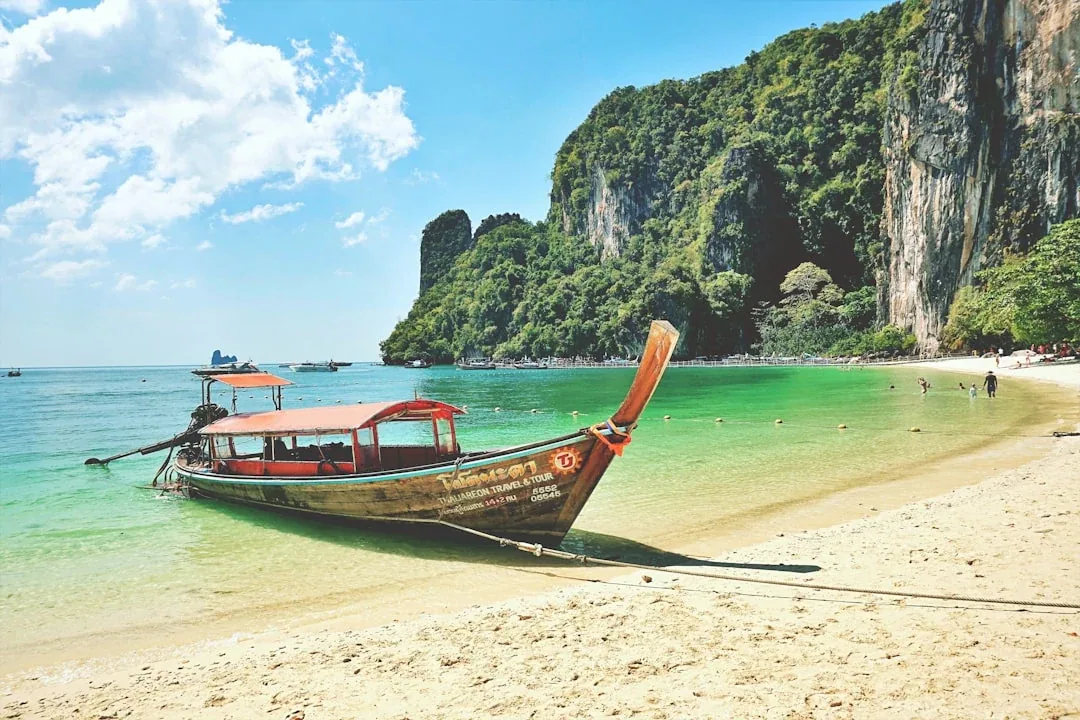
Longtail vs speedboat: Longtails cost less (1,000-1,500 baht for group tours), move slower, feel more traditional and scenic. Speedboats cost more (1,800-2,500 baht), cover more ground, create better Instagram content. Neither is "better"—they're different experiences.
Timing matters enormously. Start tours at 7-8am to beat crowds at popular spots. The difference between arriving at Phi Phi's viewpoint at 8am versus 11am is the difference between paradise and Disneyland.
Most visitors skip Krabi Town entirely, heading straight from the airport to Ao Nang's beachfront hotels. That's a mistake. Krabi Town offers something increasingly rare in Thai tourist destinations: genuine local life operating on its own terms, not for tourist consumption. This is a working river port where fishing boats unload catches, where markets serve locals not selfie-taking visitors, where English remains optional not expected.
The weekend night market along the Krabi River (Friday-Sunday, 5pm-10pm) exemplifies this authenticity. Locals outnumber tourists five-to-one. Street food stalls serve Southern Thai specialties—kaeng tai pla (intense fermented fish curry), khua kling (dry spicy minced meat), gaeng som (sour orange curry)—for 40-80 baht per dish. Live music on the riverside stage leans toward Thai country music (luk thung) not generic pop. Souvenirs feel less aggressively marketed. It's the night market experience before tourism industrialized it.
For longer-term visitors and the small expat community (estimated 3,000-5,000 foreign residents province-wide), Krabi Town serves as the practical base. Rent runs 8,000-15,000 baht monthly for decent apartments, compared to 12,000-20,000 baht in Ao Nang. Thai language schools, visa agents, and government offices cluster here. The hospital, though basic compared to Phuket or Bangkok facilities, handles routine medical needs competently. You can live here on a genuinely modest budget—25,000 baht monthly if you adopt local habits—while staying 20 minutes from world-class beaches.
Krabi attracts fewer digital nomads than Bangkok or Chiang Mai, but a dedicated community exists, particularly around Ao Nang and the climbing scene in Railay/Tonsai. The infrastructure supports remote work adequately without specialising in it. Ao Nang has a small handful of coworking spaces (day passes typically 200–300 THB) and a steady rotation of laptop-friendly cafés with reliable WiFi and proper seating—check current options on Google Maps before committing, as openings turn over quickly. Fibre internet from True and AIS reaches Ao Nang and Krabi Town (roughly 500–800 THB monthly for home connections), delivering speeds sufficient for video calls and cloud work.
What you won't find is the density of coworking spaces, networking events, and nomad-focused infrastructure that defines Chiang Mai or even Phuket. Krabi's remote workers tend toward independence—freelancers, consultants, and people with established remote arrangements who chose Krabi for lifestyle, not community. They're the developers who climb four hours daily then work evenings, the writers splitting time between coffee shops and beach lounging, the consultants who discovered European time zones align beautifully with Krabi afternoons.
The challenge is social infrastructure. There's no weekly remote worker meetup, no built-in community of hundreds of fellow nomads. You build connections organically—through climbing gyms, yoga classes, long conversations at the same cafe, Facebook groups like "Krabi Expats." This suits introverts and people seeking quieter alternatives to Bangkok's hustle. It frustrates anyone expecting instant community or structured networking. Krabi demands more social initiative than plug-and-play nomad hubs.
→ Apartment (1-bedroom, Ao Nang): 12,000 THB
→ Utilities (electric, water, internet): 2,500 THB
→ Food (mix of local and western): 10,000 THB
→ Scooter rental: 2,500 THB
→ Activities and entertainment: 5,000 THB
→ Gym membership: 1,500 THB
→ Miscellaneous: 2,000 THB
→ TOTAL: 35,500 THB (~$1,000 USD)
Budget travelers on local food and basic digs: 20,000-25,000 THB. Comfortable western lifestyle: 50,000-80,000 THB. Railay living adds 20-30% to all costs.
Krabi's tropical monsoon climate creates two distinct realities. November through April delivers the postcard version—clear skies, calm turquoise seas, comfortable temperatures hovering around 28-30°C. This is high season for good reason. Island boats run reliably, rock climbing conditions peak (dry limestone, cool mornings), and every outdoor activity operates at full capacity. December through February see the highest tourist numbers and prices, with accommodations booking out weeks ahead. March and April get brutally hot (33-35°C with intense sun) but remain dry, creating a sweet spot for visitors who can handle heat but want fewer crowds and better prices.
Then comes the monsoon. May through October brings the other Krabi—heavy rainfall, rough seas, and dramatically reduced tourism. September and October are particularly intense, with sustained downpours and waves that make island hopping dangerous or impossible. Tour operators reduce schedules or shut down entirely. Railay's famous climbing routes become slippery death traps when limestone gets wet, though sheltered areas and caves remain climbable for experienced climbers.
But here's what the tourism industry won't emphasize: monsoon season has genuine appeal if you know what you're getting into. Accommodation prices drop 40-60% from high season rates. The jungle turns lush and intensely green. Waterfalls run strong instead of trickling. Tourist crowds disappear, returning Krabi to locals and the small population of year-round residents. Rain typically falls in afternoon bursts rather than all-day downpours, leaving mornings often sunny and pleasant. For retirees or remote workers with flexible schedules, it's entirely livable—you just structure life around weather patterns rather than fighting them.
Rock climbing: Best November-March (dry, cool), possible year-round with careful route selection. Wet limestone kills traction—stick to caves and overhangs during rain.
Island hopping: November-April only for casual visitors. Rough seas May-October make trips uncomfortable or dangerous, with frequent cancellations.
Diving and snorkeling: Best visibility December-April. Limited operations during monsoon season, conditions often poor.
Budget travel: Target May-June or late September-October for maximum savings while missing peak monsoon. Shoulder months offer 30-40% discounts with mixed weather.
Krabi International Airport handles domestic flights from Bangkok (1.5 hours, 1,200-3,500 baht depending on carrier and timing) and Chiang Mai, plus limited international connections from Singapore, Kuala Lumpur, and Chinese cities. The airport sits 30 minutes from Ao Nang by taxi (600 baht), airport bus (150 baht), or Grab (400-500 baht). Many visitors actually fly into Phuket's larger international airport—more flight options, often cheaper fares from abroad—then bus or taxi the two hours to Krabi.
Once in Krabi, scooter rental offers maximum flexibility (200-250 baht daily, 3,000-4,000 baht monthly). Roads feel safer than Phuket's carnage but still require defensive driving and helmet discipline. Songthaews (white pickup trucks with benches) run fixed routes between Krabi Town and Ao Nang (20-50 baht), operating as shared taxis. Private taxis and tuk-tuks exist but require firm negotiation—expect 200-400 baht for short trips, double that for longer hauls like Krabi Town to Railay pier.
Ferry connections link Krabi to Phi Phi Islands (1.5-2 hours, 350-450 baht), Koh Lanta (1.5 hours with minivan-ferry combo), and Phuket (2.5 hours). During high season, multiple departures daily make island hopping straightforward. Monsoon season sees reduced schedules and frequent cancellations when seas turn rough.
What surprises newcomers is Krabi's distinct Southern Thai character. Roughly a third of the province is Muslim, creating a cultural blend visible in mosque architecture, halal restaurants, and the rhythm of daily life punctuated by calls to prayer. The Loi Ruea Chao Le festival—held on the full moons of the 6th and 11th lunar months, roughly May/June and October/November—centres on Ko Lanta's Urak Lawoi communities. Their hand-made model-boat ceremonies set adrift to carry away misfortune are among Thailand's more intact living rituals, largely untouched by tourism commercialisation.
Tiger Cave Temple (Wat Tham Suea) embodies both spiritual tradition and masochistic tourism. The 1,237-step climb to the hilltop summit is genuinely brutal—30–45 minutes of leg-burning ascent in tropical heat. But the 360-degree views from the top, overlooking limestone karsts, jungle canopy, and distant coastline, reward the effort spectacularly. Start at 6am before the heat becomes dangerous. The temple grounds below include natural meditation caves and a rock formation said to resemble a tiger's paw print—the source of the temple's name.
For expats and longer-term visitors, understanding these cultural layers matters. Unlike Phuket's international bubble, Krabi maintains stronger connections to Thai identity. Learn basic Southern Thai phrases beyond Bangkok standard Thai. Respect mosque prayer times and Friday observances. Recognize that the sleepy vibe isn't laziness—it's a different rhythm shaped by heat, tradition, and a less frantic relationship with time than Bangkok's chaos or Phuket's tourism machine.
After watching dozens of people move to, love, and occasionally leave Krabi, patterns emerge. The province works brilliantly for outdoor enthusiasts—rock climbers obviously, but also kayakers, divers, hikers, and anyone who prioritizes nature access over urban amenities. It suits people comfortable with smaller expat communities and less infrastructure than major cities. It attracts those seeking Thailand's natural beauty without Phuket's strip-mall commercialization.
Krabi struggles for families needing international schools (nearest options in Phuket), people requiring sophisticated medical care (again, Phuket), and anyone whose happiness depends on extensive nightlife, shopping, or cultural events. The province offers less English-language support than Phuket or Bangkok—not impossible to navigate, but requiring more patience and Thai language basics. It's quieter, slower, more nature-focused, less plugged-in than digital nomad hubs like Chiang Mai.
The sweet spot seems to be couples or individuals in their 30s-50s, professionally established with remote income, prioritizing outdoor lifestyle over career networking, comfortable with moderate isolation and smaller social circles. Retirees find good value in Krabi Town or quiet areas of Ao Nang, though they keep Phuket as backup for medical needs. The climbing community skews younger—20s and 30s living lean in Railay/Tonsai, working enough online to fund extended climbing seasons.
Ultimately, Krabi sits in that sweet spot—developed enough for comfort, wild enough for adventure, authentic enough to feel like you've actually gone somewhere. Those limestone cliffs aren't just spectacular geology. They're a metaphor for Krabi itself: ancient, dramatic, surprisingly accessible once you make the effort, absolutely worth the journey. Whether you come for a week, a season, or indefinitely, the place has a way of getting under your skin, leaving you planning your return before you've even left. That's the Krabi effect—and it's entirely intentional.
Capital
Krabi Town
Population
~475,000
Area
4,709 km²
Time Zone
ICT (UTC+7)
Emergency
191 (Police), 1669 (Medical)
Quick Take
Krabi delivers Thailand's most dramatic coastal scenery with limestone cliffs, pristine islands, and world-class climbing. More authentic than Phuket, more affordable, yet developed enough for comfortable living.
Best For
Rock climbers, nature enthusiasts, island hoppers, photographers, budget to mid-range travelers seeking stunning landscapes without mass tourism
High Season
Nov-Apr · Perfect weather, calm seas, premium prices
Shoulder
May & Oct · Mixed weather, good value, fewer crowds
Monsoon
Jun-Sep · Heavy rain, rough seas, deep discounts
→ Railay Beach (boat-only access)
→ Phi Phi Islands
→ Four Islands Tour
→ Tiger Cave Temple
→ Emerald Pool & Hot Springs
→ Hong Islands
→ Krabi Town Night Market
By Air
Krabi Airport (KBV) · Bangkok 1.5hrs · Or fly to Phuket
By Bus
Bangkok 12hrs · Phuket 3hrs · Surat Thani 2.5hrs
By Ferry
Connections to Phi Phi, Lanta, Phuket
→ Phuket (2-3 hours west)
→ Phang Nga (~2 hours northwest)
→ Trang (~2 hours southeast)
→ Surat Thani (3 hours northeast)